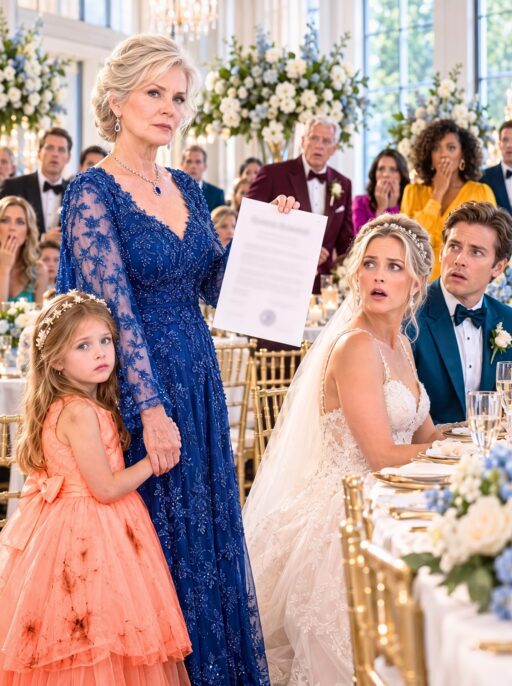
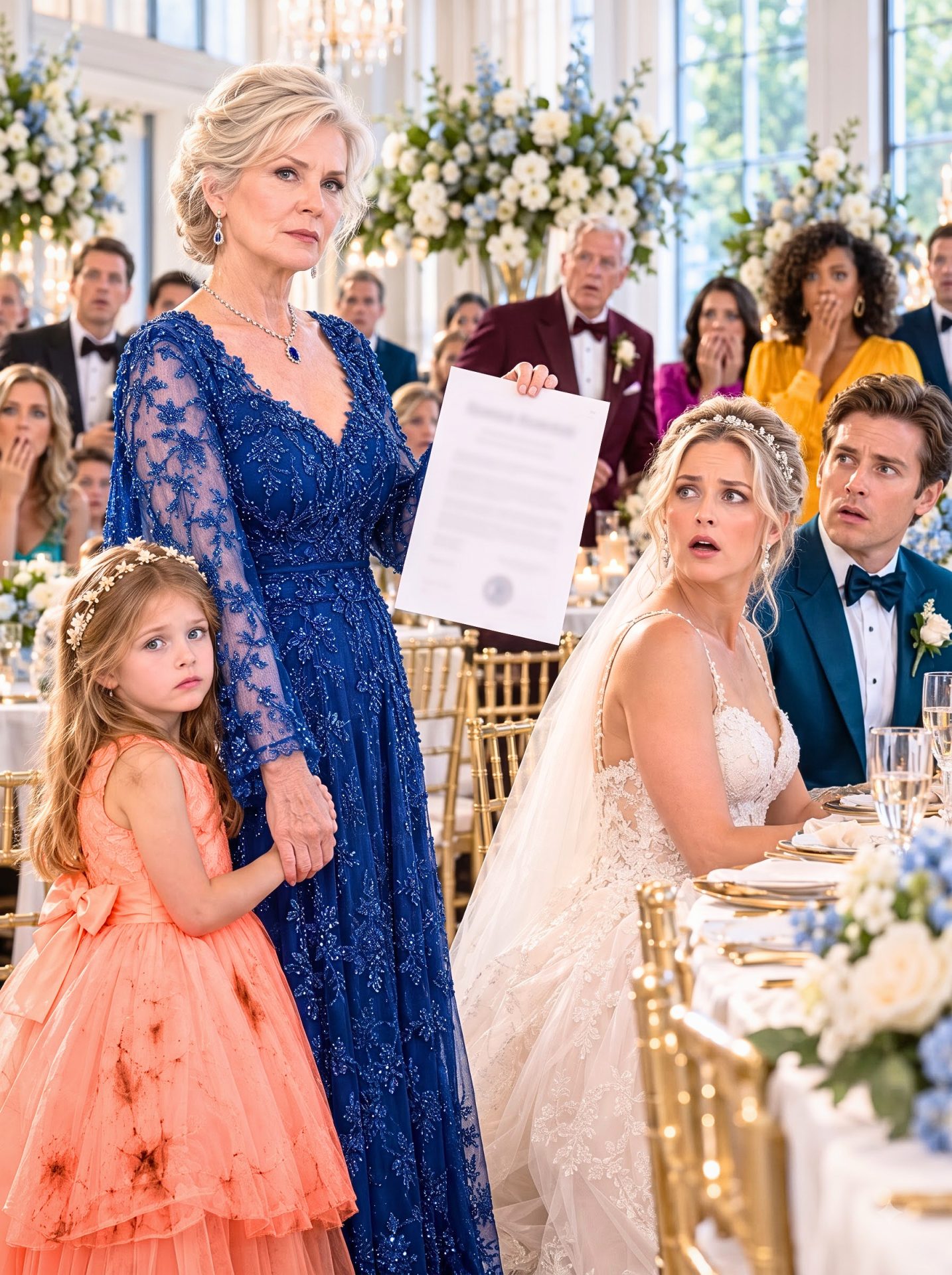

The afternoon my former son-in-law married again, I arrived at an extravagant wedding venue in Charleston, South Carolina, wearing a navy-blue dress and carrying a small present for my five-year-old granddaughter. I had no intention of drawing attention to myself. I simply wanted to see little Maisie enjoy the celebration, watch her father begin a new chapter, and leave knowing she was surrounded by people who loved her.
I had no idea that before the evening ended, I would stand before nearly three hundred guests and expose a truth that would change our family forever.
My name is Meredith Whitcomb. At sixty-seven, I was a widow and the founder of a medical equipment company I had spent three decades building. Money had given me security, but its greatest value had always been the ability to help the people I loved.
For the past four years, one of those people had been my former son-in-law, Preston Hale.
Preston had been married to my only daughter, Caroline. When Caroline died in a sudden accident, she left behind a fourteen-month-old daughter. I still remembered the final promise I had made to her.
“Mom, please look after my little girl. Make sure she always knows she’s loved, even when I’m not here.”
I had squeezed her hand and promised I would never abandon Maisie.
In the months following Caroline’s death, Preston seemed unable to manage everything alone. He was grieving, raising a toddler, and struggling to maintain the home he had shared with my daughter. Having experienced the loss of my own husband, I understood how grief could make even the simplest responsibilities feel overwhelming.
So I stepped in.
I covered the mortgage, arranged childcare, paid household expenses, and ensured Maisie had everything she needed. When Preston eventually asked for a regular allowance, he assured me the money would help him provide the childhood Caroline had wanted for their daughter.
I agreed to send him $18,000 each month.
Over time, that amount increased to $30,000 as Maisie’s medical needs became more complicated. Two years earlier, she had been diagnosed with a serious illness requiring extensive treatment. There were hospital appointments, medical expenses, and difficult days when her little body seemed far too fragile for someone so young.
I believed Preston was using my support to give her the best possible care.
Perhaps I believed it because I desperately needed to think my granddaughter was in good hands.
When Preston announced his engagement to Brielle Sutton, I welcomed the news cautiously but sincerely. Brielle was thirty-four, attractive, and particular about appearances. She wanted an elaborate wedding filled with imported flowers, crystal decorations, and professional photographers.
The celebration came with an enormous price tag.
Preston asked whether I would help pay for it, explaining that the wedding would give Maisie a stable family environment again. I agreed to contribute because I wanted to believe the marriage would bring happiness into the little girl’s life.
By the wedding day, I had paid a substantial portion of the expenses.
As I entered the magnificent venue, white roses lined the entrance, chandeliers glittered overhead, and waiters hurried between tables arranged for hundreds of guests.
Everything looked perfect.
Then I spotted Maisie near the entrance, wearing a pale pink flower-girl dress and holding a basket decorated with white ribbons.
A lavender scarf embroidered with tiny stars covered her head. I had given it to her after one of her chemotherapy appointments because her scalp remained sensitive, and wearing it helped her feel comfortable.
When she saw me, her face lit up.
“Grandma! Look at my dress!”
I knelt and hugged her gently.
“You look absolutely beautiful, sweetheart.”
She smiled, but then her little fingers touched the edge of her scarf.
“Grandma, do you think this looks okay? Brielle said it doesn’t match the wedding.”
My heart tightened.
I brushed her cheek and reassured her that she looked wonderful exactly as she was.
At the time, I thought Brielle had merely made an insensitive remark.
I would soon discover that the scarf was only the beginning of something far more cruel.
The wedding ceremony began shortly after six in the evening.
I sat among the guests, watching Maisie walk down the aisle with her flower basket. She scattered petals carefully, taking each step with the seriousness of a child determined to do her job perfectly.
My eyes filled with tears.
After everything she had endured during her treatment, seeing her standing there in her pink dress felt like a blessing. She was still so small, yet she had already faced more hardship than many adults.
When Maisie reached her father, Preston bent down and kissed her forehead. The photographers captured the moment, and the guests smiled at the touching scene.
For a brief moment, he looked every bit like the devoted father I had believed him to be.
Then Brielle appeared, the ceremony proceeded, and the room erupted in applause. Everyone congratulated the newlyweds as though they were stepping into a perfect life together.
I wanted to believe it, too.
After the ceremony, the photographer gathered the wedding party for formal portraits. I watched Maisie approach her father, expecting her to stand beside him and Brielle.
Instead, Brielle leaned down and whispered something into the child’s ear.
Maisie’s cheerful expression vanished.
Before I could get close enough to hear what had been said, Brielle took her hand and led her down a hallway behind the ballroom.
I assumed they were going to fix her dress or adjust her scarf. I turned back toward the guests, thinking nothing of it.
Ten minutes passed.
Then fifteen.
The photographer began arranging the family members for another series of pictures, but Maisie was nowhere to be found.
I searched the nearby tables and finally approached Preston, who was standing beneath the chandeliers while the photographer adjusted his position.
“Preston, where is Maisie?”
He barely glanced at me.
“Probably with the nanny.”
“I already checked. She isn’t there.”
He let out an impatient sigh.
“Meredith, can we finish the photographs before you start worrying about everything?”
His response unsettled me.
“I am asking where your daughter is.”
“She was with Brielle. I’m sure she’s fine.”
He turned back toward the camera, apparently considering the conversation finished.
But I knew Maisie. She was a gentle, affectionate child who rarely wandered away without telling someone. After everything she had been through medically, I couldn’t understand why nobody seemed concerned about her absence.
I searched the bridal suite, the garden, and a small sitting room where the children had waited before the ceremony. I asked several staff members whether they had seen a little girl wearing a pink dress and a lavender scarf.
No one could tell me where she was.
Then I noticed a narrow corridor leading toward the service area. It was quieter than the rest of the venue, with stacked chairs and boxes of decorations lining the walls.
As I passed a closed door, I heard a faint voice.
“Grandma?”
I stopped so abruptly that my handbag slipped down my arm.
“Maisie? Sweetheart, is that you?”
“I’m in here.”
I rushed to the door and grabbed the handle, but it wouldn’t open.
My heart began pounding.
“Can someone help me?” I called toward the corridor.
A staff member hurried over, and I explained that my granddaughter was locked inside. He quickly retrieved a key and opened the door.
What I saw made my stomach twist.
Maisie was sitting on a folded tablecloth beside several boxes of wedding decorations. Her flower basket lay on the floor, and she clutched her lavender scarf in both hands.
The room was dim and clearly intended for storage, not for a frightened five-year-old.
I dropped to my knees and gathered her into my arms.
“Sweetheart, why are you in here? What happened?”
Her eyes filled with tears.
“Brielle said I couldn’t be in the pictures.”
I held her gently, trying to keep my voice calm.
“Why would she say that?”
Maisie stared at the scarf in her hands.
“She said my head would make the pictures look bad. She told me to take this off, but I didn’t want to.”
For a moment, I couldn’t find the words to answer her.
Then she whispered, “She told me to wait here until everyone finished taking pictures.”
I looked around the cramped room, imagining my granddaughter sitting alone while hundreds of people celebrated just beyond the door.
“Did anyone know you were here, sweetheart?”
She shook her head.
Then she looked up at me with the kind of uncertainty no child should have to carry.
“Grandma, when my hair grows back, will Daddy want me in the pictures again?”
Something inside me went cold.
I pulled her close and kissed the top of her head.
“You never have to change how you look to deserve a place beside your family. Not today, not tomorrow, not ever.”