
“I realized you’ve probably felt that way for years, Mom. And I either didn’t notice or chose not to notice because it was easier for me.”
He apologized again, insisting that his visit had nothing to do with the financial support I’d withdrawn. I wanted to believe him, but six years of disappointment couldn’t disappear simply because he’d finally found the right words.
For the next hour, we spoke more openly than we had in years. Owen admitted that he sometimes felt powerless in his own marriage and that most weekends revolved around visiting Christa’s parents in Oakville.
He mentioned one stretch when they’d spent eleven consecutive weekends with her family. When he tried to remember the last ordinary weekend they’d visited me, I quietly supplied the answer.
“April of last year.”
Owen lowered his head, realizing how much distance had grown between us. I told him about the Thanksgiving insult, the exhausting moving day, and the expensive cottage vacation that nobody had acknowledged.
I also explained how humiliating it felt to discover that my family valued my cooking but couldn’t spare me a seat at dinner. Owen listened without defending Christa, and for once, I didn’t have to soften my feelings to make him comfortable.
Before leaving, he paused in the hallway and brought up the phone plan, insurance, and monthly transfers. I prepared myself for another request, but what he said surprised me.
“Please don’t start paying those bills again, Mom. I should have taken responsibility for them years ago.”
I smiled and straightened his collar, remembering all the mornings I’d done the same thing before sending him off to school. I loved my son, but I finally understood that loving him didn’t mean rescuing him from every responsibility.
“I wasn’t planning to, honey.”
Owen laughed, and the sound reminded me of the boy I’d raised before adulthood complicated everything. We hugged goodbye, knowing that rebuilding our relationship would take more than one conversation.
Over the following months, the financial arrangements remained unchanged. Owen managed his own phone bill, arranged separate car insurance, and stopped relying on my monthly contributions.
Meanwhile, I discovered something unexpected about my retirement savings. Without constantly supporting two other adults, I had considerably more money available than I’d realized.
I replaced my aging furnace, booked a spring vacation to Cape Breton with Cecilia, and finally enrolled in cello lessons. Learning an instrument at sixty-three felt wonderfully impractical, which was precisely why I enjoyed it.
My relationship with Owen also began improving through regular Sunday phone calls. We talked about his work, television programs, recipes, and ordinary things that had disappeared from our conversations years earlier.
Christa and I remained polite but distant, exchanging Christmas cards without pretending everything had been forgotten. I no longer needed her approval to feel secure in my place within the family.
Then, in March, Owen called with a suggestion that made me happier than any apology or financial improvement could have done. He wanted Maya to spend an entire long weekend at my house.
I immediately agreed, unaware that during those three days, my granddaughter would give me something I’d spent six years trying to earn from the rest of my family.
When March arrived, Owen drove Maya to my house for a long weekend, bringing her pink suitcase and a backpack overflowing with books. He hugged me at the front door, confirmed that he’d return Sunday afternoon, and left us to enjoy three days together.
Maya immediately began exploring the house as though she hadn’t visited in years. Her excitement reminded me how much I’d missed having her around, and I promised myself that our weekend would be filled with the simple pleasures we’d always enjoyed.
On Friday evening, we prepared homemade chicken noodle soup using a recipe my mother had taught me. Maya insisted on cutting the dough into noodles herself, producing an assortment of uneven strips that made the finished soup look wonderfully homemade.
“Grandma, they’re supposed to be different sizes. It makes the soup more interesting.”
I laughed and agreed with her, remembering how often I’d worried about making everything perfect for Christa’s family. With Maya, perfection didn’t matter because we were simply happy to be together.
Saturday was devoted to old movies, warm blankets, and far too much popcorn. We watched The Sound of Music and Mary Poppins, neither of which Maya had seen before, and she became completely enchanted by the music.
Later that evening, she taught me a fast-paced card game she’d learned at school. She defeated me eleven times in a row, laughing every time I struggled to keep up with her quick hands.
“You’re really terrible at this game, Grandma.”
“I’m sixty-three, sweetheart. My hands aren’t as fast as yours anymore.”
She giggled and immediately demanded another round. I happily agreed because losing to my granddaughter was considerably more enjoyable than winning an argument with anyone else.
On Sunday morning, we decided to make pancakes before Owen arrived. While I prepared the batter, Maya carefully arranged the dining table with my favorite blue-and-white placemats, folded napkins, and two proper glasses for orange juice.
When she finished, she stepped back to admire her work. I noticed that she’d placed two plates on the table, one for herself and one for me, without needing to be reminded.
“Grandma, your house always feels so nice.”
I stopped stirring the batter and looked at her. She’d said it casually, but those few words meant more to me than any expensive gift could have.
“Thank you, sweetheart. That’s one of the loveliest things anyone has ever told me.”
Maya rolled her eyes, assuming I was exaggerating, and returned to arranging the napkins. But I knew exactly why her words had affected me so deeply.
For most of my life, I’d worked hard to make other people comfortable. I’d cooked meals, carried boxes, paid bills, and rearranged my schedule whenever someone needed help, rarely stopping to consider whether anyone was doing the same for me.
I’d believed that being a good mother meant giving without limits. After the dinner at Owen’s house, however, I’d finally understood that generosity should never require surrendering your dignity.
I still loved preparing meals for my family, and I had no intention of becoming bitter or withholding affection. What had changed was my willingness to accept disrespect simply because someone happened to be related to me.
Owen arrived at four o’clock, exactly as promised. Maya ran toward his car with her suitcase before suddenly turning around and racing back to give me another hug.
“Grandma, can we do this again next month?”
I looked toward Owen, who was standing beside his car with a gentle smile. He nodded before I could answer, making it clear that our weekends together were becoming a regular arrangement.
“Same time next month, Mom.”
After they drove away, I returned inside and turned the new deadbolt. The familiar click reminded me that my home, my time, and my money belonged to me, even when I chose to share them.
I went into the kitchen and opened the refrigerator, where a container of leftover chicken noodle soup waited on the middle shelf. I heated a bowl and sat at my own table, watching the evening light settle over the backyard.
The uneven noodles made me smile because every spoonful reminded me of Maya’s laughter. Unlike the leftovers Christa had offered me months earlier, this meal carried memories of a weekend when I’d felt genuinely wanted.
My relationship with Owen continued improving, although I understood that trust would take time to rebuild. We spoke regularly, and he gradually became more dependable without expecting me to solve every problem in his life.
Christa remained courteous but distant, which suited me perfectly well. I no longer measured my importance by whether she invited me to dinner, and I certainly didn’t need to purchase her approval.
My retirement also became more fulfilling than I’d expected. Cecilia and I looked forward to our Cape Breton trip, my cello lessons gave me something exciting to practice, and my savings finally supported the life I’d worked decades to enjoy.
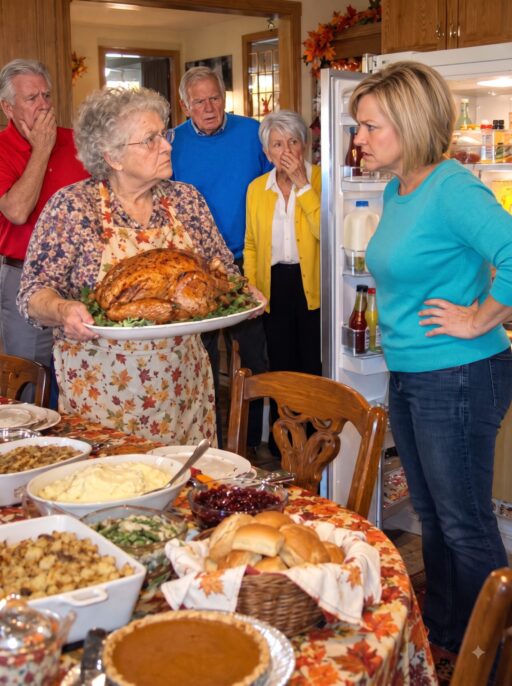
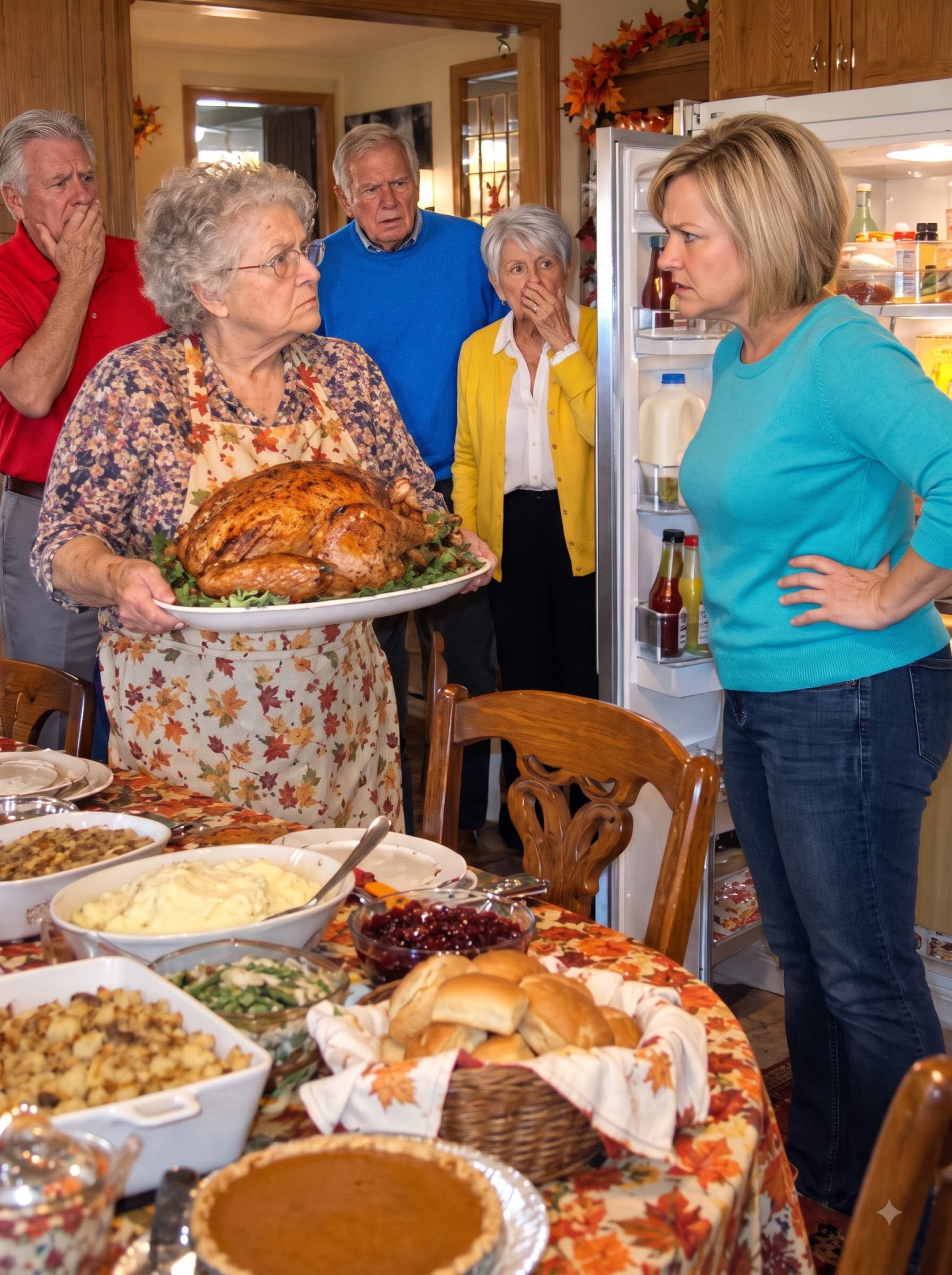
Sometimes people asked what had happened to the twelve-pound ham I’d carried away from that disastrous dinner. I always smiled because its fate had become one of my favorite parts of the story.
That October evening, I’d eaten two generous slices with scalloped potatoes and a glass of wine. Over the following days, I shared portions with Cecilia and my neighbor Mr. Halvorsen, then used the bone to prepare a delicious pot of split pea soup.
Not a single slice went back to Owen and Christa’s refrigerator. The meal I’d prepared with love had been enjoyed by people who appreciated both the food and the woman who made it.
At sixty-three, I’d finally learned that kindness didn’t mean allowing others to take advantage of me. I could remain generous, loving, and devoted to my family while still expecting the basic courtesy every person deserves.
That Sunday, Christa had offered me unwanted leftovers because she believed I would always accept whatever place she gave me. What she never expected was that I’d take my ham, reclaim my money, and discover that I already had a perfectly good seat at my own table.