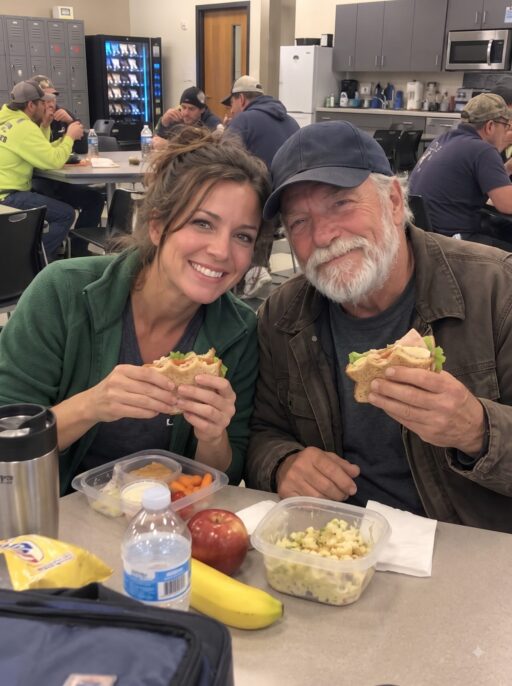


For eleven years, my coworkers laughed at me for eating lunch with the elderly janitor everyone else preferred to ignore. They made cruel jokes, questioned my judgment, and treated our friendship as something embarrassing, but I never stopped sitting beside him.
Then, at his funeral, a lawyer approached me carrying an old shoebox. What he said would eventually change everything I thought I knew about the man who had quietly become my closest friend.
“Charlotte Reyes? My name is Liam Brennan. I was Charles Wilson’s attorney, and he left something specifically for you.”
But to understand why that box mattered so much, I have to go back eleven years, to my very first day at Halvorsen & Pike.
I was twenty-eight when I moved from a small Kentucky town to Columbus, Ohio, hoping to build a better career. My new apartment was barely furnished, I didn’t know anyone in the city, and I was terrified of making a terrible impression at my new job.
I arrived forty minutes early and spent several minutes rehearsing my introduction inside my car. By the time I’d met my manager, Diane, and been introduced to dozens of unfamiliar faces, I was already exhausted.
At noon, I carried my turkey sandwich into the third-floor break room and immediately regretted it. Every table seemed occupied by coworkers laughing together, discussing office gossip, and sharing jokes I didn’t understand.
I stood near the entrance holding my lunch bag, searching for somewhere I could sit without interrupting anyone. At twenty-eight, I felt embarrassingly close to crying because I couldn’t find a place to eat.
Then an older man sitting alone beside the window looked up from his sandwich. He had short white hair, kind eyes, and a gray maintenance uniform with a name patch reading C. WILSON.
“You’re welcome to sit here, if you’d like.”
His invitation was the first genuinely comforting thing anyone had said to me that morning. I hurried over, thanked him, and introduced myself.
“I’m Charlotte. I just started working upstairs.”
“Charles,” he replied with a small nod.
He returned to his lunch without asking questions or expecting me to entertain him. Somehow, that simple kindness made the noisy room feel considerably less intimidating.
I sat with Charles that first day because I had nowhere else to go. By the following afternoon, however, I returned because I genuinely enjoyed his company.
Soon, eating lunch together became our daily routine. Every weekday at noon, we occupied the same little table overlooking the parking lot and a struggling maple tree.
Charles usually brought bologna and cheese on white bread, an apple, and a thermos of black coffee. I arrived with whatever leftovers I’d managed to pack before rushing out of my apartment.
Our conversations were rarely important, but they made my workdays better. We discussed the weather, his favorite Western novels, and the building’s perpetually broken elevator.
Charles had already worked at Halvorsen & Pike for twenty-two years when we met. He knew which printers constantly jammed, which conference rooms were too cold, and which vending machine occasionally dispensed free snacks.
He also knew nearly everyone’s name, although very few employees bothered learning his. To most of them, he was simply the older janitor who cleaned their offices and emptied their trash.
I noticed that Charles carried a small black notebook in his shirt pocket. After lunch, he would remove its rubber band, write a few lines, and carefully put it away.
I assumed he was recording maintenance problems or making shopping lists. During all those years, I never once asked what he was writing.
The teasing began about two months after I started working there. One afternoon, Derek from underwriting approached me in the hallway wearing an exaggerated grin.
“Had lunch with your boyfriend again, Charlotte?”
I laughed awkwardly because I was still new and didn’t want to create problems. Then I told him Charles was better company than most people in the office.
Unfortunately, Derek wasn’t the only person who found our friendship amusing. Soon, other employees began whispering whenever I walked toward Charles’s table.
One Monday, someone even taped a printed sign to his chair. It read, RESERVED FOR CHARLOTTE’S DATE, and several coworkers watched eagerly to see how we’d react.
Charles quietly removed the sign, folded it into four neat squares, and slipped it into his pocket. He never complained, but I felt humiliated on his behalf.
I thought that incident was simply another cruel office joke. Eleven years later, I would discover that Charles had kept the sign, along with a secret record of nearly every important moment we’d shared.
The jokes about Charles and me continued for years, although I tried not to let them affect our friendship. Some coworkers treated our daily lunches as harmless entertainment, while others openly suggested that spending time with a janitor could damage my professional reputation.
At one Christmas party, Megan from accounting pulled me aside with an expression of exaggerated concern. She warned that people noticed whom I associated with and that appearances could influence my future at the company.
“Charlotte, don’t you worry about your career? Sitting with the janitor every day isn’t exactly the impression you want to make.”
I smiled politely and changed the subject, but her words stayed with me long afterward. There were evenings when I drove home wondering whether I should start eating alone at my desk to escape the constant embarrassment.
Yet every afternoon, I returned to our little table beside the window. Charles never asked me to defend our friendship, and his quiet companionship meant more to me than the approval of people who barely knew him.
One day, after Derek and several coworkers made another joke about us, I finally asked Charles whether their comments bothered him. He took a thoughtful sip of coffee before answering.
“People are loudest when they don’t understand what quiet is worth.”
I didn’t fully appreciate his meaning at the time, but I remembered those words. As the years passed, I began discovering just how much kindness could exist in the smallest gestures.
During my third year at Halvorsen & Pike, I received a promotion to senior claims analyst. The raise allowed me to buy a proper couch for my apartment, although I barely mentioned the achievement to anyone.
The following afternoon, Charles placed a chocolate cupcake with rainbow sprinkles in front of me. It came from a nearby gas station, and the $2.49 price sticker was still attached to its plastic container.
“How did you know I got promoted?”
“Saw your name on the bulletin board. Thought it deserved celebrating.”
I ate the cupcake while trying not to cry, touched that he’d noticed something I’d almost dismissed myself. From then on, he brought me the same inexpensive treat every birthday without ever needing a reminder.
Two years later, I married Kevin, a high school history teacher. Charles couldn’t attend our wedding, but he mailed a card containing twenty dollars and a handwritten wish for our happiness.
Unfortunately, our marriage ended three years later. There was no dramatic betrayal, only two people who gradually realized they wanted different futures and couldn’t find a way to build one together.
Kevin moved out on a Saturday, and I returned to work the following Monday feeling completely hollow. At lunchtime, I sat across from Charles and stared at my untouched food without explaining anything.
He didn’t pressure me to talk or ask questions I wasn’t ready to answer. Instead, he told me ordinary stories about broken elevators, maintenance problems, and a raccoon he’d discovered near the dumpsters.
By Friday, I finally found the courage to tell him what had happened.
“Kevin moved out. We’re getting divorced.”
Charles nodded gently, as though he’d already understood.
“I thought something was wrong. You stopped wearing your wedding ring, and you’ve been eating lunch like it’s medicine.”
His simple observation meant more than a dozen carefully rehearsed expressions of sympathy. He had noticed my pain without demanding that I explain it before I was ready.
The following year brought an even greater loss when my mother suffered a fatal stroke at sixty-four. I returned to work three days after her funeral because sitting alone in my apartment felt unbearable.
That first afternoon, I realized I’d forgotten to bring lunch. Charles noticed my empty hands, divided his bologna sandwich in half, and placed one portion in front of me.
“Eat something, Charlotte. You’ll only feel worse if you don’t.”
I broke down crying in the middle of the crowded break room, unable to hold back the grief I’d been carrying. Charles remained beside me without offering empty reassurances or worrying about who might be watching.
For the next two weeks, he brought an extra sandwich every day. He never mentioned the effort, just as he never expected thanks when he helped jump-start my car, recovered my grandmother’s lost ring from a sink drain, or left soup on my desk when I was sick.
I knew Charles lived alone in a small house in Clintonville and that his wife, Ruth, had died years earlier. He occasionally brought me vegetables from his garden, but he rarely discussed his personal life.