
There was a local position opening, but it involved more paperwork, less overtime, and none of the travel pay I had come to count on.
“Take a few days before you decide,” he said.
I did.
I went through the bills. Canceled a planned purchase. Asked questions about the schedule instead of making a speech about what mattered most.
Then I accepted.
I still needed to work. Evie still needed other reliable adults.
Ruth offered to help sometimes.
“Sometimes,” she repeated, pointing at me. “I have my own appointments, and I’m not fast enough to chase a school bus.”
For the first time in days, I laughed.
Ben and his wife joined the backup plan. I spoke with the school about pickups and the arrangements they needed to follow.
With support from the professionals involved, Evie and I eventually returned home. Rachel had moved elsewhere, and access to the house was handled according to the arrangements in place.
I changed what needed changing.
I didn’t empty the rooms of every trace of her mother.
One Saturday, Evie found a photograph of the three of us at the beach.
She held it against her chest.
“Do we have to throw this away?”
“No.”
“Even if I don’t want it on my dresser?”
“We can keep it somewhere else.”
She chose a shoebox in her closet.
That evening, she cried because she missed the way Rachel braided her hair.
I sat beside her and listened.
Later, I watched a tutorial and made such a poor attempt that she studied the result in the mirror for a long time.
“It’s kind of sideways.”
“I noticed.”
She handed me the hairbrush.
“Try again.”
So I did.Set featured image
Part 5: When the Porch Was Just a Porch
The first time I went to the grocery store without Evie, I told her exactly where I was going and who would stay with her.
Ruth sat at our kitchen table working on a crossword.
Evie asked how long I would be gone.
“About forty minutes. If that changes, I’ll call Ruth.”
I came back in thirty-six.
She checked the clock.
I pretended not to notice.
There were many things like that.
I learned to say her name before entering a room if she couldn’t see me coming.
I stopped answering serious questions while looking at my phone.
When plans changed, I told her before she had to ask.
I made mistakes. Once, I promised we could work on her lighthouse after dinner and then opened my laptop.
She watched me for several minutes before quietly carrying the box of supplies back upstairs.
I closed the computer.
“I forgot what I said. I’m sorry.”
She shrugged.
“It’s okay.”
“You can be disappointed.”
She looked at me.
“I already got the glue out.”
We went upstairs.
The professional helping Evie also helped me understand how much I wanted visible proof that she was getting better.
A happy afternoon did not mean she would sleep easily that night. Missing her mother did not mean the protective arrangements were unnecessary. Being angry with me did not mean she trusted me less.
Sometimes it meant she believed I would stay and hear it.
The adult proceedings continued. There were findings, consequences, and decisions about contact that required more than apologies. Rachel began doing things she had been required to do, but I learned not to treat that as a promise about the future.
I kept Evie informed about changes that affected her, in words she could understand.
I did not give her every document.
Her job was to be nine.
Then, a year after the afternoon on the porch, she turned ten.
She wanted chocolate pancakes, Ruth’s lemon cake, and enough time to finish the model lighthouse we had been building.
Ben came with his wife. Ruth brought the cake in a carrier older than I was.
Evie received books, colored pencils, and a small kit with a battery-powered light for the lighthouse.
The orange stuffed cat sat beside her chair.
Halfway through dinner, she interrupted Ben to explain why his description of a ferry was technically wrong.
He looked at me.
“Does she get this from you?”
“Unfortunately.”
Evie grinned.
I remembered the girl on the porch asking whether she was trying hard enough to be good.
Then I passed her another pancake.
We finished the lighthouse several weeks later.
It leaned slightly. There was glue on one window, and the railing did not meet properly at the back.
Evie refused my offer to straighten it.
“Real things aren’t all perfect.”
One rainy afternoon, she carried it downstairs.
“Can I put it on the porch table? It’ll look better with the rain behind it.”
My hands stopped in the dishwater.
She waited.
“Sure,” I said.
I opened the door and helped her carry it outside. The porch roof kept the table dry, and the rain made a soft ticking sound along the gutter.
Evie arranged the lighthouse beside a flowerpot.
I stood close enough that she glanced up at me.
“You can finish the dishes.”
“I don’t mind staying.”
“I know. I’m still fixing the little wire.”
She bent over the model, concentrating.
I went back to the kitchen. Through the open doorway, I could hear her moving things around.
For a while, there was only running water, rain, and my daughter muttering at a stubborn battery cover.
Then she called.
“Dad! Come look!”
I dried my hands and went outside.
The tiny light shone through the crooked windows. Evie stood beside it, smiling as though she had built something tall enough to guide ships all the way home.
“It works,” she said.
“It does.”
She moved over so I could sit beside her.
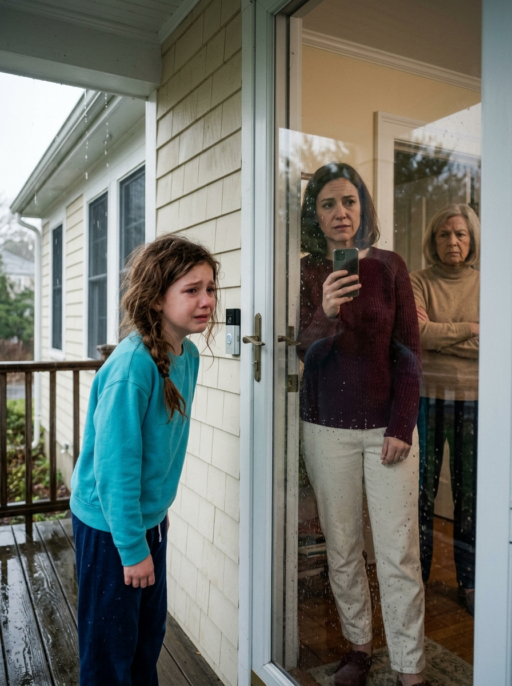
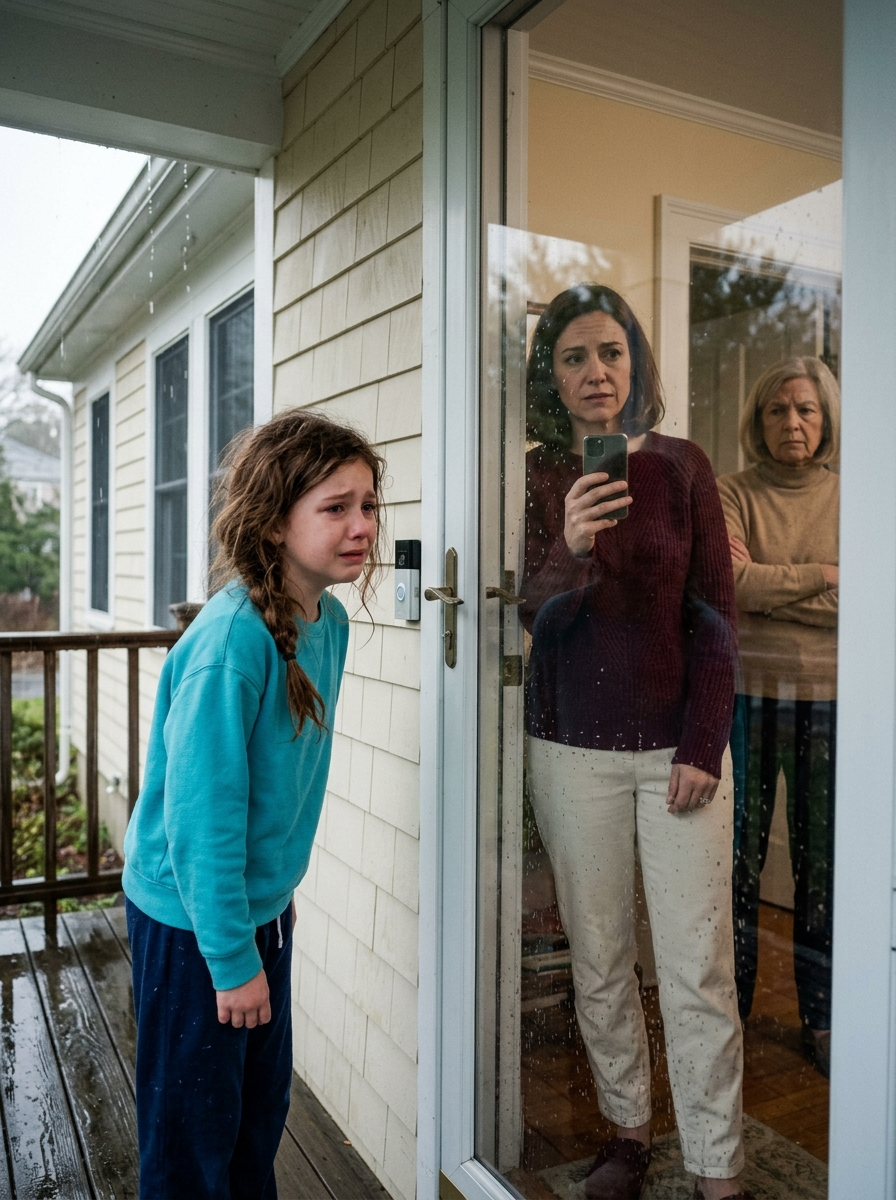
The first time I heard her through that door, she was asking to be let in.
This time, she was asking me to come see what she had made.