
We rushed into the cold autumn night. My jacket was only half zipped, and one sneaker hung loosely from my foot, its laces dragging through the damp grass. I could barely keep up, but Mom held my left wrist carefully, making sure not to touch my injured hand.
Behind us, the back door flew open.
“Sarah! Get back here!”
David’s voice had lost its artificial calm. For once, he sounded frightened and furious, and I understood that he hadn’t expected Mom to defy him.
She hurried me toward her sedan, unlocked the doors, and pushed me into the passenger seat. Then she climbed behind the wheel and struggled to start the engine. Her hands trembled so badly that she missed the ignition twice.
Finally, the engine roared to life.
David reached the driver’s window just as Mom locked the doors. He struck the glass with his palm, shouting for her to get out.
She refused to look at him.
Mom reversed out of the driveway, narrowly clipping the trash cans before shifting into drive and speeding down the street. Through the rear window, I watched David standing beneath the streetlight, growing smaller until the darkness swallowed him.
My chest heaved as I struggled to breathe.
Mom drove farther than I expected, her knuckles white around the steering wheel. Eventually, she pulled onto the highway shoulder and stopped the car.
“Mom?” I whispered.
She covered her face with both hands.
Then she began to cry.
I had never seen her like that. She was always the person who solved problems, prepared meals, and smoothed things over whenever David became angry. Seeing her shoulders shake made me realize how much she had been carrying alone.
“I’m sorry,” she choked out, reaching over to touch my cheek. “I’m so sorry, sweetheart. I should have noticed what was happening.”
“It’s okay,” I murmured through my own tears. “I kicked the cookie under the refrigerator.”
Mom gave a broken little laugh and pulled me into a careful embrace.
“You were so brave,” she whispered. “You helped me understand the truth.”
After a few moments, she wiped her eyes and straightened in her seat. Her expression changed, sorrow giving way to a determination I had never seen before.
“We’re going to the hospital,” she said quietly. “And after that, we’re never going back.”
The emergency room was painfully bright, filled with the sharp smell of disinfectant and the faint odor of stale coffee. After everything that had happened, the clean white walls and steady footsteps of the medical staff felt strangely comforting.
A doctor named Dr. Aris examined my injured hand. She handled my swollen fingers gently, asking a few questions without pressuring me to answer in front of Mom. The moment she saw the extent of the damage, her expression grew serious.
She ordered X-rays immediately.
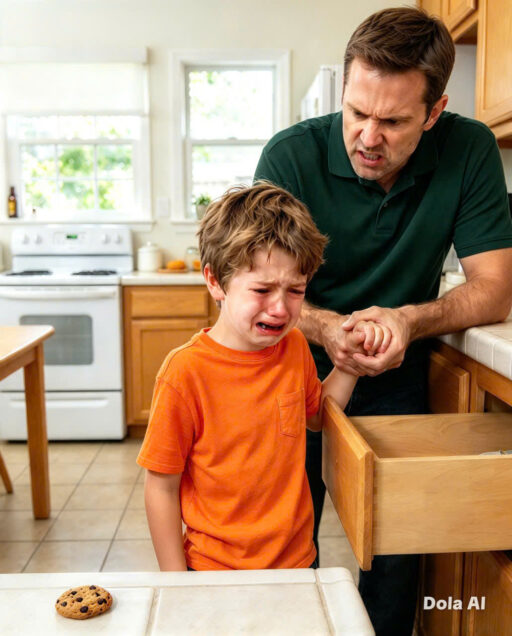
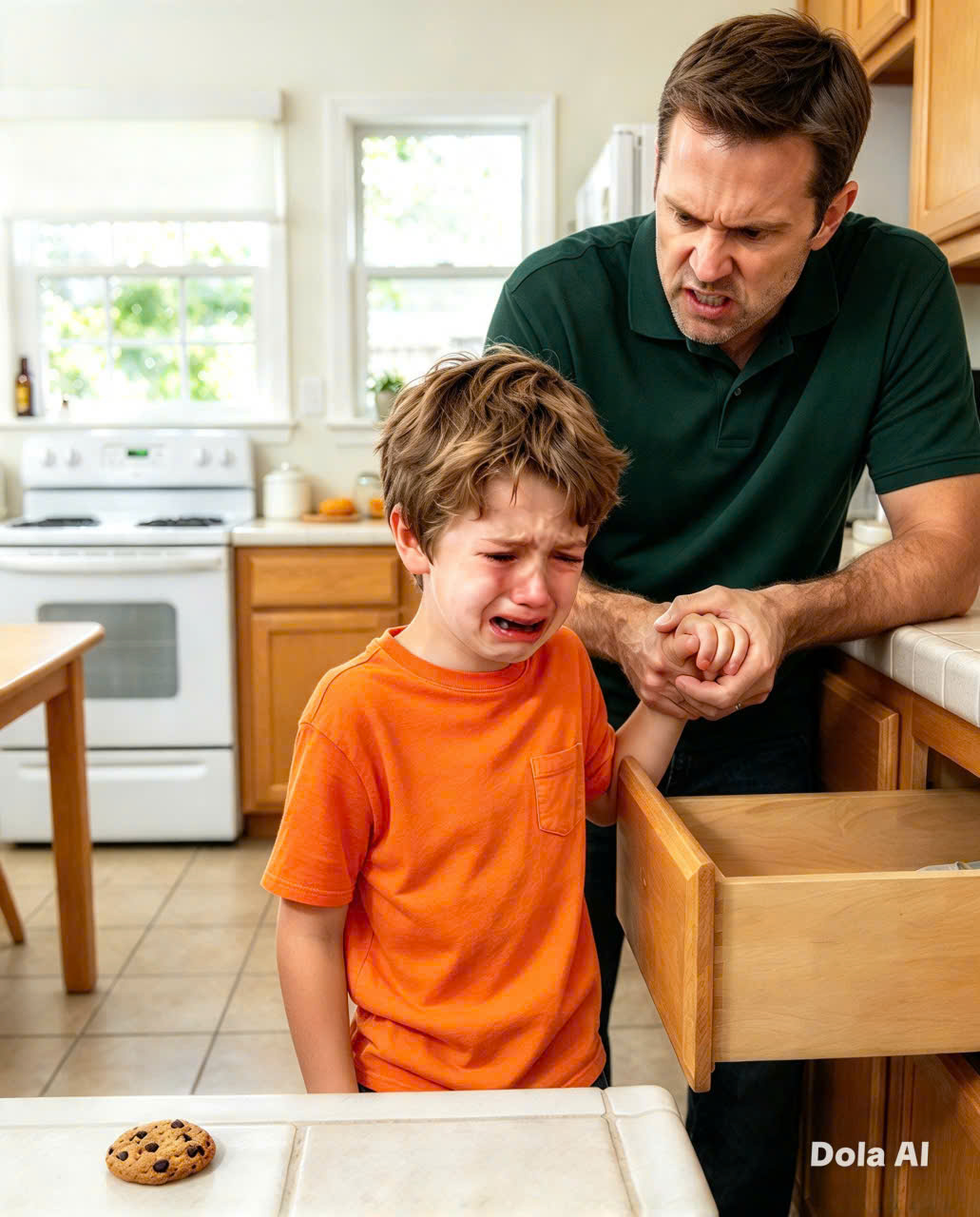
The results confirmed what Mom had feared. Two of my fingers had been fractured by the crushing force of the heavy wooden drawer. It wasn’t a minor injury, and it certainly wasn’t something I could have ignored until morning.
While a nurse secured my hand in a rigid fiberglass splint, two police officers entered the curtained examination area.
Someone at the hospital had contacted them.
Mom’s phone had been buzzing throughout our wait. David had called fourteen times, leaving behind a growing collection of messages. At first, his words sounded apologetic.
I lost my temper. Please come home. We can discuss this calmly.
But his tone soon changed.
If you take him to a hospital, they’ll think you did it. You know how nervous you get.
He was still trying to control the story, even from a distance. He wanted Mom to doubt herself, to fear the consequences of telling anyone what had happened, and perhaps to return before anyone could discover the truth.
This time, however, Mom refused to cooperate.
When the older officer asked what had happened, she unlocked her phone and handed it over. Then she indicated my splinted hand.
“My husband deliberately injured my son by closing a kitchen drawer on his fingers,” she explained firmly. “When I tried to leave with him, he locked the door and prevented us from getting out. I want to make an official report, and I need protection from him.”
Her voice was steady. There were no excuses, no attempts to soften the truth, and no hesitation about naming the person responsible.
The younger officer carefully recorded her statement while his colleague contacted the appropriate authorities.
For the first time, I watched an adult describe what David had done without pretending it was an accident or suggesting that I had somehow deserved it.
We didn’t return to the house that night.
Instead, Mom found a small motel near the highway. The room smelled faintly of smoke and old laundry detergent, and the furniture was worn from years of use. Yet when we stepped inside, I felt safer than I ever had in David’s beautifully maintained home.
Mom dragged a chair in front of the door as an extra precaution. Then she settled beside me on the bed, keeping one arm wrapped around my shoulders.
Neither of us slept much.
Every unfamiliar sound made me tense, and I kept glancing toward the entrance, half expecting David to appear. Mom would squeeze my shoulder whenever she noticed me trembling, silently reminding me that we were no longer under his roof.
The following days were difficult, but something important had changed.
David could no longer rely entirely on his version of events. There were medical records documenting my fractures, photographs showing the bruising, evidence of blood beneath the refrigerator, and messages revealing his attempts to intimidate Mom into returning.
The truth had finally left the kitchen.
And now, other people could see it too.
In the weeks that followed, the life we had known began to fall apart, but for the first time, Mom and I had the chance to build something better.
David refused to accept that he had lost control over us. He hired a lawyer and insisted that my injuries had resulted from an unfortunate accident. He claimed he had never intended to hurt me and that Mom was exaggerating the situation because she had become emotionally unstable.
He even contacted my grandmother, trying to convince her that Mom was having a breakdown and had taken me away for no good reason.
His story changed depending on whom he was speaking to, but his goal remained the same: make everyone question Mom’s judgment until his own actions disappeared behind a cloud of doubt.
Fortunately, the evidence told a different story.
My fractured fingers had been documented at the hospital. The photographs showed the extent of the swelling and bruising. The blood beneath the refrigerator supported my account of what had happened in the kitchen, while the cracked glass tabletop demonstrated how desperately Mom had needed to create an opportunity for us to escape.
Then there were David’s messages, filled with apologies that quickly turned into warnings and accusations.
Together, these details made it much harder for him to dismiss everything as a simple misunderstanding.
A temporary protective order was eventually granted, giving Mom and me some breathing room. Three days after our escape, she filed for divorce.
I didn’t fully understand the legal process, but I understood what the decision meant. Mom was no longer trying to preserve a marriage at the expense of our safety. She was choosing to protect us, even if that meant leaving behind the life she had spent years maintaining.
Two months later, we moved into a small apartment on the second floor of a building in another town.
It was nothing like David’s house. There was no spacious yard, no expensive kitchen, and no polished countertops. The wooden floors creaked whenever we walked across them, and the neighbors sometimes played music so loudly that the walls seemed to vibrate.
But our new home had something far more valuable than expensive furniture.
It was peaceful.