
I listened without speaking, surprised by the vulnerability in her voice. Judy had never admitted responsibility for anything before, and although her explanation didn’t excuse her actions, I could finally understand the fear behind them.
She looked toward Mark before turning back to me, her expression filled with something I hadn’t expected to see. There was no sarcasm, no superiority, and none of the familiar hostility she’d directed at me for eight years.
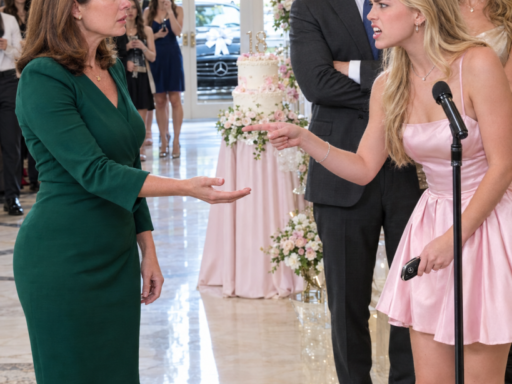
“Kate, I know I’ve treated you terribly,” she whispered. “The truth is, I was afraid you were taking my son away, and I didn’t know how to stop feeling that way.”
For the first time, I wasn’t looking at the woman who had spent years trying to destroy my marriage. I was looking at someone who finally seemed ready to explain why she’d done it.
After discovering that Judy’s house was completely undamaged, I stood outside for several minutes, struggling to process what I’d found. The woman who had driven my husband and me to the brink of divorce had invented an entire emergency simply to move into our home.
I photographed the house from several angles, capturing its spotless walls, intact windows, neatly maintained lawn, and blooming flower beds. There wasn’t a single indication of fire damage or ongoing renovations, and I wanted Mark to see the evidence with his own eyes.
Without stopping to rest, I climbed back into my car and began the five-hour journey home. By the time I reached our driveway, darkness had fallen, but my determination to confront Judy hadn’t weakened.
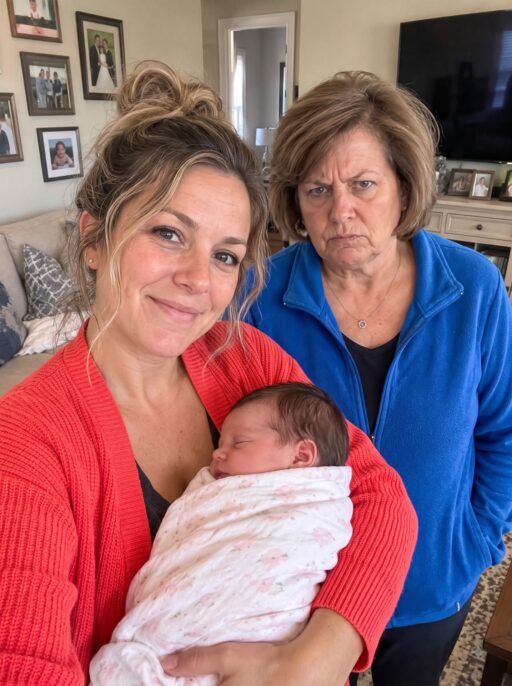
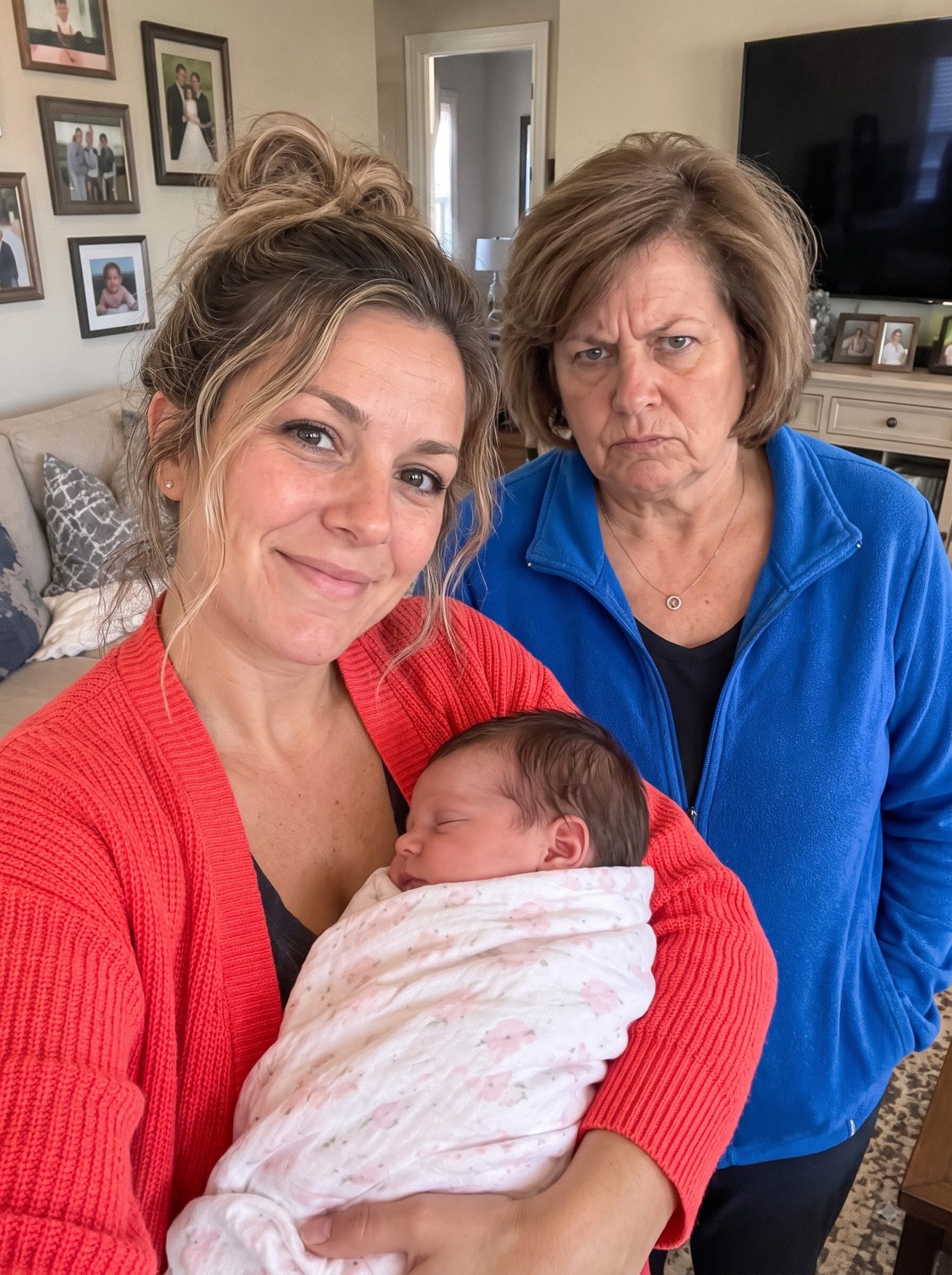
I unlocked the front door and walked directly into the living room, where Mark and Judy were sitting together watching television. Seeing them so comfortable in the house Riley and I had been forced to leave made the betrayal feel even worse.
“Kate? What are you doing here?” Mark asked, rising from the couch.
I ignored his question and turned toward Judy, who looked at me with her usual expression of innocent superiority. This time, however, I had something she couldn’t dismiss with another condescending remark.
“Tell me the truth, Judy. There was never a fire at your house, was there?”
She blinked and immediately attempted to look confused, insisting that she didn’t understand what I was talking about. But before she could invent another explanation, I took out my phone and opened the photographs.
“I drove to your house today. The windows are perfect, the walls are spotless, and there’s absolutely no sign of damage or construction. I have pictures of everything, so don’t insult me by lying again.”
Mark moved closer and examined the images, his expression changing as he recognized his mother’s perfectly maintained property. For several moments, he said nothing, clearly struggling to understand how someone he trusted could have deceived us so completely.
Judy looked down at her hands, and the confidence she’d displayed throughout her stay finally disappeared. When she spoke again, her voice was unexpectedly quiet.
“I was lonely.”
I stared at her, unable to believe that loneliness was her explanation for weeks of manipulation. She admitted that living five hours away from her only son had become increasingly difficult, especially after Riley was born.
“Your mother lives twenty minutes away, Kate. She gets to see you and Riley whenever she wants, but I spend most of my days alone. I wanted to be part of my son’s family again.”
Mark looked genuinely hurt as he asked why she hadn’t simply told us how she felt. Judy hesitated before admitting that she already knew I would never have agreed to let her stay for an entire month.
“So I invented a reason you couldn’t refuse,” she confessed.
Her admission confirmed everything I’d suspected, but it also revealed how deliberately she’d planned the deception. She hadn’t merely exaggerated a difficult situation; she’d created a false emergency because she knew I would object to her moving in.
I reminded her that I’d spent years trying to build a relationship with her, only to receive criticism and humiliation in return. She’d attacked my appearance, questioned my abilities, attempted to sabotage our wedding, and recently suggested taking Riley away from me.
“You pushed me away for years, Judy. You made me feel unwelcome in your family, and then you blamed me for keeping my distance. How could you possibly expect me to trust you?”
For the first time since I’d known her, Judy didn’t interrupt or defend herself. She lowered her eyes and admitted that she’d always struggled to express concern without turning it into criticism.
“My mother treated me the same way. I suppose I became exactly like her, even though I never wanted to. I’ve spent so long criticizing everyone that I’ve pushed away the people I love.”
Her voice trembled as she acknowledged that her behavior had contributed to her isolation. She admitted that she was afraid of losing Mark and that seeing him build a family with me had made her feel increasingly unnecessary.
I listened without speaking, surprised by the vulnerability in her voice. Judy had never admitted responsibility for anything before, and although her explanation didn’t excuse her actions, I could finally understand the fear behind them.
She looked toward Mark before turning back to me, her expression filled with something I hadn’t expected to see. There was no sarcasm, no superiority, and none of the familiar hostility she’d directed at me for eight years.
“Kate, I know I’ve treated you terribly,” she whispered. “The truth is, I was afraid you were taking my son away, and I didn’t know how to stop feeling that way.”
For the first time, I wasn’t looking at the woman who had spent years trying to destroy my marriage. I was looking at someone who finally seemed ready to explain why she’d done it.
For eight years, I’d believed Judy would never acknowledge the pain she’d caused our family. Yet there she was, sitting in my living room, admitting that her jealousy and fear of losing Mark had driven her to criticize me, interfere with our marriage, and invent a house fire.
I was still furious about the deception, but something about her confession made me hesitate. For the first time, Judy wasn’t trying to defend her behavior or convince me that I was responsible for our terrible relationship.
I sat down across from her, exhausted from the ten hours I’d spent driving and the emotional turmoil of the previous month. Mark remained nearby for a moment before quietly leaving us alone, apparently recognizing that his mother and I needed to have a conversation we’d avoided for years.
At first, neither of us knew what to say. We’d spent so long exchanging criticism and polite hostility that speaking honestly felt unfamiliar, but gradually Judy began explaining the insecurities she’d hidden behind her controlling behavior.
“When Mark was little, it was mostly just the two of us. His father wasn’t around much, and eventually he disappeared from our lives. Mark became my entire world.”
She explained that she’d devoted so much of herself to raising her son that she’d never learned how to build a meaningful life outside motherhood. When Mark met me and began planning a future of his own, she interpreted his happiness as evidence that she was becoming unnecessary.
“I saw how much he loved you, Kate, and instead of being happy for him, I became terrified. I thought you were replacing me, so I kept looking for reasons he shouldn’t marry you.”
Her confession surprised me because she’d always behaved as though her hostility came from genuine concern about my shortcomings. Now she admitted that many of those supposed flaws had been invented simply because she couldn’t accept that Mark loved someone else.
Judy even acknowledged that arranging for another woman to approach Mark before our wedding had been unforgivable. She’d known it was wrong, but her pride had prevented her from apologizing because she considered admitting fault a form of defeat.
I listened carefully before admitting that I’d also contributed to the distance between us. After years of criticism, I’d stopped trying to understand her feelings and had grown comfortable keeping her outside our family life.
“I wanted us to have a good relationship, Judy. But every time I tried, you made me regret it, and eventually I decided it was easier to shut you out completely.”
She nodded without interrupting, and we continued discussing the resentment that had accumulated throughout our relationship. There were uncomfortable moments when old memories resurfaced, but neither of us attempted to escape the conversation.
Eventually, Judy reached across the space between us and pulled me into an unexpected embrace. I initially stiffened, overwhelmed by the unfamiliar gesture, but then I hugged her back as years of anger and exhaustion finally gave way to tears.
Our conversation didn’t magically erase everything she’d done, and I knew rebuilding trust would require more than one emotional evening. However, we’d finally established something we’d never possessed before: the ability to acknowledge mistakes and speak honestly without attacking each other.
Judy returned to her perfectly undamaged house a week later, but our relationship didn’t return to its previous hostility. Instead, she began arranging visits in advance, asking whether the timing worked for our family rather than assuming she could stay whenever she pleased.
She visited every couple of months and gradually became the grandmother I’d once hoped Riley would have. Occasionally, her old habit of criticizing my parenting resurfaced, but she began recognizing those moments and correcting herself.
“Sorry, Kate. That was an old habit. You’re doing a wonderful job with Riley.”
Hearing those words from Judy once would have seemed impossible, yet she was genuinely trying to change. She still had flaws, but she no longer treated every disagreement as a battle she needed to win.
Mark and I also worked to repair the damage the situation had caused our marriage. We never again threatened divorce during an argument, having learned how easily anger and exhaustion could turn a temporary crisis into something far more serious.
We became more careful about discussing family decisions together, especially those involving our home and daughter. Mark understood that avoiding conflict with his mother had nearly cost him his own family, while I learned that setting boundaries didn’t necessarily mean abandoning the possibility of reconciliation.
Looking back, I never could have imagined that discovering Judy’s lie would eventually lead to a healthier relationship between us. The woman who had once tried to sabotage my wedding was now making a genuine effort to become part of our family without controlling it.
I hadn’t simply regained my home or protected my marriage. I’d finally gained a mother-in-law who could acknowledge her mistakes, respect my boundaries, and love her granddaughter without treating me as an obstacle.
Judy had never experienced a house fire, but her deception had nearly destroyed everything our family had built. Somehow, confronting that lie gave us the opportunity to create something we’d never managed before: an honest relationship founded on respect, forgiveness, and the willingness to change.