
“She was the best worker I ever had, Cal. At least until you came along.”
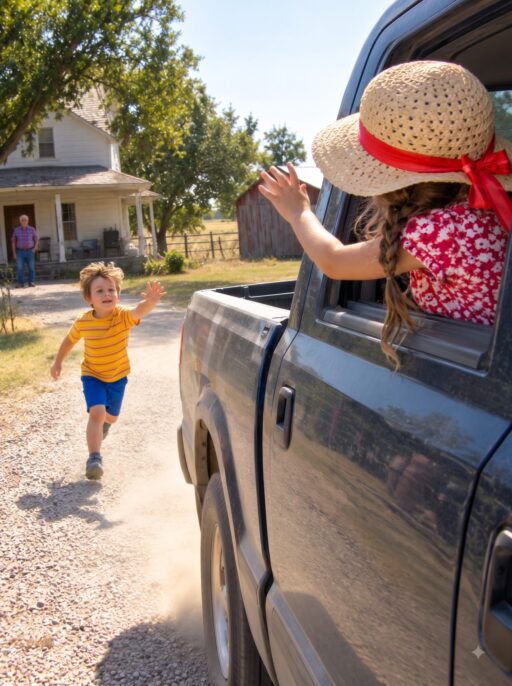
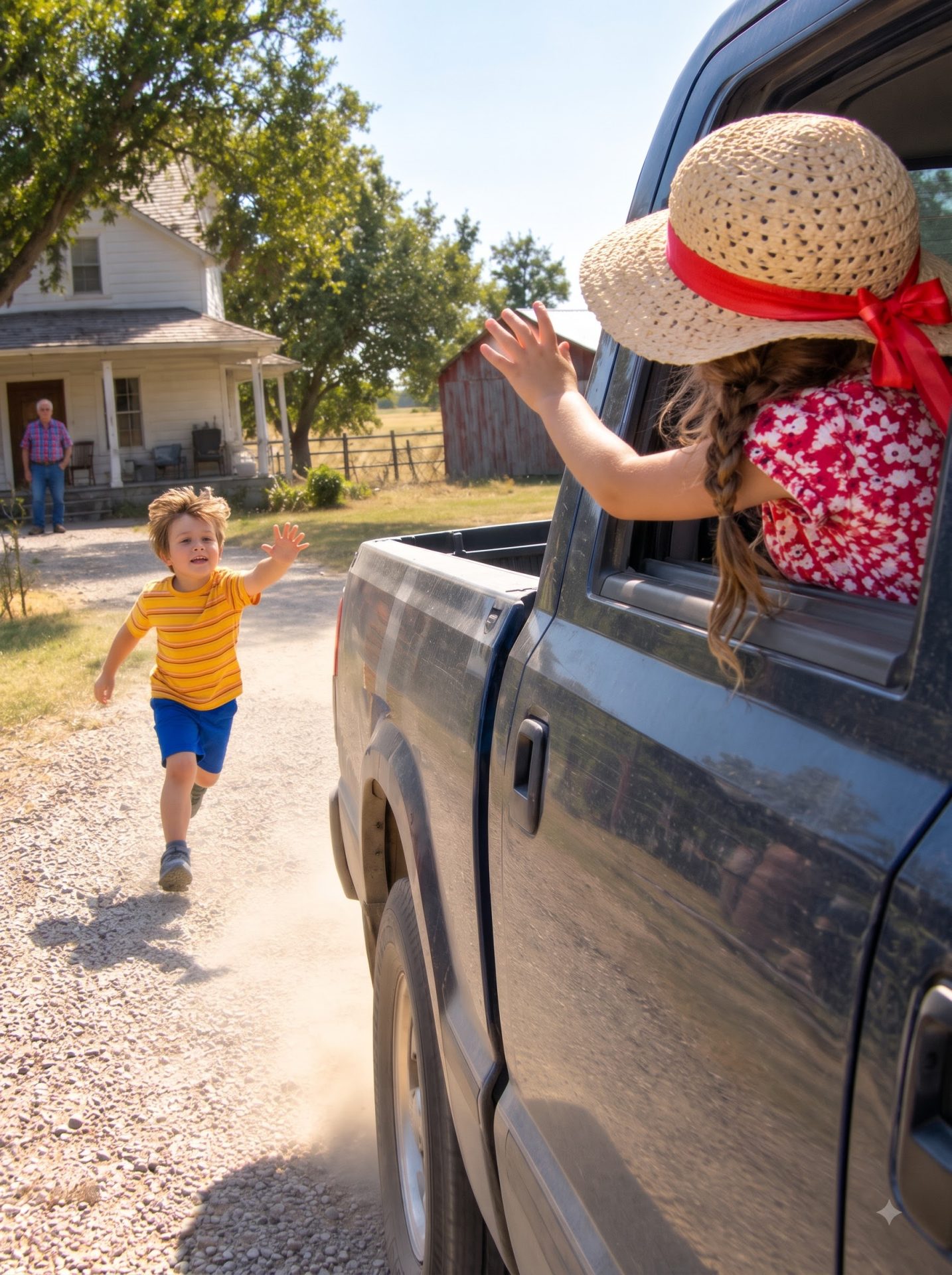
At seventeen, a devastating hailstorm damaged much of our wheat shortly before harvest. Grandpa and I spent exhausting days saving whatever we could, and one evening, while eating cold sandwiches on a truck’s tailgate, he told me he was proud of how hard I’d worked.
That August, he placed the eleventh brass washer in my palm and held it there longer than usual. He explained that it would be the final one because I would soon leave for college and begin building my own life.
We made another trip to the courthouse, where Miss Opal greeted me warmly and Grandpa’s attorney, Mr. Barlow, joined us. This time, I signed three pages instead of one, but I still assumed the documents concerned ordinary farm business.
Before we left, Grandpa looked down Main Street and nodded with quiet satisfaction.
“That’s finished, then.”
I returned home carrying eleven mysterious washers inside the red coffee can, unaware that their crooked numbers represented something far more valuable than pocket money.
Years later, when my parents tried to take control of Grandpa’s farm, those eleven pieces of brass would expose a secret he’d been protecting since I was seven years old.
During my senior year of high school, I received an acceptance letter from Kansas State University’s agricultural program, along with a partial scholarship. I brought the letter to dinner, hoping my parents would finally show some interest in something I’d accomplished.
Dad barely looked up from his phone, while Mom mentioned that we would eventually need to discuss college expenses. I waited for that conversation, but it never happened until the deadline for my dormitory payment was approaching.
When I asked about my college savings, Mom admitted that the money wasn’t available. Grandpa had sent Christmas contributions for my education over the years, but she’d deposited them into the family account and used them for other expenses.
“We had bills to pay, Cal. There were repairs to the house, and Paige’s dance activities weren’t cheap.”
I reminded her that Grandpa had specifically intended those contributions for my education. She simply replied that I had a scholarship and had always been independent, so she expected me to manage.
Moments later, Paige entered the room carrying a brochure for a summer dance program in London and Paris. Both my parents were planning to accompany her, and their excitement made it painfully clear where their financial priorities lay.
At my high school graduation, Mom and Dad left before my name was announced because Dad had a business call and Paige needed transportation to rehearsal. Grandpa remained in the highest row of the gymnasium, wearing his best shirt and boots, and stood applauding when I crossed the stage.
Afterward, he shook my hand and told me he was proud of me. He also arranged to cover my immediate college expenses directly, ensuring I wouldn’t lose my place because of the money my parents had spent.
I moved into Grandpa’s farmhouse that summer while my family traveled through Europe. Weeks later, Mom sent me a message from Paris, not to ask about college, but to find out where I’d left the garage remote.
University life was demanding, but I enjoyed studying agriculture and working early shifts at the research farm. Every Sunday evening, I called Grandpa to discuss the weather, livestock, soil conditions, and whatever repairs needed attention.
As the years passed, he trusted me with increasingly important decisions about the farm. Even Hollis Rucker eventually learned that when he needed an answer, Grandpa would often tell him to ask me.
My parents also missed my university graduation because Paige had a sorority event. Grandpa attended with his cane, stood when my name was called, and afterward celebrated by taking me out for dinner.
By twenty-three, I was working as a field agronomist for an agricultural cooperative and renting a modest house close enough to visit Grandpa regularly. I’d built a peaceful life, and although my relationship with my parents remained distant, I no longer expected them to change.
Then, one March morning, Hollis called with devastating news. Grandpa had fallen inside a barn, fractured his hip, and remained there for approximately nine hours before anyone discovered him.
I rushed to the hospital in Salina, where I found my parents waiting outside the operating room. I hadn’t seen Mom in nearly five years, yet instead of asking how I was coping, she immediately questioned how I’d arrived so quickly.
She was holding a manila folder containing a power-of-attorney document Grandpa had signed in 2009, shortly after Grandma died. According to Mom, his accident proved that he was no longer capable of managing his affairs.
“Your grandfather is eighty-two, Cal. Someone has to make responsible decisions about his property and his future.”
I stared at the folder, disturbed that she was already discussing control of his assets while he was still undergoing surgery. Grandpa had spent an entire night injured and alone, yet my parents seemed more concerned about what authority his condition might give them.
When I finally visited him, his first question was whether the cattle had been fed. I assured him that Hollis and I had everything under control, and his next concern was a pregnant red heifer in the eastern pen.
Then he looked directly at me.
“Did your mother bring paperwork?”
When I nodded, he gave a humorless little smile.
“Of course she did.”
Over the next several days, I divided my time between work, hospital visits, and keeping the farm operating. On the fourth morning, however, I discovered unfamiliar men surveying Grandpa’s northern field.
A representative from Prairie Sun Renewables explained that my parents had signed preliminary documents involving a major solar development. He showed me paperwork bearing Mom’s signature, identifying her as Grandpa’s authorized representative.
I immediately called her, demanding to know why she’d agreed to a project without consulting him. Mom insisted the money would pay for assisted living, although Grandpa had never agreed to leave his home.
Then she casually mentioned that she and Dad had already committed to buying a lake house.
That was when I realized my parents weren’t simply planning Grandpa’s retirement. They were preparing to profit from land they assumed they had the right to control.
The day after I discovered my parents’ plans to sell Grandpa’s land, Paige arrived at the farmhouse carrying two iced coffees. She wore spotless white sneakers and looked uncomfortable standing in the muddy driveway, but what surprised me most was her admission that she hadn’t known where I lived.
According to Paige, Mom had spent years telling her that I preferred staying with Grandpa and had no interest in family vacations. She’d even convinced my sister that I enjoyed my independence so much that I deliberately avoided traveling with them.
“I used to wonder why you never came with us, Cal. Mom always said you loved the farm more than anything.”
I stared at her, realizing we’d grown up believing completely different versions of the same childhood. While I’d assumed Paige knew I was being excluded, she’d believed I was the one choosing to stay behind.
Then she revealed something even more disturbing. While helping Mom organize financial records, she’d discovered a spreadsheet documenting eleven Christmas contributions Grandpa had made toward my education, totaling $44,000.
The money had been spent on household expenses, Paige’s dance activities, and even her London program. My sister looked genuinely horrified when she realized that some of her opportunities had been financed with money intended for my college education.
That evening, our parents arrived at Grandpa’s farmhouse with an attorney’s title report. Mom dropped the documents onto the kitchen table and demanded to know why the records showed that I owned most of Grandpa’s property.
According to the report, Grandpa legally owned only 200 of his original 640 acres. The remaining 440 acres, including the farmhouse, barns, access road, and valuable land near the transmission line, were registered under my full name, Calvin W. Haynes.
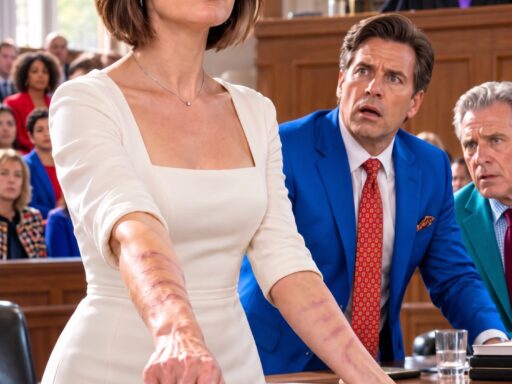
Dad immediately accused me of manipulating Grandpa and taking advantage of an elderly man. Mom insisted the transfers must have been fraudulent and announced that she’d already requested an emergency conservatorship hearing.
“You disappeared from this family for years, and now you’ve somehow taken almost everything your grandfather owns!”
I reminded Dad that I’d spent nearly every weekend and holiday helping Grandpa, while they had rarely bothered to visit. Then I noticed the numbered sections on the property map and suddenly remembered something I’d kept hidden since childhood.
Without explaining, I retrieved the old red coffee can and emptied its contents onto the kitchen table. Eleven brass washers scattered across the documents, each bearing a number Grandpa had stamped during our summers together.
I picked up the first washer and compared its markings with the property map. To my astonishment, the numbers matched individual tracts of farmland, including the northern field and the creek bottom where Grandpa and I had worked.
The final washer was different because it contained a single word.