
“Then why didn’t he do it?”
“Your father became seriously ill before the documents could be finalized. Richard controlled access to him, and I was repeatedly turned away.”
Whitmore had kept copies of the correspondence.
He also possessed an unsigned draft removing both brothers from the trust.
Gabriel closed his eyes.
“My father knew.”
“He was trying to protect you,” Whitmore replied.
The next day, Rebecca obtained additional records from the old law firm.
Among them was a letter written by Gabriel’s mother shortly before her death.
She had requested an independent review of the trust and expressed concern that Richard was preventing her from speaking privately with legal advisers.
Her letter had never reached the attorney.
Instead, it had been returned to the estate and placed in Richard’s personal files.
I watched Gabriel read it.
He had always believed his mother was too ill to understand what was happening around her.
Now he knew she had been fighting to protect his inheritance.
“She was trying to help me,” he whispered.
I moved closer and put my arm around him.
“She never stopped being your mother.”
For several minutes, neither of us spoke.
Then Rebecca’s phone rang.
Investigators had located Richard at a private airport outside Chicago, where he was attempting to leave the state on a chartered aircraft.
Victor had been detained separately after attempting to withdraw funds from an account linked to Hawthorne Family Holdings.
Both men were taken into custody.
But the investigation had uncovered another disturbing detail.
During a search of Richard’s office, officers found a locked cabinet containing old medical records and financial correspondence.
Inside was a file bearing Gabriel’s mother’s name.
Attached to it was a handwritten instruction from Richard directing Dr. Finch to prevent outside attorneys from reviewing her medical condition.
The file contained conflicting assessments of her ability to make decisions.
One report described her as mentally alert.
Another, signed only days later, claimed she was incapable of understanding financial documents.
Rebecca explained that investigators would need to determine whether the second assessment had been falsified.
Gabriel stared at the records.
“My mother wanted to protect me, and they used her illness to silence her.”
He looked toward the window.
“I spent my whole life thanking those men for raising me.”
I squeezed his hand.
“They wanted you to believe you owed them everything.”
Gabriel turned back toward Rebecca.
“Then I want every document examined. Every account, every property, every signature.”
His voice was quiet but steady.
“I want to know exactly what they took from my parents.”
That evening, Rebecca received the final set of records from Whitmore’s former law firm.
Inside was a sealed envelope addressed to Gabriel.
His father’s handwriting appeared across the front.
The envelope had been held in storage for nearly thirty years.
And for the first time since his parents died, my husband was about to hear what his father had wanted him to know.
Gabriel held the envelope in both hands for several minutes before opening it.
His father’s handwriting was unmistakable.
I sat beside him on the hospital bed while Rebecca waited near the window.
The letter had been written shortly before his father’s death.
It began with an apology.
His father explained that he had trusted Richard and Victor to help manage the family businesses, but had recently discovered unauthorized transfers and suspicious changes to the trust.
He was working with Thomas Whitmore to protect Gabriel’s inheritance.
If he died before the arrangements were completed, he wanted Gabriel to know that the fortune belonged to him, not to his uncles.
Near the bottom, his father had written a final message.
He wanted Gabriel to build a life with people who loved him for who he was, not for what he owned.
Gabriel stopped reading.
Tears ran down his face.
For thirty years, he had believed Richard and Victor were honoring his father’s wishes.
Instead, they had used his father’s death to gain control of the estate.
I wrapped my arms around him.
“You don’t have to read the rest right now.”
He shook his head.
“I need to finish it.”
The final paragraph explained that his father had intended to remove both brothers from every position of financial authority.
He had also instructed Whitmore to preserve copies of the original trust records.
Those documents eventually became central to the investigation.
Over the following months, forensic accountants traced millions of dollars through companies controlled by Richard and Victor.
Investigators identified forged property transfers, unauthorized withdrawals, and financial transactions connected to the attempt on Gabriel’s life.
The man accused of shooting my husband was arrested after investigators traced payments from an account controlled by Victor.
Additional evidence connected the brothers to the planned attack.
Richard and Victor were charged with offenses arising from the shooting and the financial scheme.
Dr. Finch also faced charges related to his involvement.
The legal proceedings took time.
Gabriel had to attend interviews, review records, and provide statements while recovering from his injuries.
Some nights, he woke from nightmares about the shooting.
Other nights, he lay awake thinking about his parents.
I stayed beside him through both.
One evening, he asked me something I hadn’t expected.
“Did you ever suspect they hated me?”
I considered the question carefully.
“I don’t know if they hated you. But I think they loved what they could take from you more than they cared about your life.”
Gabriel looked down at his hands.
“Richard taught me how to ride a bicycle. Victor took me to my first baseball game. I thought those memories meant something.”
“They were real memories,” I told him. “But they don’t excuse what those men did afterward.”
He nodded slowly.
I knew the hardest part of his recovery wasn’t only the physical injury.
It was accepting that the people who had raised him had betrayed him.
Six months after the shooting, the court had invalidated several fraudulent property transfers and placed disputed assets under independent administration.
Rebecca continued working to recover funds that had been moved into private accounts.
Richard and Victor remained in custody while their criminal cases proceeded.
For the first time since Gabriel was a child, neither man had authority over his family’s property.
We returned to our Chicago estate on a warm afternoon in May.
Gabriel stood in the entrance hall for a long moment, looking at the staircase where Richard used to greet him every Christmas.
“I don’t know if I can live here anymore,” he admitted.
“We don’t have to decide today.”
He looked at me.
“You nearly lost your life trying to save mine.”
I shook my head.
“I was afraid of losing you. That’s all I could think about.”
Gabriel took my hands.
“When I heard Richard ordering them to put me in that bag, I couldn’t move. I could barely breathe. But I heard your voice.”
My eyes filled with tears.
“I thought I was too late.”
“You weren’t.”
We stood together in the quiet hallway.
Eventually, Gabriel decided to keep the estate, but we changed much of its interior and removed the reminders of the men who had controlled his childhood.
He also established a charitable foundation in his parents’ names.
The foundation provided medical assistance, educational scholarships, and emergency financial support to employees and families facing hardship.
I returned to nursing part-time, something I had missed since leaving the profession years earlier.
Gabriel supported my decision without hesitation.
He said the night I saved him had reminded both of us how much my work meant to me.
One Saturday afternoon, we visited the lakeside property his mother had loved.
The original cottage had been sold years earlier, but Rebecca had helped us locate the current owners.
They agreed to let us visit the grounds.
Gabriel stood beside the water, looking toward the place where he had spent his last summer with his mother.
“She used to sit right there,” he said, pointing toward a large oak tree. “She’d read while I played near the shore.”
I slipped my hand into his.
For a while, we watched the sunlight moving across the lake.
Then Gabriel spoke again.
“I used to think I was lucky because my uncles took me in after my parents died.”
He turned toward me.
“Now I think I was lucky because I found you.”
I leaned against his shoulder.
“We found each other.”
He smiled for the first time that afternoon.
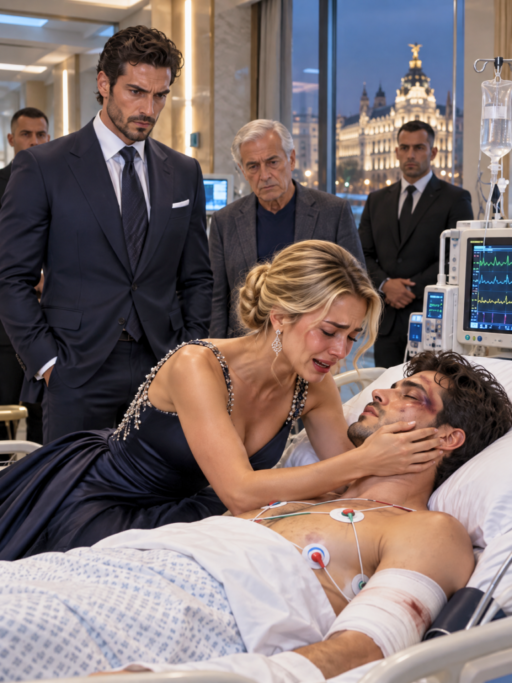
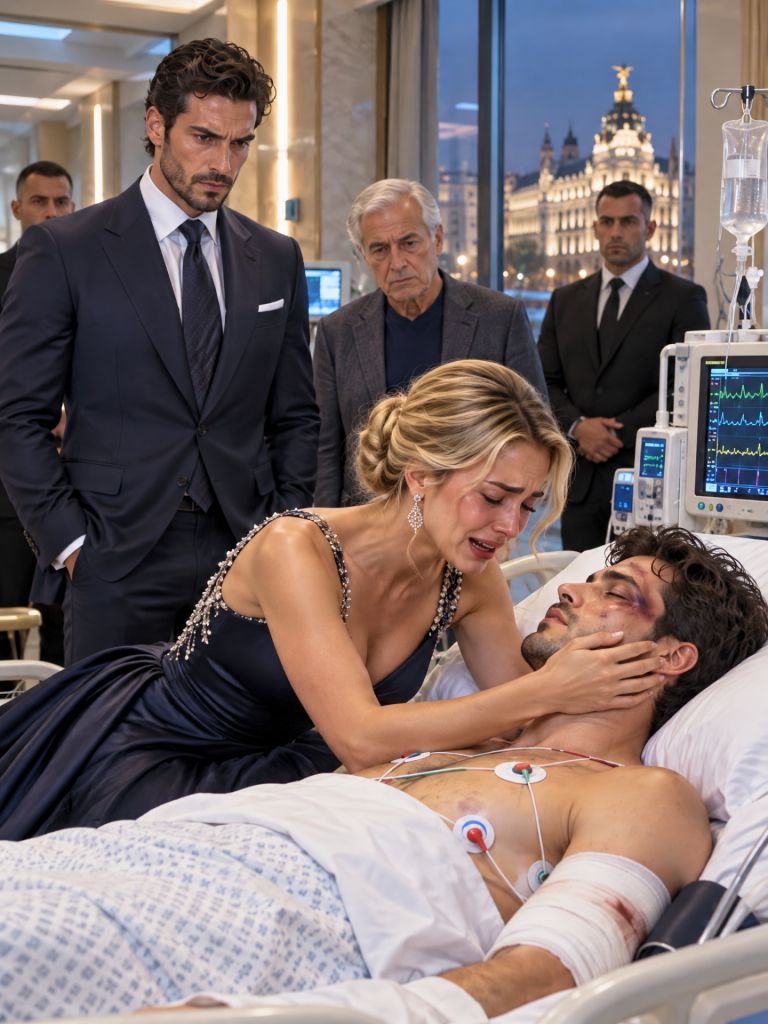
Months earlier, Richard and Victor had stood beside my husband’s bed pretending to mourn him while preparing to take his inheritance.
They had signed cremation papers before he was shot, forged his signature, and tried to convince me that the man I loved was already gone.
But I had heard his heartbeat.
And I refused to let them take him away.
The investigation could recover property, return money, and hold those responsible accountable. It could not give Gabriel back the childhood he had spent trusting the wrong people.
What we could do was build a future that no longer depended on their approval.
As we walked back toward our car, Gabriel reached for my hand.
His fingers were warm.
His heartbeat was steady.
And after everything we had survived, being able to walk beside my husband again meant more to me than the entire $180 million inheritance.