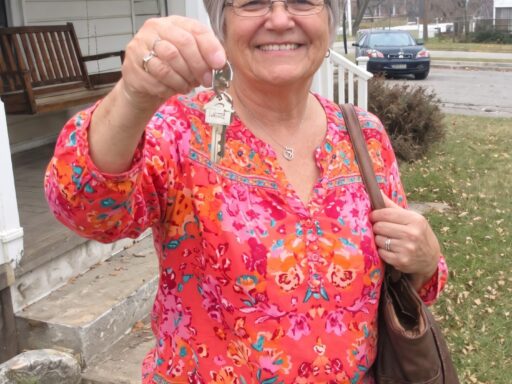
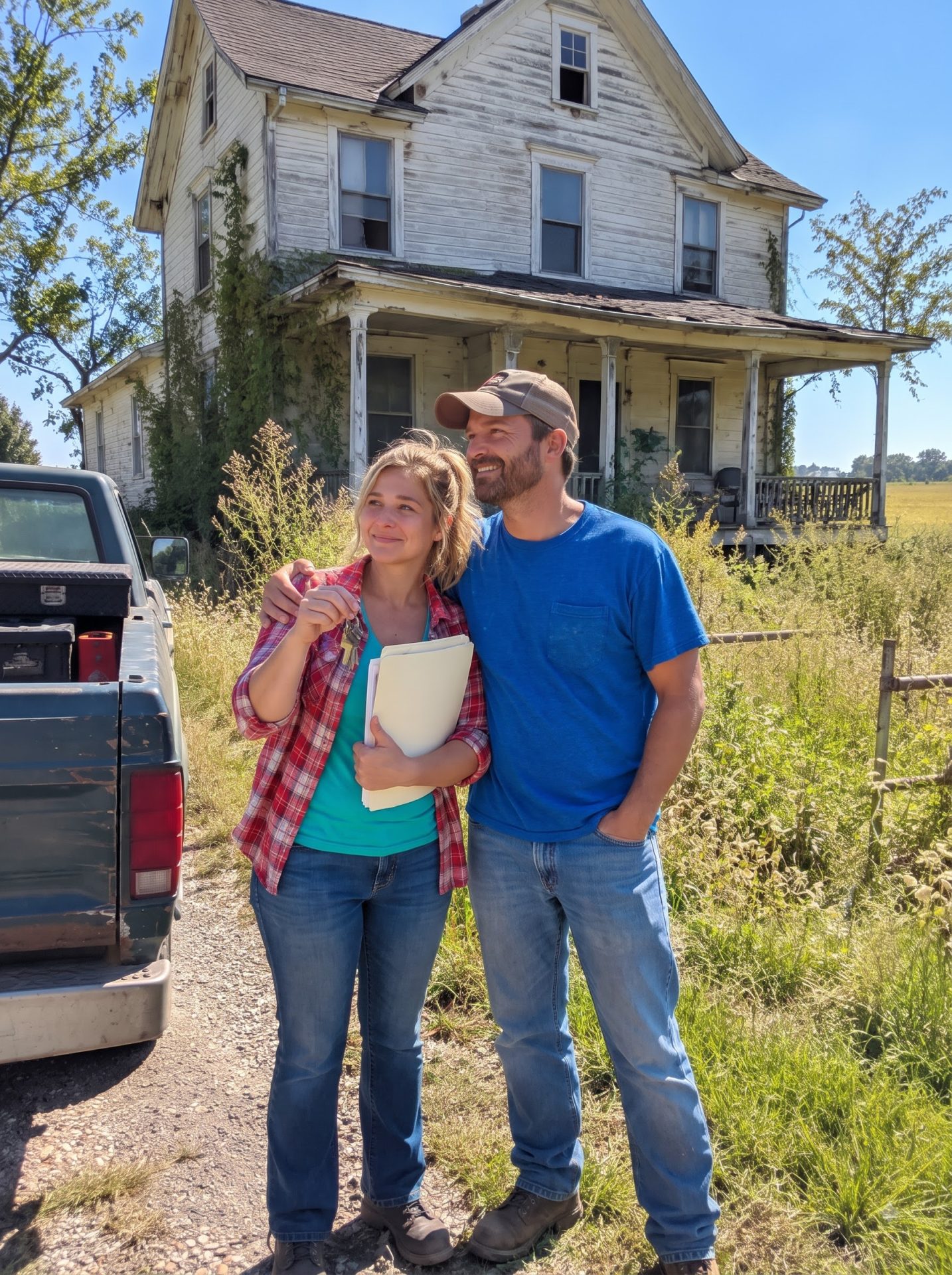

Inside the courthouse, we paid with a $40,000 cashier’s check and $1,500 in cash from my diner tips. The county clerk handed us three old keys and explained that the remaining paperwork would follow.
We kept the purchase secret from Nate’s family because we wanted to finish enough repairs before inviting anyone over. Every evening, Nate worked on replacing the outdated wiring while I stripped wallpaper, cleaned rooms, and helped clear years of accumulated debris.
It was exhausting, but for the first time, we were building something entirely our own.
In May, the county officially recorded our ownership in the local newspaper. We assumed nobody would notice the tiny legal announcement, but Nate’s grandmother, Opal Brenner, had spent decades reading every legal notice in the Corwin Courier.
A few days later, she called me at the hospital.
“Callie, I saw the announcement. Pick me up after church on Sunday, and don’t tell Ronald.”
Her unusually serious tone worried me, but I agreed without questioning her.
That Sunday, I collected Opal from Prairie View Senior Living and drove her to our farmhouse. She remained silent throughout the journey, but when the building appeared beyond the gravel driveway, her eyes filled with tears.
Inside, she walked slowly through the damaged rooms until she reached the kitchen doorway. There, she placed her trembling hand against several faded pencil marks hidden beneath layers of paint.
“My mother measured my height here every birthday until I was fourteen.”
I stared at her in astonishment as she explained that she’d been born Opal Miller in that very house during a blizzard in 1938. Her younger brother Walter had lived there until his death six years earlier, after which the neglected property eventually fell into tax delinquency.
Opal gently traced one of the markings, remembering the childhood she’d spent there. She told me she’d feared the house would eventually be demolished, never imagining that her grandson would become its new owner.
Then her expression changed, and she reached into her purse.
“Callie, there’s another reason I wanted to come here. I need your help, and Ronald cannot know.”
She handed me a collection notice from Corwin Regional Medical Center, the hospital where I worked. The letter demanded $6,840.12 for treatment following her hip surgery.
I knew Opal had Medicare and supplemental insurance, so the unpaid balance immediately concerned me. She explained that her supplemental policy had been canceled for nonpayment, even though the premiums had always been deducted automatically.
When she contacted the bank, she discovered that Ronald had redirected her financial statements to his own address.
“I haven’t received a bank statement in two years, Callie. I think my son has been taking my money.”
Then she revealed that before her accident, she’d possessed $191,000 in savings, but her latest account balance showed only $41,206.18.
As I stared at the figures, Opal asked the question that would unravel everything:
“Where do you think Ronald got the sixty thousand dollars he handed out at Easter?”
I sat across from Opal in our unfinished kitchen, struggling to comprehend how nearly $150,000 could disappear from an elderly woman’s savings. She explained that after breaking her hip, she’d spent six weeks recovering in a rehabilitation facility, where Ronald had visited with an attorney and asked her to sign a power of attorney.
“He told me it was only so he could pay my bills while I recovered. I couldn’t even find my reading glasses, Callie, but I trusted my own son.”
Her late husband, Raymond, had worked at the John Deere plant for thirty-eight years, leaving her a pension and substantial life insurance benefits. She’d carefully preserved that money, determined never to become financially dependent on anyone.
Now she feared Ronald had treated those savings as his personal account.
When I asked why she’d chosen me instead of Nate, Opal explained that her grandson might confront his father before we gathered evidence. She also trusted my experience in hospital billing and knew I could recognize suspicious financial transactions.
“Besides, Callie, you were the only person at that Easter table who wasn’t bought.”
That evening, I told Nate everything while we sat on the farmhouse porch eating sandwiches. His face tightened as I described the missing money, the canceled insurance, and Opal’s suspicion that the Easter gifts had come directly from her savings.
“I sold Grandpa Raymond’s fishing boat to help us buy this house, while Dad was spending Grandpa’s money on everyone else.”
Nate was furious, but he eventually agreed that we needed documents before confronting anyone. The following morning, we accompanied Opal to First Farmers & Merchants Bank, where branch manager Gail Stoddard welcomed us into her office.
Gail confirmed that Ronald had controlled Opal’s accounts through a notarized power of attorney for approximately two years. Although she’d noticed questionable transactions, the authorization had prevented her from simply blocking his access.
At Opal’s request, Gail printed the account statements and spread them across her desk. As I examined the records, I discovered transfers to Ronald, withdrawals from certificates of deposit, and payments toward his struggling equipment business.
Then I found three transactions dated March 29, just two days before Easter.
Each was a $20,000 cashier’s check payable to Kim, Jeff, or Stacy.
The records confirmed that Ronald had used his mother’s savings to finance the gifts while pretending the money belonged to him. Additional payments covered his business debts, property taxes, and more than $11,000 in Judy’s credit card expenses.
The most disturbing entry concerned Opal’s supplemental insurance.
Ronald had stopped the $214 monthly premium shortly before her accident, leaving her exposed to the medical bill that eventually reached collections. Gail calculated that approximately $148,612 had been transferred or spent on expenses that appeared unrelated to Opal’s welfare.
Opal studied the statements before calmly removing her reading glasses.
“I want him stopped today.”
Gail helped her establish a new account under her exclusive control and recommended contacting an attorney immediately. That afternoon, we visited Martin Vos, an experienced elder-law attorney who reviewed the records and explained that a power of attorney did not permit Ronald to spend his mother’s money for personal benefit.
Opal instructed Martin to revoke Ronald’s authority and appoint Nate and me as joint agents, requiring both signatures for financial decisions. She also asked him to revise her will, which had previously left her entire estate to Ronald.
Before leaving, she made one final request.
“I want Ronald to account for every dollar he took, and I want my money returned.”
Martin agreed to prepare a formal demand letter, while I began working with Opal’s insurance company to resolve her medical bill. Six weeks later, we succeeded in getting the collection account recalled and her hospital balance marked paid.
But the family conflict was only beginning.
When Ronald received Martin’s certified letter, he immediately called Nate, shouting that we’d turned his own mother against him.
Nate listened until his father claimed he’d only been trying to help the family, then finally asked the question Ronald couldn’t answer.
“Dad, if you were helping everyone, why did you stop paying Grandma’s medical insurance?”
Ronald remained silent when Nate confronted him about canceling Opal’s medical insurance. After several uncomfortable seconds, he insisted that it had been an oversight caused by financial pressure, but Nate refused to accept his explanation.
“You gave sixty thousand dollars of Grandma’s savings to Kim, Jeff, and Stacy, then handed me a card saying I was capable. I sold Grandpa’s boat to buy our house while you were spending his money on everyone else.”
Nate ended the call before his father could respond, then sat beside me with tears running down his face. The following morning, Judy called and accused me of manipulating Opal to gain control of her remaining money.