
My son-in-law, Todd, pushed a sheet of notebook paper across the kitchen table with one number circled in the middle: $800. My daughter, Michelle, sat beside him, holding her coffee mug as she explained their proposal.
“That’s what you’d pay us every month for the basement, Mom. It covers rent, utilities, and groceries. You’d also watch the children four days a week to earn your keep.”
I stared at the paper, wondering when being a mother and grandmother had become something I needed to pay for. At sixty-seven, I received $1,640 a month in Social Security benefits following my husband’s death, and I knew immediately how little their arrangement would leave me.
After paying $800, I’d have only $840 for insurance, medication, transportation, church contributions, and personal expenses. In exchange, I’d be living beneath my daughter’s house while providing childcare for most of the week.
Todd insisted their price was reasonable because nearby apartments cost almost the same. Michelle added that living with family would prevent me from becoming lonely, although neither seemed to recognize how uncomfortable their offer made me.
I asked to see the basement again, hoping perhaps I’d misunderstood something. Michelle led me downstairs to a space containing a bed, a worn carpet, a dehumidifier, and one tiny window overlooking the neighbor’s fence.
She promised Todd would eventually install a partition to give me privacy. However, the only bathroom was upstairs, thirteen steps away, and the basement smelled faintly of damp cardboard.
My four-year-old granddaughter, Sadie, followed us downstairs and looked around curiously.
“Grandma, are you going to live in the under? Eli says there’s a spider down here named Kevin.”
I smiled at her, but the thought of spending my remaining years in that basement made my heart sink. Still, I refused to argue because Michelle was my only child, and I couldn’t bear the possibility of damaging our relationship.
Instead, I thanked them politely and promised to consider their offer. Michelle reminded me that I needed to leave my current home before November, making it clear that she expected an answer soon.
The farmhouse I’d lived in for thirty-one years had never belonged to us. My husband, Dale, had worked for Jim Olson, and the house was provided as part of his employment.
Dale died suddenly two years earlier, leaving me with memories of our marriage but no property of my own. The Olsons generously allowed me to remain there until their son needed the house for his growing family.
I understood their situation and had already agreed to move out. Nevertheless, losing the home where I’d raised Michelle was painful enough without feeling that my daughter now considered me a financial burden.
After leaving Michelle’s house, I sat in my Buick, staring at Todd’s handwritten proposal. I could have driven straight back to the farmhouse, but something made me turn toward Brandt’s Feed Store instead.
For several weeks, I’d noticed a small rental advertisement taped beside the store’s cash register. It offered a two-room house with a bathroom, although I’d never seriously considered asking about it.
When I entered, seventy-four-year-old Mr. Brandt greeted me warmly.
“Looking for sunflower seeds today, Judy?”
“Not this time. I wanted to ask whether that little house is still available.”
He studied my expression for a moment before reaching for his keys. The property was only a short walk away, tucked behind the grain elevator on a quiet side street.
As we approached, I noticed its white siding, green roof, and small front porch with a wooden swing. Unlike Michelle’s basement, the house had its own entrance, a large kitchen window, and no staircase to climb.
Mr. Brandt unlocked the door and showed me the modest interior, explaining that his elderly mother had once lived there. Everything was small but functional, including a bedroom, bathroom, kitchen, and sitting area.
Then I asked the question that would determine my future.
“How much is the rent?”
“Five hundred and fifty dollars a month, Judy. You’d pay your own utilities.”
I calculated the difference immediately and realized I’d have $1,090 left from my monthly benefits. More importantly, I’d have something I’d never possessed in sixty-seven years: a home I’d chosen entirely for myself.
I looked around the little house, then turned toward Mr. Brandt with a decision that would soon leave my daughter furious.
“I’ll take it. And there’s one thing I need to ask you before I sign anything.”
Standing inside Mr. Brandt’s little rental house, I knew I’d finally found somewhere I could live without depending on my daughter. Before signing anything, however, I wanted to make sure I understood exactly what the arrangement involved.
“Will I be responsible for repairs, or will you take care of the roof and heating?”
Mr. Brandt assured me that he’d handle major maintenance and even mow the small yard whenever he tended the feed store. The only inconveniences were the grain elevator’s constant noise during harvest and the trains passing through town at night.
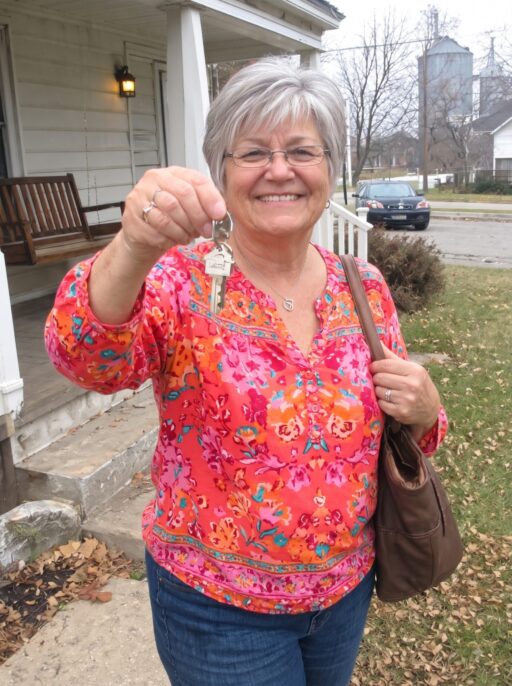
After two years of living alone in a quiet farmhouse, I wasn’t particularly frightened by the prospect of noise. I wrote him a check for the first month’s rent and accepted two brass keys, one for the front door and another for the back.
Holding those keys made me unexpectedly emotional. I’d spent my childhood beneath my father’s roof and my entire marriage in a house provided by my husband’s employer, but this was the first home I’d ever selected entirely for myself.
I moved the following Wednesday with help from Jim Olson and his son. They loaded my bed, couch, kitchen table, sewing machine, Dale’s recliner, and several boxes onto a flatbed truck.
Thirty-one years of married life had somehow become a single truckload of furniture. I gave the remaining household items to the Olson family, grateful for their kindness but saddened to leave behind the place where I’d raised Michelle.
Once everything was inside, I arranged Dale’s recliner near the heater and placed my African violets on the kitchen windowsill. The first night, the grain elevator roared and a passing train rattled my windows, but by the second night, I was already sleeping comfortably.
There was one problem I hadn’t solved: I still hadn’t told Michelle.
When she called to ask whether I’d considered moving into her basement, I avoided giving her a definite answer. I knew delaying the conversation was wrong, but I dreaded explaining that I’d chosen a tiny rental instead of her family’s offer.
Nine days after I moved, Todd spotted my Buick outside the house while driving to work. Michelle called that evening, furious that I’d been living only four blocks away without telling her.
“You rented a house behind the grain elevator, and you let me keep asking whether you’d made up your mind?”
I apologized for keeping the move secret, but Michelle immediately demanded to know how much rent I was paying. When I told her it was $550, she became even more upset.
“So you’d rather pay a stranger than your own family over a difference of two hundred and fifty dollars?”
I explained that Mr. Brandt wasn’t a stranger and that the decision wasn’t simply about money. I wanted to remain her mother rather than become a tenant who was also expected to provide unpaid childcare.
“I would gladly watch Sadie and Eli because they’re my grandchildren, Michelle. But you told me I’d have to earn my keep, and I believe I earned that a long time ago.”
Michelle revealed that she’d already considered changing her work schedule and withdrawing Sadie from daycare. She accused me of making selfish decisions without considering how they would affect her family, then abruptly ended the call.
For the next ten days, I heard nothing from her. She stopped sending photographs of the children, and the silence hurt more than I expected.