
Over the following weeks, my recovery continued steadily. Susan helped me regain my independence, while Phillip and Diana gradually adjusted to managing their household without relying on me for every unexpected responsibility.
Six weeks after returning from Cleveland, I had another cardiology appointment scheduled for ten o’clock. I’d already arranged transportation when Phillip called the previous evening.
“Mom, what time is your appointment tomorrow? I’d like to drive you if that’s alright.”
I reminded him that he usually had work commitments during the morning. To my surprise, he explained that he’d rearranged a meeting because he wanted to accompany me.
“You didn’t have to change your schedule for me, Phillip.”
“I know, Mom. But I wanted to.”
Those words meant more than he probably realized because they were offered without resentment or obligation. The following morning, he arrived with breakfast, carried my bag to the car, and remained beside me throughout the appointment.
My cardiologist explained that my recovery was progressing well, although I still needed monitoring and sensible restrictions. Phillip listened attentively, asking questions and making sure he understood what I could safely do.
Afterward, we visited the little diner Robert and I had loved for years. As we shared cinnamon pancakes, Phillip became unusually quiet before asking a question that caught me off guard.
“Mom, do you think Dad would be disappointed in me?”
I set down my fork and studied his expression. Phillip explained that he’d been thinking about the airport, remembering how he’d dismissed my request despite knowing that my surgery involved my heart.
“When you needed me, I made it sound like you’d done something wrong. I should’ve been there, Mom.”
I thought about Robert, who’d always believed that family members should support one another during difficult moments. He would certainly have been hurt by what happened, but he’d also have wanted Phillip to learn from his mistake.
“Your father would’ve been disappointed by what happened. But he’d also care about what you chose to do afterward.”
Phillip looked at me with tears in his eyes, and I could see that he was no longer searching for excuses. Instead, he seemed genuinely concerned about whether our relationship could recover from the damage he’d caused.
“Can you forgive me, Mom?”
I considered everything that had happened since my return from Cleveland. Phillip couldn’t undo the afternoon he’d left me stranded, but he’d begun showing me through his actions that he wanted to become a more thoughtful son.
“Yes, Phillip. I forgive you, but that doesn’t mean things can go back to the way they were.”
He nodded, assuring me that he understood and didn’t want to repeat the same mistakes. For the first time, I believed we might finally build a relationship in which my needs mattered as much as everyone else’s.
Over the following months, our family gradually developed healthier routines. Phillip checked on me without asking for favors, while Diana arranged childcare and transportation before inviting me to spend time with Madison and Caleb.
I also began reclaiming the parts of my life I’d neglected. With my doctor’s approval, I joined a gentle walking group, returned to light gardening, and started making plans that belonged entirely to me.
Then, one September evening, Phillip and Diana invited me to dinner. When I arrived, Madison took my cardigan, Caleb greeted me warmly, and Diana led me toward the dining room.
But when I saw what they’d prepared for me, I stopped in the doorway, overwhelmed by something I hadn’t experienced in their home for fifteen years.
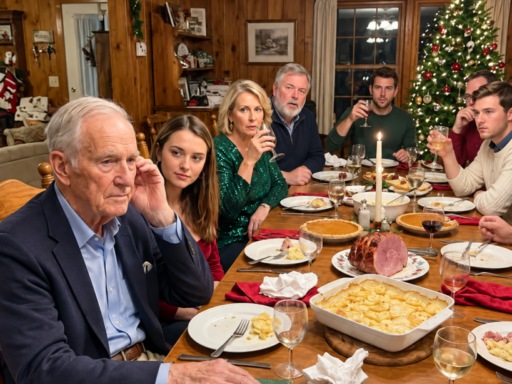
When I entered Phillip and Diana’s dining room that September evening, I immediately noticed something unusual. The table was beautifully prepared, dinner was already served, and a chair had been reserved for me between my grandchildren, Madison and Caleb.
For fifteen years, visiting their home had usually meant helping prepare meals, organizing activities, or handling some unexpected household problem. This time, however, everyone seemed determined to make sure I could simply enjoy being part of the family.
“Margaret, don’t even think about helping tonight. Everything’s ready, and you’re our guest.”
Diana smiled as she guided me toward my chair, and I felt an unexpected tightness in my throat. Being treated as a guest rather than an unpaid assistant was something I’d almost forgotten how to experience.
Madison sat beside me and began describing her latest school projects, while Caleb excitedly talked about his soccer season. Neither child asked me to drive them anywhere or help with an expense, and I enjoyed listening without feeling responsible for solving another problem.
Before we began eating, Phillip raised his glass and looked directly at me. His expression was sincere, and I could tell he’d been thinking carefully about what he wanted to say.
“Mom, I want to thank you for being here tonight. Not for everything you’ve done for us, but simply because you’re here.”
His words brought tears to my eyes because they reflected the change I’d been hoping to see. For so many years, my value within the family had seemed connected to how much time, money, and energy I could provide.
Diana reached across the table and gently touched my hand. She smiled warmly before adding something that made the evening even more meaningful.
“We’re really glad you’re home, Margaret. And we’re grateful that you’re doing so much better.”
I looked around the table at the people I’d spent decades loving and supporting. They weren’t perfect, and neither was I, but we’d finally begun understanding that love shouldn’t depend on one person’s willingness to sacrifice everything.
Over the previous months, Phillip and Diana had continued respecting my boundaries. They managed their own schedules, arranged transportation for the children, and stopped assuming I would automatically cover unexpected expenses.
Sometimes I still offered to help, particularly when I felt strong enough to enjoy time with my grandchildren. I attended Caleb’s soccer games, baked birthday cakes, and invited everyone over for dinner, but those activities had become choices rather than obligations.
I had also started rebuilding my own life outside the responsibilities of motherhood and grandmotherhood. Following my rehabilitation team’s recommendations, I joined a walking group, met old friends for lunch, and returned to gardening when my doctor approved it.
One afternoon, I’d written a list of things I’d always wanted to experience. Visiting the mountains in autumn, taking a pottery class, seeing the ocean again, and planting another rosebush in Robert’s memory were all dreams I’d postponed for years.
For the first time in decades, my calendar contained plans that belonged entirely to me. I no longer felt guilty about enjoying an afternoon simply because someone else might have preferred that I spend it helping them.
After dinner, Phillip walked me outside to my car. The evening air was cool, and the first autumn leaves had begun gathering along the quiet residential street.
As he opened my car door, he hesitated and looked at me with an expression I recognized. Something was still troubling him, and I suspected it had to do with the afternoon that had changed our relationship.
“Mom, can I ask you something? Do you still think about those forty-eight missed calls?”
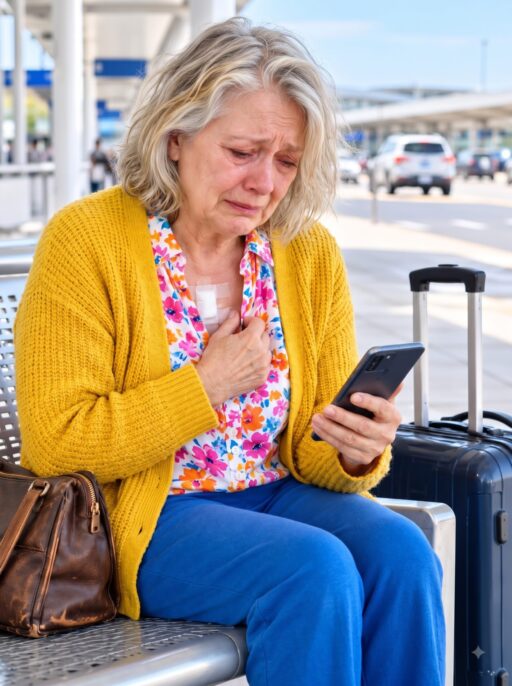
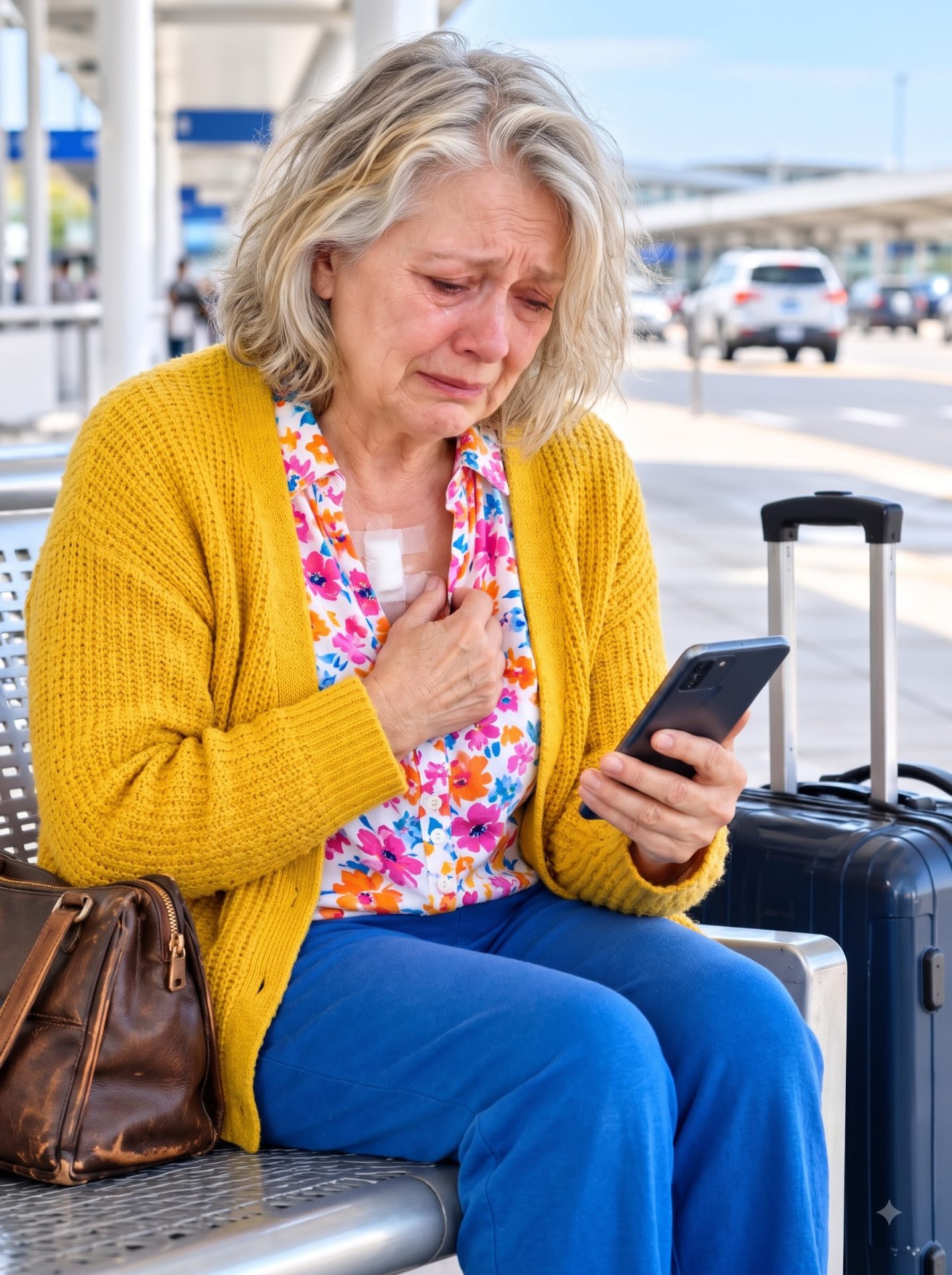
I rested my hand against the car door and considered his question. Although we’d made considerable progress, I couldn’t pretend that being abandoned at the airport after heart surgery was something I’d completely forgotten.
“Sometimes, Phillip. I don’t think I’ll ever forget how frightened and alone I felt that day.”
He lowered his eyes and admitted that he wished he could undo what had happened. He knew he’d failed me when I needed him, and he was no longer trying to defend his behavior.
“I should’ve come to get you, Mom. I should’ve been there.”
I nodded because there was no reason to deny the truth. But I also recognized that he’d spent the past several months demonstrating that he wanted to become someone I could depend upon.
“Yes, you should have. But what matters now is whether we’ve learned something from that day.”
Phillip squeezed my hand and assured me that he had. As I looked at him, I realized that I finally believed his promise because his actions had begun matching his words.
When I arrived home, I sent him a message letting him know I’d reached the house safely. He replied that he loved me, and I smiled as I told him I loved him too.
I made myself a cup of tea and settled into my favorite chair, surrounded by the familiar comforts of the home Robert and I had shared. The house was quiet, but the silence no longer reminded me of being abandoned or forgotten.
Instead, I felt peaceful knowing that I had the support I needed and a family learning to respect my independence. My life no longer had to disappear whenever someone else needed assistance.
I still loved Phillip, Diana, Madison, and Caleb with every beat of the heart my doctors had worked so hard to save. But I’d finally understood that a mother’s love could be endless without requiring her strength, time, and resources to be unlimited.
The afternoon Phillip refused to collect me from the airport, I’d believed I was simply facing another painful disappointment. I hadn’t realized that his rejection would force me to reconsider the way I’d allowed my family to treat me for so many years.
At sixty-seven, after spending forty-one years putting everyone else’s needs ahead of my own, I was finally learning that caring for myself didn’t mean loving my family any less.
My son had left me stranded when I needed him most, but that painful afternoon ultimately taught us something we should have understood long ago: I deserved to be loved for who I was, not for everything I could do for someone else.