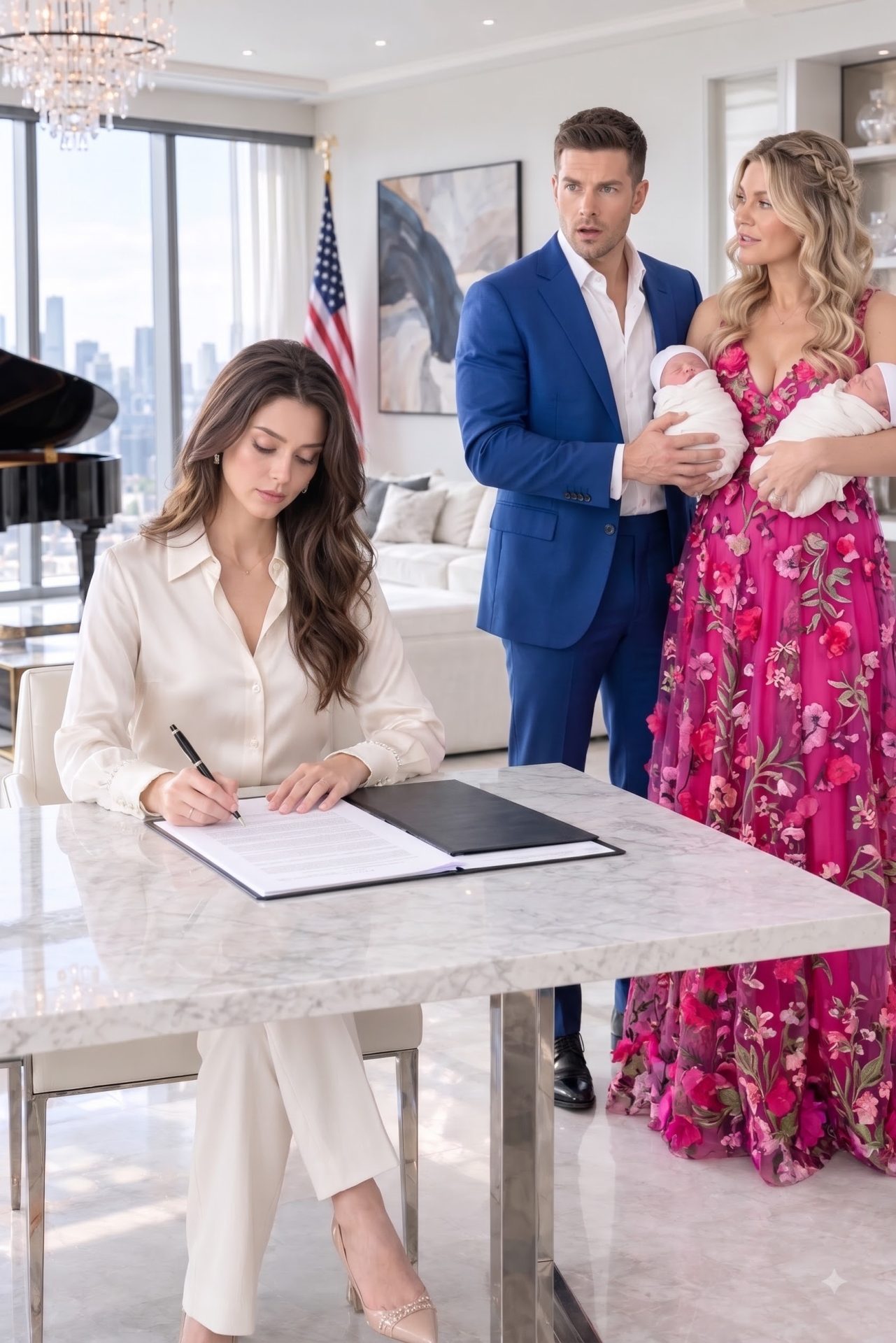

“You knew about our baby’s heartbeat before you asked me for the divorce.”
Grant admitted that he had learned about the pregnancy loss on the night his relationship with Madison began. He claimed that shame over his genetic condition had driven him toward another woman because he wanted to prove he could father healthy children.
I told him that his insecurity had never justified betraying me or abandoning me during the most painful period of my life. When he asked for forgiveness, I explained that releasing my anger did not mean reopening our marriage.
“There is no future for us, Grant. Go home, raise your sons, and stop expecting me to rescue you whenever responsibility becomes difficult.”
I returned to California two days later, where Noah greeted me at the airport with coffee and quietly asked whether I had finally closed that chapter. I admitted that I had, although the experience still hurt.
Back at my apartment, he prepared dinner and remembered that I disliked fish bones because of an incident during college. His attention to such a small detail reminded me how different genuine care felt from expensive gestures.
I told Noah that I needed another six months, perhaps a year, before beginning a serious relationship. He accepted without complaint, explaining that waiting while I rediscovered myself was far easier than watching me remain unhappy with someone else.
Three months after my interview aired, Evelyn publicly accused me of exploiting Grant’s grief to obtain the divorce settlement. Her allegations spread through celebrity gossip websites, threatening both my reputation and the credibility of my growing business.
At Whitmore Luxe’s annual shareholders’ meeting, a journalist questioned Grant about the fifty-million-dollar payment. Evelyn sat in the front row, apparently expecting him to defend the family against me.
Instead, Grant approached the microphone and began telling the truth.
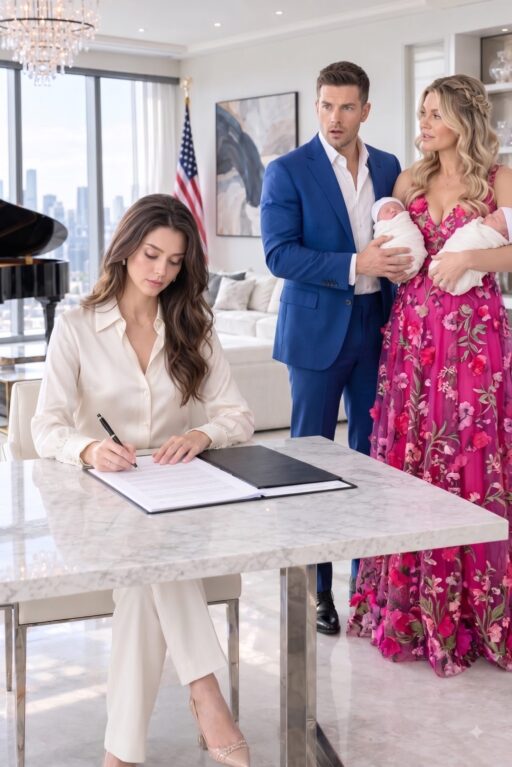
Grant publicly admitted that he had proposed the fifty-million-dollar settlement after conducting an eighteen-month affair and failing to support me through infertility treatments and pregnancy loss. He also revealed that Evelyn had concealed medical information to protect his reputation while allowing everyone to blame me.
“Claire Bennett stole nothing from this family. I offered her that money because I wanted a quick divorce, and she accepted the agreement exactly as I proposed it.”
Evelyn attempted to interrupt, but security prevented her from reaching the microphone. The confession was broadcast live, damaging her social standing and finally ending the false narrative she had maintained for years.
I watched the broadcast from my San Diego studio with Noah beside me. When a journalist asked Grant whether he wanted me back, he admitted that he did, but acknowledged that wanting someone did not give him the right to reclaim them.
Later, Madison called to tell me she had permanently left the townhouse. She was raising Benjamin and Samuel in a modest apartment in New Jersey, with Grant providing financial support and participating regularly in their care.
Madison also resumed professional work and eventually collaborated with Bennett Spatial Design on luxury retail projects. I encouraged her to build an independent future rather than spend her life apologizing for the past.
My business expanded steadily, eventually employing several designers and completing projects in multiple cities. Meanwhile, Grant established a support fund for women attending fertility treatments without adequate assistance, naming it after the son we had lost.
I had privately called our baby James, after my father’s middle name. Grant respected my request to use only that name, without attaching the Whitmore surname or turning the fund into a publicity campaign.
The James Support Fund provided transportation, counseling, and recovery assistance to patients who otherwise would have faced treatment alone. When I learned that its first beneficiary had received help after a medical procedure, I finally felt that something meaningful had emerged from our painful history.
Noah remained patient as our friendship gradually developed into something deeper. Six months after I requested more time, we walked along Coronado Beach, where he gently asked whether I was ready to let him love me openly.
“Yes, Noah. I’m ready for a new beginning.”
We built our relationship carefully, maintaining our independence while learning to trust one another. Eventually, Noah showed me plans for a modest house overlooking a canyon near San Diego, complete with separate workspaces and a room whose purpose I could decide.
I helped redesign the plans, and we created a home that reflected our shared values rather than anyone else’s expectations. Later, during a visit to Columbia University, Noah proposed on the same steps where our old photograph had been taken.
“I don’t want you to belong to me, Claire. I want us to keep choosing to stand beside each other.”
We married the following spring in my parents’ garden in Queens, surrounded by forty close friends and relatives. My father accompanied me along the short stone path in his wheelchair, while my mother walked beside us.
Near the end of the reception, Grant sent one final message. His sons were healthy, the James Support Fund had helped its thousandth patient, and he wished me happiness without asking for anything in return.
I deleted our message thread and returned to Noah, who was waiting beneath the garden lights. Looking around at the people celebrating with us, I finally understood that a beautiful home had nothing to do with marble floors, expensive chandeliers, or a powerful surname.
Grant had paid me fifty million dollars because he believed my silence and departure could be purchased. Instead, I had used that money to build a business, help others, and create a future in which nobody expected me to sacrifice my dignity to earn their love.
For years, the Whitmores had convinced me that I was incomplete because I couldn’t give them the family they wanted. But after leaving them behind, I discovered that my worth had never depended on motherhood, marriage, or anyone else’s approval.
I reached for Noah’s hand, and together we returned to the celebration. For the first time in years, I wasn’t trying to become the woman someone else wanted me to be.
I was finally free to be myself.