
The next morning, Vanessa asked whether Michael and she could meet me for breakfast at the resort café. They arrived without their families, looking exhausted and considerably less defensive than they had the previous afternoon.
Vanessa admitted that they had convinced themselves they were protecting their children from sadness when they were actually avoiding their own discomfort. Michael then opened a folder containing calculations of the membership fees I had paid during their three Christmas vacations.
“We want to reimburse you, Mom. We can’t pay everything immediately, but we can make monthly payments.”
I appreciated the offer, but I reminded them that financial compensation couldn’t restore the holidays we had lost.
“You can repay the money, but you can’t give me those Christmas mornings back.”
They accepted that painful truth, and I agreed to consider a realistic written repayment arrangement. I also explained that I would personally manage the resort membership from then onward, including reservations, authorized guests, and additional charges.
Neither child objected.
That afternoon, Sophie called and asked whether she could help decorate the casita. Within an hour, all four grandchildren arrived carrying cookies and handmade paper snowflakes, filling the rooms with the cheerful noise I had missed for three years.
We decorated the tree, prepared hot chocolate, and listened to Robert’s favorite Christmas music. When my youngest grandson, Oliver, noticed an old photograph of his grandfather wearing a ridiculous red sweater, I explained that Robert believed it brought him good luck.
The children laughed as I shared memories of the man who had loved them so deeply. Nobody complained that mentioning Robert might make Christmas uncomfortable.
Sophie carefully placed his favorite ornament near the top of the tree before asking whether we could celebrate together again the following year. I told her that I would love that, provided everyone made the arrangements together.
Christmas morning arrived bright and cold, with sunlight spreading across Sedona’s red mountains. I sat on the patio wrapped in Robert’s old wool blanket, feeling grateful that I no longer had to wait for someone to remember me.
Around nine o’clock, the grandchildren returned with their parents. Vanessa brought breakfast pastries, while Michael arrived with groceries and volunteered to prepare lunch.
We exchanged gifts, shared memories, and took a family photograph outside the casita. Nobody expected me to handle every responsibility, and nobody acted as though my presence needed justification.
Later, Vanessa showed me a photograph from our first Sedona Christmas in 1994. On the back, Robert had written a message expressing his hope that the resort would always remain a place where everyone belonged.
Vanessa began crying as she admitted how badly they had forgotten that promise. I held the photograph and told her that remembering it now was a beginning, even if repairing our relationship would take longer.
That evening, Michael stayed behind to help wash the dishes after everyone else returned to their hotel. While we worked together, he quietly asked whether I believed I could eventually forgive him and Vanessa.
“I think forgiveness is possible, Michael, but rebuilding trust will take much longer.”
He accepted my answer without arguing, and I reminded him that future Christmas arrangements would need to begin with an invitation rather than assumptions about my membership. If he wanted to celebrate with me, he needed to ask instead of expecting me to remain at home while everyone else used my reservation.
Before going to bed, I placed our new family photograph beside the older one from Robert’s lifetime. I knew that sincere apologies didn’t guarantee lasting change, but I also recognized that something important had changed within me.
I no longer believed that being a devoted mother required accepting whatever treatment my children offered. My love for them remained strong, but I finally understood that generosity and dignity could exist together.
Over the following months, Vanessa and Michael began making the payments we had agreed upon. More importantly, they started calling regularly, involving me in family activities, and asking about my preferences rather than making decisions without consulting me.
Some conversations remained uncomfortable because three years of exclusion couldn’t be erased by a single happy holiday. Nevertheless, I appreciated their efforts and allowed our relationship to improve gradually without pretending the past had never happened.
The following September, the annual resort bill arrived, and I paid it as usual. This time, however, I knew exactly who controlled the reservation and understood that preserving our tradition didn’t require surrendering my rights.
A few days later, Vanessa called with a question I had once desperately hoped to hear.
“Mom, would you like all of us to spend Christmas together in Sedona this year?”
I looked toward Robert’s photograph, remembering how different her words had sounded the previous December. Instead of telling me that Christmas would be easier without me, she was finally asking whether I wanted to be included.
“I’d love that, Vanessa. Let’s work out the arrangements together.”
We discussed the holiday openly, agreed on expenses, and established clear expectations about the casita. Everyone understood that the membership belonged to me and that no reservations, charges, or additional guests would be arranged without my approval.
When Christmas arrived, I returned to Sedona feeling lighter than I had in years. The familiar red mountains, decorated lodge, and scent of pine reminded me of the celebrations Robert and I had worked so hard to create.
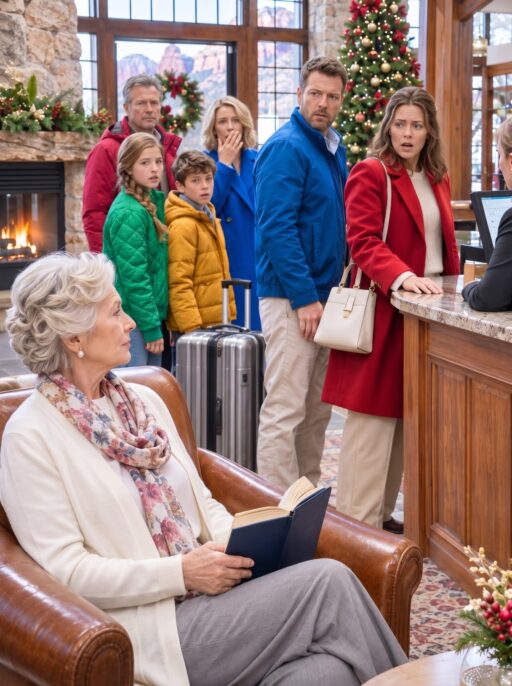
This time, when my family entered the resort lobby, they didn’t immediately approach the reception desk expecting everything to be waiting for them. They came looking for me.
Vanessa kissed my cheek, Michael offered to carry my suitcase, and Sophie excitedly announced that she had organized a Christmas Eve cookie-baking competition. Their enthusiasm felt genuine, and I was grateful that we were finally creating memories together again.
As we gathered near the fireplace, I remembered Robert’s belief that the holidays we shared in Sedona would become part of our family’s lasting legacy. He had been right about the importance of those memories, but I had needed to learn something he might have understood all along.
Protecting a family tradition didn’t mean allowing other people to erase me from it.
For decades, I had made room for everyone I loved, often without considering whether they were making room for me. At seventy-one, I finally understood that being a widow, mother, and grandmother didn’t make my wishes less important than anyone else’s.
I had every right to enjoy the place Robert and I had purchased together, just as I had every right to expect respect from the family we had raised.
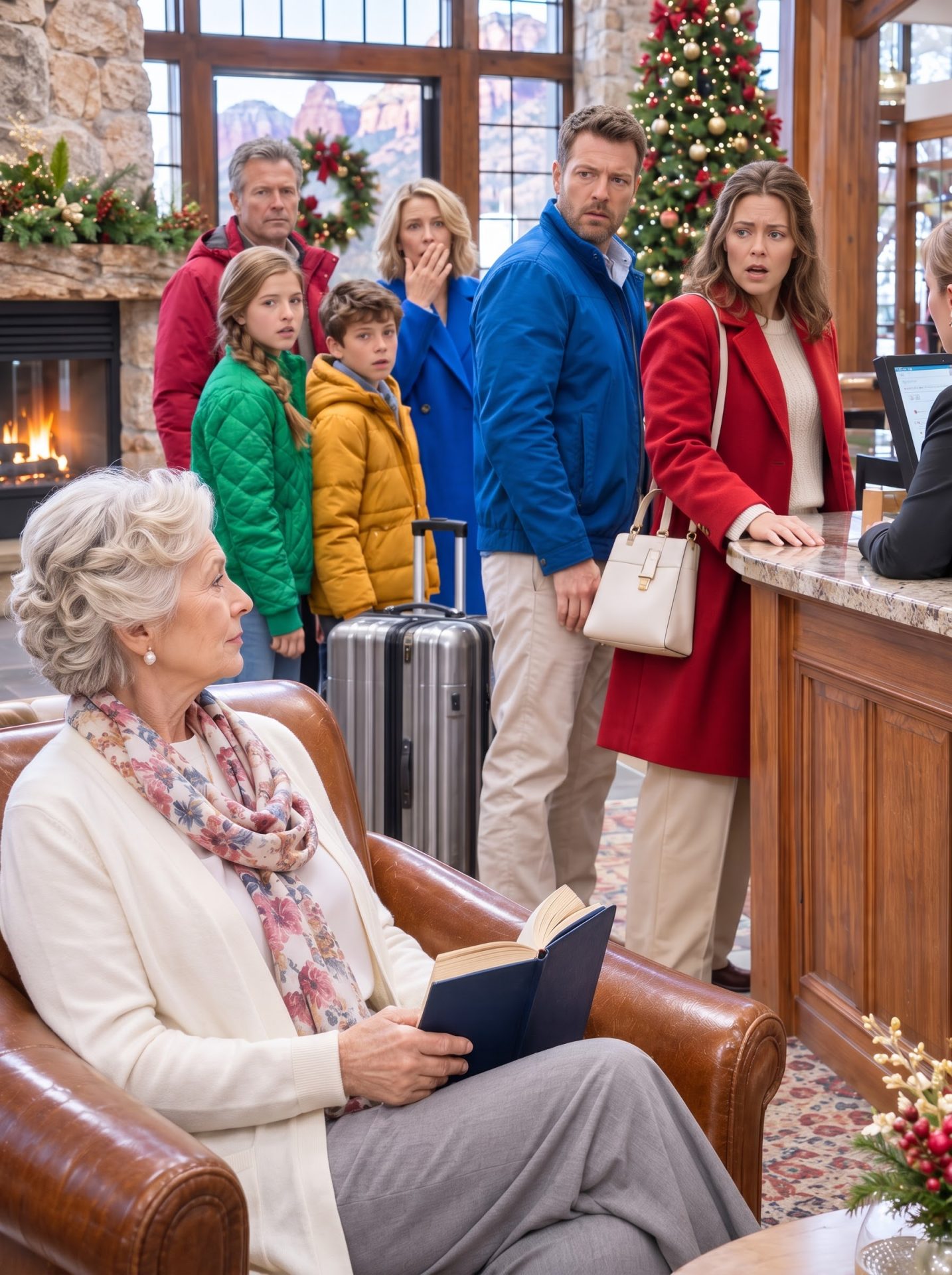
The previous Christmas, my children had arrived expecting a vacation they considered theirs, only to discover that the mother they had excluded still controlled the reservation. Their surprise had been uncomfortable, but it forced us to confront a truth that years of polite silence had concealed.
My patience had never meant I was powerless. It had simply taken me three lonely Christmases to recognize that I could love my family without allowing them to take my place at the table.
And when we gathered for another Christmas photograph beneath the Sedona lights, I no longer stood wondering whether I was welcome.
I knew I belonged there, and this time, my family knew it too.