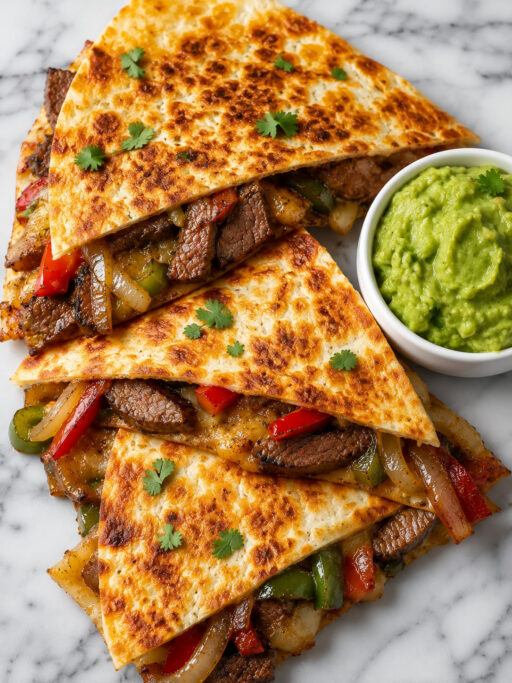
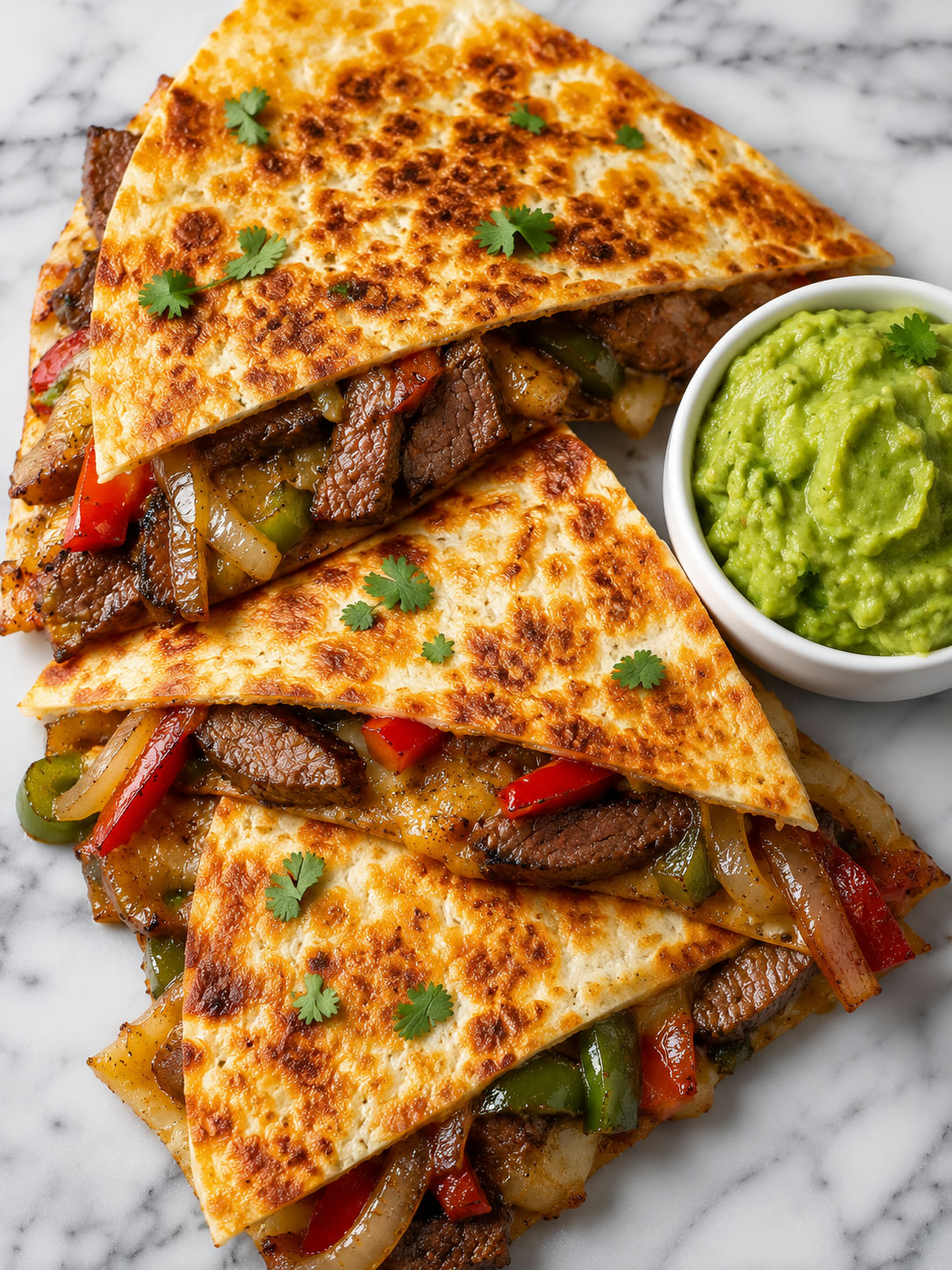

These quesadillas are the kind of thing that disappears before you can get everyone to the table. Thin-sliced skirt steak seasoned with cumin and lime, a pile of charred peppers and onions, and a two-cheese blend that goes completely molten inside a golden tortilla. They look like something from a good Tex-Mex spot and come together in about 30 minutes.
The “loaded” part is not just a label. Every wedge has seared beef, caramelized vegetables, and enough cheese to pull when you cut through. Add sour cream and guacamole on the side and this is a proper dinner, not a snack. It is also one of those meals that gets requested again the following week.
Steak, Cheese, and the Works
A short, quality-driven lineup. The steak is the star, and a simple marinade with cumin, lime, and smoked paprika does most of the work in 15 minutes. The cheese blend handles the rest. Look for a well-marbled skirt steak and shred the cheese yourself from a block for the best melt.
- Skirt steak. The best cut for this dish. Its open grain soaks up marinade fast and cooks to a juicy medium in minutes over high heat.
- Cumin and smoked paprika. The backbone of the marinade. They give the steak a warm, smoky depth without overpowering the beef.
- Lime juice. Adds brightness and helps tenderize the meat. Use a fresh lime, not bottled.
- Red and yellow bell peppers. Sweetness and color. They char slightly in the hot pan and balance the richness of the cheese.
- Yellow onion. Sweetens and softens as it cooks. It fills out the quesadilla and soaks up the steak drippings from the pan.
- Jalapeño. Optional but recommended. It adds a clean heat that cuts through the fat.
- Monterey Jack cheese. The melt cheese. Smooth and creamy, it holds the filling together without getting greasy.
- Pepper jack cheese. Sharpness and a low-level heat that wakes up the whole filling.
- Large flour tortillas. Need to be big enough (10-inch) to fold without splitting. Warm them briefly if they feel stiff.
- Butter. A small pat in the pan gives the tortilla a golden, slightly crunchy crust.
Sear, Fill, and Fold
- Marinate the steak. Whisk together the olive oil, lime juice, cumin, smoked paprika, garlic powder, chili powder, oregano, salt, and pepper. Coat the steak on both sides and let it sit at room temperature for 15 to 30 minutes. Up to 2 hours in the fridge also works.
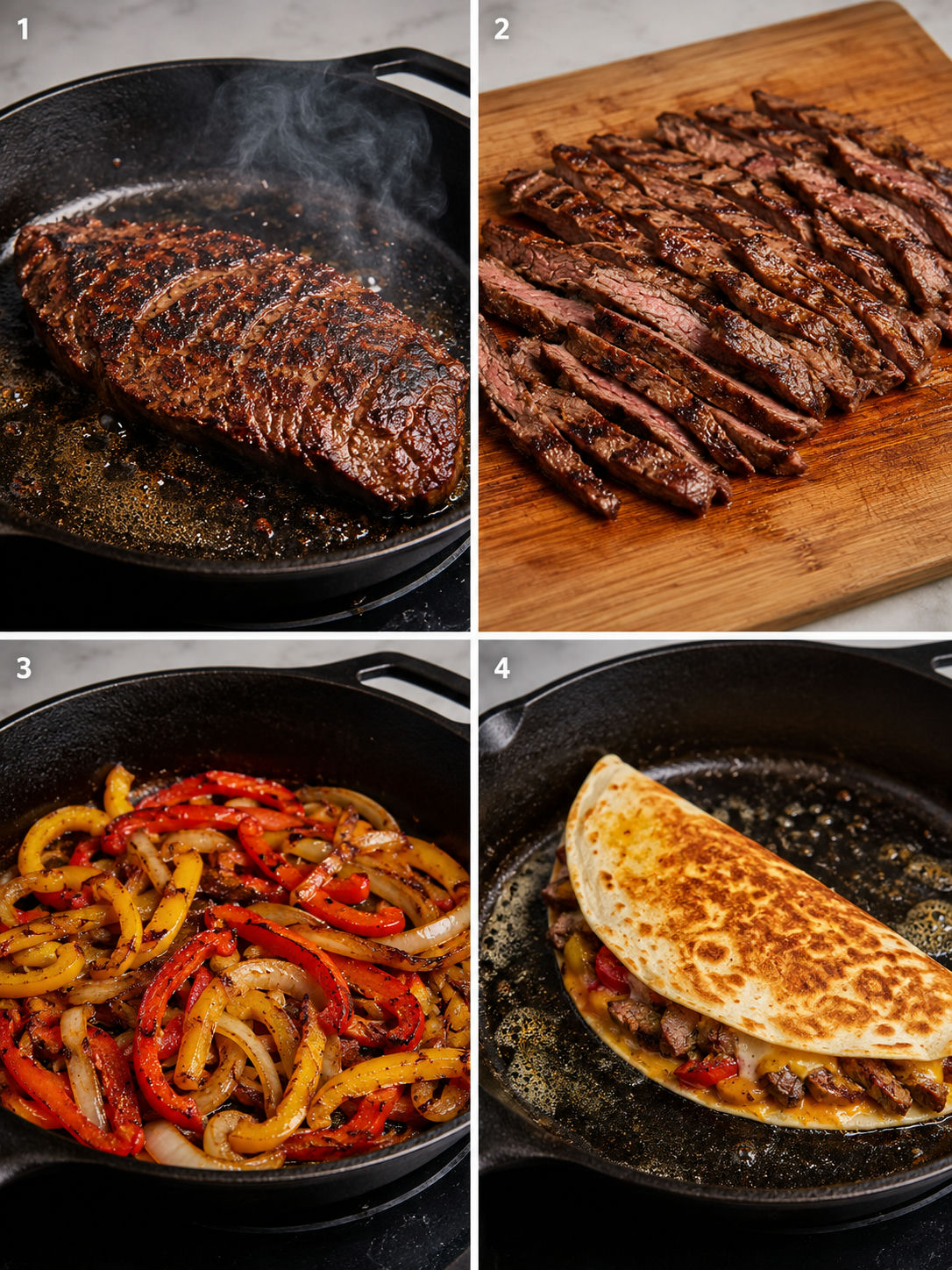
- Sear the steak. Heat a cast iron skillet over high heat until very hot. Add the steak and cook for 3 to 4 minutes per side, pressing down gently if it curls, until a deep brown crust forms. Aim for 130 to 135°F (54 to 57°C) for medium. Transfer to a cutting board and rest for 5 minutes.
- Slice against the grain. Look at the direction the muscle fibers run across the steak. Cut perpendicular to them into thin strips about 1/4 inch (6 mm) wide. This step is what keeps the steak from feeling tough inside the quesadilla.
- Char the vegetables. In the same skillet over medium-high heat, add a drizzle of olive oil. Add the bell peppers, onion, and jalapeño. Let them sit undisturbed for 1 to 2 minutes at a time so they pick up color, then stir. Cook 6 to 7 minutes total until softened and charred at the edges. Season with salt and pepper.
- Assemble. Lay a tortilla flat. Scatter a layer of mixed cheese over one half, then add steak strips and a spoonful of vegetables. Add a little more cheese on top of the filling, then fold the tortilla over to close.
- Cook until golden. Melt a small pat of butter in a large skillet over medium heat. Add one or two quesadillas without crowding and cook for 2 to 3 minutes per side until golden and crisp and the cheese is fully melted. Repeat with the remaining quesadillas.
- Slice and serve. Transfer to a cutting board, cut each quesadilla into 3 to 4 wedges, and serve hot with sour cream, guacamole, and pico de gallo.
Why Skirt Steak Wins Here
Skirt steak has a wide, open grain that grabs onto marinade quickly. It sears fast over high heat and stays juicy as long as you do not push it past medium. Flank steak is a fine swap with a slightly leaner texture and cleaner flavor. Both cuts need to come to room temperature before they hit the hot pan so they cook evenly. A cold steak straight from the fridge goes into a screaming-hot skillet and the outside overcooks before the center catches up. For a spicier variation with a different personality, the Creole steak and shrimp quesadillas here follow a similar sear-and-fill method but add a bold spicy sauce. The USDA recommends cooking beef to a minimum of 145°F (63°C) for food safety. Read the full guidance at the USDA FSIS safe food handling guide.
The Two-Cheese Rule
Monterey Jack does the heavy lifting on melt. It goes creamy and smooth without separating or turning greasy. Pepper jack is the accent: sharper, with a low heat that builds through the bite. Together they create a filling that holds the steak and vegetables in place without going gluey. The ratio is roughly 2 parts Monterey Jack to 1 part pepper jack. You can also use a mild cheddar in place of the pepper jack for a stronger flavor without the heat, or Oaxacan cheese for a stringy, authentic pull.
Getting Real Char on the Peppers
The vegetables are not just filler. Charred bell peppers add a faint bitterness that balances the richness of the cheese and the lime in the marinade. The trick is to leave them alone. Put the peppers and onion in the hot pan and resist stirring for a full minute or two so they make direct contact with the surface and develop actual dark spots at the edges. The same pan you used for the steak already has flavor from the drippings on the bottom. Those browned bits dissolve into the vegetables and season them without any extra work. If you want an even more pepper-forward filling, the pepper steak and cheese quesadillas here go heavy on the bell peppers for a satisfying variation.
Storing and Reheating Leftovers
The filling (steak and vegetables) keeps well in an airtight container in the fridge for up to 3 days. Assembling and cooking quesadillas fresh from the filling each time gives the best result. Fully cooked quesadillas also keep for 3 days, though the tortilla softens. A dry skillet over medium heat for about 90 seconds per side brings back most of the crispness. An oven at 375°F (190°C) on a wire rack for 8 to 10 minutes heats more evenly and works just as well. Skip the microwave. It makes the tortilla floppy and steams the filling.
What to Serve on the Side
Sour cream, guacamole, and pico de gallo are the non-negotiable toppings. Beyond that, cilantro-lime rice and black beans round out the plate into a full Tex-Mex dinner. A simple green salad with lime dressing cuts through the richness. For a backyard version cooked on a flat-top, the Blackstone steak cheese quesadillas use the griddle’s even heat for a perfectly crisp exterior on every inch. And if you want a fun appetizer to kick things off before the main event, the jalapeño popper quesadillas are a great way to start the meal.
FAQs
- What is the best cut of steak for quesadillas?
-
Skirt steak is the top choice. It has a bold, beefy flavor, cooks fast over high heat, and slices thin easily. Flank steak is a close second with a slightly leaner texture. Both need to be sliced against the grain after resting or they will feel chewy. Avoid thick cuts like ribeye here since they take longer and do not integrate into the filling as well.
- Can I use leftover steak for this recipe?
-
Yes, leftover steak works great and makes this recipe even faster. Slice it thin, warm it briefly in a hot pan for 30 to 60 seconds, then build the quesadillas as written. Cold steak straight from the fridge is also fine since it heats through inside the quesadilla as the cheese melts.
- Which cheese melts best for steak quesadillas?
-
Monterey Jack is the ideal base. It melts smooth and creamy without separating or getting greasy. Mixing in pepper jack adds sharpness and a gentle heat. Shred the cheese yourself from a block for the best melt. Pre-shredded cheese is coated with anti-caking powder that holds back the melt and leaves the filling grainy.
- How do I keep quesadillas crispy?
-
Cook them over medium heat in a lightly buttered pan, not high heat, so the tortilla has time to crisp without burning before the cheese melts. Do not overcrowd the pan. Let the quesadilla sit undisturbed for the full 2 to 3 minutes before flipping. Serve immediately after cutting since they soften as they sit.
- Can I make these gluten-free?
-
Yes. Swap the flour tortillas for certified gluten-free corn tortillas. Use the same filling. Corn tortillas are smaller, so fold them taco-style rather than in half like a traditional quesadilla. The result is crispier and slightly less pliable but just as flavorful.
- How do I reheat leftover steak quesadillas?
-
A dry skillet over medium heat is the best option. About 90 seconds per side restores most of the crispness. An oven or air fryer at 375°F (190°C) for 8 to 10 minutes also works well. Avoid the microwave since it steams the tortilla and makes it soft and a bit rubbery.
- Can I freeze loaded steak quesadillas?
-
You can freeze them after cooking. Let them cool completely, then wrap each one individually in foil and freeze for up to 2 months. Reheat from frozen in a 375°F (190°C) oven for about 15 minutes or in an air fryer for 10. They will not be quite as crispy as fresh but are still very satisfying.
- What toppings go best with steak quesadillas?
-
Sour cream, guacamole or sliced avocado, and pico de gallo are the classics. Pickled jalapeños add heat and acidity that cuts right through the richness. A drizzle of chipotle crema takes the whole plate up a level. Fresh cilantro and a squeeze of lime brighten everything just before serving.
References
Sources cited in this recipe.