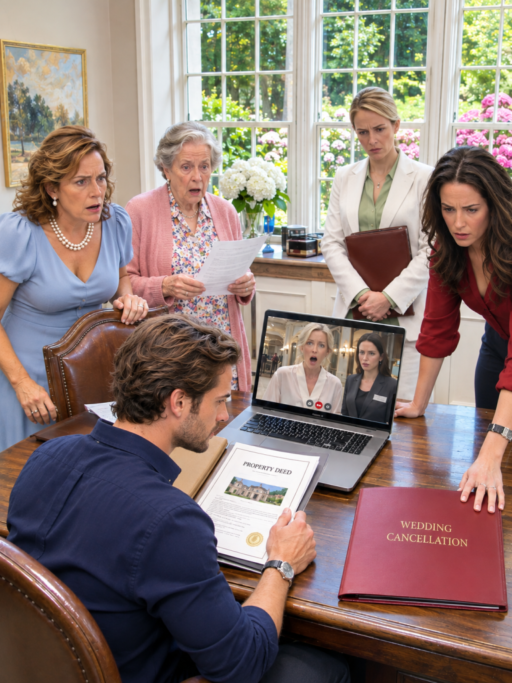
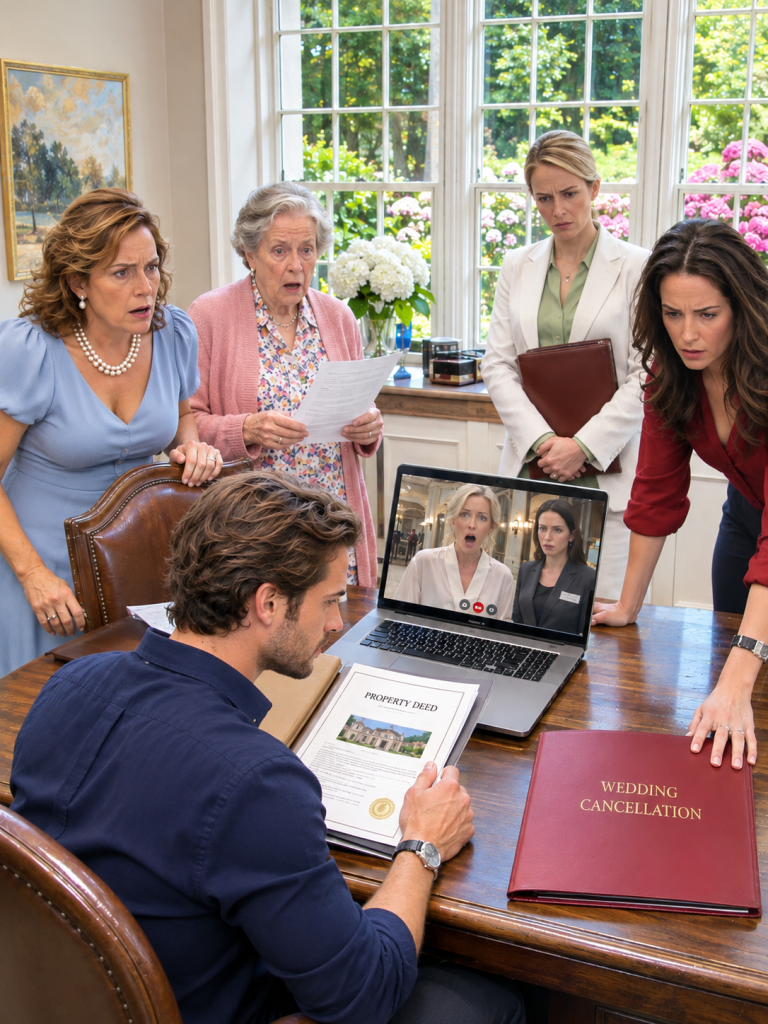

Then she tried a familiar argument.
“After everything we’ve done for you, you’re really going to let this happen?”
I looked around my apartment.
The secondhand camera equipment I’d bought while working hotel night shifts was stacked beside my desk.
I’d built my business without the education I’d wanted because my family always needed something first.
“I’ve spent years helping you,” I answered. “That never gave you permission to take what belonged to me.”
She began crying again.
I ended the call.
Over the following weeks, the investigation continued.
Daniel kept me informed as the trust administrator verified the records and restored the account’s security protections.
The attempted transfer was formally reversed, and both accounts were placed beyond my mother’s access.
The case eventually resulted in a restitution and diversion agreement rather than a full criminal trial.
Mom and Elise were required to cover legal and investigative expenses. Elise also had to complete financial ethics counseling and community service.
Neither could simply dismiss the incident as a misunderstanding.
Meanwhile, Belladonna’s booking team worked through the canceled wedding arrangements.
Some vendors had already purchased supplies or begun preparing services, so legitimate expenses had to be addressed.
I instructed the estate not to collect an additional cancellation penalty.
I wasn’t interested in making money from my family’s dishonesty.
The wedding never took place.
Marcus ended the engagement, and several invited guests lost money on nonrefundable travel arrangements.
When relatives began asking questions, Mom initially claimed there had been confusion over a family account.
But the financial records and her recorded statements made that explanation difficult to maintain.
Eventually, the excuses stopped.
Some relatives contacted me to apologize for believing Elise’s version of events.
Others remained silent.
I didn’t chase either group.
I’d spent too many years trying to persuade people that my needs mattered.
Six months later, I enrolled in a real estate development program designed for working professionals.
The education fund finally began serving the purpose Uncle Carl had intended.
The matching investment account also helped finance Belladonna’s next expansion.
I planned to create a training studio where local photographers, hospitality students, and event workers could gain practical experience.
For years, my family had treated my future as something that could be postponed indefinitely.
Now I was using the money they’d tried to take to build opportunities for myself and other people.
Aunt Nina called when my enrollment was confirmed.
“Your uncle would have been proud of you,” she said.
I looked at the acceptance letter on my desk.
For once, I wasn’t paying someone else’s bill or solving someone else’s emergency.
I was making a decision about my own life.
And a few weeks later, I boarded a flight to Italy to see what that decision had made possible.
Six months after my sister’s wedding collapsed, I stood on the vineyard terrace of Belladonna Estate, watching the morning mist drift across the Tuscan hills.
The property looked nothing like the neglected villa I’d first photographed three years earlier.
Its stone walls had been restored, the gardens were flourishing, and the guest suites were welcoming visitors from around the world.
This was the estate Elise had tried to reserve using my college fund.
The same estate where she’d planned to celebrate with two hundred guests while telling me there wasn’t room for her own brother.
Now I was here for a very different occasion.
Belladonna was opening a training studio for young photographers, hospitality workers, and students interested in property development.
The expansion had been financed partly through the matching investment fund Uncle Carl had established for me.
Aunt Nina joined me on the terrace carrying two cups of coffee.
“Your uncle would have loved this place,” she said.
“I wish he’d gotten to see it.”
She smiled.
“He saw enough of you to know you’d build something worthwhile.”
I looked toward the courtyard, where staff members were arranging tables for that evening’s scholarship dinner.
There were no imported flowers or extravagant decorations.
Just simple arrangements, local food, and a gathering of people who had helped restore the estate.
For years, I’d imagined freedom meant moving far enough away that my family couldn’t ask me for anything.
But standing there, I understood that distance wasn’t the most important part.
Freedom meant being able to make decisions without feeling guilty for disappointing someone.
It meant keeping the money I’d earned, choosing my own education, and refusing to treat every family emergency as my responsibility.
My phone vibrated.
A message from Mom appeared.
I hadn’t spoken to her much since the investigation ended.
She had completed her obligations under the restitution agreement, but our relationship remained strained.
This message was different from her earlier attempts to contact me.
“Owen, I’m sorry I treated your patience like permission to take whatever I wanted. I know I hurt you, and I don’t expect you to forgive me immediately.”
I read it twice.
For the first time, she hadn’t mentioned Elise’s suffering or asked me to make things easier for the family.
I didn’t respond right away.
An apology was a beginning, but it couldn’t erase years of being told that my needs mattered less than everyone else’s.
A few weeks earlier, Elise had also contacted me.
She admitted that she’d always assumed I would recover from whatever sacrifices our family demanded.
Because I kept working, paying bills, and solving problems, she’d convinced herself that taking my education fund wouldn’t really hurt me.
Losing Marcus had forced her to reconsider how she’d treated people.
“I thought being protected meant I could do whatever I wanted,” she’d written. “I was wrong.”
I told her I hoped she would build a life she could support honestly.
Then I explained that I needed six months without further contact.
She didn’t argue.
That alone was a change.
Later that afternoon, Daniel Cho arrived at Belladonna carrying a framed copy of the estate’s restored ownership deed.
The original remained secured with the company’s legal records.
Across the top of the copy were the words that had stunned my mother and sister during their video call.
OWEN MERCER — CONTROLLING MEMBER.
I hung it in the estate library beside Uncle Carl’s letter.
Not because I wanted to remind myself that I’d defeated my family.
I wanted to remember how close I’d come to allowing them to decide my future again.
That evening, the scholarship dinner began beneath the courtyard lights.
Students spoke about their ambitions, local business owners discussed new opportunities, and members of our staff shared stories about restoring the property.
One young photographer told me she’d spent years believing professional training was beyond her financial reach.
Now she had a place in our program.
Listening to her reminded me of the eighteen-year-old I’d once been.
Back then, I’d wanted to attend college, but every time I saved enough to begin, another family expense appeared.
I had eventually stopped asking when my turn would come.
Now, at thirty-one, I was enrolled in a real estate development program, running a successful business, and helping other people pursue opportunities they might otherwise have missed.
Aunt Nina approached while I stood near the library doors.
“You’ve been watching everyone else enjoy the evening,” she said.
“I was just thinking.”
“About your family?”
“A little.”
She looked toward the terrace.
“Your uncle didn’t leave you that money so you could spend your whole life proving you deserved it.”
I smiled.
“I think I’m finally beginning to understand that.”
She touched my shoulder.
“Then go enjoy what you’ve built.”
I stepped outside.
For once, nobody was waiting for me to fix a financial crisis, cover an unexpected bill, or sacrifice something important.
The people gathered around those tables weren’t there because I had rescued them from their own decisions.
They were there because we’d created something worthwhile together.
As I took my seat, I thought about the phone call that had started everything.
My mother had laughed when she told me my college fund was being used for Elise’s wedding.
She’d believed I would accept it because I’d always accepted everything else.
What she hadn’t known was that I owned the estate.
But the most important thing I’d gained wasn’t the property, the restored trust, or even my education.
It was the ability to say no without feeling that I had to apologize.
And that evening, surrounded by people who respected what I’d built, I finally stopped putting my own life on hold.
THE END.