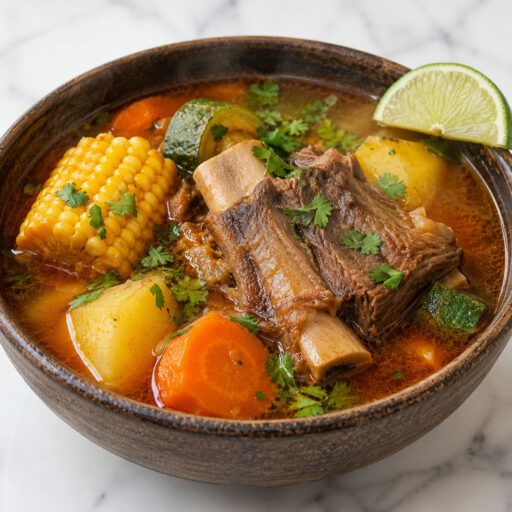
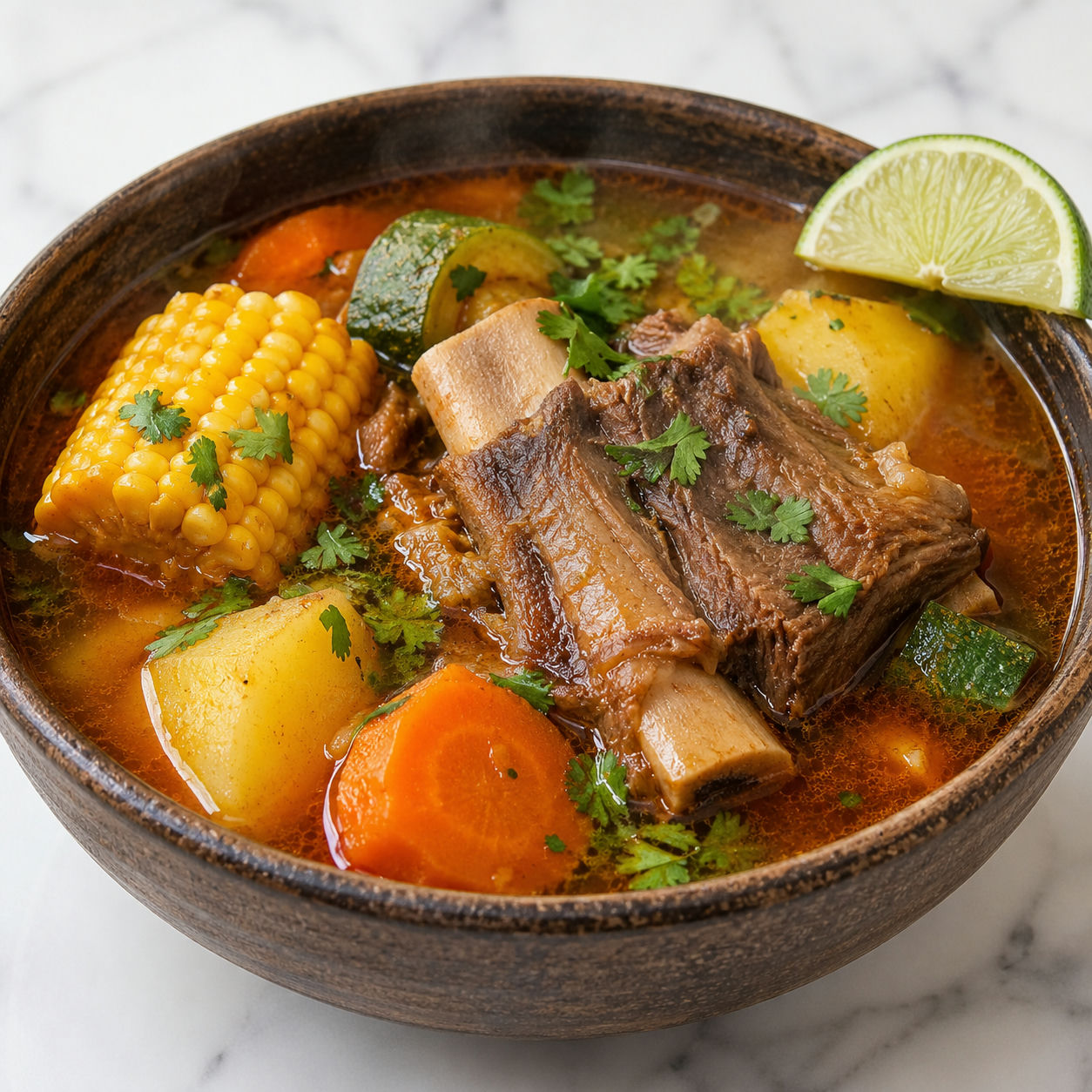

Caldo de res has been on Mexican family tables for generations, and the old-fashioned way of making it is still the best. You start with bone-in short ribs, put them in a big pot of water with garlic and cumin, and let the whole thing simmer low and slow until the broth turns into something no store-bought stock can touch. No shortcuts. Just time and a good pot.
This is the version that fills the whole house with a smell that pulls everyone into the kitchen. The broth gets its body from the bones, not from a jar, and the vegetables go in stages so nothing ends up mushy. Corn and cabbage only need a few minutes at the end. Potatoes need more. Getting that sequence right is what separates a great caldo from a forgettable one.
Serve it with lime wedges, fresh cilantro, sliced serranos, and warm corn tortillas on the side. Some people like a scoop of Mexican rice dropped into their bowl. Others add a spoonful of pico de gallo. However you serve it, this is a pot of soup that does what good food is supposed to do.
Short ribs, bones, and every vegetable
The meat does most of the heavy lifting here, so start with the best bone-in short ribs you can find. Marrow-rich bones are what turn plain water into a broth worth eating. Everything else, the vegetables, the seasonings, can come from any grocery store. But skimping on the beef shows up in the bowl.
- Bone-in beef short ribs. The marrow and collagen slowly enrich the broth over a long simmer. Plan on 4 to 5 ribs for a full pot.
- Beef chuck (optional). Cut into 2-inch chunks, it adds extra meat for bigger servings without changing the character of the soup.
- Corn on the cob. Cut into thirds before going into the pot. It adds sweetness and is one of the defining ingredients of a real caldo de res.
- Yellow potatoes. Waxy varieties hold their shape better than starchy russets. Halved or quartered, 4 to 6 medium potatoes.
- Carrots. Cut on the bias into thick rounds so they don’t disappear into the broth after an hour of simmering.
- Zucchini. Added near the end. It absorbs the broth flavor quickly and softens fast, so don’t rush it in with the harder vegetables.
- Cabbage. Roughly chopped and stirred in during the final five minutes. It stays slightly firm and soaks up the broth without falling apart.
- Tomato sauce. One 8-ounce can gives the broth a reddish tint and rounds out the flavor without overpowering it.
- Beef bouillon. The seasoning base. Start conservative, taste after it simmers a few minutes, then adjust from there.
- Garlic powder and cumin. The two seasonings that make this unmistakably caldo de res rather than just a plain beef soup.
Building the pot, step by step
- Start the beef. Place the short ribs and beef chuck in a large pot (at least 8-quart). Cover with 10 to 12 cups of water. Bring to a full boil over high heat.
- Skim and season. As the water heats, gray foam will rise to the surface. Skim it off with a ladle for the first 10 to 15 minutes. Then add the beef bouillon, garlic powder, cumin, and black pepper, and reduce the heat to a gentle simmer.
- Add tomato sauce and simmer the beef. Pour in the tomato sauce and stir. Partially cover the pot and simmer for 60 to 75 minutes until the meat is very tender and pulling away from the bone. Taste the broth and adjust the seasoning.
- Add potatoes and carrots. Drop in the potato chunks and carrot rounds. Simmer uncovered for 12 to 15 minutes until they are beginning to soften.
- Add zucchini and corn. Add the zucchini rounds and corn-on-the-cob pieces. Simmer for another 8 to 10 minutes until the zucchini is just tender.
- Finish with cabbage. Add the chopped cabbage and simmer for 5 more minutes. Do a final taste and add more bouillon or salt as needed.
- Serve. Ladle into deep bowls, making sure each bowl gets a piece of corn, a rib, and an assortment of vegetables. Pass lime, cilantro, and warm tortillas at the table.
Why a slow simmer beats a hard boil
The biggest mistake people make with caldo de res is rushing the beef. A hard boil extracts heat fast but it also clouds the broth and can tighten the muscle fibers before the collagen has time to melt out. What you want is a lazy simmer, just a few bubbles breaking the surface, for a solid hour. That patience is what turns water into actual beef broth.
USDA food safety guidelines for beef set a minimum internal temperature of 145°F. For bone-in braised cuts like short ribs, you are going well past that. The meat is genuinely tender around 195 to 200°F internal, once the collagen has fully melted into the liquid and the broth is silky. A thermometer is useful but the fork test is just as reliable. The meat should pull away from the bone with gentle pressure and offer no resistance.
If you enjoy a slow-cooked beef dish with a slightly thicker, more stew-like base, Mom’s Classic Beef Stew is worth having in your rotation alongside this one.
Getting every vegetable just right
The vegetable order matters more than it might seem. Potatoes and carrots need 12 to 15 minutes of real simmering. Zucchini and corn need 8 to 10. Cabbage only needs 5. Add everything at the same time and you end up with mush in some places and raw crunch in others.
Cut the potatoes into large halves or quarters. Too small and they dissolve into the broth. Carrots should go in on the thicker side for the same reason. Zucchini rounds cut about an inch thick will stay intact without being crunchy. The corn, cut into thirds before going in, is easy to eat from the cob right in the bowl and sweetens the broth as it simmers.
For a Mexican soup built around a completely different grain, Pork Pozole Rojo is a satisfying companion recipe that uses hominy instead of potatoes and corn.
Swaps and additions that belong here
Chayote squash is a classic caldo addition in many regional Mexican kitchens. It has a mild flavor, holds its shape through a long simmer, and goes in at the same time as the zucchini. Green beans work well too. Some cooks drop a halved white onion into the pot with the beef and pull it out before serving. The broth picks up a quiet sweetness from it without tasting like onion soup.
If beef isn’t on the menu, the exact same approach works beautifully with chicken. See Caldo de Pollo for how the chicken version comes together with a slightly lighter broth.
For the bouillon, taste as you go. Brands vary a lot in saltiness. Start with one tablespoon, let it simmer a few minutes, then decide if it needs more. Fresh minced garlic (4 to 6 cloves) can replace the garlic powder for a sharper, more aromatic broth.
How to serve it at the table
Set out lime wedges, a bowl of chopped cilantro, sliced serranos or jalapeños for those who want heat, and a stack of warm corn tortillas. Everyone seasons their own bowl. A squeeze of lime right before eating brightens the whole thing and is really non-negotiable.
Pico de gallo on the table makes the meal feel complete. This soup is genuinely good the next day, once the broth has had time to settle in the refrigerator and the flavors have deepened. For a different style of Mexican beef soup with an equally rich broth, this traditional caldo de res on the site uses a slightly different spice approach that is worth comparing side by side.
FAQs
- What cut of beef is best for old fashioned caldo de res?
-
Bone-in short ribs are the classic choice because the marrow and collagen render into the broth and give it a richness you cannot fake. Beef shank and cross-cut soup bones work just as well. If you want more meat per bowl, add a chunk of beef chuck alongside the ribs. Avoid lean cuts like sirloin or round, they cook too fast and turn dry before the broth has time to develop any depth.
- Can I make caldo de res in a slow cooker?
-
Yes. Add the beef, water, bouillon, garlic, cumin, and tomato sauce to the slow cooker and cook on low for 7 to 8 hours. Drop in the potatoes and carrots during the last 2 hours, zucchini and corn in the last 45 minutes, and cabbage in the last 20 minutes. The broth will not be quite as clear as the stovetop version, but the flavor is just as good.
- How do I get a clear, flavorful broth?
-
Skim the gray foam that rises to the surface in the first 10 to 15 minutes of boiling. That foam is coagulated protein from the bones and it makes the broth cloudy if you leave it. After skimming, drop the heat to a gentle simmer. A hard rolling boil makes the broth murky and can tighten the meat fibers before the collagen breaks down. Low and slow gives you something clear and deeply flavorful.
- What vegetables can I substitute or add?
-
Chayote squash is a common addition in many regional versions and can replace or join the zucchini. Green beans and celery also go in well. Some cooks add a halved white onion to the pot with the beef and pull it out before serving for a quiet sweetness in the broth. If you skip the tomato sauce, the broth is lighter in color and more delicate in flavor, which some people prefer.
- Can I make caldo de res ahead of time?
-
Yes, and it is actually better the next day. Make the beef and broth a day ahead, then refrigerate. The fat will solidify on the surface overnight and lifts off easily, leaving a cleaner broth. Reheat the stock and beef until simmering, then add fresh vegetables so they don’t turn mushy from sitting overnight. This method gives you the best of both worlds.
- How do I store and reheat leftovers?
-
Cool the soup to room temperature and refrigerate in an airtight container for up to 4 days. Reheat gently over medium-low heat with a splash of water if the broth has thickened. The vegetables will be softer the second day, which is fine. If you plan to eat leftovers, slightly undercook the vegetables the first time so they hold up better after reheating.
- What do you serve with caldo de res?
-
Warm corn tortillas are standard. Set the table with lime wedges, chopped fresh cilantro, sliced serrano or jalapeño chiles, and a small bowl of pico de gallo or fresh salsa for everyone to add to their own bowl. A scoop of Mexican red rice stirred into the broth is a popular move and turns a bowl of soup into a genuinely filling meal.
References
Sources cited in this recipe.