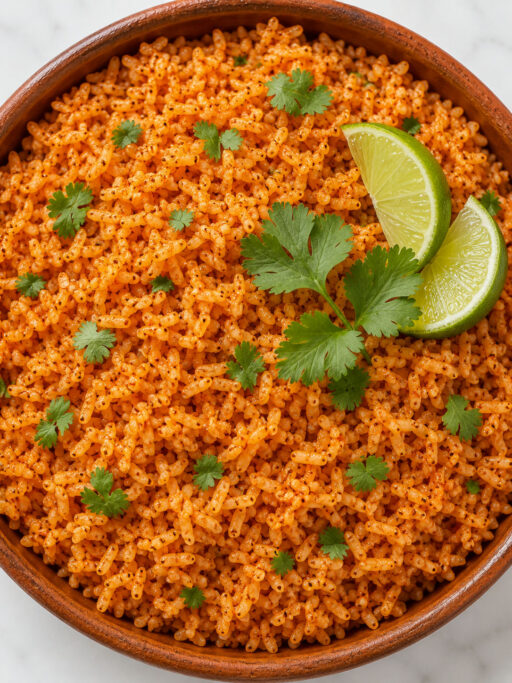
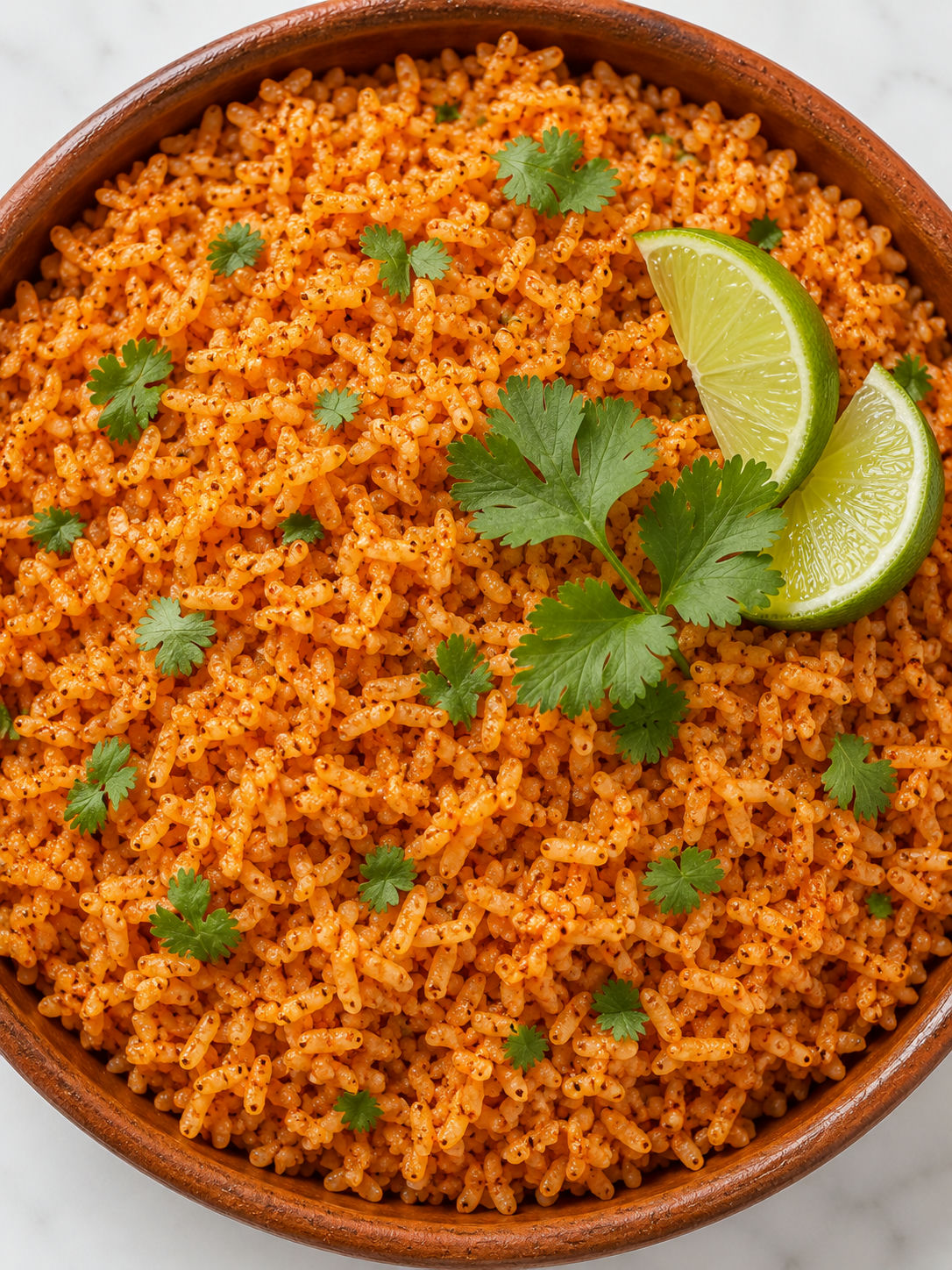

Spanish rice is the one side dish that disappears faster than anything else at a BBQ. Rich, tomatoey, and just smoky enough to feel right at home next to a rack of ribs or a pile of grilled chicken, it is the kind of thing people go back for a second scoop of before the main course is even gone.
The key step that most people skip is toasting the raw rice in hot oil until it turns a deep golden brown before any liquid goes in. That single move builds a nutty flavor into every grain and keeps the texture separate and fluffy instead of sticky and clumped. Get that right and the rest of the recipe takes care of itself.
A Short Ingredient List That Gets It Right
Good Spanish rice doesn’t need a long list of ingredients. What matters is decent chicken broth, long-grain white rice, and real tomato. Those three things carry the whole dish. Everything else is seasoning.
- Long-grain white rice. The length matters here. Long grains stay separate after cooking and hold the tomato color and flavor without turning sticky or clumped.
- Vegetable oil or lard. Either works for toasting the rice. Lard adds a richer, more traditional depth, but neutral oil is perfectly fine and what most home cooks reach for.
- White onion. Finely chopped so it melts into the rice rather than sitting in noticeable pieces. A quarter of a small onion is all you need.
- Garlic. A couple of fresh cloves, minced. Added right after the onion and cooked just long enough to turn fragrant without burning.
- Tomato sauce. One small can or two roma tomatoes blended smooth. This gives the rice its red-orange color and that mildly tangy base flavor.
- Chicken broth. The liquid that actually cooks the rice. A real broth or a good bouillon makes a noticeable difference between rice that tastes like something and rice that doesn’t.
- Cumin and chili powder. Just enough to add warmth without turning the rice into a heavily spiced dish. They should be background notes, not the main event.
How to Make Spanish Rice Step by Step
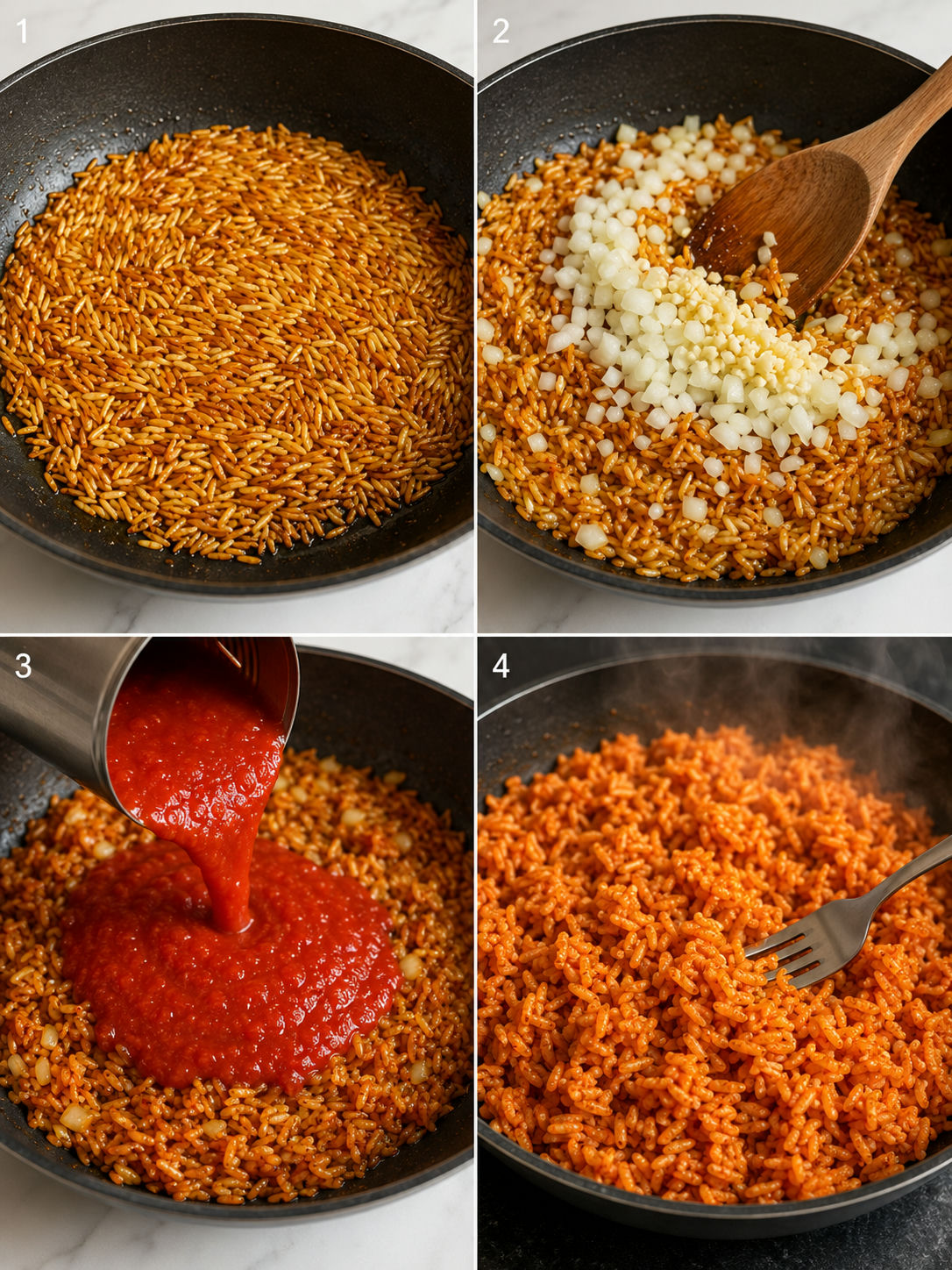
- Toast the rice. Heat the oil in a large skillet over medium heat. Add the dry rice and cook, stirring often, until the grains turn a deep golden brown and smell faintly nutty. This takes 6 to 8 minutes and it is the most important part of the whole recipe. Don’t cut it short.
- Soften the aromatics. Stir in the finely chopped onion and minced garlic. Cook for 1 to 2 minutes until the onion softens and the garlic turns fragrant but not browned.
- Coat with tomato. Pour in the tomato sauce and stir until every grain is coated. Let it cook for about 30 seconds so the raw tomato smell cooks off and the sauce caramelizes slightly against the hot pan.
- Season and add broth. Stir in the cumin, chili powder, and salt. Pour in the chicken broth and stir everything together. Raise the heat and bring it to a gentle boil.
- Simmer covered. Drop the heat to low, cover the pan with a tight-fitting lid, and cook undisturbed for 18 to 20 minutes until all the liquid is absorbed and the rice is tender.
- Rest and fluff. Turn the heat off and leave the lid on for another 5 to 10 minutes. This lets the steam finish the top layer. Then fluff with a fork and serve hot.
The Toasting Step Is the Whole Trick
Most failed batches of Spanish rice trace back to one skipped step: toasting the dry rice before any liquid goes in. When you cook raw rice in hot oil, the surface starch dries out so the grains can’t stick together later. More importantly, the heat triggers the Maillard reaction, the same browning that gives a good sear its depth, and that builds a nutty, roasted flavor into every grain before a drop of broth touches it.
The color you want is a warm amber, close to the skin of a roasted peanut. Too pale and the rice will be gummy. Too dark and it will taste bitter. Medium heat, constant stirring, and patience are the whole trick. Spanish rice, also called arroz rojo, is a staple across Mexico and Tex-Mex cooking, and that toasting method is the foundation of every authentic version. If you want to explore a more traditional preparation, the Authentic Mexican Red Rice (Arroz Rojo) on this site is a great place to start.
Swaps and Additions That Work Well
No tomato sauce on hand? Blend two or three roma tomatoes with a small splash of broth and use that instead. The color will be a touch lighter but the flavor is fresher. No chicken broth? Water plus a bouillon cube or two does the job without much sacrifice. For a vegetarian version, swap the chicken broth for vegetable broth and the rice still comes out full and satisfying.
Want to add vegetables? Frozen peas and corn go in with the broth and cook right along with the rice. Fold in a handful of diced bell pepper for color and a little sweetness. For another easy weeknight rice option, the Easy Mexican Style Rice on this site uses a similar method and is worth keeping in your back pocket.
What to Serve with It at the Grill
Spanish rice holds up next to anything with char or smoke without getting lost. It pairs naturally with Grilled BBQ Chicken Thighs for a plate that comes together fast and feeds a crowd without much extra effort. For a bigger spread, serve it alongside a Smoked Brisket and Pulled Pork BBQ Platter and let the rice soak up the juices that come off the tray.
It also works as the base for a quick rice bowl after the cookout: spoon some into a bowl, add grilled meat, a spoonful of salsa, and a dollop of sour cream. Or go the burrito route and serve it inside a Chicken Burrito Bowl with Rice and Beans for something that feels like a full meal on its own.
Storing Leftovers and Reheating Right
Cool the rice completely before putting it in the fridge. Store it in an airtight container and it keeps well for up to four days. To reheat, add a tablespoon or two of water or broth to the pan, cover, and warm over low heat for about five minutes. The steam revives the texture far better than a dry microwave. If you do use the microwave, add a splash of liquid and cover the bowl with a damp paper towel to trap the steam.
For food safety at outdoor events, FoodSafety.gov recommends refrigerating cooked grains within two hours of cooking. If the rice is sitting out on a table at a summer cookout in warm weather, use an insulated serving dish or a slow cooker on warm to keep it at a safe temperature while people graze.
FAQs
- Can I make Spanish rice ahead of time for a BBQ?
-
Yes. Cook the rice up to a day ahead, cool it completely, and refrigerate in an airtight container. Reheat on the stovetop with a splash of chicken broth or water over low heat and a lid on. It comes back to fluffy in about five minutes. Avoid reheating it dry or the texture suffers.
- What can I substitute for chicken broth?
-
Water plus a bouillon cube or two works and is actually what many home cooks in Mexico use every day. Vegetable broth is another easy swap that keeps the dish vegetarian-friendly. Plain water without any bouillon will leave the rice tasting flat, so skip that option.
- Why did my Spanish rice turn out mushy?
-
The most common cause is skipping or rushing the toasting step. If the rice doesn’t toast long enough in the oil, the starch on the outside of each grain stays soft and the grains clump and absorb too much liquid. Toast until the rice is a deep golden brown and smells nutty, about 6 to 8 minutes. Also resist lifting the lid during the 20-minute simmer.
- Can I use brown rice instead of white rice?
-
You can, but the timing changes. Brown rice needs about 40 to 45 minutes of simmering and roughly 3 cups of liquid for every 1.5 cups of rice. The flavor is nuttier and the texture chewier. It still tastes great alongside BBQ meats. Just plan ahead so it finishes at the same time as the rest of the spread.
- What BBQ meats pair best with Spanish rice?
-
Almost anything from the grill works. Grilled chicken thighs, smoked brisket, pulled pork, and carne asada are all classic pairings. The tomatoey, mildly spiced rice cuts through the richness of smoky meats and complements the char without competing with it. It also works well alongside grilled vegetables and black beans.
- Can I add vegetables to the rice?
-
Easily. Frozen peas, corn kernels, diced carrots, or a handful of chopped bell pepper all work well. Add them when you pour in the broth so they cook through with the rice. Just don’t overcrowd the pan or add too many wet vegetables at once or the moisture balance shifts and the rice can come out wet.
- How do I scale this recipe for a large crowd?
-
Double or triple the recipe in a wide, deep pot rather than a standard skillet so the rice has room to steam evenly. Keep the rice-to-liquid ratio consistent at 1 cup of rice to about 1 2/3 cups of broth. Add a few extra minutes to the simmer time for larger batches and let the rice rest covered for at least 10 minutes before fluffing.
References
Sources cited in this recipe.