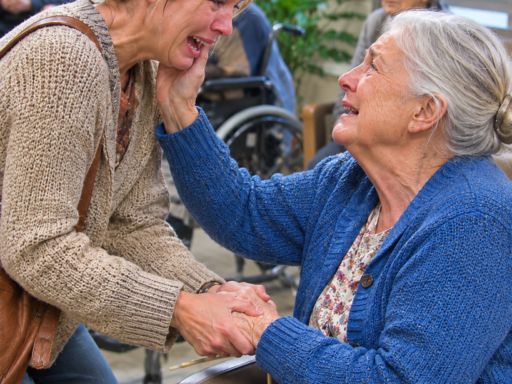


I’d spent years remembering the flash as one more thing somebody had done to embarrass me. Knowing why Deborah took the photograph changed how I looked at it. I still wished she’d spoken up, and when we talked, I told her so. She said she wished she had, too.
After Christmas, Grant knocked on my door early one Monday. He’d spoken to Trevor and told him about the drinking, the accident and the way our parents had arranged for me to sign. He’d also told Trevor he’d watched me face the wall that night and smiled because he thought the family had taken care of everything for him.
“I thought I’d feel better once I told him,” Grant said.
“What did Trevor say?”
“He asked if I’d ever imagined being the one standing in that corner.”
Before he left, Grant gave me a letter Mom had found in Dad’s files. Dad had sent it to a military admissions office months after the accident, identifying me as the relative responsible so the incident wouldn’t affect Grant’s nomination.
Two days later, Mom brought Warren a set of bank statements. The settlement was supposed to provide Trevor with $85,000 for his injuries. Warren showed me three transfers totaling $18,500 that went into an account Dad controlled.
I could see why Grandma had insisted on preserving the insurance file. The statement I’d signed had given Dad a way to speak on my behalf long after I’d left his house. The bank records showed what he’d done while nobody was asking me any questions.
Warren traced the three transfers through the bank records. Part of the money went toward Grant’s education, part paid for a vehicle and the rest went into an account used for household expenses. Grant admitted he’d suspected where the money came from when Dad started paying his bills. He agreed to tell the investigators what he remembered.
Mom called me after Warren asked her about the transfers. She said she’d seen them years earlier and accepted Dad’s explanation that they were reimbursements. Then she told me Trevor’s attorney had written to ask why the amount Trevor received differed from what he expected.
“Your father replied that everything had been paid according to the agreement,” she said. “He signed your name on the copy.”
I asked her to keep the letter where it was until Warren could collect it. When I hung up, I thought about how often I’d checked my own memory of that night in the kitchen. I knew exactly where I’d been sitting when I signed the first statement. I’d never even seen the letter Dad sent to Trevor’s attorney.
Dad showed up at my office a few days later with an agreement in his briefcase. It said I’d taken responsibility voluntarily. If I signed, he wanted everyone to drop their claims and settle the remaining disputes privately.
“You understood what you were doing the first time,” he said.
“I understood that my parents wanted me to protect my brother. I had no idea you’d still be using my name after I left.”
He told me I’d regret refusing. I slid the agreement back across the desk and waited until he put it in his briefcase. As soon as he left, I called Warren.
The following week, Mom found an old recording dated December 23, the day before the family Christmas gathering. Warren played it with me sitting beside him. I heard Grant ask what would happen if anyone found out he’d been drinking. Then I heard Dad explain to Mom why he was sure I would sign.
“She can have one difficult year,” he said. “You have a future, Grant. She doesn’t have anything to lose.”
I asked Warren to turn the recording over and arrange for Mom to explain where she’d found it. Then I drove to see her. She was at the kitchen table with an old photograph of Grant and me. I was seven, and he had his arm around my shoulders. I remembered how I used to run to keep up with him on the way home from school.
Mom said she’d watched me leave that Christmas and almost followed me. Dad had told her going after me meant choosing me over the family.
“You were supposed to come after me because I was your daughter,” I said.
She started crying, and I stayed at the table with her until it got dark. When I stood to leave, she told me to drive carefully. The next morning, she met with the investigators and told them where she’d found the recording.
By spring, the insurer had amended its claim file to identify Grant as the driver, and the agency that held the original collision report added a correction. Warren sent me copies of both. I read them at my kitchen table, where I’d set down my keys and a bag of groceries. After fifteen years of wondering whether anyone would ever put the truth in writing, I was surprised by how ordinary the afternoon felt.
Trevor’s attorney used the bank records and correspondence to recover the $18,500 that had been diverted from his settlement. Dad lost the job he’d held for decades, and his professional conduct went through a formal review. After years of leaving my name on paperwork I never saw, he had to answer questions under his own.
Grant cooperated with the investigation. He sent me a letter saying he missed having a sister. I folded it and put it away. I remembered the boy who used to slow down so I could catch up with him on the walk home. I also remembered waiting for him to speak while Dad handed me the pen. I needed time to sit with both memories before I answered him.
Trevor started volunteering with a training program for people recovering from serious injuries. One afternoon he called to tell me about a young man who was afraid he’d never be able to do the work he’d planned for himself.
“I told him he could take some time figuring out what he wanted next,” Trevor said. “I could’ve used somebody telling me that.”
When we hung up, I opened the foundation’s next application. A young woman had written three pages about something her family wanted her to admit doing. In the last paragraph, she asked whether someone could call her while she was at work, because at home her parents checked her phone. I called during the break she’d marked on the form.
The following Christmas Eve, I set fifteen places in Grandma’s dining room. Deborah brought dessert, Warren brought sparkling cider, and Trevor arrived with his cane and a small package tucked under his arm. Mom sent a card and Grant sent a letter. I put both beside Grandma’s photograph.
The old sign hung on the living room wall. Beneath it, I’d placed a small brass plaque that read, No one should ever have to earn the right to belong. As I straightened it, I could see my reflection in the same window where Grandma had once stood behind the curtains with the phone.
“Margaret,” Trevor called from the dining room. “We’re waiting for you.”
There was an empty chair beside the window. Deborah had moved the bread basket closer to my place because she remembered I always reached for it first. I sat down, took a piece, and asked her to pass the butter. Outside, snow was beginning to cover the steps. This time, I watched it fall from my seat at the table.