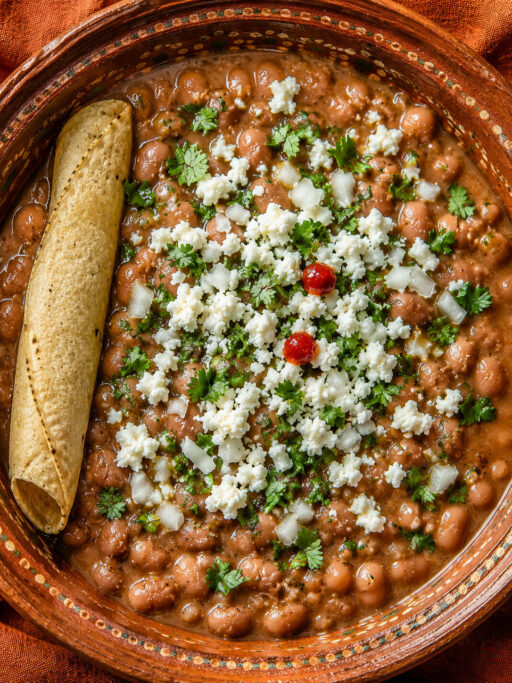
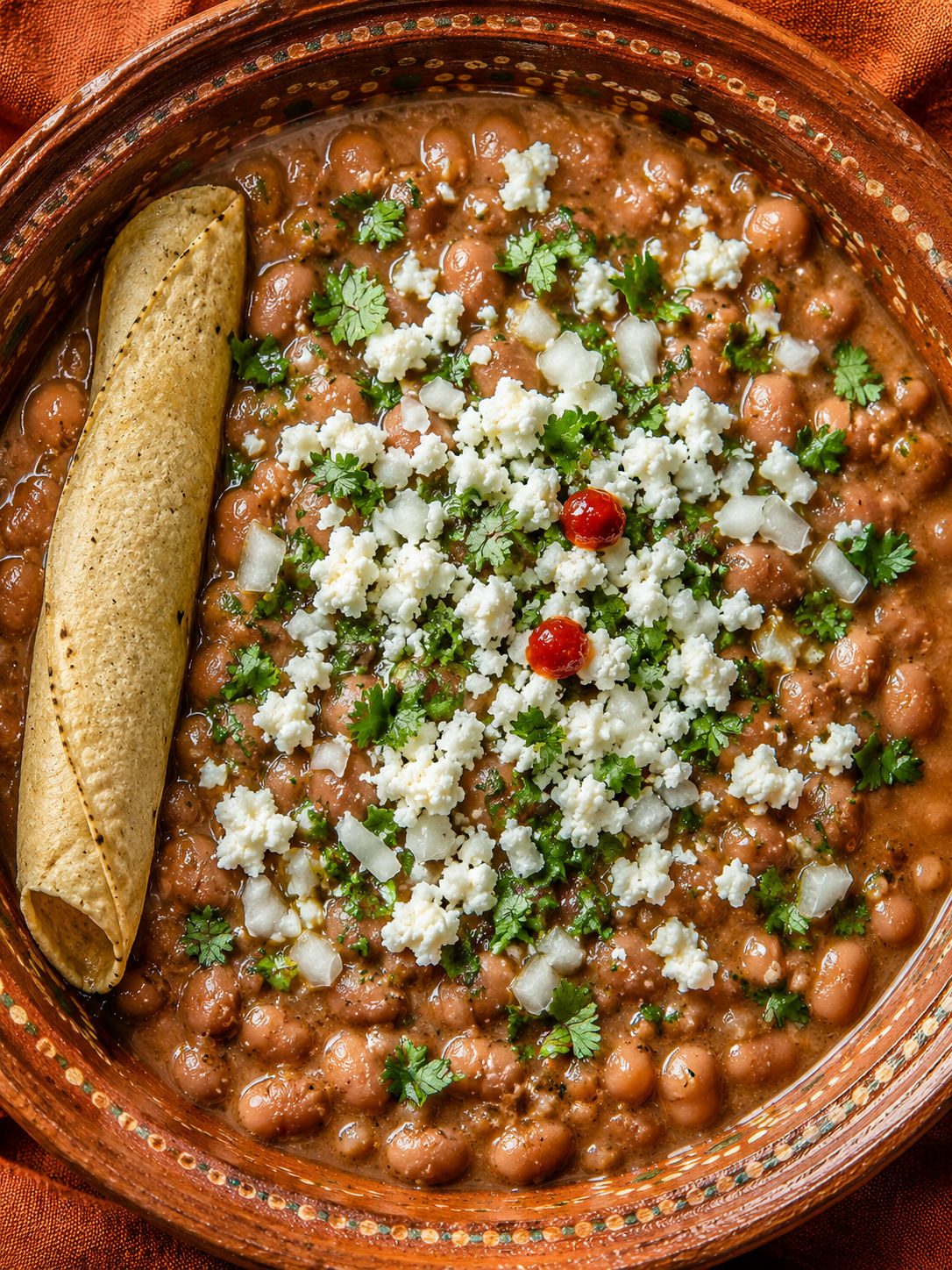

Frijoles de la olla means “beans from the pot,” and in Mexico that is exactly what they are. A clay or heavy pot filled with dried pinto beans, water, a halved onion, and a patient flame. The beans cook slowly until the broth turns thick and savory, and that broth matters as much as the beans themselves. People ladle it over tortillas or drink it warm from a cup alongside their meal.
This version adds thick-cut bacon and roasted green chiles, a northern Mexican touch that builds a smokier, deeper pot. The fat from the bacon soaks into the beans over hours of simmering, and the chile adds an earthy warmth that is hard to place but impossible to miss once it is gone. It is simple food, hearty enough to anchor a meal and patient enough to leave on the stove all afternoon.
If you have never cooked dried beans from scratch, this is a good place to start. The technique is forgiving. You only need to remember one rule, and it comes later in the article.
The Beans and What They Need
The ingredient list is short on purpose. Pinto beans cook best when you do not crowd them with too many competing flavors early. Focus on fresh dried beans and quality aromatics rather than shortcuts, and the pot takes care of the rest.
- Dried pinto beans. The foundation of the dish. Buy a fresh bag from a store with good turnover. Old beans resist softening no matter how long you simmer them.
- Thick-cut bacon. Chopped small and cooked first, it builds a base of smoke and fat that the beans absorb slowly over the cook.
- White onion. Added halved or quartered, it sweetens the broth as it cooks down and slowly disappears into the pot.
- Garlic. A few whole cloves, lightly smashed, add depth without turning sharp once they have simmered for two hours.
- Roasted Anaheim or Hatch green chiles. Their earthiness and gentle heat define the northern Mexican character of this pot. Roast them yourself under the broiler or use a can of fire-roasted green chiles in a pinch.
- Roma tomato. Diced and cooked with the aromatics, it adds a quiet acidity that keeps the broth from tasting flat.
- Epazote or Mexican oregano. Either brings the herbal note that separates a Mexican pot of beans from anything else. Dried works fine if you cannot find fresh.
- Salt. Added only after the beans are fully tender. This is not optional timing.
Cooking the Pot from Start to Finish
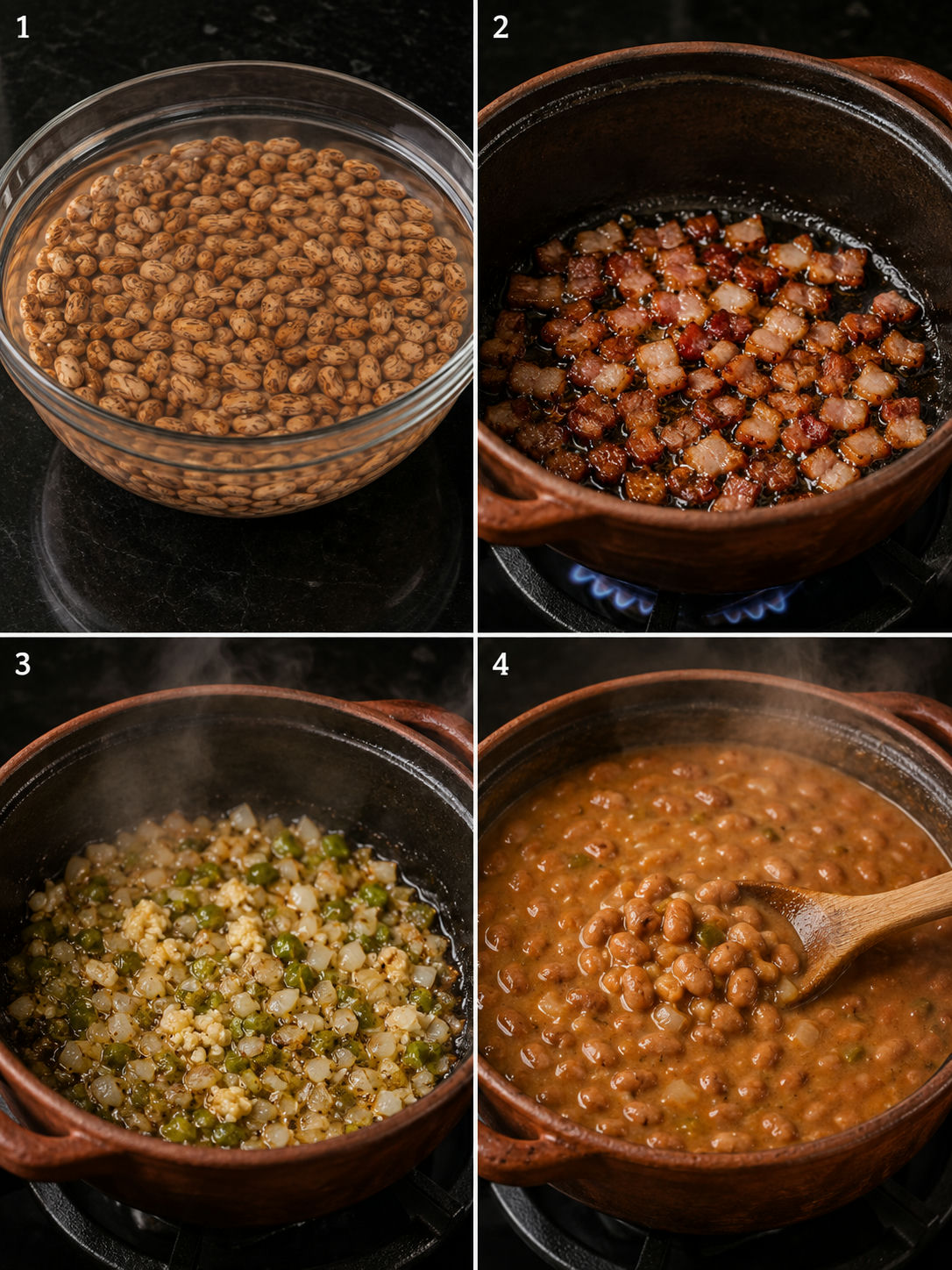
- Soak the beans. Rinse the dried pinto beans and place them in a large bowl. Cover with cold water by at least three inches. Soak overnight (8-12 hours), then drain and rinse. For a quick soak: boil beans in fresh water for two minutes, cover, rest one hour off the heat, then drain and rinse.
- Cook the bacon. In a large heavy-bottomed pot over medium heat, cook the chopped bacon until just crispy, about five minutes. Remove with a slotted spoon and set aside. Leave about one tablespoon of fat in the pot.
- Sauté the aromatics. Add the onion, garlic, and chopped green chiles to the bacon fat. Cook three to four minutes until softened and fragrant. Add the diced tomato and epazote or oregano. Stir and cook two more minutes.
- Build the pot. Add the soaked and drained beans. Pour in cold water to cover the beans by about three inches. Bring to a full rolling boil, skimming any foam that rises to the surface. Reduce heat to a low, steady simmer. Cover partially with a lid.
- Simmer until creamy. Cook for two to two and a half hours, stirring every 30 minutes. Add more water if the level drops below the beans. The beans are done when they are completely soft throughout and the broth has turned thick and slightly cloudy.
- Season at the end. Once the beans are fully tender, add salt generously and stir well. Taste and keep adjusting. Return the reserved crispy bacon to the pot and simmer five more minutes.
- Serve with the broth. Ladle into bowls with plenty of the bean broth. Top with crumbled queso fresco and fresh cilantro. Serve with warm corn tortillas on the side.
The One Rule That Changes Everything
Adding salt to dried beans before they are tender is the most common mistake in this recipe, and it causes real damage. Salt draws moisture out through the bean skin and firms it up, making the beans resist softening even after hours on the stove. You can cook salt-hardened beans for four hours and still find a chalky, grainy center.
Hold off entirely until the beans are completely soft and you can crush one between two fingers without any resistance. Then add salt all at once, stir, taste, and adjust. A well-seasoned pot of frijoles should taste almost bold on its own, since it will mellow once it meets the tortilla or rice on the plate. The USDA also recommends bringing dried legumes to a full boil at the start of cooking to neutralize naturally occurring compounds in raw beans that can cause digestive discomfort.
Turning Leftovers into Refried Beans
Leftover frijoles de la olla are the starting point for the best homemade refried beans you will ever make. Heat a tablespoon of lard or vegetable oil in a skillet over medium heat. Add a ladleful of beans and some of the broth. Start mashing with a fork or potato masher. Add more broth a little at a time, mashing and stirring, until the texture is loose enough to spread but thick enough to hold its shape on a tortilla. A pinch of extra salt and a handful of shredded cheese stirred in at the end makes them genuinely good.
These go straight onto homemade Mexican tostadas, into burritos, or spread across a warm flour tortilla as a quick snack. They beat canned refried beans without much effort. You can also pair frijoles de la olla as a side alongside Mexican style chili beans for a bean-forward spread at the table.
Serving This the Right Way
Frijoles de la olla are traditionally served as a side, soup-style in clay bowls, with the broth ladled generously over the beans. They pair with almost anything on a Mexican table. Serve them next to easy Mexican style rice and warm tortillas for a simple, satisfying meal. For a full spread, add a bowl of authentic Mexican albondigas soup alongside and you have dinner covered.
Top each bowl with crumbled queso fresco, a spoonful of crema, chopped white onion, and fresh cilantro. A wedge of lime squeezed over the top adds brightness. A few drops of hot sauce never hurt.
Storing and Reheating Without Losing the Broth
Keep leftover beans in an airtight container with all of their broth for up to five days in the refrigerator. They thicken considerably overnight as the beans absorb more liquid. Add a generous splash of water when reheating on the stovetop over medium-low heat and stir to loosen. For longer storage, freeze in one- or two-cup portions for up to three months. Thaw overnight in the fridge and reheat gently. Do not freeze beans that have already been mashed for refried beans since the texture does not come back right after freezing.
FAQs
- Why are my pinto beans still hard after two or three hours of cooking?
-
The most common reason is old beans. Dried beans do not last indefinitely. A bag sitting in a pantry for a year or more can take twice as long to soften and sometimes never gets fully creamy. Adding salt or any acid before the beans are tender is another cause since it toughens the outer skin. Check the package date and make sure you season only after the beans are completely soft.
- Can I make frijoles de la olla without soaking the beans overnight?
-
Yes. Use a quick soak: bring the rinsed beans and plenty of cold water to a hard boil for two minutes, then remove from heat, cover, and rest for one hour. Drain, rinse, and proceed with the recipe. The stovetop cook time stays about the same. Overnight soaking gives a slightly more even, creamier texture, but the quick method works well on a busy day.
- Can I make this recipe without bacon, to keep it vegetarian or vegan?
-
Absolutely. Skip the bacon and cook the aromatics in a tablespoon of lard or vegetable oil instead. Add a sprig of fresh epazote if you can find it, or a bay leaf and a pinch of dried Mexican oregano. The beans will taste lighter and cleaner without the smoke, but still deeply satisfying. A drizzle of good olive oil added just before serving adds back some richness.
- What is epazote and do I have to use it?
-
Epazote is a wild herb native to Mexico and Central America with an earthy, slightly pungent flavor. It is traditional in many Mexican bean pots and is said to help reduce the gas-inducing compounds in dried legumes. You can find it fresh or dried at Latin grocery stores. It is optional in this recipe, but worth adding if you can get it. A sprig or two during the last hour is enough.
- How long do cooked frijoles de la olla keep?
-
Store leftovers with the broth in an airtight container in the refrigerator for up to five days. The beans thicken as they sit, absorbing the liquid. Add a splash of water when reheating on the stovetop over medium-low heat. They also freeze well for up to three months in one- or two-cup portions. Thaw overnight in the fridge and reheat gently.
- Can I use a slow cooker instead of the stovetop?
-
Yes. Sauté the bacon and aromatics on the stovetop first, then transfer everything to the slow cooker with the soaked beans and enough water to cover by about three inches. Cook on LOW for seven to eight hours or HIGH for four to five hours. Add salt only during the last 30 minutes. The texture comes out slightly softer than stovetop, which many people prefer for serving over rice or tortillas.
- What should I serve with frijoles de la olla?
-
Warm corn tortillas are the most traditional pairing. The beans also go naturally alongside Mexican rice, grilled meats, or scrambled eggs with chorizo for breakfast. Leftovers are ideal for homemade refried beans, which you can use in burritos or tostadas. A bowl of the soup-style beans served as a side next to a hearty main is a complete meal on its own.
References
Sources cited in this recipe.