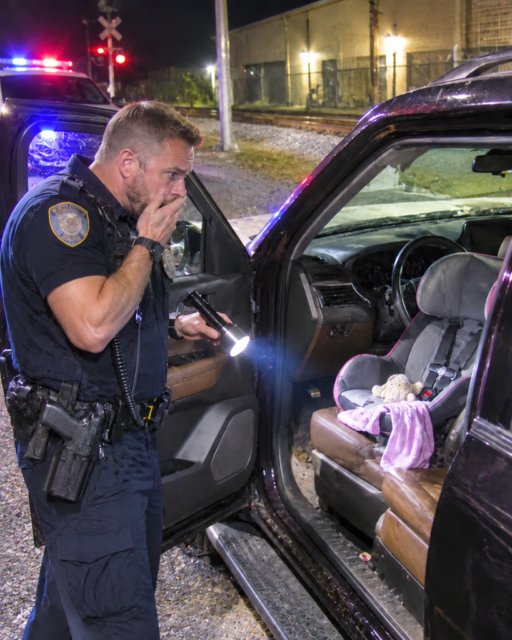
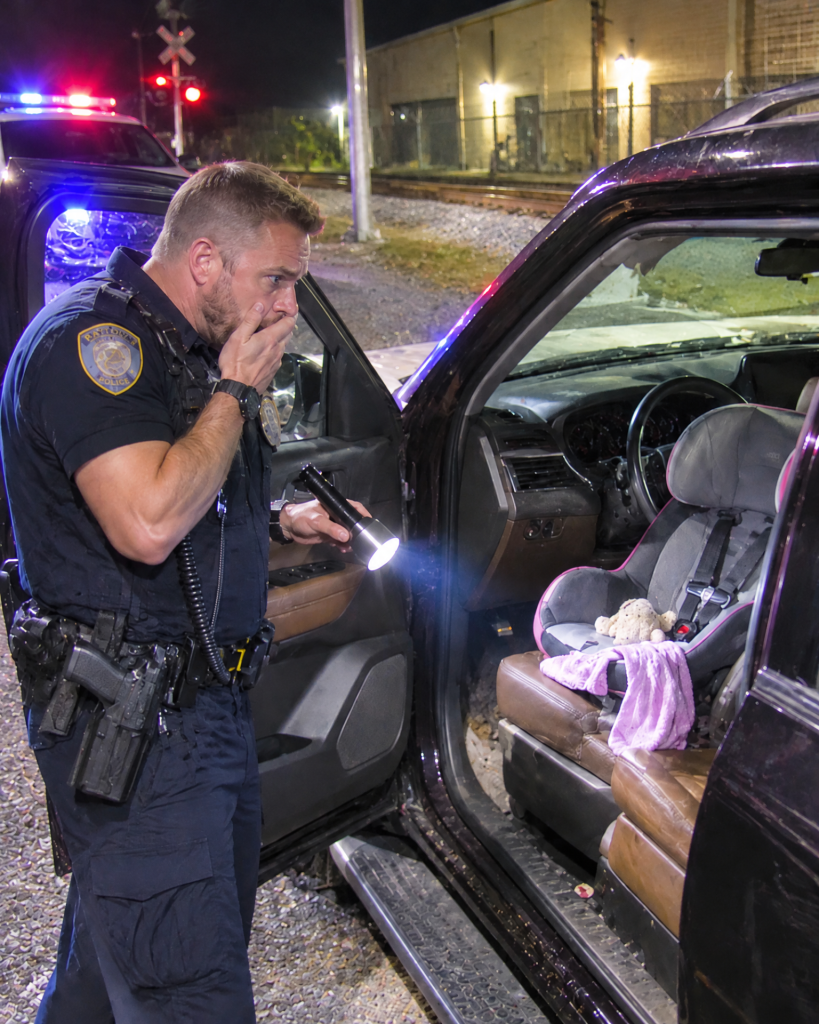

When the officer arrived carrying my little boy, I hurried toward them and reached out my arms. Matteo recognized me immediately, grabbing my hair with both fists as he began crying.
“MAMA!”
I held him tightly against my chest, overwhelmed by the relief of finally having him back. His cheeks were bright red, and his small body felt cold, but he was conscious, responsive, and safe.
He was still wrapped in a jacket that didn’t belong to anyone in our family. It was the coat the teenager had removed from his own body to keep Matteo warm beside the railroad tracks.
Medical staff examined my son, and fortunately, he had not suffered any serious harm. I stayed close to him throughout the examination, unable to stop thinking about how differently the night might have ended.
The teenager’s name was Brecken, and he was seventeen years old. Police charged him with stealing our vehicle, and the case eventually went before a judge.
At the hearing, the circumstances surrounding Matteo’s rescue became an important part of the proceedings. Brecken admitted that he had taken the car without permission, but he also explained that he hadn’t known a child was inside when he drove away.
He described hearing Matteo crying, panicking, and later trying to find somewhere safe to take him after the engine stopped. The court also heard how he had given up his own jacket to protect my son from the freezing temperature.
When Brecken looked toward me, his expression was filled with regret.
“I’m really sorry, ma’am. I shouldn’t have taken your car. I promise I never wanted to hurt your baby.”
I looked at the teenager who had frightened me more than anyone ever had, remembering the image of Matteo wrapped in his coat.
“I believe you didn’t want to hurt him. You gave him your jacket when he needed it.”
The judge considered the full circumstances and sentenced Brecken to community service rather than juvenile detention. His decision didn’t erase the seriousness of the theft, but it acknowledged the teenager’s actions after discovering Matteo.
Kristof also faced criminal consequences for what happened that night. He was charged with child endangerment after leaving our two-year-old son unattended in a running vehicle for approximately forty minutes during freezing weather.
Throughout the proceedings, Kristof continued describing his decision as an isolated lapse in judgment. He insisted that he had never expected anyone to steal the car and seemed frustrated that people blamed him for another person’s crime.
“It was one mistake. I never thought anything like this could happen.”
The judge listened before carefully reminding him of the facts.
“Your son was taken by a stranger while you were watching football. The reason he survived that night was that the person who stole your car showed him the care you failed to provide.”
Kristof had no answer.
He received probation and was ordered to attend mandatory parenting classes. For the first time, the consequences of his obsession with sports could no longer be dismissed as forgotten plans or disappointing behavior.
I had spent years forgiving him for overlooking birthdays, ignoring responsibilities, and putting football ahead of our family. But leaving Matteo alone in a running car wasn’t something I could treat as another ordinary mistake.
Our son had been placed in danger because the person responsible for protecting him had chosen a football game instead.
And I knew our marriage could never return to what it had been before that night.
Kristof moved out of our home in January, several weeks after the incident that nearly cost us our son. He also sold his football tickets to help pay his legal expenses, although by then the damage to our marriage was far greater than any financial loss.
I didn’t make that decision because I believed Kristof had intended to hurt Matteo. I made it because I could no longer ignore how consistently he had placed his own interests ahead of the people who depended on him.
For years, I had accepted forgotten anniversaries, unpaid bills, and broken promises as frustrating parts of his personality. But the night outside Rocky’s Sports Bar showed me what could happen when his lack of attention involved something far more important than a missed celebration.
Matteo had been only two years old, completely dependent on adults to keep him safe. He couldn’t unlock a car door, call for help, or understand why his father had disappeared into a building and left him alone.
That realization stayed with me long after the police returned him to my arms.
I also continued thinking about Brecken, the teenager who had stolen our vehicle. His actions had caused a terrifying emergency, and I didn’t want to minimize the seriousness of his decision.
Yet when he discovered Matteo inside the car, he hadn’t abandoned him. After the engine stopped and the heater went cold, Brecken had taken my son out of the vehicle and tried to bring him somewhere safe.
I kept the jacket he had wrapped around Matteo, unable to forget how important it had been during those freezing minutes near the railroad tracks. Eventually, I washed it carefully, folded it, and arranged to return it to Brecken at the community service center.
I included a short handwritten note because I wanted him to understand that his mistake didn’t have to determine the rest of his life.
“Thank you for keeping my son warm. You’re better than the worst thing you’ve ever done.”
I didn’t expect a response, but some time later, Brecken wrote back.
“I’m planning to go to college next year. I want to become a firefighter. Please tell Matteo I said hello.”
I read his message several times, thinking about the frightened teenager Officer Imani had found holding my son beside the tracks. He had made a terrible decision when he stole the car, but he had also shown that he was capable of compassion when someone vulnerable needed help.
I hoped he would follow through with his plans and build a better future. His desire to become a firefighter seemed especially meaningful because he had already experienced what it meant to be responsible for another person’s safety.
I never forgot the fear I felt when Officer Imani told me the car seat was empty. Even after Matteo was safely home, certain memories could bring back the helplessness of those minutes when I didn’t know where he was.
But I also remembered the relief of hearing him cry through the phone. That sound had been the first sign that the nightmare might end with my little boy returning to me.
Matteo is three years old now, and he still has his curly black hair, round cheeks, and endless curiosity about the world. He also continues calling every animal a “doggy,” regardless of whether we’re looking at a puppy, a cow, or something completely different.
Our lives have changed since that December night, but I am grateful that Matteo is still here to grow, learn, and fill our home with his cheerful little voice. I don’t know how much of that evening he will remember when he’s older, and I hope its frightening details eventually fade completely.
There is one place that always reminds me of what happened, though not only because of the fear we experienced.
Whenever Matteo and I drive past the fire station on 27th Street, he becomes excited as soon as he sees the emergency vehicles. He points toward the building, smiling as he recognizes the familiar red trucks.
“Mama! Fire truck!”
I always smile back and honk the horn twice.
Matteo doesn’t know that a frightened seventeen-year-old once carried him through the freezing darkness, hoping to reach that same fire station. He doesn’t understand that the boy who had stolen our car was trying to find someone who could keep him safe.
One day, when Matteo is old enough, I may tell him the whole story. I’ll explain how a moment of terrible irresponsibility placed him in danger, how a stranger made a frightening mistake, and how that same stranger chose to protect him rather than leave him alone.
I’ll also tell him about Officer Imani, who followed the vehicle’s location through the industrial streets and searched the snowy ground until she found him. Her determination, together with Brecken’s decision to keep him warm, gave us the ending I had desperately prayed for.
I can’t change what happened outside that sports bar, and I can’t erase the fear that followed me through the hospital that night. But I can remember the people whose actions brought my son home safely.
And every time Matteo points excitedly toward the fire station, I think about the jacket that once kept him warm and the teenager who hoped to become a firefighter.
Then I honk twice, grateful that my little boy is sitting safely beside me.