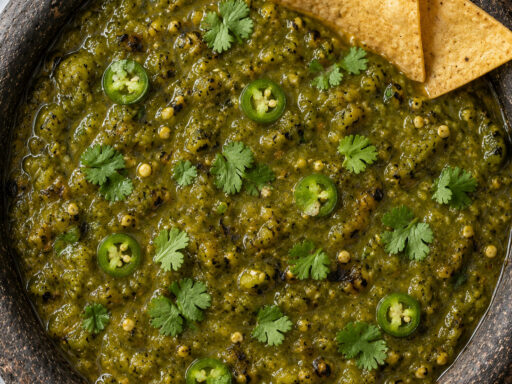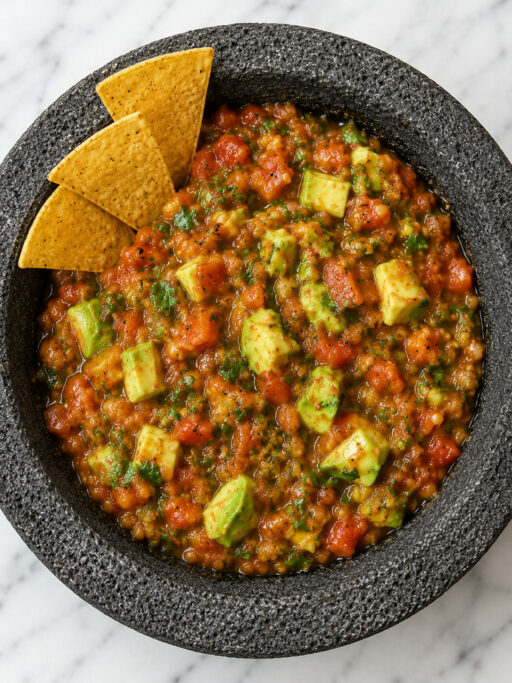
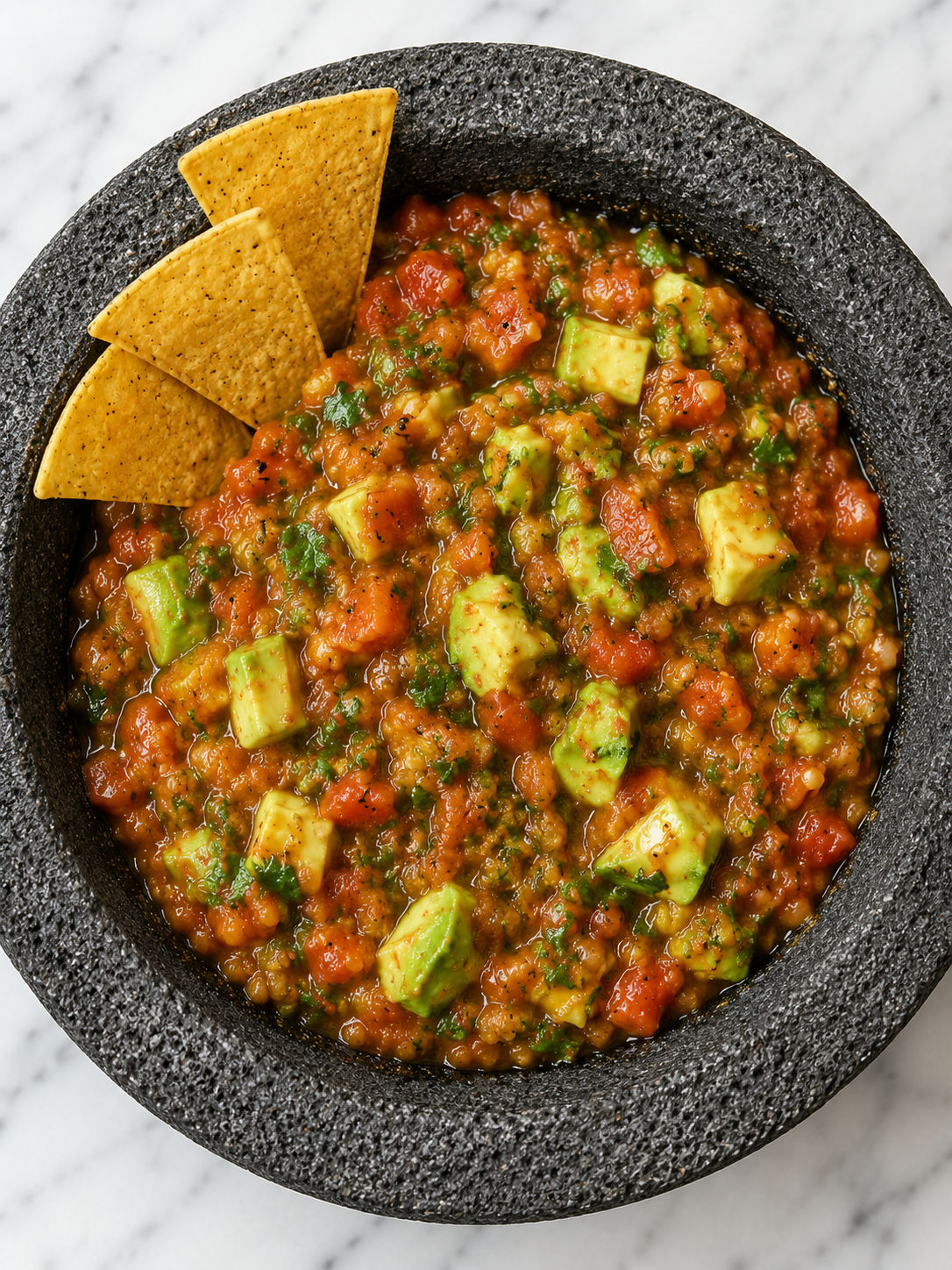

This is not guacamole, and it is not a standard red salsa either. Salsa de molcajete con aguacate lives somewhere between the two, and once you make it this way you will understand why stone mortars have stayed on Mexican kitchen counters for generations.
The charring is the whole point. When you blister tomatoes and chiles over direct heat, the smoky, slightly sweet depth that develops cannot be replicated in a blender. The rough texture from the molcajete keeps bits of tomato and avocado intact so every scoop feels fresh and alive.
This takes about 20 minutes and uses ingredients you likely already have. Serve it alongside chips, on top of tacos, spooned over eggs, or as a sauce for any grilled meat.
Six Ingredients, All Earning Their Place
Every item in this salsa does something specific. You do not need a long list, you need the right ones treated well. Look for firm, ripe Roma tomatoes and an avocado that gives slightly under gentle thumb pressure but is not mushy.
- Roma tomatoes. Meaty and low in moisture so the salsa holds its body after mashing. Charring concentrates their sweetness and adds smoke.
- Serrano or jalapeño peppers. Serranos add sharper heat; jalapeños are gentler. Either roasts beautifully and gives the smoky backbone this salsa depends on.
- Garlic cloves. Roasted unpeeled until caramelized and soft, then peeled and ground first with salt to form the base paste that ties everything together.
- White onion. A small wedge, charred until the edges blacken and the center softens. It adds sweetness and depth without overpowering the tomatoes.
- Ripe avocado. Mashed directly into the salsa base at the end. It brings creaminess and a mild richness that cools the heat from the chiles.
- Fresh cilantro. Stirred in raw at the finish. Its bright herbal flavor cuts through the smoke and fat and lifts the whole bowl.
Char, Grind, Mash in Order
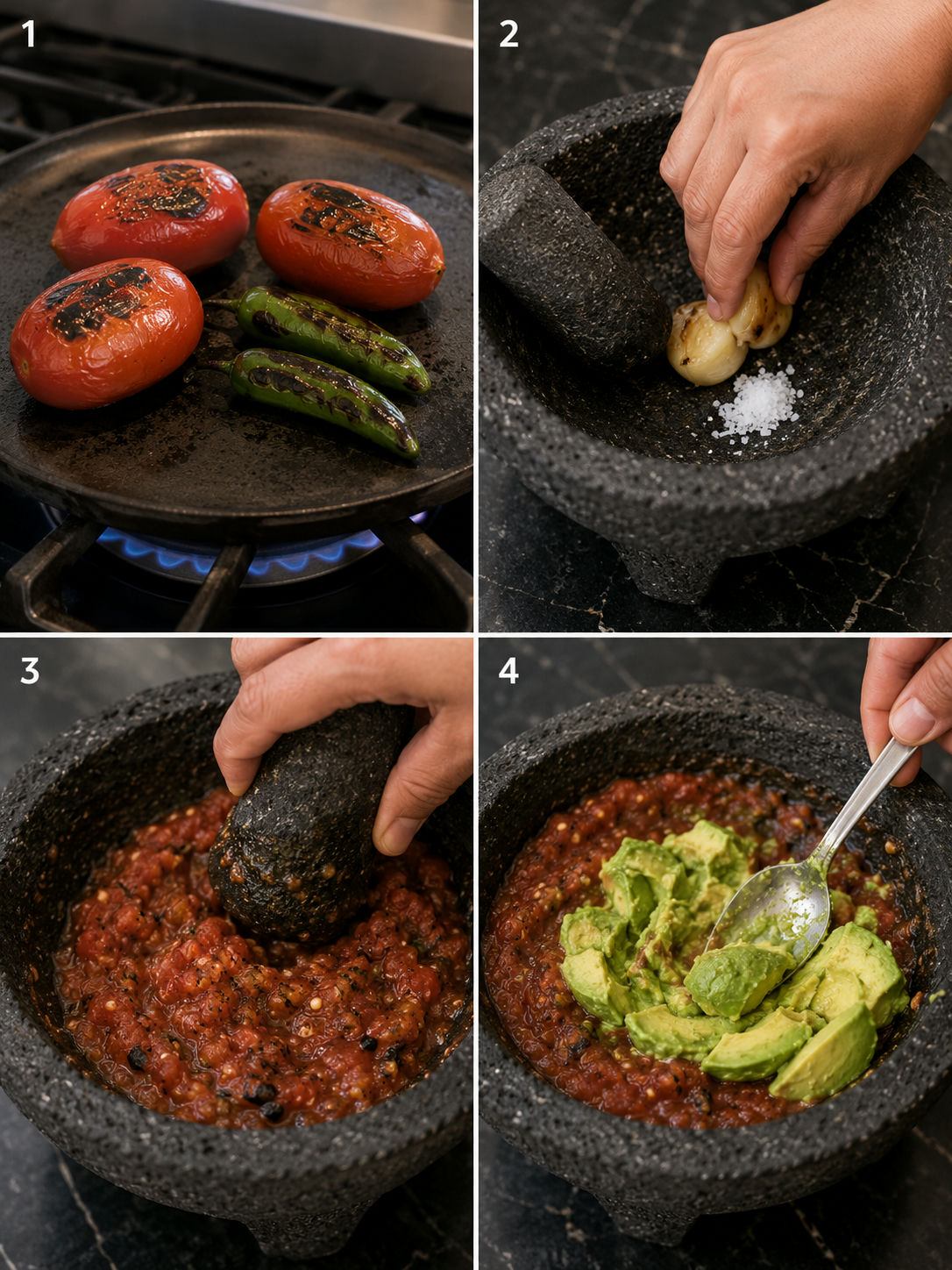
- Char the vegetables. Place the tomatoes, peppers, unpeeled garlic cloves, and onion wedge in a dry comal or heavy skillet over medium-high heat. Turn with tongs every 2 to 3 minutes until all sides show dark char marks and the tomatoes are soft and leaking juice, about 8 to 12 minutes. Remove from heat and let cool enough to handle.
- Grind the garlic. Peel the garlic cloves. Place them in the molcajete with a generous pinch of salt. Grind in a circular motion until a smooth paste forms, about 1 minute. This base holds the whole salsa together so take your time here.
- Work in the peppers. Remove the stems from the roasted peppers and add them to the molcajete. Grind into the garlic paste until you have a rough, chunky puree with visible flecks of charred skin.
- Mash in the tomatoes. Add the roasted tomatoes one at a time, mashing and grinding each one into the base before adding the next. The skins will break down naturally. Roughly chop the charred onion and stir it in. Stop when you have a textured salsa with some visible tomato pieces.
- Add the avocado. Halve the avocado, remove the pit, and scoop the flesh into the molcajete. Mash and fold it into the tomato base, leaving some texture. It should look chunky and cohesive, not smooth.
- Season and finish. Stir in the chopped cilantro and lime juice. Taste and adjust salt. Serve straight from the molcajete while it is fresh.
Why Charring Does the Heavy Lifting
Charring transforms the raw sharpness in tomatoes and chiles into something deeper and more complex. The high heat concentrates natural sugars and creates new flavor compounds across the blistered skins. That smokiness you taste in a great molcajete salsa is not added, it is coaxed out of the ingredients themselves.
A comal works best because it holds heat evenly and lets the tomatoes sit long enough to develop real color. A cast-iron skillet is a fine substitute. For even more smoke, char directly over a gas burner flame using tongs, though the comal gives you more control. The cooking science guides at Serious Eats cover how charring and the Maillard reaction change vegetables if you want to understand the mechanics more deeply.
This same roasting method is what drives the depth in Salsa Quemada, a roasted tomato and tomatillo salsa that uses the identical charring technique for equally bold flavor.
No Molcajete? Use a Food Processor
The molcajete gives you control over texture and a porous stone surface that retains some of the smoky aroma. But a food processor or blender handles bigger batches well. Add the roasted garlic and chiles first and pulse a few times. Add the tomatoes and pulse again until roughly chopped. Fold in the mashed avocado by hand after blending so it stays chunky rather than whipped smooth.
If you want a no-cook avocado salsa with a similar fresh flavor, the Cilantro Lime Avocado Salsa skips the charring entirely and comes together in minutes. For a smoky tomatillo version that follows nearly the same process, the Roasted Tomatillo Avocado Salsa swaps tomatoes for tomatillos and is equally good.
Controlling Heat and Richness
One serrano gives mild heat with a grassy, bright character. Two serranos push it into medium territory. For more heat without adding extra pepper, stir in a pinch of dried chile de arbol powder at the end. For a milder salsa, use one jalapeño and remove the seeds before grinding.
The avocado controls richness. One full avocado makes it thick and creamy. Half an avocado keeps it closer to a standard tomato salsa with a soft, smooth finish. More mashing gives you a spreadable texture good for tostadas. Less mashing keeps it scoopable and chunky for chips and tacos.
What to Eat This With
Tortilla chips are the obvious starting point, but this salsa is worth putting on real food too. Spoon it over Carne Asada Street Tacos straight off the grill. The smokiness in both the meat and the salsa reinforce each other in a way that a fresh, uncharred salsa simply cannot match.
It also sits beautifully over scrambled eggs with black beans for breakfast, on top of a crispy tostada, or alongside any roasted or grilled chicken. Because this salsa pulls double duty as both a dip and a guacamole substitute, you only need to bring one bowl to the table. Serve it in the molcajete itself for a casual, good-looking presentation that takes zero extra effort.
Keeping the Salsa Fresh
Store leftovers in an airtight container. Press a sheet of plastic wrap directly onto the surface of the salsa before putting on the lid. This limits air contact and slows surface browning significantly.
Refrigerate and use within 2 days. The very top layer will darken, which is normal. Stir it back in before serving and add a small squeeze of lime to brighten the flavor again. Do not freeze this salsa. Avocado turns grainy and watery when thawed and does not recover its texture.
FAQs
- Can I make this without a molcajete?
-
Yes. A food processor or blender works fine, though the texture will be smoother. Pulse in short bursts rather than running it continuously to keep some chunks. A fork also works for very small batches if you like it rough and thick.
- What is the difference between this salsa and guacamole?
-
Guacamole is avocado-forward and built around lime and herbs. This salsa starts from a charred tomato and chile base, so the avocado enriches and smooths the mix rather than starring in it. The result is smokier, more tomatoey, and less creamy overall. Think of it as a salsa made more substantial with avocado rather than a guacamole that happens to have tomato in it.
- How do I keep the avocado from turning brown?
-
The acidity from the roasted tomatoes and a squeeze of lime slows oxidation considerably. Press a piece of plastic wrap directly onto the surface of the salsa before refrigerating. The top layer may darken slightly within a few hours, which is normal. Stir before serving and it will look fresh again.
- How spicy will this be?
-
One serrano makes it mildly spicy with a grassy, bright heat. Two serranos push it into medium territory. Jalapeños are gentler than serranos, so they work well if you want flavor without a strong burn. Charring the chiles first also softens their raw bite so the heat registers as warm rather than aggressive.
- Can I use a different type of tomato?
-
Roma tomatoes are ideal because they are meaty and low in moisture, which keeps the salsa from turning watery after mashing. Vine tomatoes or plum tomatoes also work well. Avoid very juicy varieties like beefsteak since they release too much liquid when charred and the salsa becomes thin.
- How long does this salsa keep in the refrigerator?
-
It is best on the day you make it. Stored in an airtight container with plastic wrap pressed onto the surface, it holds for up to 2 days in the fridge. The avocado darkens a bit but the flavor stays good. Stir and taste for salt before serving again.
- What dishes pair best with this salsa?
-
It shines on carne asada tacos, grilled chicken, and scrambled eggs with black beans. It also works as a topping for tostadas, quesadillas, and fish tacos. Because it pulls double duty as both salsa and guacamole, you only need one bowl on the table.
References
Sources cited in this recipe.