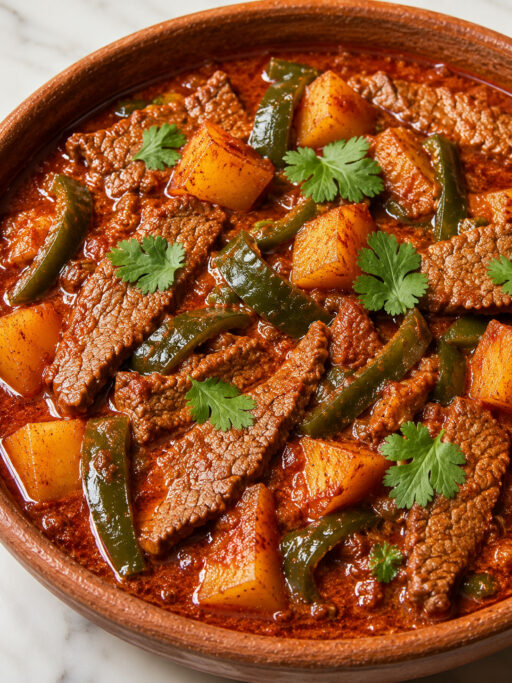
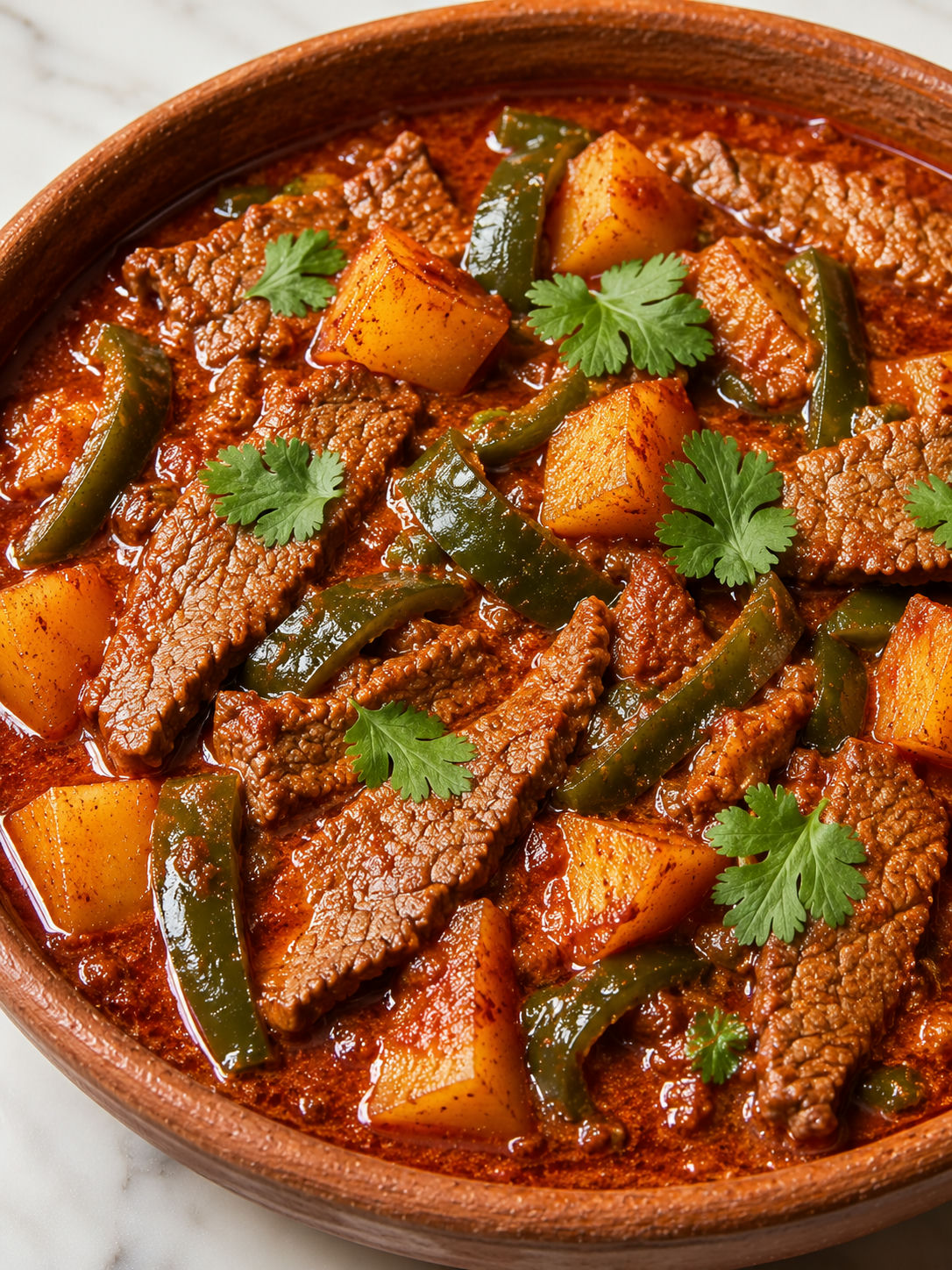

Bistec ranchero is the kind of meal that fills the kitchen with the smell of charred tomatoes and warm spices before it even hits the table. Thinly sliced beef braises low and slow in a rustic salsa ranchera, with cubed potatoes that soak up every bit of that smoky sauce.
Like most Mexican home cooking, this dish asks for patience more than technique. The salsa is built on charred vegetables, not raw ones. The meat gets seared first, then left to steam in its own juices until it is genuinely fork-tender. Then everything comes together in one pot.
If you have 45 minutes and a cast iron pan, you can make this tonight.
What Goes Into Bistec Ranchero
Two things matter most here. Thin-sliced beef and tomatoes with some real char on them. Round steak or sirloin from a Mexican butcher is ideal, but any thin-cut beef will work with the right technique.
- Thinly sliced beef steak. Round, sirloin, or chuck cut to about 1/4 inch. Thin slices are what let the low braise make the meat tender rather than tough.
- Roma tomatoes. Charred directly on a dry hot pan until soft and blistered. This is where the salsa gets its depth.
- Jalapeño peppers. They lose most of their raw bite during roasting but keep a steady kick in the finished sauce.
- White onion. Half goes into the salsa, half gets added with the potatoes for a savory backbone during the braise.
- Garlic. Roasted unpeeled alongside the tomatoes for a mellow, rounded flavor that is nothing like raw garlic.
- Cumin seeds. They tie the salsa together with earthy warmth. Ground cumin works fine if that is what you have.
- Yukon Gold potatoes. Waxy enough to hold their shape during cooking and starchy enough to absorb the sauce without turning to mush.
- Roasted poblano strips (rajas). Add mild smokiness and a classic Mexican flavor note. Canned is a convenient shortcut and works very well.
- Neutral oil. For searing the beef over high heat at the start of cooking.
How This Dish Comes Together
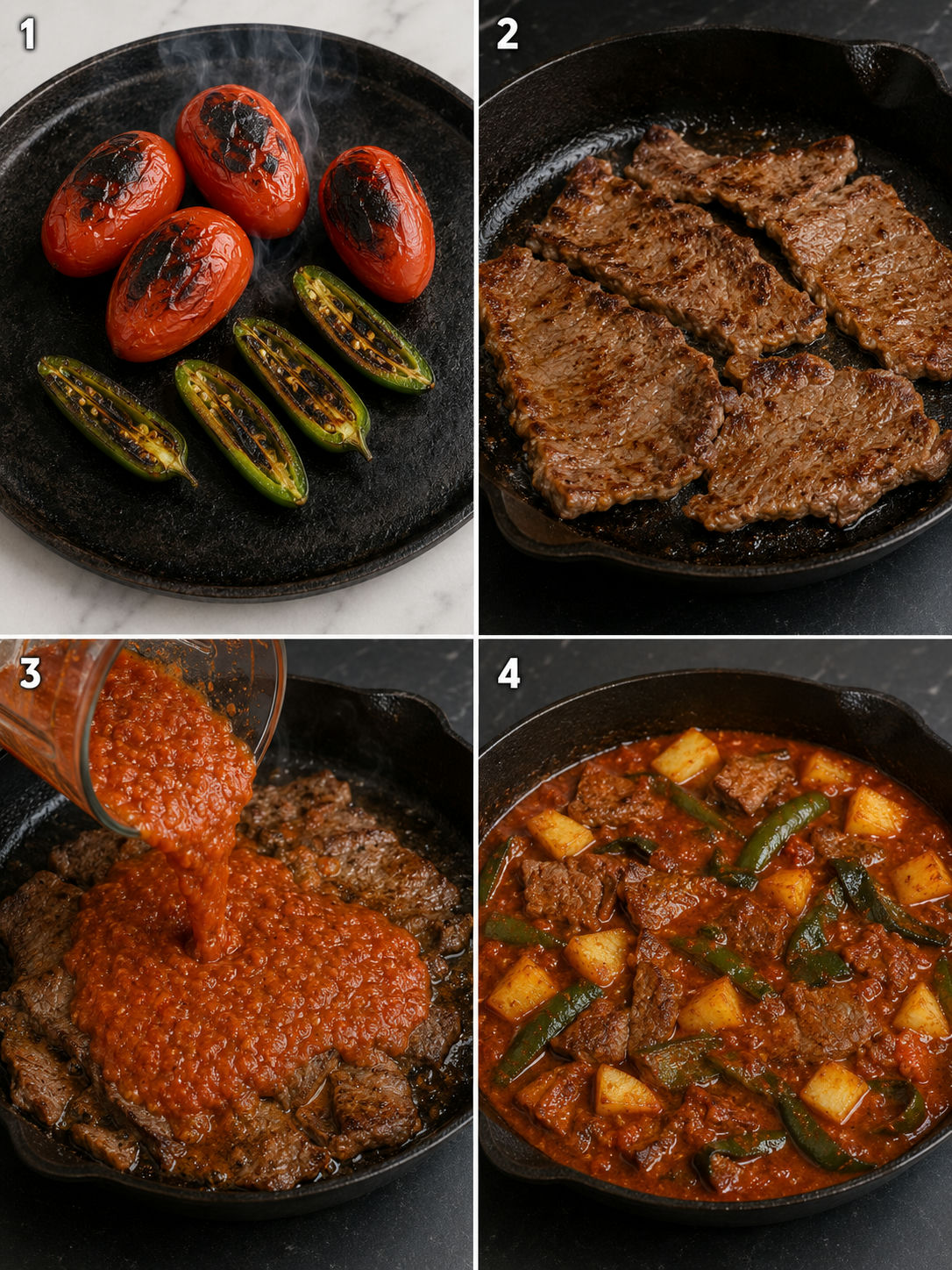
- Char the salsa vegetables. Set a dry cast iron skillet or comal over high heat. Add the whole tomatoes, jalapeños, half the onion, and unpeeled garlic cloves. Roast for 8-10 minutes, turning once or twice, until charred and soft on all sides. No oil needed.
- Blend the salsa ranchera. Peel the roasted garlic and transfer all the charred vegetables to a blender with cumin, a pinch of salt, and 1/2 cup water. Pulse just 2-3 times. The salsa should stay rough and chunky with visible texture, not smooth.
- Season and sear the beef. Season the sliced steak on both sides with salt, pepper, garlic powder, and cumin. Heat oil in a wide, lidded pan over high heat. Sear the beef for about 1 minute per side until browned. Work in batches if needed so the pan stays hot.
- Braise until tender. Once all the beef is back in the pan, cover tightly and reduce heat to its lowest setting. Cook for 25-30 minutes until the beef is very tender. Add 2-3 tablespoons of water if the pan looks dry at any point.
- Add potatoes and onion. Uncover and add the cubed potatoes and remaining diced onion. Stir over medium heat for 2 minutes to coat everything.
- Pour in the salsa and finish. Add the salsa ranchera and enough water to just cover the ingredients. Bring to a boil. Stir in the drained poblano strips. Cover and cook over medium-low heat for 10-15 minutes, stirring once or twice, until the potatoes are fork-tender.
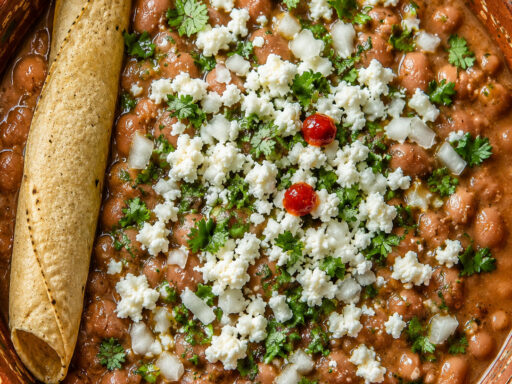
- Taste and serve. Adjust salt. Serve hot with warm corn tortillas and a generous side of authentic pinto beans.
Why the Char on the Salsa Matters
The salsa ranchera is what separates bistec ranchero from a basic beef stew. Roasting the tomatoes, onion, and chiles directly on a dry, screaming-hot pan develops a depth of flavor that sautéing in oil cannot replicate. Let the tomatoes actually blister. Let the garlic skins blacken in spots. Those char marks translate directly into smokiness in the finished sauce.
A blender is fine here. Two or three pulses gives you a rough, rustic texture with real body. If you own a molcajete, this is the right dish to use it. Grinding by hand gives you even more control and a coarser texture that holds up beautifully in the braise. Either way, the goal is a sauce that looks hand-made, not pureed.
Getting the Beef Tender Every Time
Thin slices are essential. The method relies on the beef steaming gently over very low heat in its own juices, and it only works when the meat is cut thin enough to cook through without toughening up. Ask a Mexican carnicería for “bistec” and they will cut it for you. At a regular grocery store, ask the meat counter for thin-sliced round or sirloin. Doing it yourself at home? Pop the steak in the freezer for 15 minutes first. The firmness makes getting even 1/4-inch slices much easier with a sharp knife.
The quick sear at the start also matters. One minute per side over high heat builds color on the meat and adds real flavor to the finished sauce. Per the USDA FSIS food safety guidelines, whole-muscle beef should reach an internal temperature of 145°F. The 30-minute low braise in this recipe takes the meat well past that.
What to Serve Alongside It
This is a plate meal with clear supporting roles. Mexican rice on the side soaks up the extra sauce. Frijoles de la olla are the natural companion. A stack of warm corn tortillas rounds everything out, and a spoonful of cilantro lime avocado salsa on top adds a bright note that cuts the richness of the braise.
For a bigger spread, bistec ranchero pairs well alongside carne asada tacos. The braised beef and the grilled beef are different enough in texture and flavor that they complement each other on the same table without repeating the same taste.
How to Store and Reheat It
Leftovers keep in an airtight container in the fridge for up to 4 days. The sauce thickens overnight but loosens easily with a splash of water when reheated. A covered skillet over medium-low heat for 5-7 minutes is the best method. The microwave works but can toughen the beef if you overshoot the time.
For freezing, leave the potatoes out. They turn watery and grainy after thawing. Freeze just the beef in the sauce, then add freshly cooked potatoes when you reheat.
FAQs
- What cut of beef is best for bistec ranchero?
-
Thinly sliced round steak is the most traditional and affordable option. Sirloin is a step up in tenderness. Chuck steak works too with the full braise time. Ask a Mexican butcher for “bistec” cut to about 1/4 inch, or look for pre-sliced beef at a Latin market.
- Can I use fresh poblanos instead of canned rajas?
-
Yes. Roast 2-3 fresh poblano peppers directly over a gas flame or under the broiler until charred on all sides, then peel, seed, and cut into strips. Fresh rajas have a slightly brighter flavor. Canned is a reliable shortcut that still delivers the mild smoky pepper note the dish needs.
- How do I make the salsa ranchera less spicy?
-
Remove the seeds and white membranes from the jalapeños before roasting. For a milder result, swap them for a single Anaheim or pasilla pepper. The ranchero sauce can range from very mild to genuinely hot depending on the chile you use and how much of the seeds stay in.
- Can I make this in a slow cooker?
-
Yes. Sear the beef and make the salsa as directed, then transfer everything to a slow cooker with the potatoes. Cook on LOW for 6-7 hours or HIGH for 3-4 hours. Add the drained poblano strips during the last 30 minutes so they do not get too soft.
- Why do my potatoes turn mushy?
-
Russet potatoes break down more quickly than waxy varieties. Use Yukon Gold or red potatoes instead, and add them only for the last 10-15 minutes as directed. Adding them too early means they absorb too much liquid and fall apart before the beef is ready.
- How long do leftovers keep, and can I freeze them?
-
Leftovers keep in an airtight container in the fridge for up to 4 days. Reheat in a covered skillet with a splash of water over medium-low heat. For freezing, leave out the potatoes since they turn grainy when thawed. Freeze just the beef in the sauce and add freshly cooked potatoes when you reheat.
References
Sources cited in this recipe.