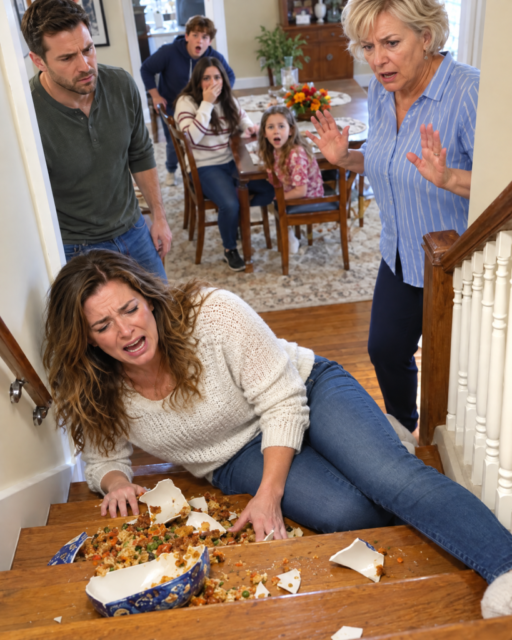
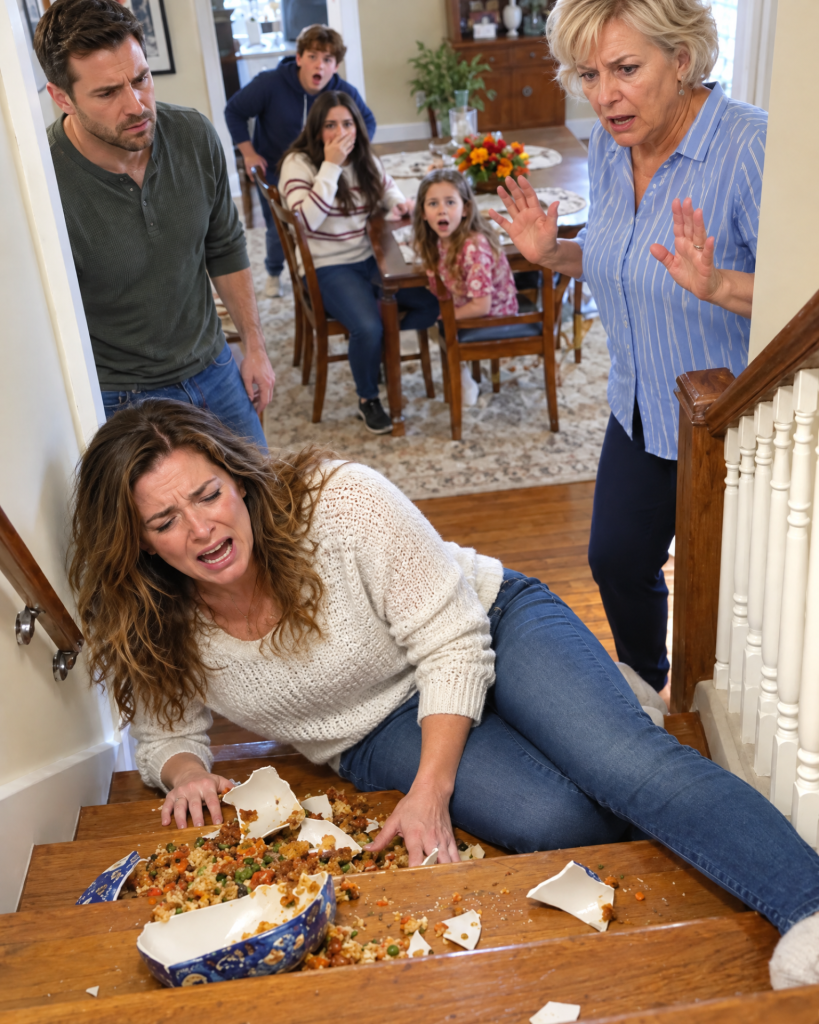

Their apologies could not erase the fact that neither had helped me on the concrete floor. Then Graham began typing in the same family chat, and I watched his name appear beneath theirs, waiting to see whether his promise would survive his mother reading it.
Graham’s message appeared beneath the relatives’ accounts, leaving no room for the explanation he had given at the hospital. This time, he put what he had witnessed in writing.
“I saw my mother put her hand on Nora’s back. Nora did not slip.”
Judith responded almost immediately, calling him ungrateful and accusing me of controlling him. Then she left the group chat, but her departure could not remove what everyone had read.
For years, the family had arranged itself around her reactions. Now, people’s accounts remained on the screen even after she refused to hear them.
I spent another night in the hospital, and Graham stayed in a hallway chair because I would not let him into my room. When he later said he had nowhere else to go, I told him I could not solve that problem while breathing still hurt.
My coworker arrived on discharge day with coffee, a clean sweatshirt, and a pillow to cushion the seat belt. Graham waited near the exit with my overnight bag and handed it to her without trying to lead me toward his car.
“I’m sorry.”
“I know.”
Acknowledging his apology did not mean I forgave him. It meant only that I had heard it.
For six weeks, my days revolved around medication, short walks, and follow-up appointments. I slept sitting upright because lying flat made the pain unbearable.
My coworker brought groceries and never demanded an explanation when footsteps behind me on the stairs made me cry. Graham moved into a short-term rental, and I answered his messages only when they concerned practical matters.
He paid the medical expenses insurance did not cover and gave a formal statement that matched his admission at the hospital. Judith, meanwhile, tried reaching me through relatives.
Depending on who carried her message, she called the incident an accident, a misunderstanding, or something the family should handle privately. Every version required me to help shield her from what she had done, so I stopped responding.
The case progressed through interviews and records. My chart documented the fractures, lung bruising, pressure mark, and account I had given before anyone could organize another explanation.
Graham’s first message showed that he knew about the push while telling staff I had slipped. His statement and the relatives’ accounts added to the record, and Judith’s attorney eventually advised her to stop denying she had touched me.
Months later, she accepted a resolution involving probation, counseling, restitution toward my medical costs, and an order prohibiting contact with me. She never offered a direct apology.
Her written statement expressed regret that a family disagreement had become physical. Even then, she avoided plainly describing what she had done.
Graham and I remained separated, although he asked me to attend counseling with him. I told him he needed help whether I returned or not, and he finally accepted that his progress could not depend on my participation.
As he began speaking honestly about his mother, he admitted that the staircase had not been the first warning. There had been a hand gripping my wrist too long at Thanksgiving and a doorway Judith blocked during an argument.
Then he recalled her remark about accidents happening to women who failed to respect their elders. I listened as he described each incident, realizing he had noticed them when they happened—and wondering how many times I had mistaken his silence for not knowing.
Graham admitted that he had treated each warning as an isolated incident. Recognizing the pattern would have meant confronting his mother, and he had repeatedly found reasons to postpone that choice.
His confession hurt almost as much as the lie he told in the emergency room. I had believed he failed to understand what Judith was doing, but he had understood enough to keep explaining it away.
By then, my decision was clear, and I filed for divorce. Graham did not contest it or insist that his efforts to change entitled him to another chance.
He had finally begun facing the way he managed his mother’s emotions at other people’s expense. I hoped he would continue, but I could no longer make my safety depend on whether he did.
The final paperwork arrived on a rainy afternoon nearly a year after the fall. My ribs had healed, although one spot still ached when the weather changed.
I was living in a small apartment on the second floor. At first, the staircase frightened me, and I held the railing so tightly that my fingers sometimes went numb.
Hearing someone behind me made it worse. I would pause to let them pass, unable to stop remembering the pressure between my shoulders and the moment my foot missed the step.
Gradually, walking upstairs became an ordinary part of coming home. I still noticed who was behind me, but I no longer reached my door shaking every time.
One Sunday, the coworker who had collected me from the hospital came over with two friends. She brought a casserole in an inexpensive glass dish, and we ate together at my kitchen table.
Nobody monitored my words or corrected my recollection of something I had lived through. I did not have to decide whether speaking honestly would ruin the afternoon for everyone else.
When we finished eating, my friend picked up the dish and asked where I wanted the leftovers. I glanced toward the refrigerator.
“Right there.”
She carried it across the kitchen and placed it on the middle shelf. I watched her close the door, struck by how uneventful the movement had been.
A dish had gone safely from the table to the refrigerator. Our Sunday dinner was ending with conversation and leftovers, and no one needed to be afraid.
For a long time, Graham’s plea had stayed with me, returning whenever I thought about the hospital. He had asked me to keep what happened inside the family, as though silence could protect something worth saving.
I understood the cost of that silence now. It had protected Judith, left me defending my injuries, and allowed everyone at dinner to avoid examining what their failure to act had meant.
Telling the truth did not undo the fall or restore my marriage. It gave the doctors an accurate account, made a record possible, and forced Graham to decide whether he would continue denying what he had seen.
I had once believed that belonging to a family meant absorbing painful things so everyone could remain together. Sitting at my own kitchen table, surrounded by people who had helped without asking me to make myself smaller, I no longer believed that.
The people I trusted were the ones who listened when I said I was hurt. With them, I could finish a Sunday dinner, put away the food, and expect to be safe.