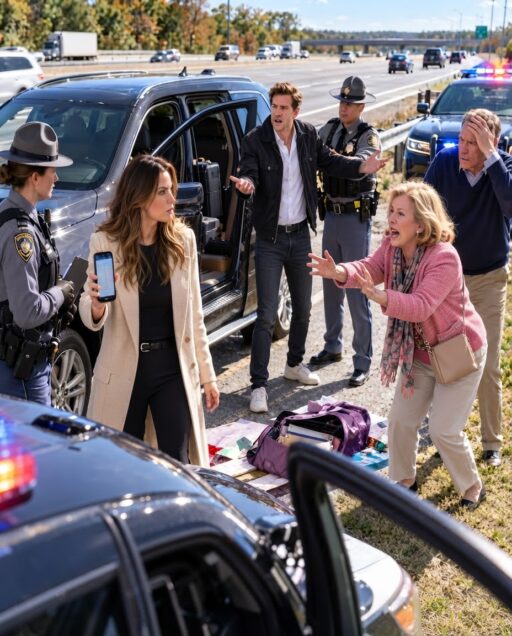
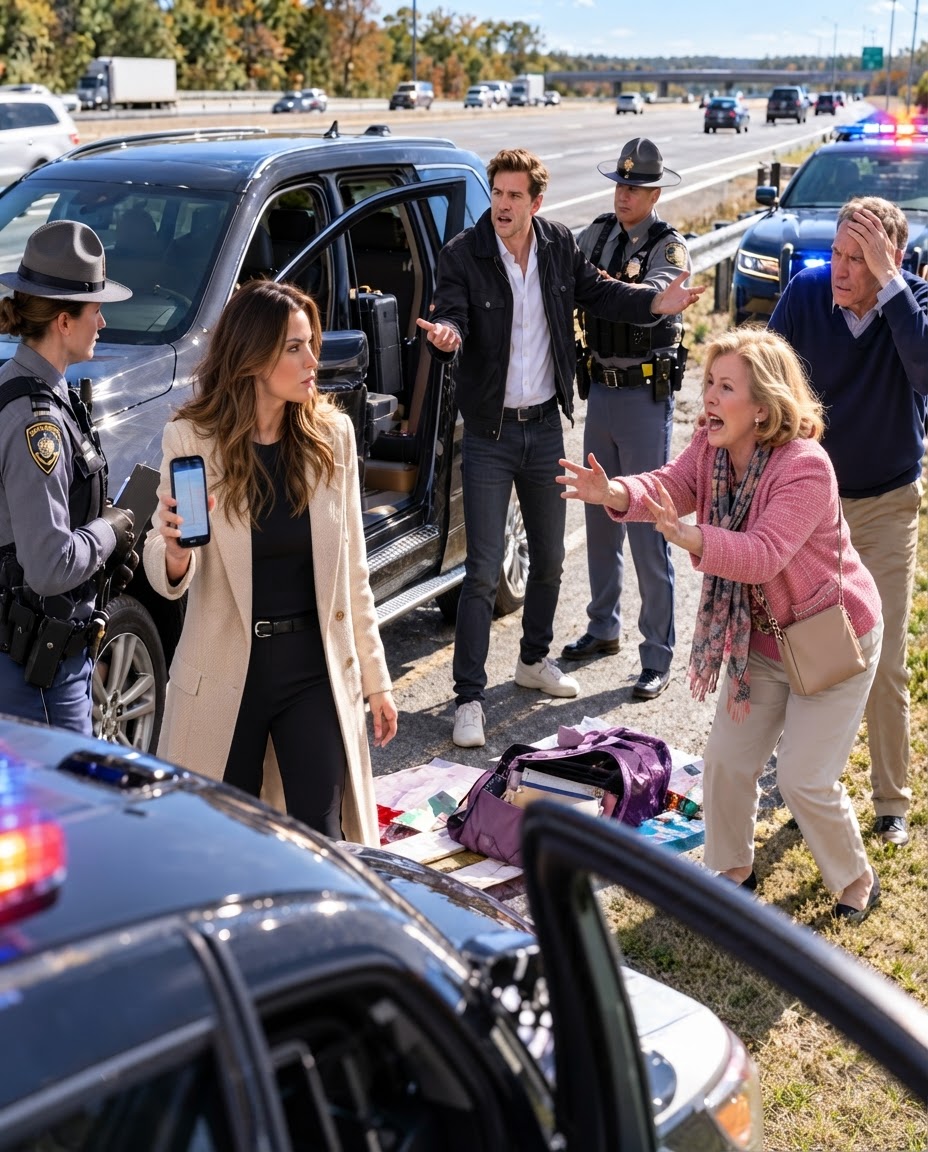

I looked at her, exhausted by the familiar expectation that I should protect Mason regardless of what he had done. Even after watching him deliberately smash my vehicle and ram it with his pickup, she remained more concerned about his reputation than the damage he had caused.
“Mom, Mason made his own decisions. I didn’t force him to pick up that tire iron, and I didn’t tell him to drive into my SUV.”
She began crying, but I no longer felt obligated to abandon my boundaries whenever she became emotional. For years, her tears had persuaded me to overlook unpaid debts, broken promises, and countless examples of Mason’s irresponsible behavior.
This time, the evidence was already secured, and the investigation would proceed without my family controlling the explanation.
Mason faced allegations involving felony vandalism, assault, and conspiracy to commit attempted insurance fraud. Vanessa was questioned after investigators reviewed footage showing her encouragement during the confrontation and examined her possible involvement in planning a false account.
My mother wasn’t arrested that afternoon, but her recorded suggestion that I lie to the insurance company prompted additional scrutiny. The discovery of Mason’s earlier claims made investigators particularly interested in understanding whether she had previously helped him present misleading information.
I cooperated with the investigation and provided the documentation requested by the authorities. My consulting firm’s records established the sequence of events, while the electronic recordings showed that the destruction had been intentional rather than accidental.
Within two weeks, the consequences began affecting Mason’s life outside the investigation. He lost his job, and Vanessa’s nursing program withdrew her acceptance after his criminal charges became public.
I understood that these developments would have serious consequences for their household. Nevertheless, I couldn’t ignore the fact that Mason had created the situation by choosing violence and destruction when I refused to surrender my property.
My mother began calling repeatedly, sometimes leaving angry messages and sometimes begging me to intervene. She accused me of humiliating the family and insisted that a decent brother would find a way to protect Mason.
By the time I counted forty-seven missed calls, I realized that she still hadn’t accepted any responsibility for encouraging the false insurance report. She continued describing the incident as a family disagreement rather than acknowledging what had actually happened.
Eventually, I answered one of her calls while sitting in my rental vehicle, watching the sunrise over the city.
“Ethan, you’ve destroyed this family,” she sobbed. “Your brother has lost his job, Vanessa’s future is ruined, and now everyone is suffering.”
I listened until she finished, remembering how many times I had been asked to solve Mason’s problems at my own expense. For years, I had mistaken financial sacrifice for loyalty and silence for keeping the peace.
“No, Mom. I didn’t destroy this family. I stopped paying for the damage everyone else kept causing.”
She tried to interrupt, but I continued before she could turn the conversation into another argument about what I owed my brother.
“I won’t lie to investigators, and I won’t take responsibility for Mason’s choices. He needs to face what he did.”
After ending the call, I blocked her number. It was a difficult decision, but I knew that continuing the same conversations would only pull me back into a cycle I had finally found the courage to leave.
For the first time in years, I wasn’t waiting for another family emergency or wondering how much money Mason would demand next. I began concentrating on my work, the insurance investigation, and rebuilding the independence that had been repeatedly interrupted by my family’s expectations.
As the months passed, the legal and financial consequences continued unfolding. The destruction of my SUV had also become an important example of how modern vehicle technology could preserve evidence in cases involving deliberate damage and suspected insurance fraud.
But while my professional life was moving forward, I was beginning to understand that the greatest change had nothing to do with my career.
I was finally learning what life could feel like when nobody expected me to sacrifice everything simply because we shared the same last name.
Six months after Mason destroyed my $78,000 SUV, my life looked completely different. The wrecked vehicle had been replaced with a newer model, and the financial recovery connected to the civil judgment against my brother helped cover the cost. But the greatest change wasn’t sitting in my driveway. It was the absence of constant demands from my family.
For most of my adult life, I had believed that being a good son and brother meant making myself available whenever someone needed help. I had paid Mason’s debts, covered his financial mistakes, and supported our mother whenever his irresponsible decisions created another crisis.
I had rarely received gratitude for those sacrifices. Instead, my family had gradually come to regard my money, time, and possessions as resources they could claim whenever they wanted.
The afternoon Mason attacked my SUV had finally exposed how far that entitlement had gone. He hadn’t destroyed the vehicle because he needed transportation, but because I had refused to surrender something that belonged to me.
My mother’s reaction had been equally revealing. Rather than condemn his actions, she had expected me to commit insurance fraud to protect him from the consequences.
I thought about those events often during the months that followed, especially whenever I remembered how confidently Mason had threatened to lie about what happened. Without the cameras and electronic records installed in my vehicle, the investigation might have been far more complicated.
Fortunately, the evidence had preserved the truth. My consulting firm continued cooperating with the appropriate authorities, while I concentrated on expanding the business and moving forward with my life.
The incident eventually became a training example at insurance fraud seminars, demonstrating how vehicle cameras, telematics, and impact records could help investigators reconstruct deliberate collisions. The attention also introduced my company to new professional contacts and opportunities.
Within six months, our consulting operations expanded into three additional states. I was proud of that progress, although I knew that no amount of professional success could completely erase the disappointment I felt toward my family.
Mason’s legal and financial problems remained his responsibility. For the first time, I didn’t offer to pay his debts, negotiate on his behalf, or rescue him from the consequences of his behavior.
I also maintained my distance from Vanessa and our mother. Blocking Mom’s number had been painful initially, but each peaceful week reminded me why I had made that decision.
Without her constant calls, I no longer woke up wondering which emergency Mason had created overnight. I could focus on my work without feeling guilty for refusing another request, and I could make financial decisions without calculating how much of my income someone else might demand.
Eventually, I decided that I wanted more than a replacement vehicle and a successful business. I wanted a place where I could enjoy the life I had worked so hard to build without the tension that had followed me for years.
I found a small lakeside house approximately two hours outside the city. It wasn’t particularly extravagant, but the property had a comfortable porch, tall pine trees, and a beautiful view of the water.
The first time I visited, I stood near the shoreline and listened to the breeze moving through the trees. There were no arguments, no angry phone calls, and no one insisting that I owed them something simply because we were related.
I purchased the house and began preparing it as a peaceful retreat from my demanding career. After years of handling complicated investigations and family emergencies, the thought of spending a quiet weekend beside the lake felt like an extraordinary luxury.
On my first morning there, I parked my replacement SUV in the driveway and carried a cup of coffee onto the porch. The rising sun spread golden light across the water, while the surrounding trees moved gently in the morning breeze.
For a long time, I simply sat there enjoying the silence.
I remembered Mason standing beside his pickup with a tire iron in his hand, convinced that destroying my property would force me to obey him. I remembered Vanessa smiling at the shattered windows and Mom demanding that I lie to the insurance company.
Those memories still hurt, but they no longer controlled my decisions. I had finally accepted that I couldn’t change people who believed love entitled them to take whatever they wanted.
I could only decide what behavior I was willing to accept and what kind of future I wanted to create.
Looking toward the driveway, I saw my new SUV parked safely beneath the morning sunlight. It represented more than a recovered financial loss because I had purchased and protected it without surrendering to anyone else’s demands.
I took another sip of coffee and thought about the years I had spent trying to earn my family’s respect. No matter how much I contributed, Mason had always expected more, and my mother had always found another reason why his needs should come before mine.
Now I understood that my worth had never depended on their approval. I didn’t need to keep paying for their mistakes to prove that I was a decent person.
The lake remained perfectly still as the morning grew brighter. My phone rested quietly beside my coffee, and for once, I wasn’t afraid that another call would bring an expensive problem I was expected to solve.
I had my career, my home, and the freedom to decide how I wanted to spend my life. Most importantly, I had finally established boundaries that no one could cross simply by invoking the word family.
My brother had destroyed a $78,000 SUV because I refused to give him control over my property. In the end, he lost far more than I did, because I discovered something no amount of money could replace: peace, independence, and the right to say no.
And for the first time in my life, nobody in my family had the keys.