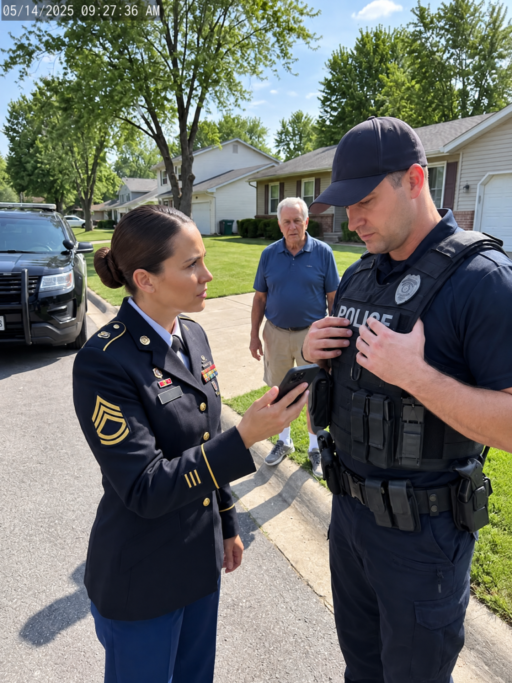
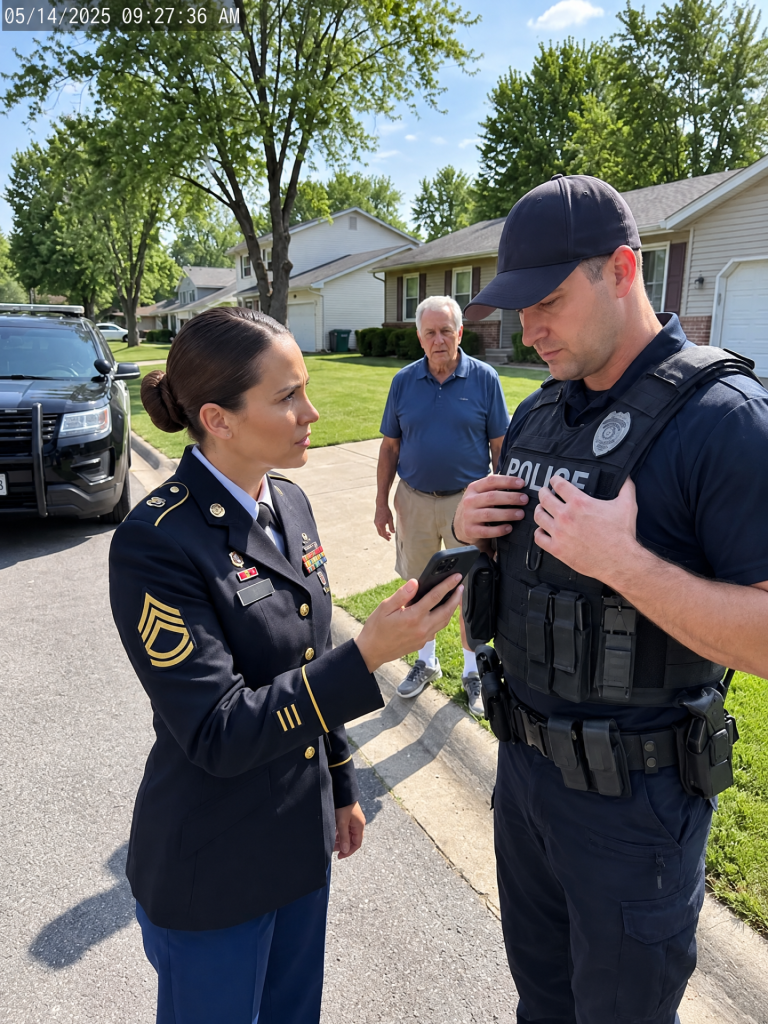

My father didn’t come to my wedding. Neither did my mother or my younger brother. But at 8:14 the following morning, my father sent me a message demanding $8,400 for my brother’s wedding celebration.
There was no congratulations, no apology, and not a single question about how my special day had gone.
Just a demand for money.
My name is Elena Flores. I’m thirty-eight years old, a commander in the United States Navy, and I’ve spent fourteen years serving a country my father claims to respect.
Yet somehow, I could never earn his respect at home.
My father, Eduardo Flores, was a retired high school principal who loved telling neighbors about his successful daughter. At church gatherings, he proudly mentioned my military career and the responsibilities I’d earned.
But he never attended a single promotion ceremony.
My younger brother, Marco, received everything I had once hoped for: financial support, encouragement, and unconditional attention. Dad paid for his college education, helped him purchase a car, and repeatedly rescued his struggling businesses.
Whenever Marco needed additional money, Dad eventually called me.
“You’re the responsible one, Elena. Family helps family.”
For years, I believed him.
Then I met David Reyes, a thoughtful aerospace contractor who treated my career with genuine respect. We fell in love, built a life together in Virginia, and eventually decided to marry.
I called my parents as soon as we set the date.
“Dad, I’d really love for you to walk me down the aisle.”
He hesitated.
“I’ll have to check my schedule.”
Our wedding was scheduled for May 14 at a beautiful venue in Norfolk. David’s family responded enthusiastically, and his mother helped us arrange the ceremony.
I reserved three pews for my family.
As the wedding approached, my parents still hadn’t confirmed their attendance. Mom blamed Dad’s knee problems, while Marco apparently had personal difficulties.
On the morning of my wedding, I stood in front of the bridal-suite mirror wearing my Navy dress uniform.
I called Dad.
He didn’t answer.
Mom finally picked up after several attempts.
“I’m sorry, sweetheart. Your father’s knee is bothering him.”
“Mom, are any of you coming?”
She went quiet.
“We love you, Elena.”
I understood.
I walked down the aisle alone, passing three empty pews decorated with white ribbons.
David was waiting at the altar, and when he saw my expression, his eyes filled with concern. He took my hands and held them firmly throughout our vows.
His family surrounded me with love that evening, but I still cried in our hotel bathroom after midnight.
The next morning, I woke hoping to find a message from my parents.
Instead, Dad had written:
“Elena, Marco needs $8,400 for his wedding venue deposit. The deadline is Tuesday. You’ve always been dependable, so please transfer it today.”
I read the message twice.
Then I opened my banking app.
For years, I’d transferred thousands of dollars whenever Dad demanded help for Marco. This time, I entered a different amount.
One dollar.
In the payment memo, I wrote: Best of luck.
I sent the transfer and blocked Dad’s number.
David squeezed my hand.
“You don’t owe them anything.”
I wanted to believe that ending the financial demands would finally bring peace.
But a week later, I unblocked Dad and discovered forty-one messages waiting for me.
The last one read:
“You think your Navy rank makes you important? I’ll make sure everyone knows what kind of daughter you really are.”
I stared at the screen, suddenly uneasy.
Because my father knew exactly where I worked.
And three days later, he showed up at the entrance to my military base, asking security personnel for my daily schedule.
The security officer’s call came shortly after nine on a Wednesday morning. I was reviewing documents in my office at Naval Station Norfolk when Commander Patricia Hughes told me my father had appeared outside one of the installation gates.
“He was asking which building you work in, what time you arrive, and when you usually leave,” she explained.
I sat upright.
“Did anyone give him that information?”
“No. Security turned him away and documented the encounter.”
I closed my eyes for a moment. My father had spent years criticizing my military career, yet now he was trying to use it to reach me after I’d stopped giving him money.
“Thank you for telling me. I’ll report everything formally.”
That afternoon, I met with Lieutenant Commander James Okafor, who worked with installation security. I showed him the messages my father had sent after receiving my one-dollar transfer.
The first few demanded an explanation. Others accused me of abandoning my brother, but the later messages became increasingly hostile.
One read, Those medals won’t protect you when everyone learns what you’ve done.
Okafor reviewed the messages carefully.
“Commander Flores, asking about your movements at a military installation is concerning, especially alongside these communications. We need to document this.”
I gave him copies of everything.
He recommended that I avoid sharing my schedule with relatives and take reasonable precautions at home. Before leaving, I called David and explained what had happened.
By the time I returned to our house, he’d already arranged to install additional security cameras.
“I don’t think your father understands that you’ve stopped playing by his rules,” David said.
“He’s never had to hear me say no before.”
David took my hand.
“Then we’ll make sure you’re safe while he learns.”
The next afternoon, a letter arrived at my office.
I recognized my father’s handwriting immediately.
Inside was a single sheet of paper.
You will end up alone with nothing but those medals.
I stared at the words longer than I wanted to admit.
When I was a child, Dad had always been careful about his public image. He spoke about discipline, family loyalty, and respect, but behind closed doors, he could make me feel worthless with a single sentence.
Now he was putting those same words in writing.
I preserved the letter and contacted a Virginia attorney named Marcus Stein, who had experience handling harassment cases.
Marcus listened while I explained the missed wedding, the demand for $8,400, the messages, and my father’s visit to the Navy base.
“Elena, I want you to continue documenting every incident,” he said. “We’ll review what legal protections may be available.”
“Can I request a protective order?”
“We can examine the requirements and present the evidence if the circumstances support it.”
For the first time, I felt relieved that someone was taking my concerns seriously.
Over the next several days, Dad stopped messaging me directly.
I hoped the silence meant he’d finally decided to leave us alone.
Then, on Tuesday afternoon, my phone began vibrating during a briefing.
The first message was from David.
Your father is here. He’s brought the police.
A second message appeared almost immediately.
He says you stole money from his bank account.
I excused myself and called David from the hallway.
“What’s happening?”
“Two officers are outside. Your dad told them you transferred money without permission. They’re asking to speak with you.”
My stomach tightened.
“Did he say how much?”
David hesitated.
“He claims you accessed his account after the wedding. Elena, he’s calling it a felony.”
I thought of my security clearance, my fourteen years of service, and everything I’d worked to build.
Then I remembered the transaction I’d made from my own account.
One dollar, sent directly to the account my father had given me years earlier.
“I have the banking record,” I told David. “Don’t argue with him. I’ll be there soon.”
When I pulled into our driveway, two police vehicles were parked outside.
My father stood on the front lawn, speaking animatedly to an officer while several neighbors watched from their porches.
He turned when he saw me and smiled.
Officer McCann approached before I could reach the house.
“Ma’am, your father alleges that you made an unauthorized transfer involving his bank account. We need to clarify what happened.”
I took out my phone.