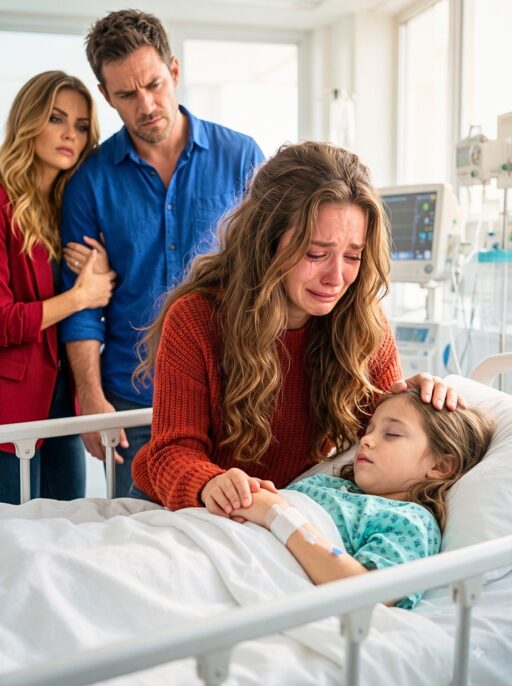
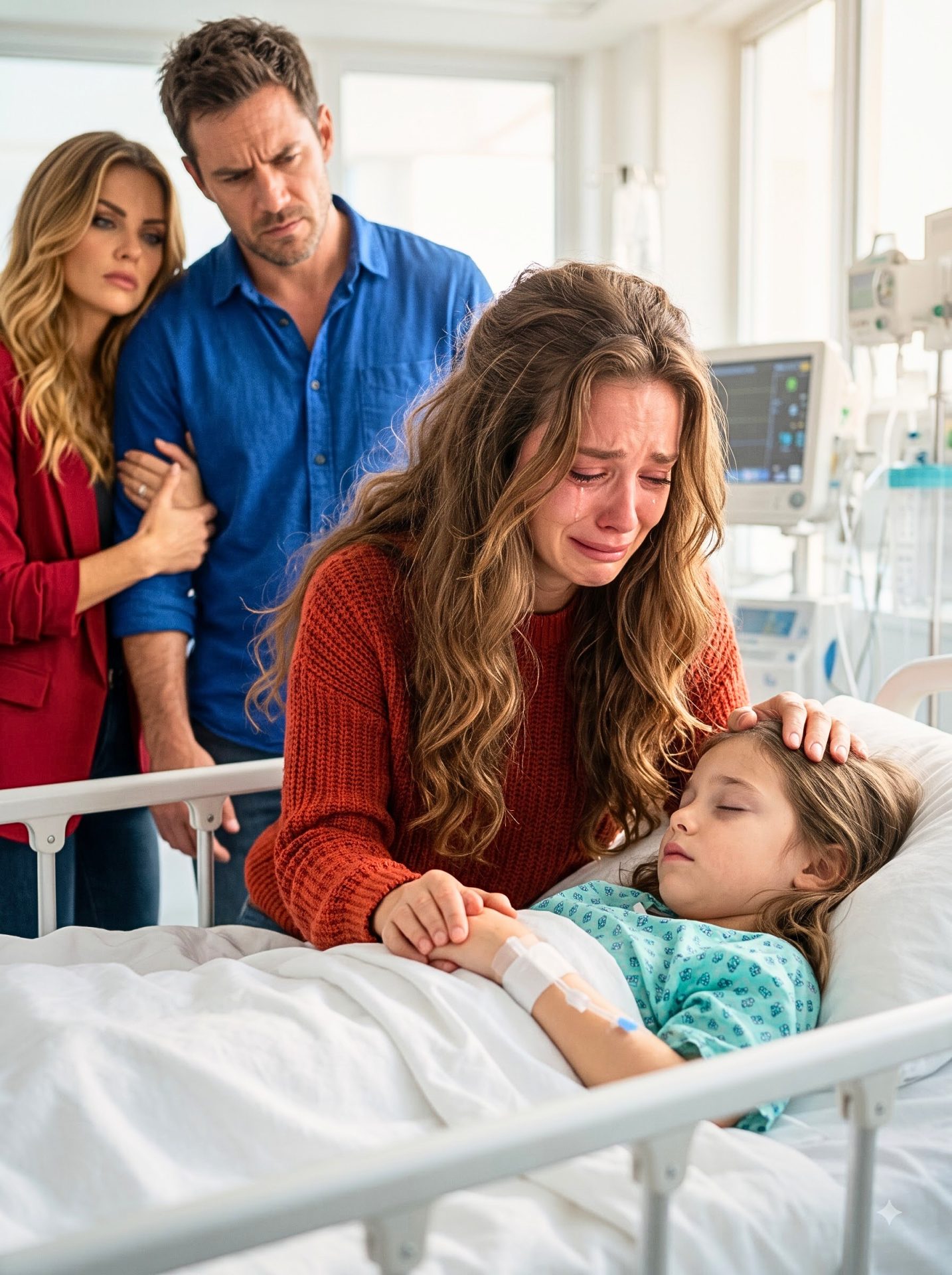

Before Valerie could press him further, her phone rang again. This time, it was Officer Javier Mendoza, the investigator assigned to Abigail’s accident.
“Mrs. Hayes,” he said, “we’ve reviewed the initial reports and spoken to a witness. There was no second truck involved, despite what was suggested earlier.”
Valerie’s stomach tightened.
“Then what really happened?”
“We’re still piecing everything together,” Javier replied. “But there are details about the events leading up to the crash that your family hasn’t explained.”
Valerie looked through the hospital window at her daughter.
Whatever had happened that night, she was determined to uncover it. Abigail deserved the truth, and Valerie would not allow anyone to bury it beneath another convenient lie.
Officer Javier Mendoza arrived at the hospital the following morning with new information. Valerie met him in a quiet consultation room, desperate to understand what had happened to her daughter.
“We’ve recovered messages from Brenda’s phone,” Javier began. “They help establish the timeline before the collision.”
He explained that investigators had found evidence Brenda was exchanging text messages while driving that night. One message had been sent at approximately 10:43 p.m., around the time of the crash. They were still examining the complete record, but the evidence suggested that distracted driving might have played a significant role.
Valerie felt anger rising inside her, though she forced herself to listen.
“Was Abigail trying to get away from Brenda?” she asked.
Javier nodded cautiously. “We’re investigating a disagreement that happened earlier that evening. We’ve also spoken with people who saw Abigail before she was collected.”
As the investigation continued, more details emerged. Abigail had gone to a neighbor’s home after Brenda became angry with her. According to the witness, Brenda had torn up a photograph of Valerie and Abigail, one the girl treasured deeply.
Brenda had reportedly become irritated whenever Abigail talked about her mother. She told the girl to stop bringing Valerie’s name into the house and made her feel that she no longer belonged there. At one point, she even suggested that Valerie cared more about her military service than raising her own child.
The accusation was cruel, particularly because Valerie had spent years trying to provide for Abigail while serving her country. Her absences had never meant a lack of love. Every deployment had come with the hope that her daughter would understand why her mother made those sacrifices.
Abigail, however, had been left feeling unwanted.
After the argument, she sought comfort at the neighbor’s house. Charles knew she was upset, but instead of going to collect his daughter himself, he asked Brenda to do it.
Valerie struggled to comprehend that decision.
“Charles knew they had argued?” she asked Javier.
“The information we have suggests he knew there had been a disagreement,” the officer replied. “We’re still determining exactly what he understood and when.”
That distinction mattered legally, but it did little to ease Valerie’s pain. Charles had known his daughter was distressed, yet he had allowed the very person involved in the conflict to retrieve her.
When Valerie confronted him later that day, she no longer tried to soften her words.
“You knew Abigail was upset. You knew she didn’t want to stay there, and you still sent Brenda to get her.”
Charles rubbed his face. “I thought they could settle things on the way home. I didn’t believe anything like this would happen.”
“And afterward, you lied to me.”
“I was scared,” he admitted. “I thought you would blame me. I thought you’d take Abigail away from me forever.”
Valerie stared at him, struggling to understand how his fear had become more important than her right to know the truth.
“You were worried about losing custody,” she said quietly. “Meanwhile, I was halfway around the world, believing my daughter was safe because you told me she was.”
Brenda finally interrupted. “You’re acting as if I deliberately caused the accident. I never wanted Abigail to get hurt.”
“I’m not claiming you planned it,” Valerie answered. “But you were driving, and the evidence says you were texting. Abigail was in that car because you went to collect her.”
Brenda fell silent.
That afternoon, Dr. Samuel Ortega brought Valerie a small but encouraging update. Abigail had shown another subtle response during a neurological examination. It was not enough to predict when she would wake, but the team believed further testing was worthwhile.
Valerie returned to her daughter’s bedside and took her hand.
“You don’t have to explain anything yet,” she whispered. “Just keep fighting. I’m right here.”
Then she leaned closer, repeating the words she had carried across oceans to say.
“I’m still here, sweetheart. And this time, I’m not letting anyone keep me away from you.”
Outside the room, Veronica was already preparing the next step. Valerie would seek legal authority over Abigail’s medical decisions, ensuring that Charles could no longer control the flow of information or make crucial choices without her.
The truth was finally coming into focus. Now Valerie needed to protect her daughter before anyone could interfere again.
Valerie had spent years serving others, but now her greatest battle was happening far from any military base. It was unfolding in a hospital room, where her twelve-year-old daughter lay unconscious, and in a legal system she had never expected to need against her own family.
With Veronica’s help, Valerie filed an urgent petition requesting temporary authority over Abigail’s medical care and rehabilitation. She also asked the court to establish strict limits on Charles’s access to decisions concerning their daughter until the circumstances surrounding the accident had been fully examined.
Charles was furious when he received the notice.
“You’re trying to take my daughter away from me,” he accused during a tense conversation outside the hospital room.
Valerie looked at him steadily. “I’m trying to make sure the person responsible for her care tells the truth. Those are not the same thing.”
At the hearing, Veronica presented the evidence they had gathered. The outdated emergency contact information was among the first issues raised. Valerie had changed her number years earlier, yet Charles had continued using the old details when it mattered most. He had also failed to ensure that the hospital could reach Abigail’s mother after the accident.
The attorney then addressed the conflicting accounts of the crash and the information Charles had withheld about Brenda’s involvement.
Charles’s lawyer argued that his client had been frightened and overwhelmed. He insisted that Charles had never intended to endanger Abigail and that his decisions had been driven by panic rather than malice.
Veronica did not dispute that fear could influence a person’s judgment. Instead, she emphasized the consequences of his choices.
“Whatever Mr. Hayes was feeling,” she told the court, “his daughter was critically injured. Her mother needed accurate information to participate in her care. Concealing essential facts and failing to maintain reliable contact information prevented that from happening.”
The judge listened carefully before issuing a temporary order. Valerie received sole emergency authority over Abigail’s medical treatment and rehabilitation decisions. Charles’s visitation was restricted by specific conditions, and he could no longer interfere with the medical decisions entrusted to Valerie.
The ruling did not permanently erase Charles’s parental rights, but it established a clear boundary: Abigail’s safety and recovery had to come first.