
After dinner, however, he became unusually quiet and asked whether he could tell us something unpleasant without being removed from school. I sat beside him and promised that he could always talk to us about anything that troubled him.
He then revealed that another student had called him a baby the previous day. When I asked how the comment made him feel, he admitted that it had made him angry.
Ethan explained that he had wanted to tell the boy he was six, although he was actually ten. I listened without correcting the inconsistency because the important issue was helping him express his feelings and understand how to seek support.
“Next time, I’ll tell my teacher.”
I praised his decision and reminded him that he never needed to hide uncomfortable experiences to protect his opportunity to attend school. We would work through difficulties together rather than assume every problem meant mainstream education was wrong for him.
Over the following weeks, Principal Harris followed through on the school’s commitments. The lunch supervisor received additional guidance, the students involved faced appropriate consequences, and their parents were contacted.
The class also discussed kindness and respectful communication without identifying Ethan as the reason for the lesson. His teacher continued providing classroom support while encouraging him to participate alongside his peers.
There were still challenging days, including occasions when classmates excluded him from games or when assignments took him longer to complete. Instead of interpreting every setback as a failure, we helped him discuss what happened and identify ways to respond.
Throughout those weeks, Oliver remained his closest friend. Their bond grew stronger, and eventually Oliver’s mother invited Ethan to spend an afternoon at their home.
When I arrived to collect him, she told me something that changed the way I understood their friendship. Oliver had been lonely since transferring schools and had worried that nobody would want to sit with him.
Then Ethan had approached him on his first day and started talking about dinosaurs. That small gesture had made Oliver feel welcome when he needed a friend most.
I had initially viewed Oliver as the boy who protected my son from bullying. Now I understood that Ethan had also helped Oliver feel accepted, and their friendship had begun because two lonely children chose to include each other.
Approximately one month after the cafeteria incident, Ethan’s school organized a science afternoon for students and their families. He insisted that Michael and I attend because he and Oliver had prepared a project about the solar system.
The boys had worked together on a colorful poster featuring the planets. Oliver had drawn the illustrations, while Ethan helped label them and contributed ideas about how to present their research.
When we reached their table, Ethan proudly welcomed us to what he called their space station. A few nearby children laughed, and I immediately worried that he might feel embarrassed again.
However, Ethan remained confident and explained that he and Oliver had chosen the name together. Oliver supported him by pointing toward the poster and telling everyone that Ethan had invented the title.
As the boys began presenting their project, I watched my son speak about the planets with genuine enthusiasm. He briefly struggled to pronounce a word while describing Saturn, but instead of withdrawing, he paused and tried again.
Nobody interrupted or mocked him, and the other children continued listening. When Ethan finished his explanation, Michael began applauding, and our son smiled with unmistakable pride.
The experience meant more to us than an ordinary school presentation. It showed that Ethan was learning to participate confidently even when communication required additional patience.
On the drive home, he asked whether Oliver could visit the following weekend. I agreed immediately, grateful that their friendship had continued growing beyond the classroom.
Then Ethan asked whether I believed he might eventually make more friends. I told him that friendships often develop gradually and that he would have many opportunities to meet children who shared his interests.
He considered my answer before announcing that Oliver would always be his best friend. Michael smiled and reminded him how special it was to have someone who genuinely cared about him.
Later that evening, after Ethan had fallen asleep, Michael and I discussed everything that had happened since the principal’s frightening phone call. We realized that our greatest mistake had been assuming protection always meant removing our son from situations where he might experience difficulty.
We had spent years worrying about how the outside world would treat him, and those fears had influenced our decision to homeschool. Although our intentions had been loving, we now understood that Ethan also needed opportunities to develop independence, friendships, and confidence.
The cafeteria incident had been painful because our son had concealed the teasing rather than risk losing the school he loved. He had believed that enduring unkind treatment was the price of being included, and that realization changed how we approached conversations about his experiences.
We began reminding him regularly that asking for help would never disappoint us. We wanted him to understand that difficult days were part of life and that he deserved support without automatically losing the activities and relationships that mattered to him.
Five weeks after his first day, Ethan woke up before his alarm and hurried downstairs with his backpack already packed. He was excited because he and Oliver were beginning another school project, this time about dinosaurs.
I handed him his lunch while he explained what they hoped to learn. His excitement reminded me of the boy who had returned home smiling after his first day, before we discovered the teasing.
As he reached the door, Ethan suddenly turned around and looked at me.
“Mom, if somebody is mean to me today, I’ll tell you.”
I crouched beside him and reassured him that we would always listen and help him decide what to do. He hugged me before hurrying toward the car, eager to begin another school day.
Watching him leave, I thought about how much had changed in only five weeks. Ethan had entered mainstream school hoping that someone would want to be his friend, and he had found a boy who valued his kindness, curiosity, and loyalty.
He had also discovered that speaking up about mistreatment did not mean surrendering the opportunities he loved. With the right support, he could continue learning, making friends, and pursuing his dream of becoming a scientist.
Michael and I had learned an equally important lesson. Our responsibility was not to eliminate every challenge from Ethan’s life, because doing so would also limit his opportunities to grow.
Instead, we needed to help him navigate those challenges while respecting his feelings and choices. We could protect him by listening carefully, working with his teachers, and ensuring he always knew where to turn when something went wrong.
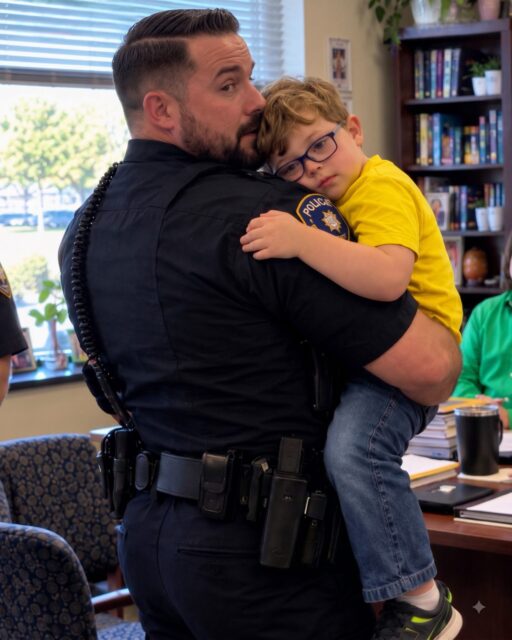
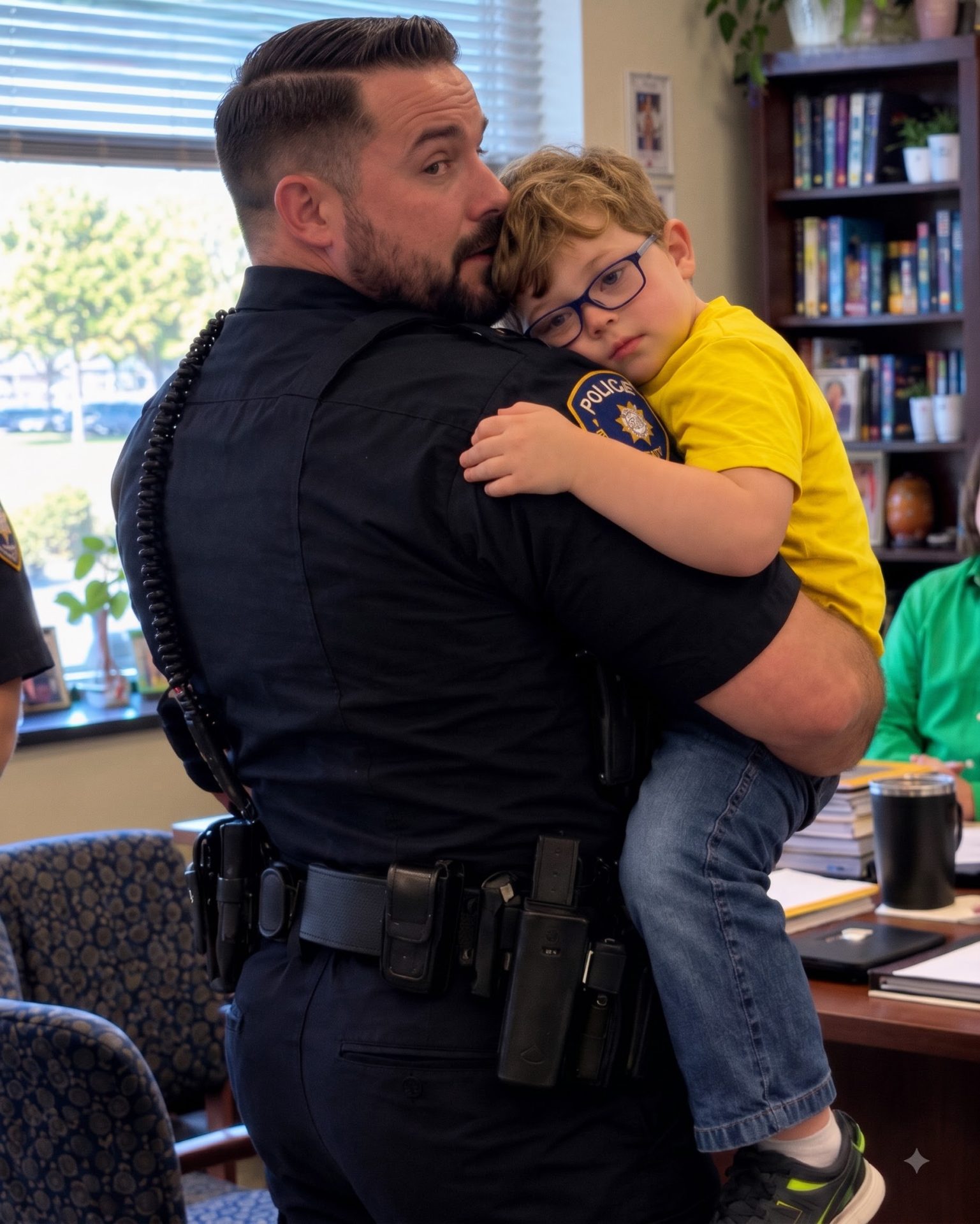
I will never forget the fear I experienced when Principal Harris called and mentioned two police officers. At the time, I imagined that something terrible had happened and wondered whether sending Ethan to a regular school had been a mistake.
But that difficult day revealed something extraordinary about our son and the friendship he had formed. Ethan had shown kindness to a lonely classmate, and Oliver had returned that kindness when Ethan needed someone to stand beside him.
Their friendship was not defined by one child rescuing the other. It was built on two boys recognizing that everyone deserves companionship, respect, and the chance to belong.
I once believed that keeping Ethan safe meant shielding him from the world whenever possible. Now I understand that the most meaningful protection we can offer is making sure he has the confidence, support, and freedom to experience that world without facing its difficulties alone.
And whenever I see him racing toward school with his backpack bouncing against his shoulders, I remember the promise we made after that frightening Friday morning. Whatever challenges Ethan encounters, he will never have to hide them from us just to keep the life he loves.