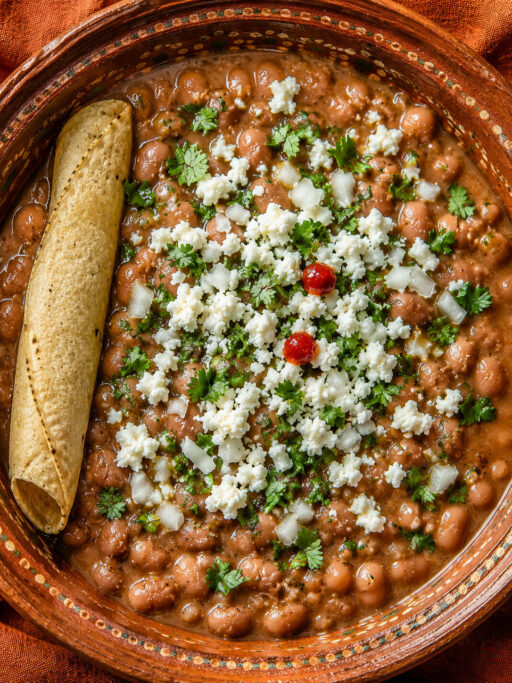
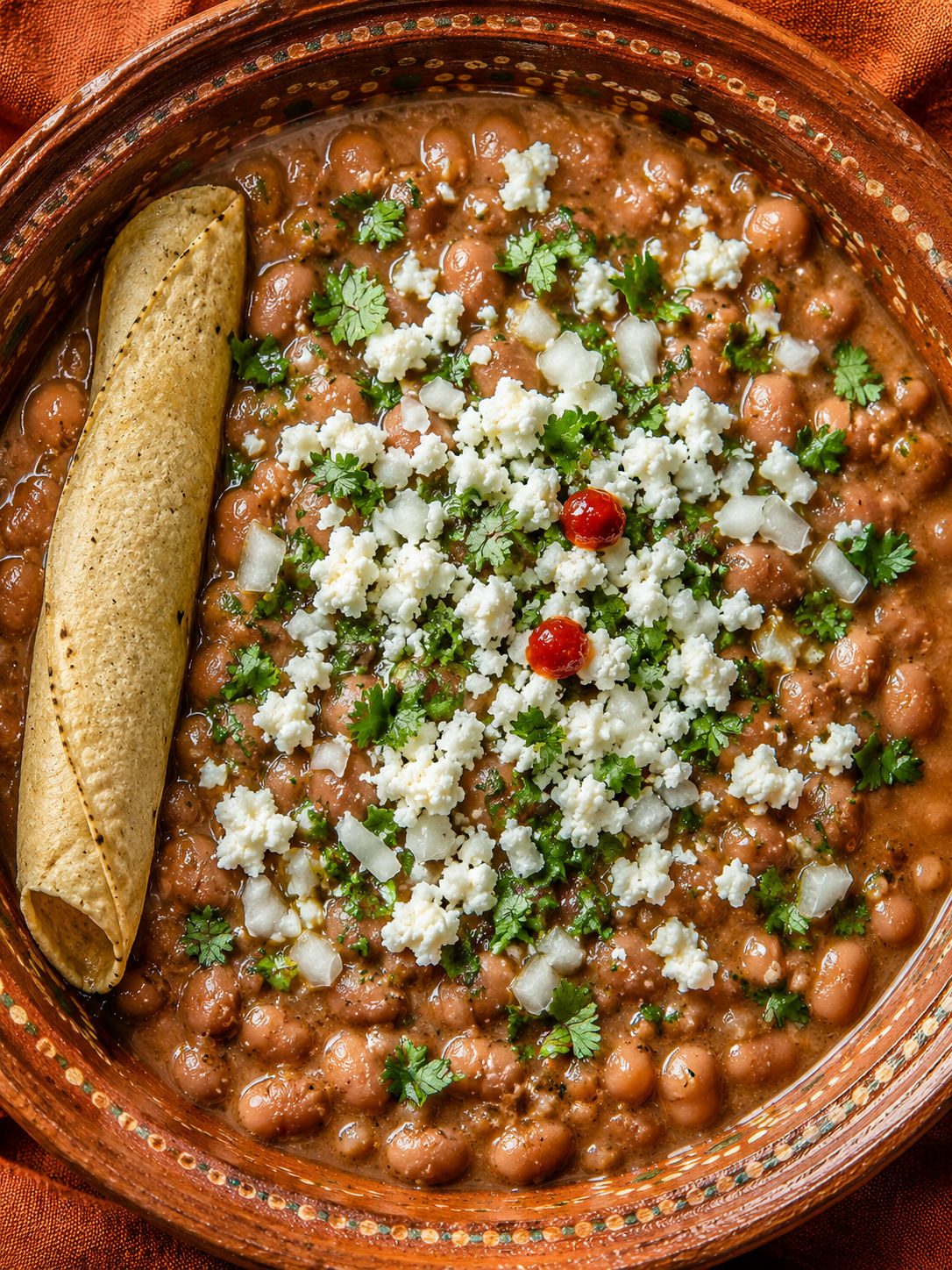

Frijoles de la olla translates as beans from the pot, and in Mexican homes that pot is almost always on the stove. This is the dish grandmothers make without measuring anything. It fills the kitchen with a low, earthy smell long before dinner is ready, and a handful of dry beans turns into something deeply comforting.
The recipe is nearly nothing. Dried pinto beans, water, onion, garlic, and the herb epazote. No stock, no spice rack overhaul, no technique you have not seen before. What you get after two to three hours of patient simmering is a pot of beans so creamy and flavorful that you will wonder why you ever reached for a can.
Serve them as a side dish, ladle them into bowls as a simple soup, or use them as the base for refried beans. They belong at every Mexican meal.
Six humble ingredients, one great pot
Every ingredient here pulls real weight. Buy dried pinto beans from a store with good turnover. Beans that have been sitting in a warehouse for two years cook unevenly and stay gritty no matter how long you simmer them. Look for plump, uniformly colored beans with no shriveled outliers.
- Dried pinto beans. The foundation. They cook up creamy and hold their shape better than canned, with a richer, earthier flavor after a long simmer.
- White onion. Half an onion goes in whole and gives the broth a gentle sweetness. White is traditional here rather than yellow.
- Garlic. A few whole cloves, peeled or unpeeled, mellow into something soft and savory over the long cook.
- Epazote. The herb that makes these beans taste unmistakably Mexican. A couple of fresh sprigs added toward the end is all it takes. Fresh cilantro is the fallback if you cannot find epazote.
- Lard or oil. Optional but traditional. A tablespoon of lard adds subtle richness to the broth. Oil works if you prefer to keep the recipe vegan.
- Salt. Added near the end so it seasons the beans from the inside once they are already tender.
Slow pot to finished bowl
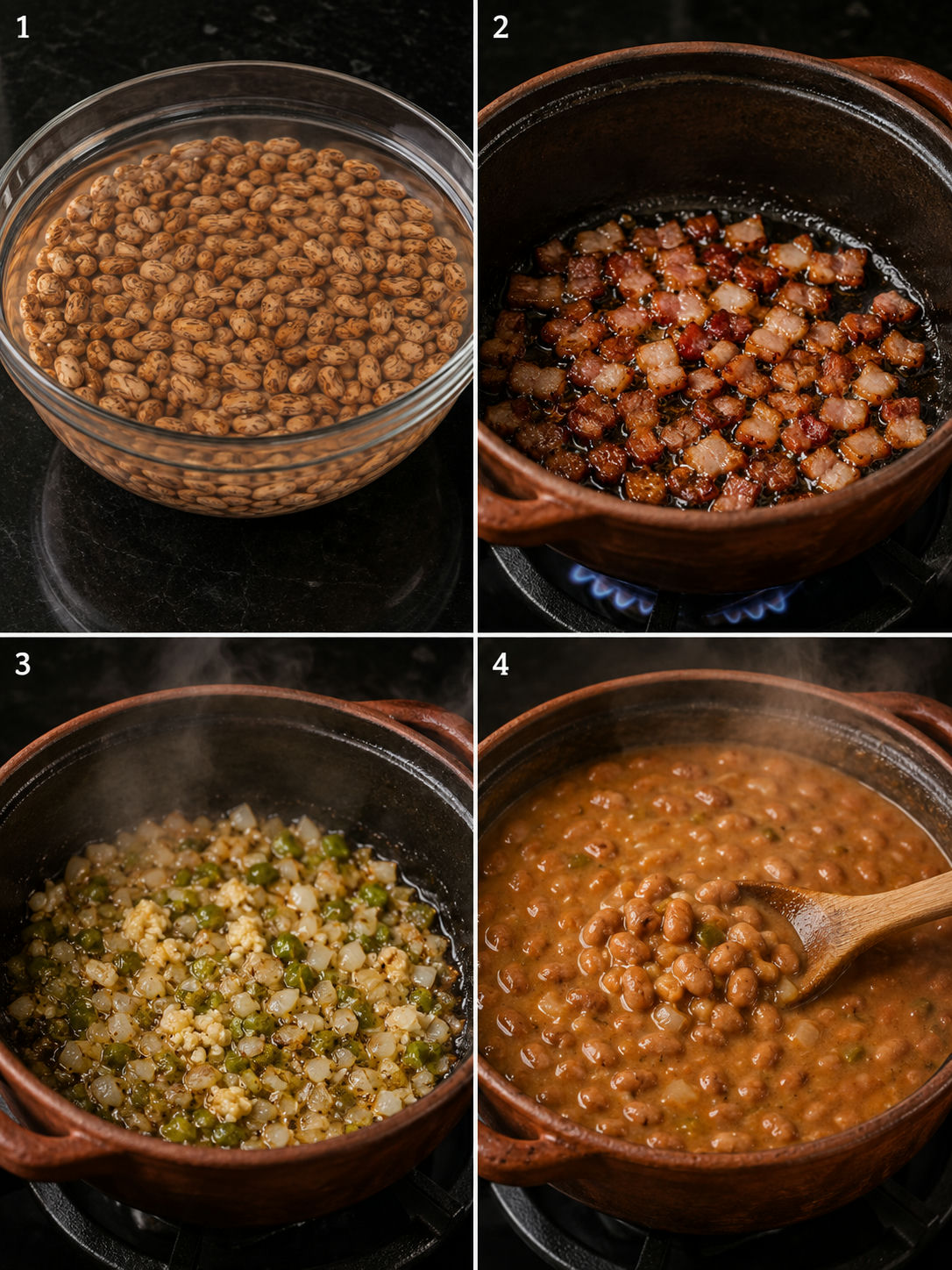
- Sort and rinse. Spread the dry beans on a clean surface and pick out any pebbles or shriveled beans. Rinse in a colander under cold running water until the water runs clear.
- Optional soak. For a shorter cook, cover the rinsed beans with cold water by at least 3 inches and soak for 4 to 8 hours at room temperature. Drain before cooking.
- Build the pot. Transfer the beans to a large heavy pot. Add the onion half, garlic cloves, and lard or oil. Pour in 10 to 12 cups of cold water since the beans absorb a lot during the long cook.
- Boil and skim. Bring to a rolling boil over medium-high heat. Skim off any gray foam that rises in the first 10 minutes. This keeps the broth clean and clear.
- Simmer low and slow. Reduce to a gentle simmer, partially cover the pot, and cook for 2 to 3 hours (no-soak) or 1.5 to 2 hours (soaked). Add hot water if the level drops below the beans. The beans are done when they mash easily between two fingers and the broth looks opaque and silky.
- Season and finish. Add the epazote sprigs and salt. Stir gently and simmer for another 20 minutes. Taste and adjust the salt, then remove the onion and epazote before serving.
Why old beans ruin the whole pot
Dried beans are shelf-stable but not immortal. Beans that are more than one to two years old have lost internal moisture, and no amount of soaking or simmering fully reverses that. You end up with uneven results. Some cook up mushy while others stay chalky at the center. Buy from a store with decent turnover, and if you can find them at a Mexican grocery where dried beans move fast, even better. Store your beans in an airtight container away from heat and light, and use them within a year of purchase.
Why epazote belongs in this pot
If you have only ever made pinto beans with bay leaf or cumin, epazote will stop you mid-bite. It has a wild, slightly resinous flavor that is hard to describe and impossible to replicate with a substitution. Mexican cooks have used it in bean pots for centuries. Beyond flavor, epazote is said to reduce the bloating that beans can cause. Whether or not you buy the folk remedy, the taste alone justifies tracking it down at any Latin grocery. Dried epazote works in a pinch at roughly half a teaspoon per fresh sprig. Cilantro is gentler and more available but does not taste the same.
Do not throw away the bean broth
The liquid left in the pot is one of the best parts. Mexicans call it caldo de frijol and it is a meal on its own. It turns dark and earthy during the simmer and thickens slightly from the starch that cooks out of the beans. Ladle it over rice, use it to thin out refried beans, or drink it from a mug. It freezes well in small portions and does a lot of work as a soup base. Pair the beans with easy Mexican style rice and you have a full weeknight meal with almost no extra effort.
How to serve frijoles de la olla
The simplest way is a deep bowl with warm corn tortillas and a sprinkle of fresh cilantro. They belong on the table any time you are making a Mexican spread. Serve them alongside carne asada street tacos or next to a pot of traditional Mexican caldo de res. Mash them with a little lard and they become the refried beans you need for homemade Mexican tostadas. A sprinkle of cotija cheese and a few slices of pickled jalapeño on top goes a long way when you want to dress them up for company.
From pot beans to homemade refried beans
Most recipes call for canned refried beans, but frijoles de la olla give you the foundation to make your own from scratch. Drain a cup or two of the cooked beans and keep the broth nearby. Mash them in a hot skillet with a spoonful of lard or oil, adding broth a little at a time until you reach the texture you want. Season again with salt and a pinch of cumin. According to USDA FoodData Central, cooked pinto beans are high in dietary fiber and plant protein, making this one of the most nutritious things you can put on the table with almost no effort.
FAQs
- Do I need to soak pinto beans before making frijoles de la olla?
-
You do not have to. Traditional frijoles de la olla skips the soak and goes straight into the pot with cold water. No-soak beans take 30 to 45 minutes longer to cook, but many cooks believe they develop a richer, fuller-flavored broth. If you are pressed for time, soaking for 4 to 8 hours shortens the cook time and can make the beans slightly easier to digest.
- What is epazote and can I substitute it?
-
Epazote is a pungent Mexican herb with a flavor somewhere between fresh oregano and anise. It is traditional in frijoles de la olla and is said to reduce the gas that beans can cause. If you cannot find it, a handful of fresh cilantro is the most common substitute. The flavor shifts, but the beans are still very good. Dried epazote works too, using about half the amount of fresh.
- When should I add salt to the beans?
-
Add salt near the end of cooking, in the last 20 to 30 minutes. Old Mexican wisdom holds that salting early toughens the bean skins, and while food scientists debate this, salting late gives you much better control over the final flavor. Taste the broth before seasoning since some beans carry more mineral flavor than others.
- Can I make frijoles de la olla in a slow cooker or Instant Pot?
-
Yes to both. In a slow cooker, add the beans, water, onion, and garlic, then cook on low for 8 to 10 hours or high for 5 to 6 hours. Add epazote and salt in the last hour. In an Instant Pot, cook on high pressure for 35 to 45 minutes with a natural release, then add epazote and salt and let them steep off heat for 10 minutes. The stovetop version develops the most complex broth, but both shortcuts are solid.
- How do I store and reheat leftover frijoles de la olla?
-
Keep them in a covered container in the fridge for up to 5 days. The beans will absorb the broth as they sit, so add a splash of water when reheating on the stove over low heat. They also freeze beautifully for up to 3 months. Freeze them with their broth in portions and thaw overnight in the fridge before reheating.
- What can I use frijoles de la olla for besides a side dish?
-
The uses are almost endless. Mash them with lard or oil for homemade refried beans. Spoon them over rice, into tacos, or onto tostadas. Blend the broth with some of the beans for a thick, hearty soup. Stir them into Mexican style chili beans for extra depth. They also make a great filling for burritos, enchiladas, and quesadillas.
- Do the beans have to be pinto? Can I use black beans?
-
Pinto beans are the most traditional choice for frijoles de la olla in northern Mexico. In southern Mexico and Oaxaca, black beans are more common and follow the same basic method. Bayo beans and flor de mayo are also traditional regional options. The technique stays the same regardless of variety, though cook times vary by 20 to 30 minutes depending on the bean.
References
Sources cited in this recipe.