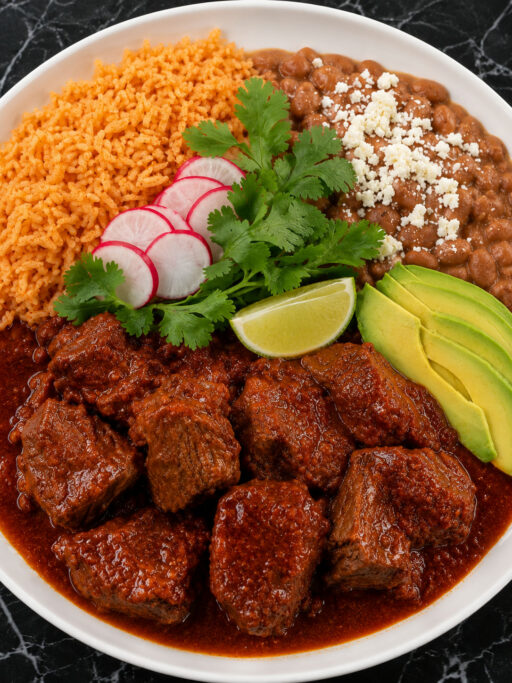
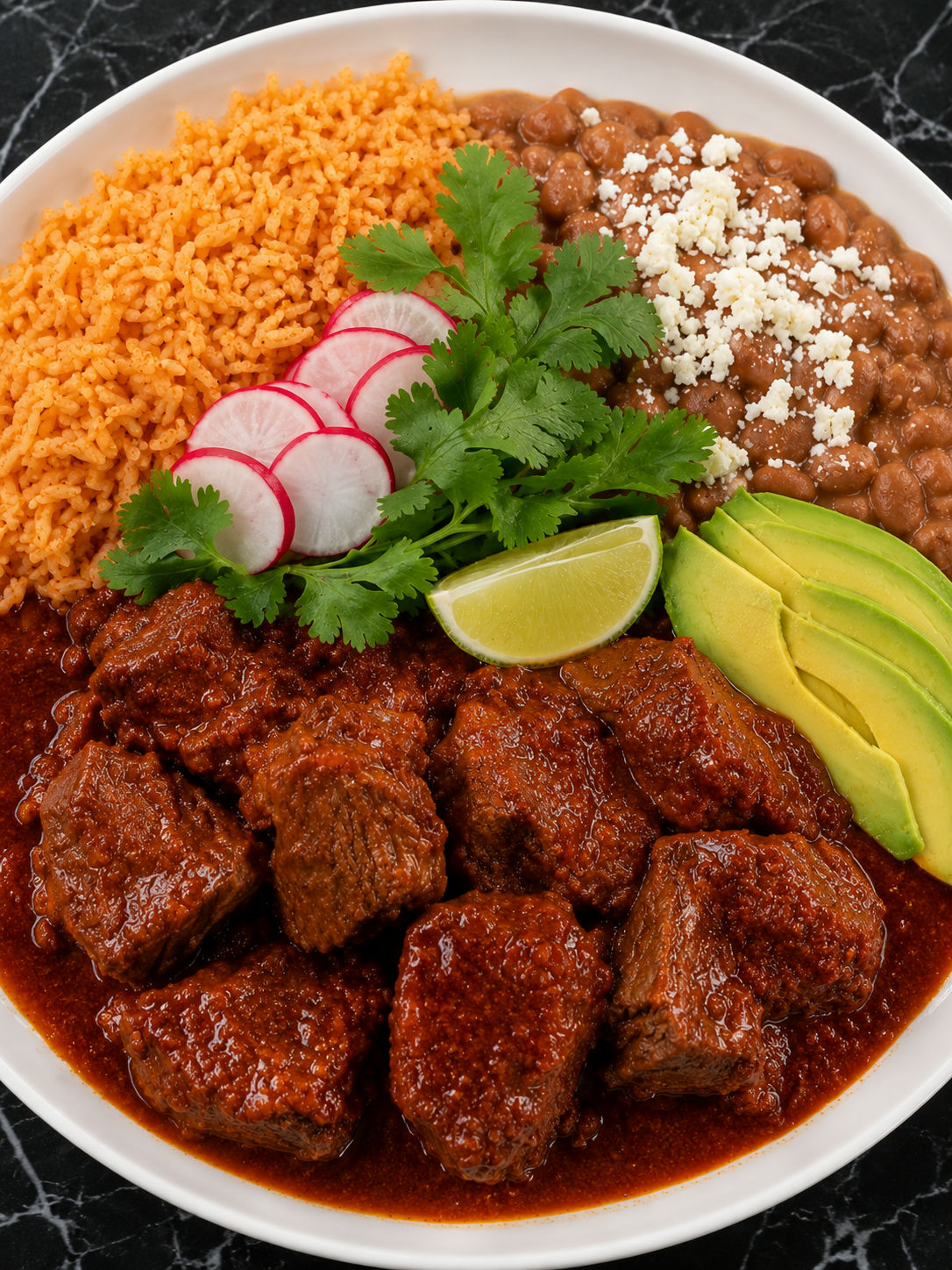

Chile Colorado has nothing to do with the Rocky Mountain state. In Spanish, colorado simply means red-colored, and the deep brick-red sauce built from rehydrated dried chiles is the whole point. Tender beef chuck braised low and slow until it nearly falls apart, bathed in that earthy smoky sauce, plated with fluffy toasted rice and creamy pinto beans, this is what a real comfort food dinner looks like.
What makes it work is the combination of dried chiles. Guajillo brings a fruity, leathery depth. Ancho adds roasted sweetness and a raisin-dark richness. Together they build a sauce that fresh chiles or chili powder simply cannot replicate. Give the braise 3 hours and the beef does the rest.
What goes into the red sauce
Every ingredient here does specific work. The dried chiles are non-negotiable and the beef needs to be a cut that can handle 3 hours of braising without drying out.
- Dried guajillo chiles. The earthy, fruity backbone of the sauce with moderate heat and a depth no other chile quite replicates.
- Dried ancho chiles. Roasted sweetness and dark richness that rounds the guajillo out and keeps the sauce from tasting sharp.
- Beef chuck roast. Well-marbled and collagen-rich, it becomes fall-apart tender at the 3-hour mark without drying out.
- Fire-roasted tomatoes. Add body and a faint smokiness to the blended sauce without overpowering the chiles.
- Beef broth. Thins the blended chile paste to a pourable consistency and layers in more savory depth.
- Cumin and dried oregano. The two spices that define the sauce’s warmth and herbal note, used in small amounts so they don’t compete with the chiles.
- Long-grain white rice. Toasted in oil before cooking for a nuttier, firmer texture that holds up under the saucy beef.
- Pinto beans. Creamy and protein-rich, they balance the plate and mellow the chile heat.
Building the braise from scratch
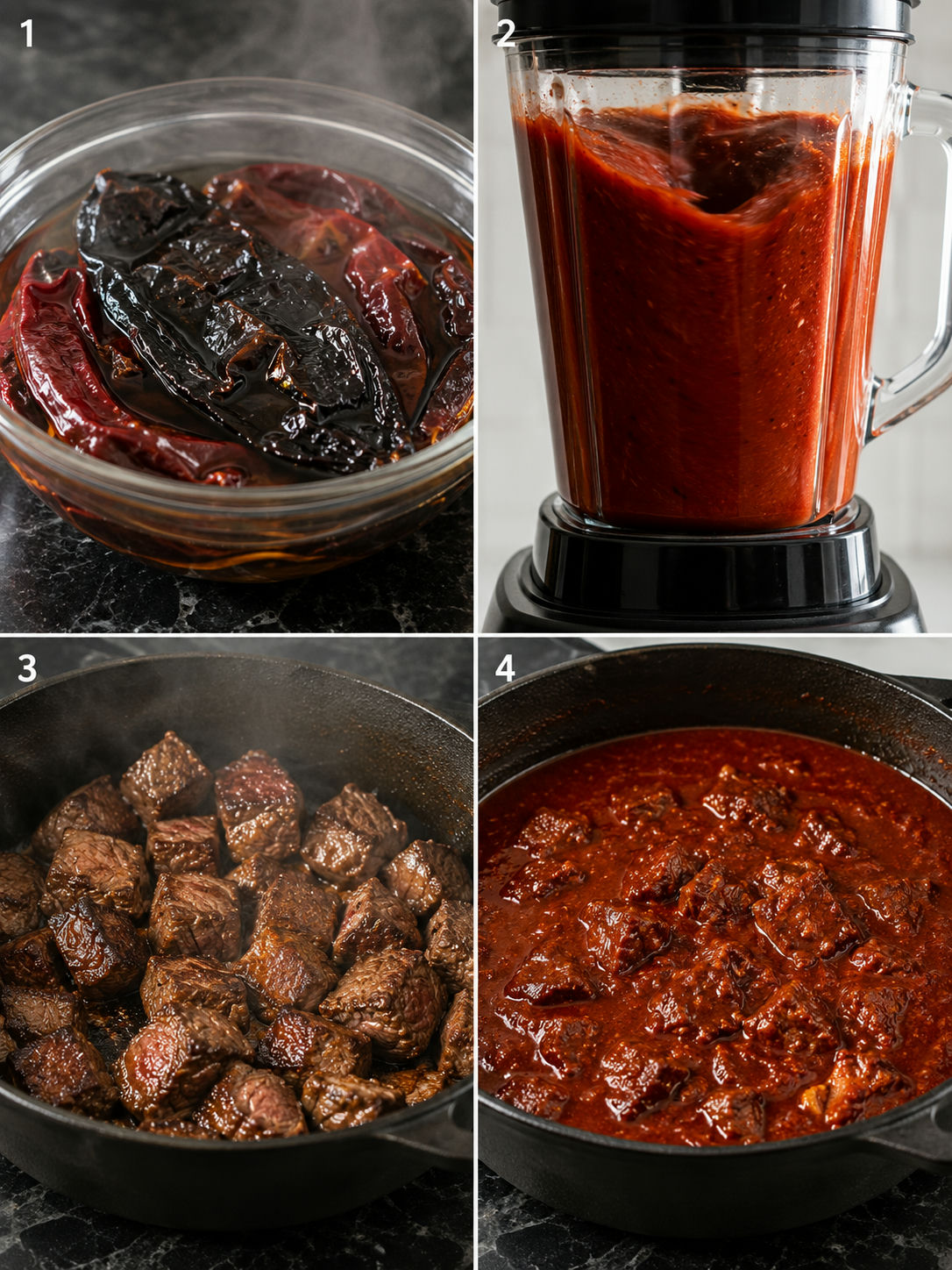
- Soak the dried chiles. Remove stems and seeds from all chiles. Place in a heatproof bowl and pour boiling water over to submerge. Soak 15 minutes until pliable. Drain and discard the soaking water.
- Build and blend the sauce. Heat 1 tbsp oil in a Dutch oven over medium heat. Cook the onion 5 minutes until soft, add garlic for 1 minute. Add the drained chiles, fire-roasted tomatoes, beef broth, cumin, and oregano. Simmer 10 minutes, then blend on high until completely smooth. Season with salt and pepper.
- Sear the beef in batches. Preheat oven to 325°F (165°C). Wipe the pot dry and heat 1 tbsp oil over medium-high. Season beef with salt and pepper. Working in batches with space between pieces, sear until deeply browned on all sides, about 5 minutes per batch.
- Pour on the sauce and braise. Return all browned beef to the pot. Pour the blended red chile sauce over so the beef is mostly submerged. Cover tightly and braise in the oven for 2.5 to 3 hours until the beef yields completely at a fork.
- Toast and cook the Mexican rice. Heat 2 tbsp oil in a saucepan over medium. Add rice and stir constantly 3 to 4 minutes until lightly golden. Add tomato sauce, chicken broth, cumin, and garlic powder. Bring to a boil, cover, drop to lowest heat, cook 18 to 20 minutes without lifting the lid. Rest off heat 5 minutes, then fluff.
- Warm the seasoned beans. Combine drained pinto beans, minced garlic, cumin, and a splash of broth in a small saucepan over medium heat. Cook 5 to 7 minutes until warmed through and fragrant. Season with salt.
- Plate and serve. Spoon the Chile Colorado beef with plenty of sauce onto each plate. Add a mound of toasted rice and a portion of beans alongside. Finish with cilantro, lime wedges, and sour cream if you like.
Getting the most from dried chiles
The dried chiles are the irreplaceable part of this recipe. Soak them in boiling water for 15 minutes, no longer, or the skins turn papery in the blender. Always discard the soaking liquid. It picks up bitter tannins from the chile skins and pulls an unpleasant aftertaste into the sauce if you add it.
Blend the sauce on high for a full minute and most blenders handle it without straining. If you’re using an older machine, run the sauce through a medium-mesh sieve afterward. For a deeper look at how dried New Mexico chiles work in a red sauce, the Chimayo red chile enchilada sauce on this site covers the technique in detail.
Why the sear on the beef matters
Brown the beef in real batches with real space between pieces. A crowded Dutch oven traps steam and the meat turns gray instead of developing a crust. You want a dark mahogany crust on at least two sides of each cube, about 5 minutes per batch in a properly hot pan.
That crust is not just color. The Maillard reaction at high heat creates flavor compounds that dissolve into the braising sauce over the next 3 hours. The browned bits stuck to the bottom of the pot get absorbed by the chile sauce as it braises, making the finished dish noticeably deeper and more savory.
Slow cooker path and make-ahead notes
Chile Colorado adapts well to a slow cooker. Build and blend the sauce the same way, brown the beef in a skillet first (that step still matters), then load everything into the crock. Cook on low 6 to 8 hours or high 3 to 4 hours. The beef shreds more than it cubes by the end, which is perfect rolled into tortillas. For a similar low-and-slow Mexican braise, the slow-simmered Chili Verde with Spanish rice and pork follows the same make-ahead logic.
Either version improves overnight. The chiles bloom further into the sauce and the beef absorbs more seasoning as it sits in the fridge. Make it a full day ahead, refrigerate it in the braising pot, and reheat gently on the stovetop before serving.
Plating, leftovers, and storage
The rice matters as much as the braise. Toasting raw rice in oil before adding liquid gives it a nuttier, firmer texture that holds its shape under the saucy beef instead of going soft and clumping. For more satisfying rice-and-bean plate ideas, the classic red beans with savory rice and sausage is a great companion recipe.
Leftovers have a natural second life as burritos. Chile Colorado beef rolled in a warm tortilla with beans and cheese is outstanding, very close to the filling in these creamy Chile Colorado burritos. Store the beef with its sauce, the rice, and the beans in separate containers in the fridge for up to 4 days. Per USDA food safety guidelines, reheat leftovers to 165°F (74°C) before serving. Freeze the beef and sauce for up to 3 months.
FAQs
- What dried chiles should I use for Chile Colorado?
-
Guajillo and ancho chiles are the most accessible combination. Guajillo is fruity and slightly tannic, ancho is sweet and dark with mild heat. Dried New Mexico or California chiles are good additions if you find them at a Latin grocery. Use 5 guajillo and 3 ancho as a starting point.
- Can I substitute chili powder for the dried chiles?
-
You can in a pinch, but the sauce will be less complex. If dried chiles are unavailable, use about 3 tablespoons of a good chili powder blend and skip the soaking step. The result is closer to a basic red beef stew than true Chile Colorado, but it still works.
- Can I make Chile Colorado in a slow cooker?
-
Yes. Build and blend the sauce the same way on the stovetop, brown the beef in a skillet first, then transfer everything to the slow cooker. Cook on low for 6 to 8 hours or on high for 3 to 4 hours. The beef shreds more than cubes by the end, which is great for burritos.
- What cut of beef works best for this braise?
-
Beef chuck roast is the right choice. It is well-marbled and collagen-rich, so it breaks down into tender, juicy pieces without drying out. Grocery-store stew meat is usually chuck too. Avoid lean cuts like round or sirloin, which turn stringy after 3 hours in the oven.
- Why should I discard the chile soaking water?
-
It picks up bitter tannins from the outer skins during soaking. Adding it to the sauce drags a sharp aftertaste into the finished dish. Always drain and discard it, then use fresh beef broth for the sauce liquid instead.
- How do I store and reheat leftovers?
-
Keep the beef and sauce airtight in the fridge for up to 4 days. Store the rice and beans separately so they don’t absorb the sauce and go mushy. Reheat the beef over low heat with a splash of broth to loosen the sauce. Freeze for up to 3 months.
- What makes the Mexican rice different from plain steamed rice?
-
Toasting the raw dry rice in oil for 3 to 4 minutes before adding any liquid. The grains turn lightly golden and develop a nutty flavor plain boiled rice doesn’t have. Toasted rice also holds its shape under a saucy braise instead of clumping and going soft.
References
Sources cited in this recipe.