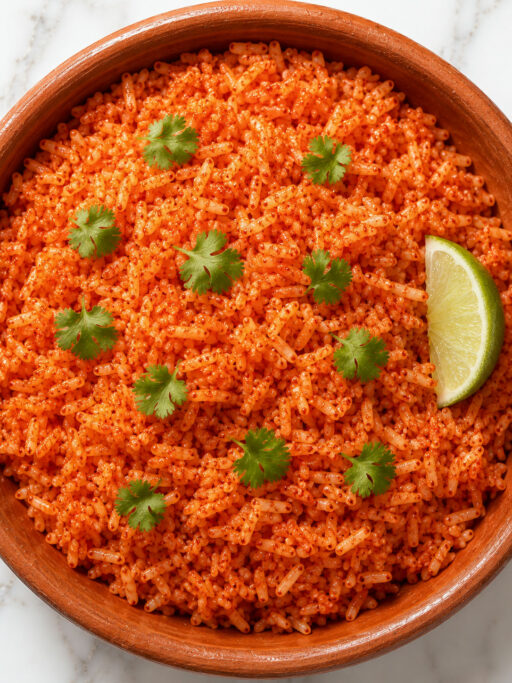
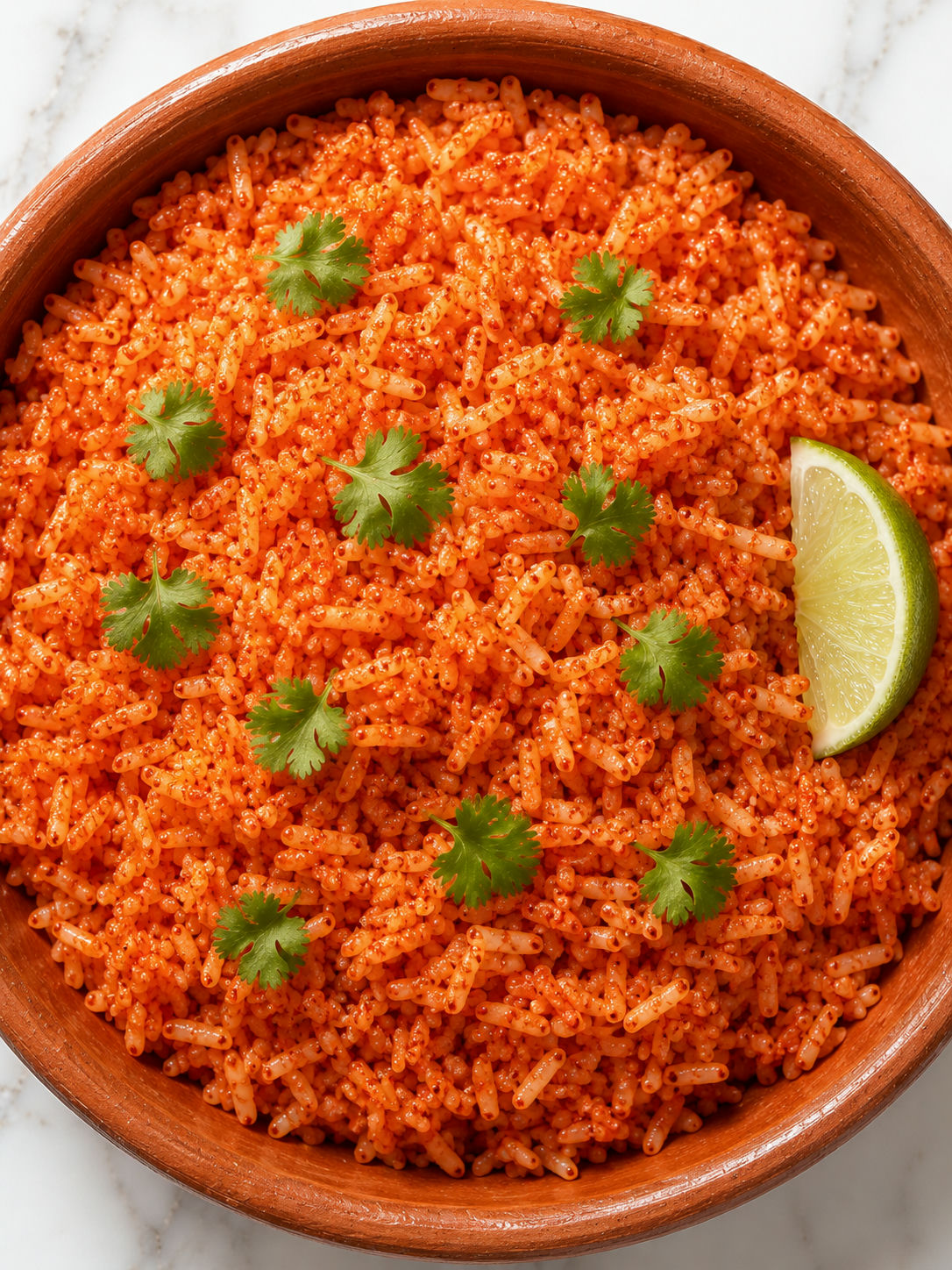

Every Mexican home cook has a version of arroz rojo. It shows up next to beans, under chile colorado, tucked alongside a plate of enchiladas, and somehow it always disappears first. Most people think it’s complicated, but the whole process takes about 35 minutes and a handful of pantry staples.
The thing that separates homemade Mexican rice from pale, sticky orange rice is one step most shortcut recipes skip. Toast the dry rice in oil until each grain turns light golden-brown. That color means flavor. Skip it and the rice tastes like it has just been dyed.
This recipe uses fresh roma tomatoes blended with white onion and garlic as the base. No tomato paste, no packet seasoning. Master this technique once and you will make it on repeat.
What Goes Into Real Arroz Rojo
Fresh tomatoes do what paste can’t. They give the rice a bright, clean color and a natural sweetness that deepens as it cooks. Everything else here is a true pantry staple.
- Long-grain white rice. Gives separate, fluffy grains. The only variety that toasts properly and stays distinct after cooking.
- Roma tomatoes. Meatier and less watery than regular tomatoes. Two large ones deliver a deep red color and clean flavor without making the rice soggy.
- White onion. Blends into the tomato base and adds mild sweetness. A quarter of a medium onion is all you need.
- Garlic. Two cloves, blended in with the tomatoes. The heat mellows them so they flavor the rice without dominating it.
- Vegetable oil. For toasting the rice. Use a neutral oil with a high smoke point, nothing with a strong flavor of its own.
- Chicken broth. Brings depth that plain water can’t. Low-sodium lets you control the final salt level.
- Ground cumin. Optional but traditional. Half a teaspoon adds a warm, earthy undertone to the finished rice.
- Salt. Season when you add the broth, then taste and adjust after the rice rests.
Making Arroz Rojo at Home
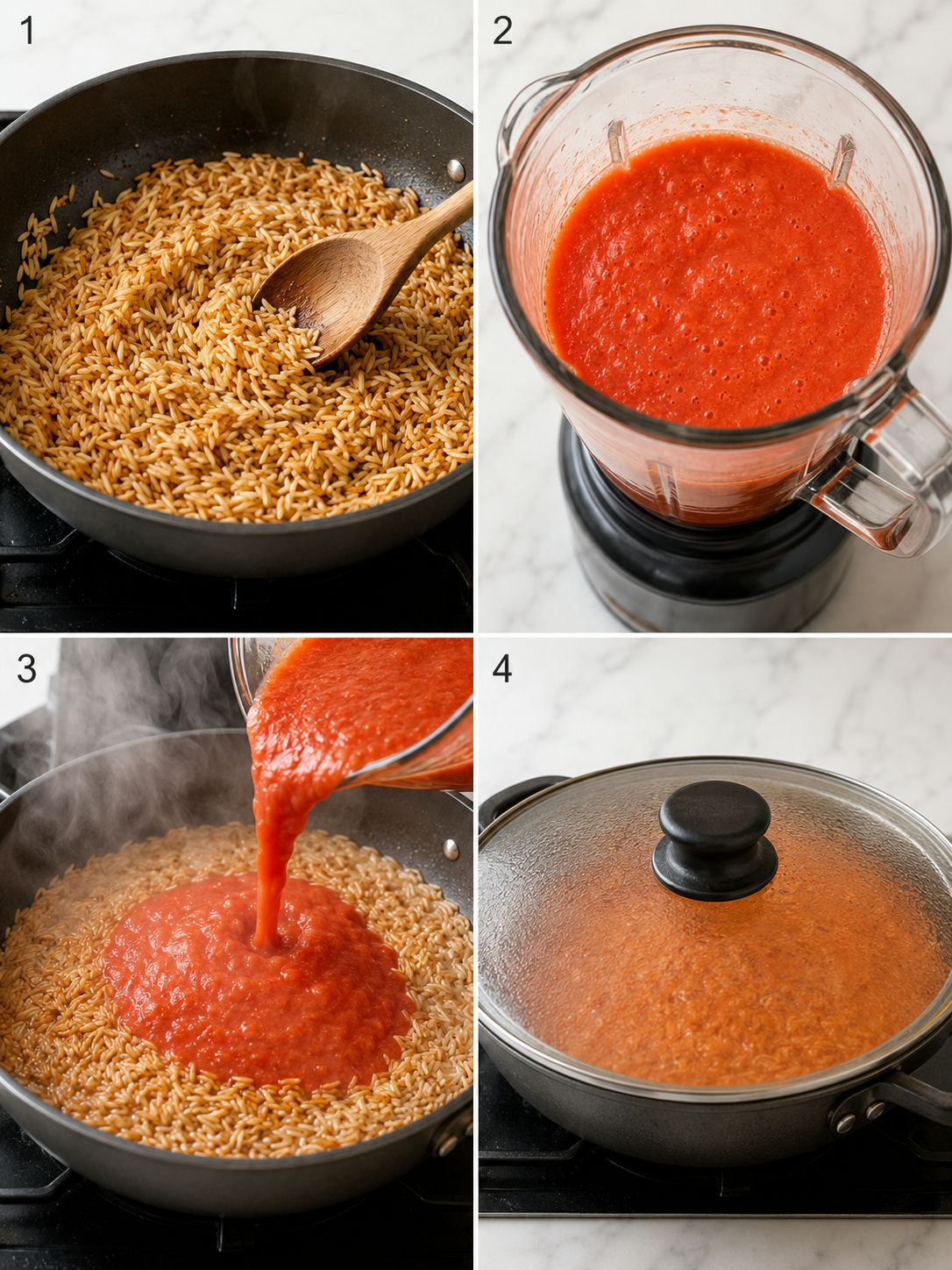
- Blend the tomato base. Add the roma tomatoes, quartered white onion, garlic, and 1/4 cup of the broth to a blender. Blend until completely smooth. Set aside.
- Toast the rice. Heat 3 tablespoons of oil in a wide, heavy-bottomed skillet or Dutch oven over medium heat. Add the dry, unrinsed rice and stir constantly for 6 to 9 minutes until every grain turns light golden-brown. You will smell a nutty aroma when it is ready.
- Add the tomato mixture. Pour the blended tomato base directly into the hot pan. It will sizzle and steam hard. Stir to coat all the rice and cook for 2 to 3 minutes until most of the liquid absorbs.
- Add broth and season. Pour in the remaining broth, add the cumin, and season with salt. Stir once to combine, then bring to a full boil.
- Steam undisturbed. Reduce the heat to low, cover tightly, and set a timer for 20 minutes. Do not lift the lid.
- Rest and fluff. Turn off the heat and let the rice sit covered for 5 minutes. Remove the lid, fluff gently with a fork, taste for salt, and serve.
Why Toasting the Grains Matters
Toasting dry rice in oil before adding any liquid is the most important step in this recipe. The heat transforms the starch on the surface of each grain, creating a light shell that keeps the rice from absorbing too much liquid at once. The result is fluffy, separate grains rather than a sticky mass.
Beyond texture, the toasting builds a nutty, almost popcorn-like flavor that you simply can’t replicate with shortcuts. Most recipes skip this step or rush through it. Six to nine minutes over medium heat sounds like a long time to stand and stir rice, but it is what makes the difference. For more on why browning unlocks flavor in grains and starches, Serious Eats covers the food science in detail.
Getting the Ratio and Steam Right
The total liquid in this recipe is about 2.5 cups, which includes both the blended tomato mixture and the remaining broth. That ratio works for a tight-fitting lid and steady low heat. If your pan has a loose lid or your burner runs hot, check at the 18-minute mark. The rice is done when all the liquid is absorbed and small steam holes have formed across the surface.
Resist lifting the lid during those 20 minutes. Each peek releases steam, drops the temperature, and leaves you with rice that is done in patches. Set the timer and walk away.
Swaps That Work Well
No fresh tomatoes on hand? One 14-ounce can of diced tomatoes, drained, blends up fine. Vegetable broth instead of chicken broth makes the whole dish vegan. Add a dried chile de arbol to the blender if you want heat built into the base.
Some cooks stir in frozen peas or diced carrots when they fluff the rice at the end. The residual heat warms them through without overcooking. This rice pairs naturally with homemade frijoles de la olla and it comes out of the kitchen right alongside chile colorado almost every week in this house.
What to Serve It With
This rice earns its place on any Mexican plate. Serve it next to chiles rellenos for a classic pairing, or spoon it alongside a bowl of Mexican albondigas soup for a filling weeknight dinner. It also works as a base layer under braised meats, or simply with a fried egg and a spoonful of salsa for a fast lunch.
Leftovers keep well in an airtight container for up to 3 days. The rice firms up when cold but returns to its fluffy texture once reheated with a splash of added liquid. Avoid freezing if you can. The grains tend to turn a little mushy after thawing.
FAQs
- Can I use canned tomatoes instead of fresh roma tomatoes?
-
Yes. One 14-ounce can of diced or whole peeled tomatoes works well when fresh aren’t available. Drain off most of the liquid before blending so the rice doesn’t turn watery. The flavor is slightly different but still very good.
- Why did my Mexican rice turn out sticky or mushy?
-
Usually it comes down to one of two things. Either the rice wasn’t toasted long enough before you added liquid, or you lifted the lid while it was steaming. Toasting firms up the starch on each grain, which keeps the rice separate and fluffy. Lifting the lid lets heat escape and throws off the timing. Once the lid goes on, leave it untouched.
- Can I make this ahead of time?
-
Yes, arroz rojo reheats beautifully. Make it up to 3 days ahead and store it covered in the fridge. To reheat, add a tablespoon or two of broth to the pan, cover, and warm over low heat for 5 to 7 minutes. It comes back almost as fluffy as fresh.
- How do I make this vegetarian or vegan?
-
Swap the chicken broth for vegetable broth and the rice becomes fully plant-based. The flavor is a little lighter but still excellent. A pinch more cumin and a dried chile de arbol added to the blender brings back that extra layer of depth.
- What kind of rice works best for arroz rojo?
-
Long-grain white rice gives you the best result: separate, fluffy grains with good texture. Medium-grain works in a pinch but tends to clump more. Do not use parboiled or instant rice. The toasting step only works properly with regular dry long-grain rice.
- How many servings does this recipe make?
-
This recipe yields 4 generous side-dish servings from 1.5 cups of dry rice. Cooked rice roughly triples in volume, so you end up with about 4 to 4.5 cups of cooked arroz rojo. It scales up easily. Double everything and use a larger, deeper pan with a tight-fitting lid.
References
Sources cited in this recipe.