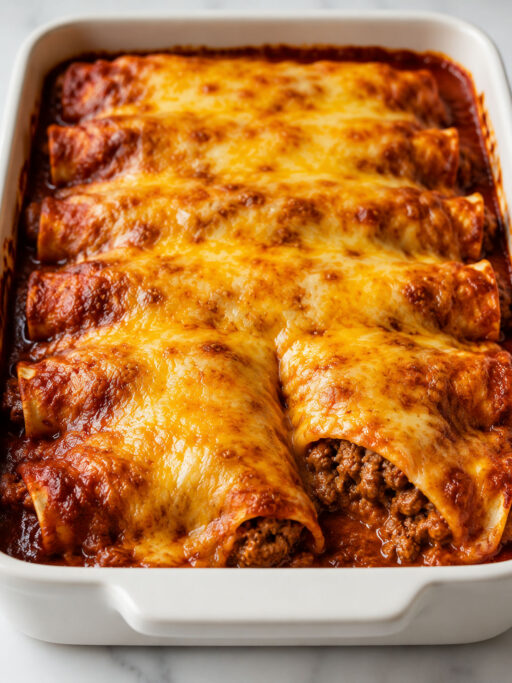
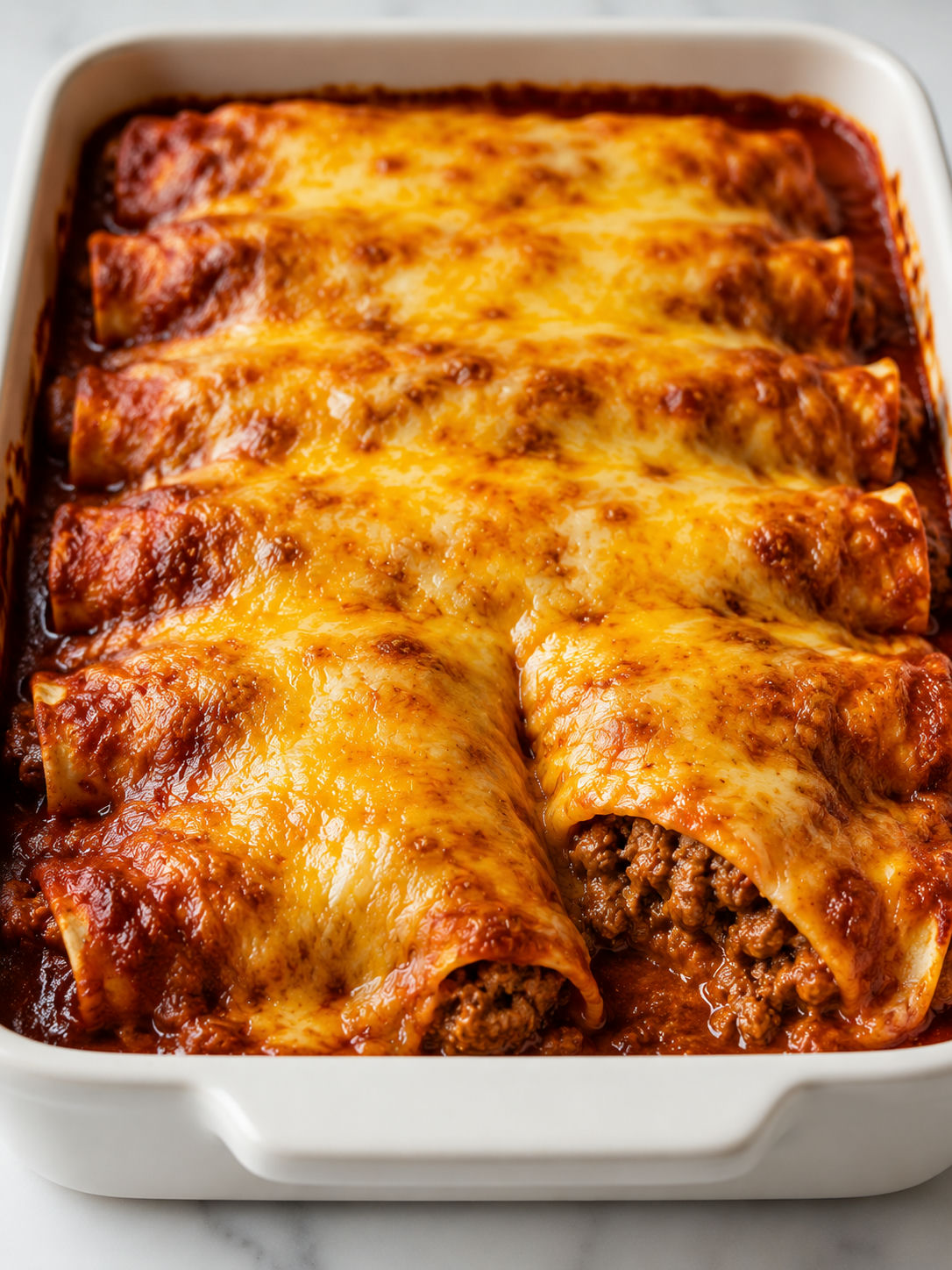

These baked beef enchiladas are the ones I make when I need something that feeds a crowd and disappears fast. Seasoned ground beef, red enchilada sauce, and so much cheese on top that it browns and bubbles in the oven. That last part is the whole point.
The recipe is straightforward weeknight food. One skillet for the filling, one baking dish, and about 45 minutes from start to finish. Corn tortillas give you that classic bite and hold their shape well in the oven.
I load the cheese on thick before it goes in. It melts into the sauce, pulls when you lift a fork, and forms those lightly golden crisp edges around the rim of the dish. That is what makes these worth making.
What Goes Inside Each Roll
The best beef enchiladas come down to a well-seasoned filling and enough cheese on top to melt into a proper blanket. Look for ground beef with about 15 to 20 percent fat. It stays juicy through the bake rather than turning dry and grainy. For the cheese, buy a block and shred it yourself for the smoothest melt.
- Ground beef. The main filling. An 80/20 blend gives you the flavor and moisture the filling needs to stay good after baking.
- Yellow onion and garlic. Sautéed first so they sweeten and deepen before the beef goes in.
- Cumin, chili powder, smoked paprika, and oregano. The four-spice base of a solid enchilada filling. They add depth rather than just heat.
- Red enchilada sauce. Used both in the filling for moisture and poured over the top before baking. A 10 oz can covers 8 to 10 enchiladas well.
- Corn tortillas. Traditional for enchiladas. They hold their shape in the sauce and add a slight corn flavor the filling plays off of.
- Mexican blend shredded cheese. Mixed into the filling for creaminess and loaded generously on top. The extra layer on top is the whole point of this recipe.
Rolling and Baking These Enchiladas
- Preheat and prep. Heat the oven to 375°F (190°C). Lightly grease a 9×13 inch baking dish with cooking spray or a thin coat of oil.
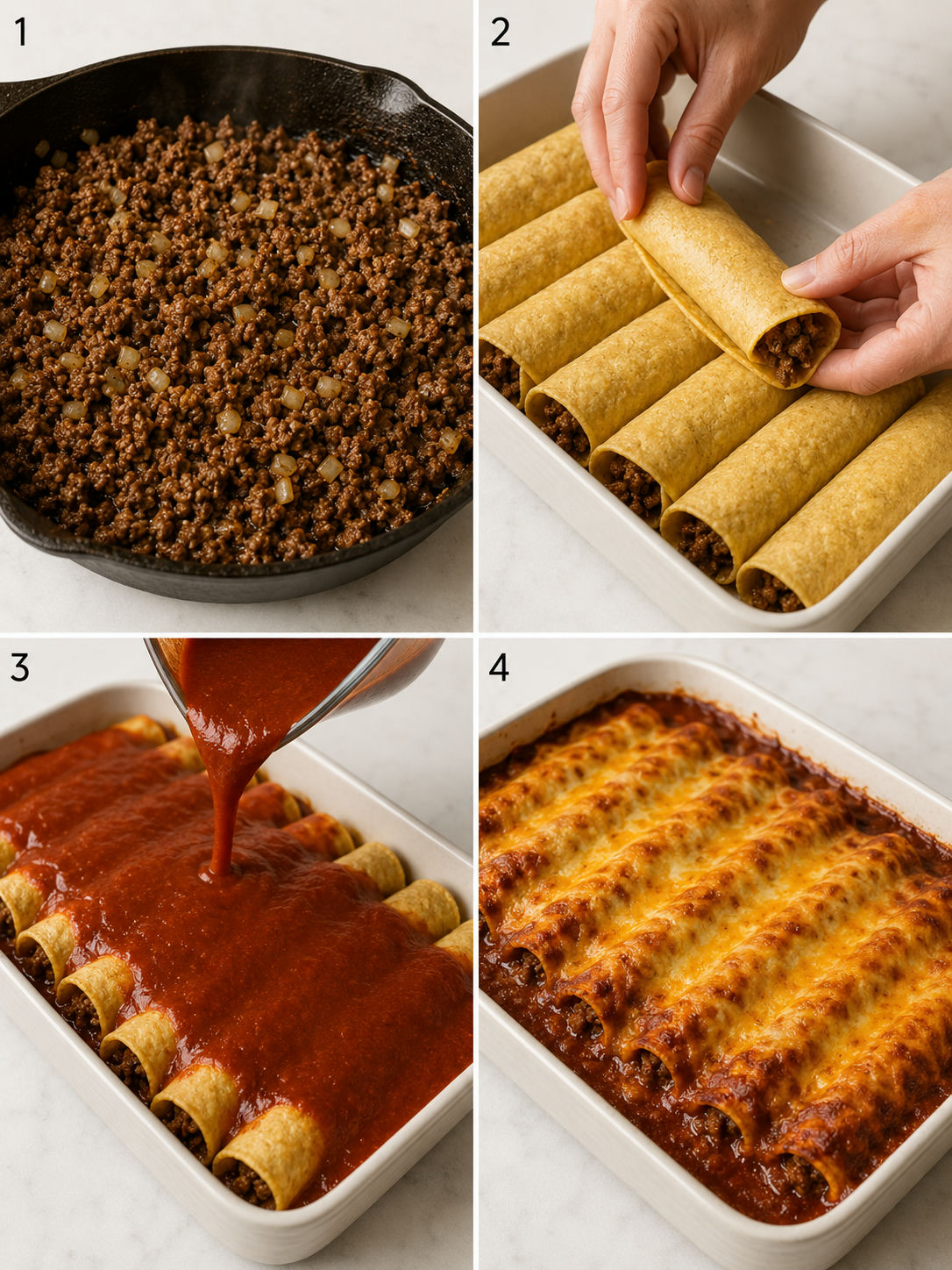
- Cook the beef filling. Heat olive oil in a large skillet over medium heat. Add the diced onion and cook until softened, about 4 minutes. Add garlic and cook another 30 seconds. Add the ground beef and break it up as it cooks. Once browned with no pink remaining, drain excess fat. The USDA recommends cooking ground beef to an internal temperature of 160°F. Stir in all the spices and 3 tablespoons of the enchilada sauce. Remove from heat.
- Warm the tortillas. Stack 4 to 5 corn tortillas between two damp paper towels and microwave for 30 to 40 seconds until they are soft and pliable. Keep them covered with a kitchen towel as you work and repeat in batches.
- Fill and roll. Spoon 2 to 3 tablespoons of filling down the center of each warm tortilla. Add a small pinch of shredded cheese inside each one. Roll tightly and place seam-side down in the baking dish, packing the rolls snugly in a single layer.
- Add sauce and cheese. Pour the remaining enchilada sauce evenly over all the rolls. Sprinkle the remaining shredded cheese generously on top. A thick, even layer is what you are after.
- Bake until bubbly. Bake uncovered for 22 to 25 minutes, until the cheese is fully melted and golden in spots and the sauce is bubbling at the edges. Let rest 5 minutes before serving.
Stopping Corn Tortillas from Cracking
This is the step that trips people up. Cold corn tortillas will crack the second you try to roll them. The fix is heat. Microwave them in small batches between damp paper towels for about 35 seconds until they are soft and bendable. Roll them while they are still warm.
If you want more insurance, dip each tortilla briefly in a bowl of warm enchilada sauce before filling it. The sauce softens the tortilla further and adds flavor at the same time. The other option is a quick fry. Heat about half an inch of oil in a small pan and run each tortilla through for 5 to 10 seconds per side. Pat dry and proceed. Fried tortillas are more forgiving to roll and hold their shape very well in the oven.
Why the Cheese Layer Matters
Most enchilada recipes call for about a cup of cheese on top. This recipe uses more and it changes the dish. A thick blanket of cheese insulates the tortillas as they bake, which keeps them from drying out. It also creates a slightly golden, crispy surface where the cheese meets the edges of the dish and wherever the sauce is thinner.
The key is spreading it evenly so every enchilada gets covered. Uncovered spots let the tortillas poke through the sauce and dry out. For the last 2 minutes of baking, turn on the broiler to get more color on top. Watch it closely since cheese burns fast under a broiler.
For a very different take on cheese-forward enchiladas, the Cheese Enchiladas with Chili Gravy on this site skips the beef entirely and leans into the cheese from every direction.
Filling Swaps Worth Trying
The spiced ground beef base is flexible. Swap half the beef for cooked black beans or pinto beans and you get extra texture and bulk for less cost. The Cheesy Beef and Bean Enchiladas on this site takes that combination further if you want a complete recipe to compare.
Ground turkey or chicken thighs work in place of beef and take the same seasoning well. For something smokier, stir a tablespoon of adobo sauce from a can of chipotles into the filling. It adds a low, smoky heat rather than a sharp bite. A diced jalapeño mixed into the filling gives a brighter kick that the sauce alone does not provide.
Storing and Reheating Leftovers
Store leftovers in an airtight container in the fridge for up to 4 days. The enchiladas hold up well the next day because the tortillas absorb the sauce overnight and become even softer.
To reheat, place them in a baking dish, add a splash of extra enchilada sauce or a tablespoon of water, cover with foil, and warm at 350°F for 15 to 20 minutes until heated through. The oven keeps the edges from going rubbery in a way the microwave does not. To freeze, wrap the dish tightly before or after baking and store for up to 3 months.
Building the Full Plate
Beef enchiladas are filling on their own, but a few sides round out the plate. Refried beans heated with a little butter and a sprinkle of cheese and a side of Mexican rice are the classic pairing. Sliced avocado or a simple guacamole adds creaminess that cuts through the richness of the cheese.
A crunchy slaw or shredded lettuce provides freshness and contrast. Sour cream and pickled jalapeños on the table let everyone adjust to their own heat level. For another full Tex-Mex baked dinner to add to the rotation, the Queso Chicken Enchiladas are a close cousin worth bookmarking.
FAQs
- Can I use flour tortillas instead of corn?
-
Yes. Flour tortillas are easier to roll since they are more flexible and less likely to crack when filled. The texture in the final dish is softer and slightly doughier compared to corn. Either works well here, and the filling and sauce stay the same either way.
- What cheese is best for beef enchiladas?
-
A shredded Mexican blend (typically cheddar, Monterey Jack, asadero, and queso quesadilla) melts evenly and has the right salt level. Pure Monterey Jack melts beautifully and stays creamy. Freshly grated cheese melts cleaner than the pre-shredded kind coated in anti-caking agents, and it pulls better off the top.
- How do I keep corn tortillas from cracking when I roll them?
-
Warm them first. Stack them between two damp paper towels and microwave for 30 to 45 seconds until they are soft and pliable. Work quickly once they are warm. You can also run each one through a skillet with a thin coat of oil for 5 to 10 seconds per side, which makes them even more flexible and adds a little flavor.
- Can I make beef enchiladas ahead of time?
-
Yes. Assemble the enchiladas, cover with sauce and cheese, then wrap the dish tightly and refrigerate for up to 24 hours before baking. Add 5 to 10 extra minutes to the bake time since the dish will be cold. You can also bake fully, cool completely, and reheat covered with foil at 350°F until warmed through.
- Can I freeze beef enchiladas?
-
Yes. Freeze them tightly wrapped in plastic wrap and foil for up to 3 months, either before or after baking. Thaw overnight in the fridge before reheating. If freezing before baking, add the sauce and cheese just before they go into the oven for the best texture on the tortillas.
- How can I make the filling spicier?
-
Add a diced jalapeño or serrano to the onion while it sautés. A pinch of cayenne in the spice blend adds noticeable heat without changing the overall flavor much. Using a hot enchilada sauce instead of mild is the easiest single swap for more kick throughout the whole dish.
- Can I add beans or rice to the beef filling?
-
Both work well. Stir in half a cup of drained black beans or pinto beans with the cooked beef for extra bulk. A quarter cup of cooked rice adds texture and helps the filling stretch further when feeding a larger group. Just do not overfill each tortilla or they will not roll cleanly.
References
Sources cited in this recipe.