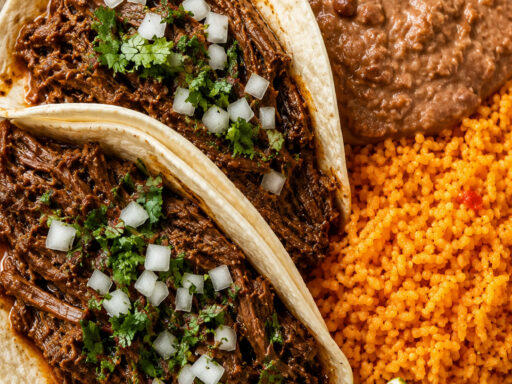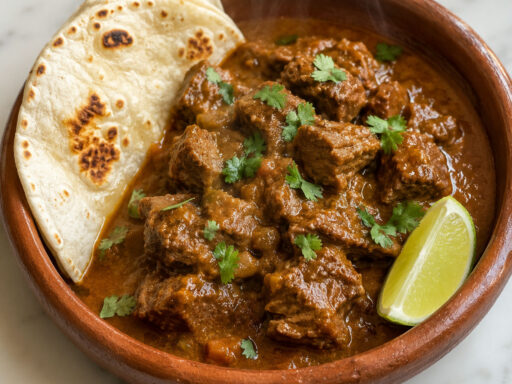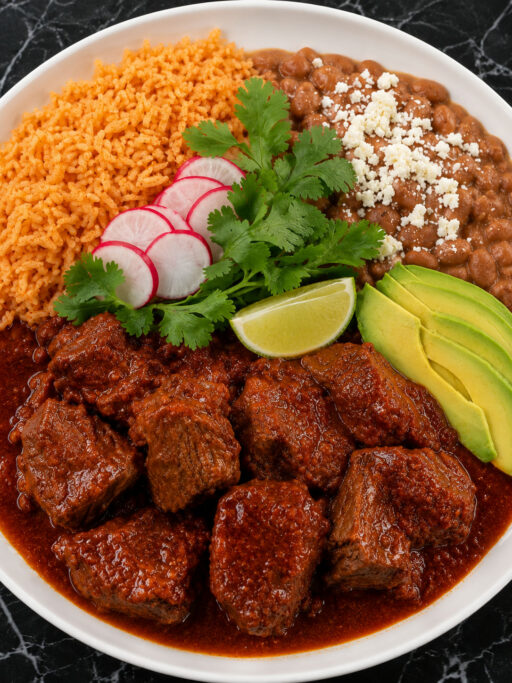
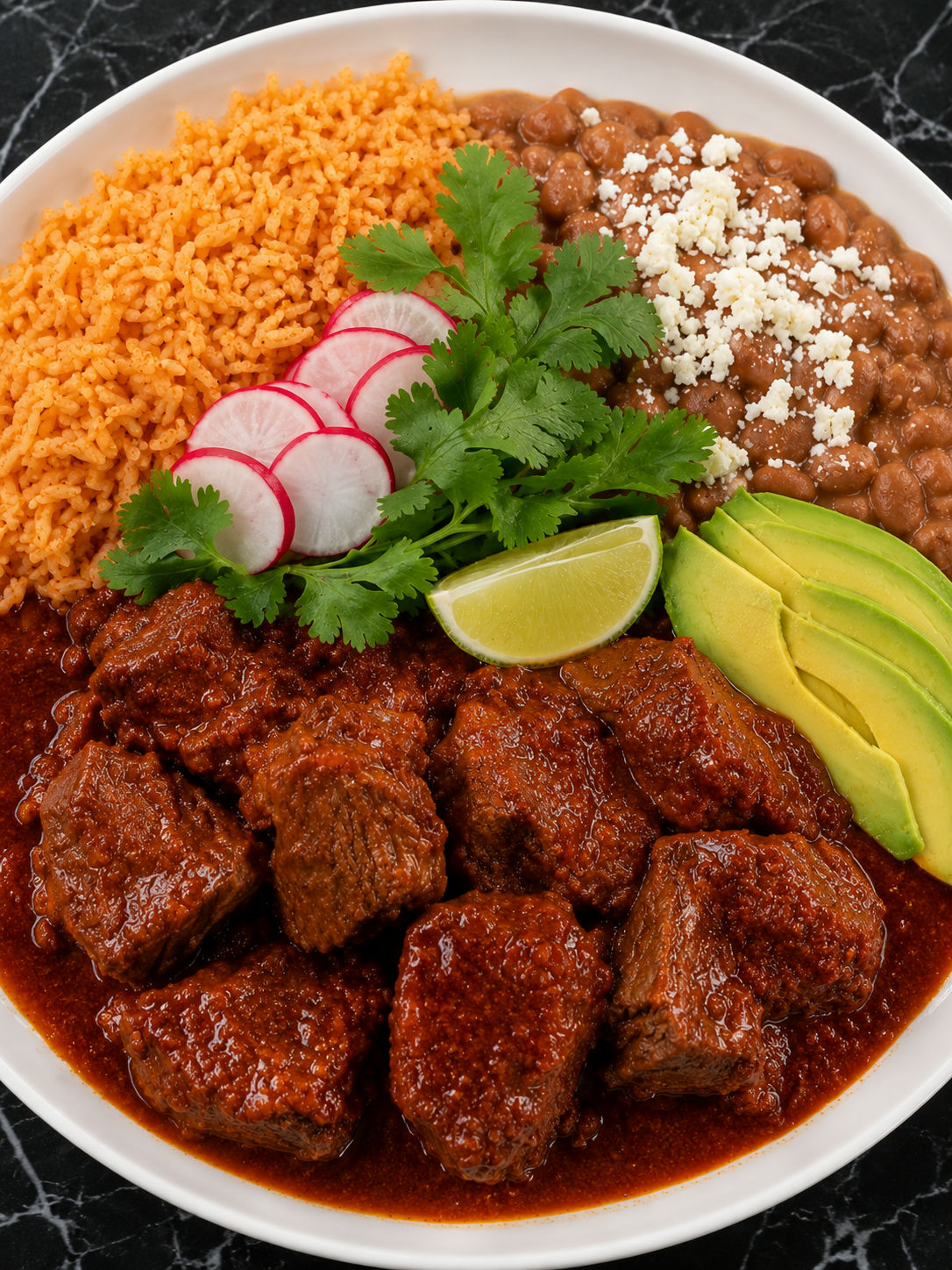

Chile Colorado gets its name from the Spanish word for “colored red,” not from any US state. The sauce is built from whole dried chiles soaked in hot water, blended smooth with fire-roasted tomatoes and beef broth, then poured over cubed chuck roast to braise low and slow. The color coming out of the oven after three hours, that deep brick-red gloss, is something you remember the first time you make it.
This recipe covers the full plate. The braise, the fluffy tomato-scented rice, and the creamy pinto beans. Start the beef first, then use the final hour of braising to cook the rice and beans so everything lands on the table at once. Plan for about three and a half hours total, most of which requires no attention from you.
Dried Chiles, Chuck, and Pantry Staples
Good dried ancho chiles look almost black and feel pliable rather than brittle, with a faint smell of dried fruit and earth. Guajillos are thinner and brick-red with a more floral, tangy aroma. Together they build a sauce that tastes far more complex than the short ingredient list suggests.
- Dried ancho chiles. Earthy, mild, and faintly sweet. They give the sauce its deep color and most of its body.
- Dried guajillo chiles. Brighter and slightly tangy with a gentle heat that layers over the ancho base.
- Beef chuck roast. The fat-threaded cut that breaks down into meltingly tender pieces during the long braise.
- Fire-roasted crushed tomatoes. Add smokiness and acidity that round out the chile flavor without making the sauce taste Italian.
- Beef broth. Keeps the sauce fluid enough to surround every piece of meat as it cooks.
- Long-grain white rice. Toasted dry in oil first so each grain cooks up separate and fluffy.
- Pinto beans. Creamy and mild, the natural partner to the bold red sauce on the plate.
Building the Plate from Start to Finish
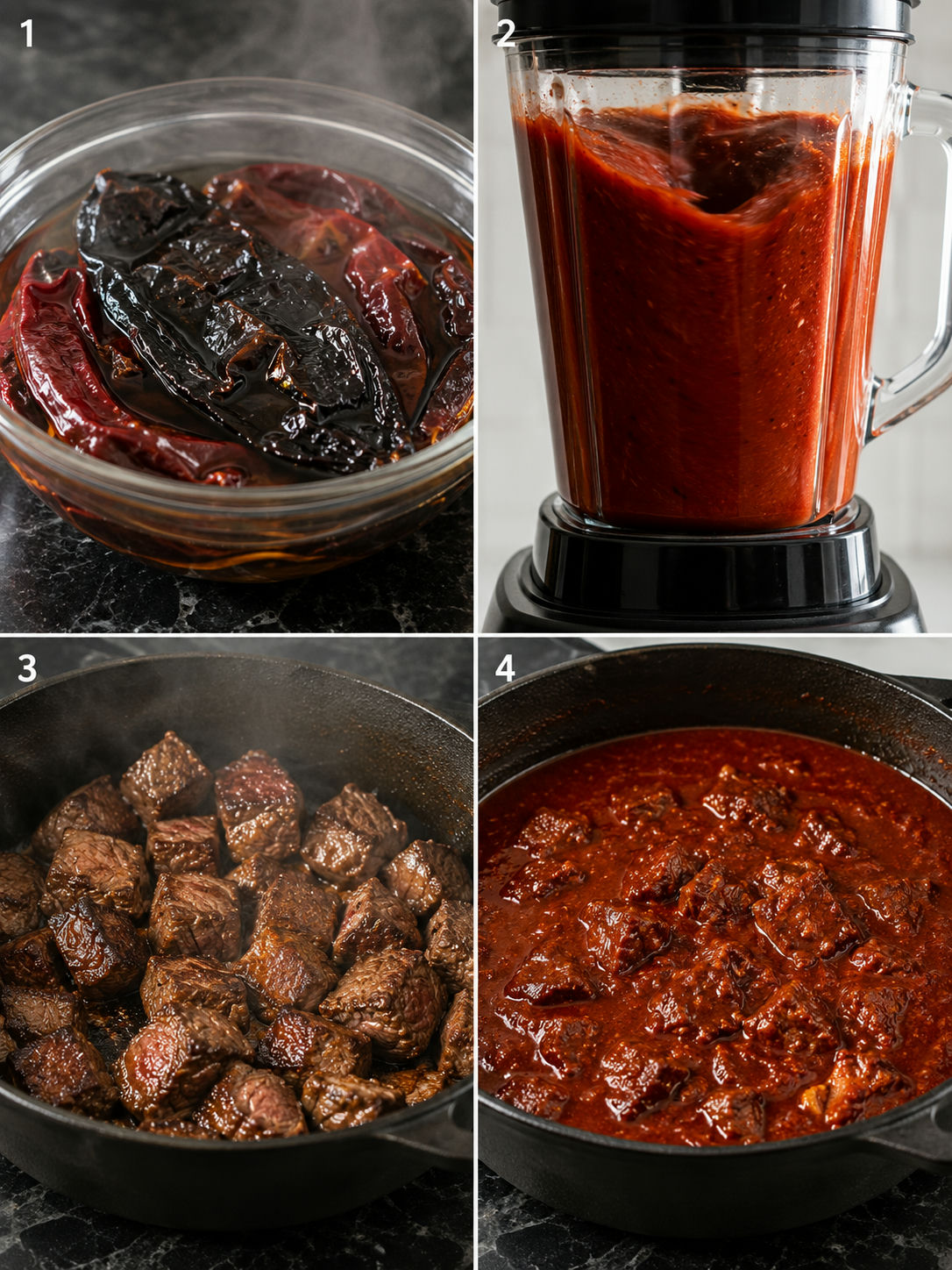
- Soak the dried chiles. Remove stems and seeds, place in a heatproof bowl, cover with boiling water, and soak 15 to 20 minutes until soft. Drain and discard the soaking water.
- Build the sauce base. Heat oil in a Dutch oven over medium. Cook diced onion 5 minutes until soft, add garlic 1 minute more. Add fire-roasted tomatoes, beef broth, cumin, and oregano. Simmer 10 minutes.
- Blend until smooth. Transfer the tomato mixture and soaked chiles to a blender. Blend on high about 1 minute until completely smooth. Season with salt and pepper. The sauce should be deep brick-red and pourable.
- Sear the beef. Preheat oven to 325°F (163°C). Wipe the pot clean, heat oil over high heat, season beef with salt and pepper, and sear in batches 4 to 6 minutes per batch until browned on two or three sides. Return all beef to the pot.
- Braise low and slow. Pour the chile sauce over the beef so it is mostly submerged. Cover and braise in the oven for 2.5 to 3 hours until the beef falls apart with a fork.
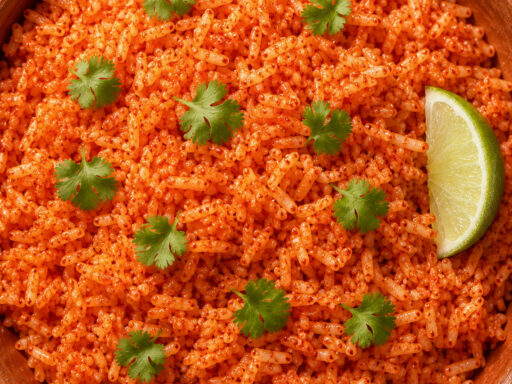
- Cook the Mexican rice. About 30 minutes before beef is done, toast raw rice in oil over medium heat, stirring often, until golden (4 to 5 minutes). Add onion and garlic, cook 2 minutes. Pour in tomato sauce and chicken broth. Bring to a boil, cover, and cook on the lowest setting 20 minutes. Rest covered 5 minutes off heat, then fluff with a fork.
- Simmer the pinto beans. Cook chopped bacon in a small saucepan until crisp. Add onion and garlic, cook 2 minutes. Add drained beans and water or broth, season with cumin and salt, and simmer 15 minutes until creamy.
- Plate and serve. Divide the chile colorado, rice, and beans into sections on each plate. Garnish with cilantro, sliced radishes, lime wedges, avocado, and cotija cheese or sour cream. Warm tortillas on the side.
What Dried Chiles Actually Do Here
Most red chile dishes in the US rely on ground chile powder. It is fine in a pinch but cannot match the depth you get from rehydrating whole dried pods. The soaking step draws out concentrated flavor compounds from the chile flesh that would otherwise stay locked in. Anchos contribute body and a faint sweetness that soften the overall sauce. Guajillos add a bright, almost cranberry-like sharpness that keeps it from tasting flat. One thing worth noting: discard the soaking water every time. It pulls bitterness from the seeds and stems during soaking. Use the tomato and broth mixture in the blender instead. For a different take on red chile sauce built on a similar dried-pod method, the Chimayo Red Chile Enchilada Sauce on this site is worth reading before you start.
The Beef Cut That Actually Matters
Chuck roast is right for this dish because of its fat and collagen content, not despite it. Both break down during the long braise into the gelatin that makes the sauce glossy and clingy. A leaner cut like sirloin or top round stays tough and chewy because it lacks the connective tissue to convert. Cut the chuck into 1.5-inch cubes so they cook evenly and you still get satisfying pieces in each portion. Searing in batches over high heat before braising builds a browned crust that adds real flavor to the finished dish. The USDA beef food safety guide recommends 145°F internal temperature, though braised chuck will be well past that after three hours. Leftover chile colorado is excellent pulled apart and tucked into Creamy Chile Colorado Burritos the next day.
Getting Fluffy Mexican Rice Every Time
The key to tomato rice that is not mushy is toasting the raw rice in oil before adding any liquid. Cook it in a thin layer of hot oil, stirring constantly, until the grains turn from chalky white to golden. This firms up the outside of each grain so it absorbs liquid more slowly and stays separate instead of clumping. Use 1 cup rice to 1.5 cups of total liquid, split between tomato sauce and chicken broth. Do not lift the lid during the 20-minute simmer and do not skip the five-minute rest off the heat before fluffing with a fork. If bean and rice plates are a regular at your table, Classic Red Beans with Savory Rice and Sausage is another great one worth adding to the rotation.
Pinto Beans That Taste Like Something
Canned pinto beans work well here as long as you give them a quick simmer with aromatics rather than heating them straight from the can. A couple of bacon strips, onion, garlic, and cumin transform them in about 15 minutes. For a meatless version of the plate, skip the bacon and use a tablespoon of olive oil instead. The flavor is still there. If you have time to cook dried pinto beans from scratch, the results are noticeably creamier. Soak 1 cup dried beans overnight, drain, and cook with onion, garlic, and a bay leaf until tender, about 1.5 hours, then season and simmer them the same way.
FAQs
- Can I use chile powder instead of whole dried chiles?
-
You can, but the flavor difference is real. Whole rehydrated pods give the sauce a fruity, layered depth that pre-ground powder cannot match. In a pinch, substitute 3 tablespoons of a good ancho or New Mexico chile powder and skip the soaking step.
- What cut of beef works best for Chile Colorado?
-
Beef chuck roast is the right choice. The fat marbling and connective tissue break down over the long braise into silky, pull-apart meat. Avoid leaner cuts like sirloin or top round as they stay tough and chewy at this temperature over this amount of time.
- Can I make this in a slow cooker?
-
Yes. Blend the sauce and brown the beef as directed, then transfer everything to the slow cooker. Cook on high for 3 to 4 hours or on low for 6 to 8 hours until the beef is very tender. The oven version develops a slightly more concentrated sauce, but the slow cooker is a great hands-off option.
- How do I store and reheat leftovers?
-
Store the chile colorado, rice, and beans separately in airtight containers in the refrigerator for up to 4 days. The beef reheats best in a small saucepan with a splash of broth over medium-low heat. Microwaving works but can dry out the meat.
- Can I freeze the Chile Colorado?
-
The beef and sauce freeze very well for up to 3 months. Thaw overnight in the refrigerator and reheat gently on the stovetop. The rice does not freeze well and tends to get mushy. The beans freeze fine if you add a splash of liquid when reheating.
- How spicy is Chile Colorado?
-
Made with ancho and guajillo chiles, this dish is mild to medium. Anchos are among the mildest dried chiles available. Guajillos add brightness and gentle heat. For more fire, add one chipotle in adobo to the blender, or soak a dried chile de arbol with the other pods.
References
Sources cited in this recipe.