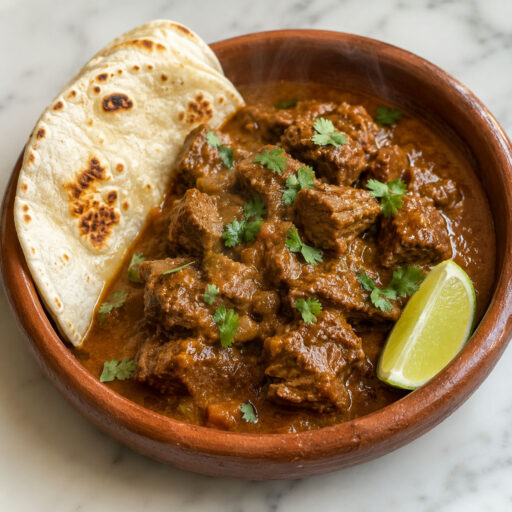
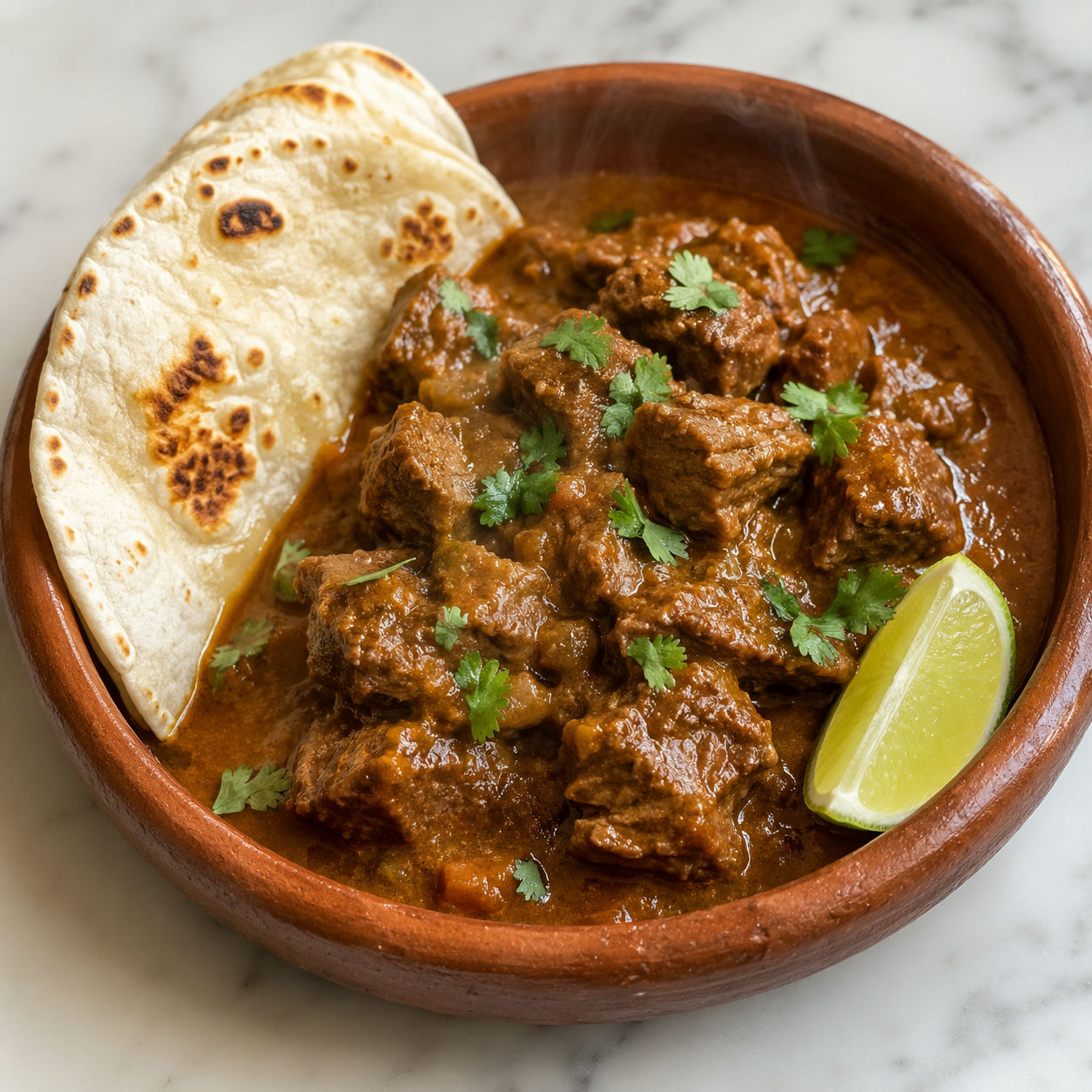

Carne guisada is Saturday morning comfort in south Texas. Chunks of beef simmer low and slow in a cumin-rich tomato-pepper gravy until fork-tender, then you scoop that stew onto a warm flour tortilla and fold it shut. If you have made the chuck roast tacos plate here before, you already know how well slow-braised beef pairs with homemade tortillas. Carne guisada takes that same combination and builds a thick, gravy-based stew around it.
This recipe makes the full thing from scratch. The stew needs about an hour of slow cooking, most of which is hands-off. The tortillas come together in under 30 minutes and are genuinely worth making, because a soft fresh round handles thick gravy in a way that a packaged tortilla simply does not.
What Goes Into the Guisada
Chuck roast is the non-negotiable here. It has the fat marbling and connective tissue that turn fork-tender during a long braise, where a leaner cut would stay tough no matter how long it cooks. For the tortillas, lard makes the softest result, though vegetable shortening works well too.
- Beef chuck. The marbled fat and collagen melt into the gravy during the braise, making it rich and glossy without any cream.
- White onion. Sweeter than yellow onion, it melts into the base without overpowering the cumin and pepper notes.
- Jalapeños. Seeded, they add gentle warmth and a grassy pepper flavor. Leave the seeds in for more heat.
- Green bell pepper. Adds body and a mild sweetness that balances the spice.
- Roma tomatoes. Firm and low-moisture, they break down into the gravy without making it watery.
- Ground cumin. The backbone of carne guisada. Freshly ground is noticeably better if you have a spice grinder.
- Beef broth. The braising liquid that becomes the gravy. Use low-sodium so you control the final seasoning.
- All-purpose flour. Stirred in before the broth to thicken the sauce as it simmers.
- Lard or vegetable shortening. What makes the tortilla dough pliable and the finished rounds tender rather than stiff.
From Sear to Simmer to Tortilla
- Brown the beef in batches. Season beef cubes with salt and pepper. Heat the oil in a large Dutch oven over medium-high heat and sear in batches, 2-3 minutes per side, until a deep crust forms. Do not crowd the pan. Set aside.
- Cook the aromatics. Lower heat to medium. In the same pot, cook the onion, jalapeño, and bell pepper for 4-5 minutes until softened. Add garlic and stir 1 minute until fragrant.
- Add tomatoes and spices. Stir in the tomatoes, cumin, chili powder, and garlic powder. Cook 2 minutes, scraping up browned bits from the bottom.
- Braise the beef. Return the beef to the pot. Sprinkle flour over everything and stir to coat. Pour in the broth and bring to a boil. Reduce heat to low, cover, and simmer 60-75 minutes, stirring occasionally, until the beef is fork-tender and the gravy coats a spoon.
- Mix and rest the tortilla dough. While the stew simmers, combine flour, baking powder, and salt in a bowl. Cut in the lard with your fingertips until the mixture resembles coarse crumbs. Add warm water and mix to a soft dough. Knead briefly until smooth, then cover with a towel and rest 15 minutes.
- Roll and cook the tortillas. Divide the dough into 10-12 balls. Roll each thin into an 8-9 inch round. Cook on a dry, preheated cast-iron skillet or comal over medium-high heat, 30-45 seconds per side, until brown spots appear and the round puffs slightly. Stack under a kitchen towel to keep soft.
- Season and serve. Taste the stew and adjust salt. Ladle onto warm tortillas, top with cilantro, and serve right away.
Why Chuck Roast and Not Anything Else
Round steak is cheaper and often sold pre-cut as stew beef, but it dries out during a long braise. Chuck has a high concentration of connective tissue that converts to gelatin as it cooks, and that gelatin is what gives the gravy its body and cling. Sirloin is too lean and too expensive for braising.
Cut the chuck yourself into uniform 1-inch cubes. Pre-packaged stew meat is inconsistently sized, which means some pieces overcook while others stay tough. According to the USDA FSIS beef safety guidelines, whole beef cuts are safe at 145°F internal temperature, though for braised stew meat you cook well past that for tenderness.
Getting the Gravy Thick and Clinging
The flour coats the beef and dissolves into the broth as it simmers, creating a gravy that clings to the meat. If the stew is still thin after 75 minutes, uncover and simmer another 10-15 minutes to reduce. Too thick? A splash of broth loosens it right away. Pull the pot off heat when it is slightly thinner than you want for serving. It thickens more as it cools and even more overnight, which is the same quality that makes dishes like chile colorado taste best as leftovers.
Lard Makes a Softer Tortilla
Lard creates a pliable, tender tortilla that stays soft even after cooling, which is what you need for scooping up thick stew. Butter gives a richer flavor but a denser result. Vegetable shortening is a solid neutral swap between the two.
Do not skip the resting time. The gluten needs 15 minutes to relax before rolling. Skip it and the rounds spring back and tear. Give it the time and the dough becomes smooth and cooperative. The homemade flour tortillas guide here covers the full technique in detail if you want to go deeper.
What to Serve on the Side
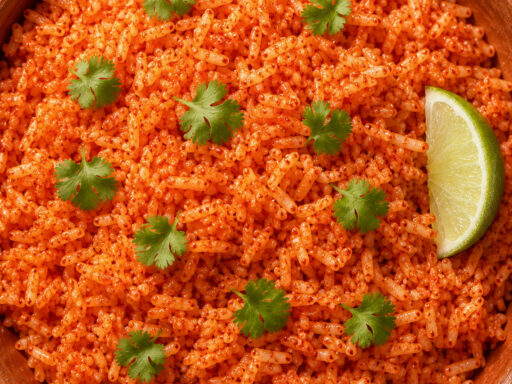
The stew pairs well with Mexican rice, refried beans, or sliced avocado with lime. A fresh lime wedge at the table brightens everything and cuts through the richness of the gravy. For a bigger spread, serve it alongside homemade picadillo with potatoes for a full Tex-Mex table. The guisada also works as a filling for burritos or enchiladas, but the fresh-tortilla wrap is the version to start with.
Storing and Reheating Both Components
The stew keeps refrigerated for up to 4 days and freezes well for up to 3 months. Reheat on the stovetop over medium-low heat with a splash of broth to loosen the gravy. Store tortillas separately, wrapped in a kitchen towel and then in a bag. They stay soft at room temperature for 2-3 days or refrigerated for up to a week. Rewarm on a dry skillet for 20-30 seconds per side.
FAQs
- Can I make carne guisada in a slow cooker?
-
Yes. Brown the beef and sauté the aromatics on the stovetop first for the best flavor, then transfer everything to your slow cooker. Cook on low for 7-8 hours or high for 4-5 hours. Skip the flour at the start and stir in a slurry of 2 tablespoons flour mixed with 3 tablespoons cold water during the last 30 minutes to thicken the gravy.
- What beef can I use instead of chuck roast?
-
Beef shoulder or blade roast behaves similarly to chuck and are solid alternatives. Both have enough fat and connective tissue to braise down tender. Avoid round steak and sirloin for this dish. They are too lean and will turn dry and stringy before the gravy has time to develop any depth.
- How do I keep my flour tortillas soft?
-
Two things matter most. First, let the dough rest at least 15 minutes so the gluten relaxes and the rounds roll thin without tearing. Second, stack cooked tortillas immediately under a clean kitchen towel so steam keeps them pliable. Cook them on a dry skillet with no oil or butter. A greased pan makes them stiff.
- Can I make the tortilla dough ahead of time?
-
Yes. Refrigerate the dough balls for up to 24 hours before rolling. Let them come to room temperature for 15-20 minutes before rolling or they will be too tight to stretch thin. Cooked tortillas keep at room temperature for 2-3 days or in the refrigerator for up to a week. Reheat on a dry skillet for 20-30 seconds per side.
- How spicy is carne guisada and can I adjust the heat?
-
The base recipe with 2 seeded jalapeños is mild to medium. For milder, remove the jalapeños or replace them with a second green bell pepper. For more heat, leave the seeds in, add a diced serrano, or stir in a teaspoon of cayenne with the other spices. The cumin and chili powder add depth but not significant heat on their own.
- What is the difference between carne guisada and carne asada?
-
They are completely different dishes. Carne asada is grilled beef, usually thin-sliced flank or skirt steak cooked fast over high heat and served in tacos. Carne guisada means stewed meat. The beef braises low and slow in liquid until fork-tender, and the cooking liquid thickens into a gravy. One is a quick grill recipe and the other is a long, slow braise.
References
Sources cited in this recipe.