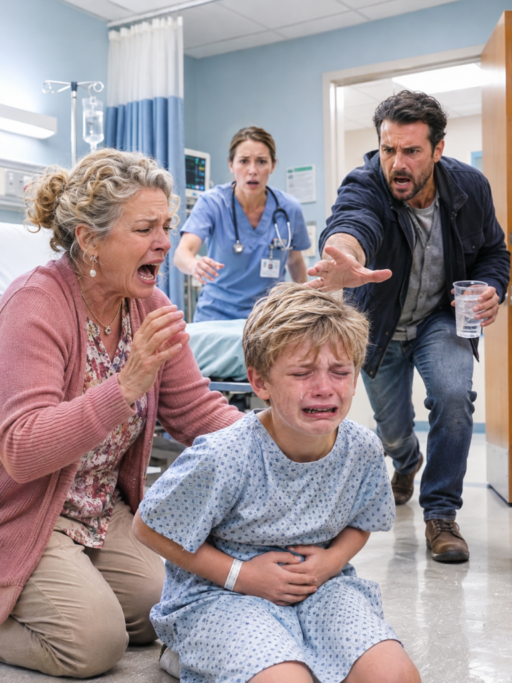
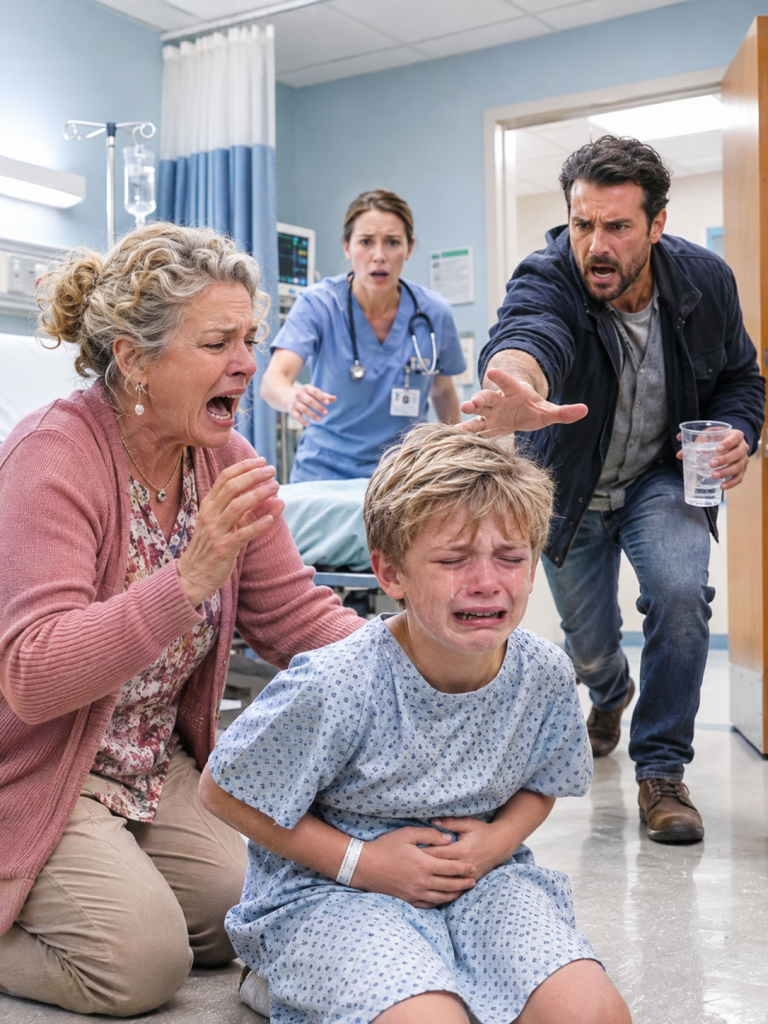

“Get out of that bed, Ethan! Stop pretending you’re helpless!”
My mother, Evelyn Miller, grabbed my thirteen-year-old son’s arm and forced him out of his hospital bed barely forty-eight hours after emergency abdominal surgery.
I was returning from the nurses’ station when I saw Ethan collapse onto his knees, holding his abdomen.
“Grandma, please. It really hurts.”
Instead of helping him, my mother slapped him across the face.
“Stop crying! You’re old enough to act like a man!”
I immediately rushed toward them.
My name is Arthur Miller. I’m forty-three years old and manage an automotive parts distribution center in Columbus, Ohio.
I’ve raised Ethan almost entirely on my own since his mother moved to Miami with another man when he was five. Eventually, her occasional telephone calls stopped, and my mother became our primary source of support.
She collected Ethan from school, prepared his meals, and looked after him whenever I worked late.
However, Evelyn believed children should obey adults without questioning them. Crying, expressing discomfort, or admitting fear were signs of weakness in her eyes.
When Ethan was nine, he suffered a wrist injury during a school field trip. My mother dismissed his complaints until an X-ray confirmed a hairline fracture.
She never apologized, and I foolishly attributed her behavior to generational differences.
Ethan was a thoughtful, sensitive boy who loved drawing animals. Despite his grandmother’s frequent criticism, he always saved his favorite drawings for her.
Everything changed one Thursday in October.
Ethan woke up experiencing severe abdominal pain. At Nationwide Children’s Hospital, doctors discovered that his appendix had ruptured, causing a serious infection that required emergency surgery.
Afterward, Dr. Grant explained that Ethan needed intravenous antibiotics, careful monitoring, and assistance from medical staff whenever he attempted to stand.
On Friday afternoon, I briefly returned to work to handle a payroll audit. My mother volunteered to stay with Ethan.
When I returned, my son seemed unusually withdrawn.
“How are you feeling, buddy?”
“I’m okay, Dad.”
He immediately glanced toward his grandmother.
“He’s exaggerating,” Evelyn interrupted. “These doctors are making him unnecessarily dependent on everyone.”
Later that evening, after she left, Ethan asked me something unexpected.
“Dad, do you think I’m a coward?”
“Absolutely not, son.”
I promised to speak with his grandmother, unaware of how deeply her words had already affected him.
The following morning, I briefly stepped away to ask the nurses about Ethan’s medication schedule.
When I returned, my mother’s shouting echoed through the corridor.
I reached his room just as she forced him out of bed. Ethan fell, crying in pain, and she struck him when he begged her to stop.
“Ma’am! Take your hands off that child immediately!” a nurse shouted.
I rushed forward as my mother continued reprimanding him.
Ethan looked up at me, his face filled with fear. But instead of asking me to protect him, he apologized.
“Dad, I’m sorry. Please don’t tell Grandma I told you.”
I stopped for a fraction of a second, stunned by his response.
My son wasn’t simply frightened because his grandmother had hurt him.
He was terrified of what might happen because someone had finally witnessed it.
And suddenly, I began remembering all the occasions when Ethan had begged me not to leave him alone with her.
By the time I reached Ethan, my mother had raised her hand again. I caught her wrist and positioned myself between her and my son.
“Don’t you ever touch him again.”
Evelyn stared at me as though I had committed some unforgivable offense.
“Arthur, that boy needs discipline!”
“He had emergency surgery two days ago!”
“That’s exactly why he needs to start moving. These doctors are making him helpless.”
Brenda, the charge nurse, immediately knelt beside Ethan and instructed him to remain still. She activated the emergency call button, bringing additional medical personnel and two hospital security officers into the room.
Dr. Grant examined Ethan and became concerned that the fall had damaged an internal suture and displaced his surgical drain. He ordered an urgent CT scan.
My mother attempted to approach him.
“Doctor, everyone is overreacting. I was simply trying to get him on his feet.”
Brenda stepped between her and the medical team.
“Ma’am, you need to leave immediately.”
“I’m his grandmother!”
“And he’s my patient.”
Hospital security escorted Evelyn from the floor. Before leaving, she threatened that I would regret humiliating her in front of strangers.
I ignored her and concentrated on Ethan, who was gripping his hospital blanket with trembling hands.
“I’m sorry, Dad.”
“Why are you apologizing, buddy?”
“Because I made Grandma angry.”
I couldn’t believe my son felt responsible for what had happened.
Later that afternoon, doctors confirmed that Ethan needed another surgical procedure to repair the internal damage. I requested that the medical team document his injuries and arranged a consultation with the hospital social worker.
That evening, I filed a formal assault report with the Columbus Police Department. Hospital administrators preserved the relevant medical records and hallway security footage.
Meanwhile, my mother repeatedly called me, alternating between tears and accusations that Ethan was deliberately destroying our family.
I saved every voicemail.
On Sunday morning, my younger sister, Claire, called from Cincinnati.
“Arthur, is it true that Mom hit Ethan?”
I explained everything.
For several seconds, Claire remained silent before beginning to cry.