

He’d listened while I talked about missing Matthew and told me I had to find a way to keep living.
Now investigators had found him in a recording connected to the boy who might be my son.
Detective Miller lowered the photograph.
“Dr. Bennett, we need to establish Daniel’s identity before drawing conclusions.”
I understood.
But one question wouldn’t leave my mind.
If Daniel really was Matthew, how long had my own brother known he was alive?
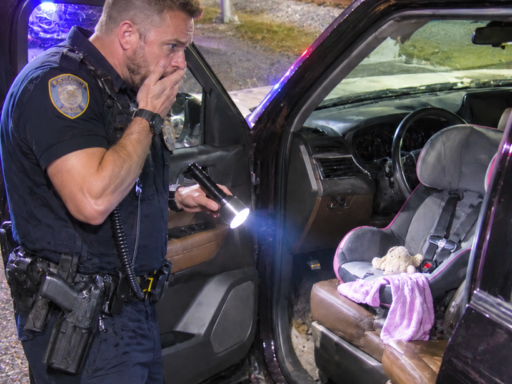
I stared at the photograph of my younger brother sitting behind the wheel of the red car.
Robert had been the person I trusted most after Matthew’s supposed death. He visited every Sunday, brought groceries when I couldn’t face leaving the house, and sat beside me whenever grief became unbearable.
Now his face appeared in evidence connected to the boy who might be my son.
“There has to be an explanation,” I whispered.
Detective Andrew Miller studied me carefully.
“We’re investigating, Dr. Bennett. Right now, our priority is protecting Daniel and establishing his identity.”
My phone vibrated.
Three messages from Robert were waiting.
The first asked whether I wanted dinner. The second mentioned hearing about an incident at the hospital.
The third had arrived five minutes earlier.
“James, don’t do anything foolish. There are things you don’t understand.”
I showed Detective Miller.
He asked me not to respond.
That evening, Emily and I remained at the hospital while authorities arranged temporary protection for Daniel.
Neither of us dared call him our son.
We’d spent seven years believing Matthew was dead, and we couldn’t survive another false hope.
Later, Daniel asked to speak with me.
“Did you know a boy named Matthew?”
I sat beside his bed.
“Yes. I knew him very well.”
“Was he nice?”
“He loved dinosaurs, macaroni and cheese, and chasing pigeons in the park.”
Daniel smiled faintly.
“I like dinosaurs too.”
Then his expression became serious.
“Rebecca said Matthew was a boy who didn’t exist anymore. Sometimes Robert called me that, and she’d get angry.”
My hands tightened around the edge of the chair.
“How long have you known Robert?”
“Since I was little. He used to bring me toys.”
Daniel hesitated before quietly humming a melody.
I recognized it immediately.
Emily had invented that lullaby while she was pregnant. It was about a little moon finding its way home by following the stars.
She’d never recorded it.
Outside the room, Emily heard the final notes and began crying.
The next morning, Detective Miller returned with information recovered from the memory card.
Investigators had found scanned medical documents, financial records, and a recording in which Rebecca discussed Daniel’s past with Robert.
One statement was particularly disturbing.
“We paid to make everyone believe Matthew was dead. If he remembers his parents, we lose everything.”
Police subsequently located Robert at his home, where he was preparing to leave.
A court-authorized search uncovered correspondence with Dr. Richard Galloway, the physician who’d certified Matthew’s death.
Financial records also revealed that Robert had received approximately $200,000 through a business connected to Rebecca.
Faced with the evidence, he agreed to speak with investigators in the presence of his attorney.
According to Detective Miller, Robert had accumulated serious debts seven years earlier.
Galloway introduced him to Rebecca, a wealthy woman desperate to have a child.
Robert knew Matthew was scheduled for a minor procedure at Galloway’s clinic.
He provided information about our family’s schedule and helped arrange access to my son.
Galloway allegedly orchestrated a false medical emergency, while altered records concealed what had actually happened.
Rebecca then raised Matthew under the name Daniel.
Robert had known where he was all along.
I remembered my son’s funeral.
My brother had stood beside me, holding my shoulder as I cried over a closed casket.
He’d watched Emily and me lose our marriage.
And he’d known Matthew was alive.
When Detective Miller finished explaining Robert’s statement, I couldn’t remain seated.
I walked to the window, struggling to breathe.
Emily approached me.
“I always knew something was wrong,” she whispered.
I turned toward her.
For years, I’d mistaken her determination for an inability to accept our loss.
“I’m sorry I stopped listening.”
She shook her head.
“They lied to both of us.”
I held her as she cried.
But there was still one question investigators couldn’t answer.
Why had Daniel appeared at the very hospital where I worked?
The answer came when the child psychologist asked him how he’d found us.
Daniel explained that he’d discovered an old photograph hidden among Rebecca’s documents.
He’d searched my name online and learned where I worked.
When Rebecca brought him to Boston, he’d seen Robert’s red car near the hospital and slipped away during an argument.
He’d fallen while running toward the emergency entrance.
Daniel hadn’t arrived at my hospital by coincidence.
He’d been searching for me.
And he had carried the evidence that might finally bring him home.
When Detective Andrew Miller explained how Daniel had found my hospital, I could barely believe what I was hearing.
The nine-year-old boy had discovered an old photograph of Emily and me among Rebecca Whitmore’s hidden documents. He’d searched my name online, learned that I worked as a pediatrician in Boston, and waited for an opportunity to find me.
He hadn’t understood everything about his past.
But he’d suspected that the people in the photograph might know who he really was.
During a trip to Boston, he’d spotted my brother Robert’s red car near the hospital. While the adults argued, Daniel slipped away and ran toward the emergency entrance.
He tripped near the parking garage, injuring his shoulder.
A security officer found him crying and arranged for medical assistance.
Rebecca arrived shortly afterward, but Daniel had already reached the hospital where I worked.
He’d found me without knowing whether I would recognize him.
That realization broke my heart.
For seven years, I’d believed my son was buried in a cemetery.
Meanwhile, he’d been growing up under another name, searching for answers the adults around him refused to provide.
The investigation continued.
Robert’s statements, the financial records, and the recordings recovered from Daniel’s memory card gave detectives substantial evidence to examine.
Dr. Richard Galloway also became a central figure in the investigation into the falsified medical records.
Rebecca remained separated from Daniel under protective arrangements while authorities reviewed his identity and circumstances.
But one question still needed a definitive answer.
Was Daniel really Matthew Bennett?
With the appropriate legal authorization and safeguards, investigators arranged DNA testing.
Emily and I provided our samples.
Daniel participated under professional supervision.
Then we waited.
Those eleven days felt longer than the seven years we’d spent grieving.
Emily and I visited Daniel whenever permitted, carefully following the guidance of the professionals overseeing his care.
We didn’t tell him he was definitely our son.
We couldn’t make promises before the results arrived.
One afternoon, a child psychologist explained something that stayed with me.
Daniel had admitted that he missed Rebecca.
She’d raised him for seven years, helped him with school, and cared for him when he was sick.
But he’d also said he was frightened of returning to her.
I understood that even if Daniel was Matthew, bringing him home wouldn’t erase everything he’d experienced.
He would need time to understand his identity and the conflicting feelings he had toward the woman who’d raised him.