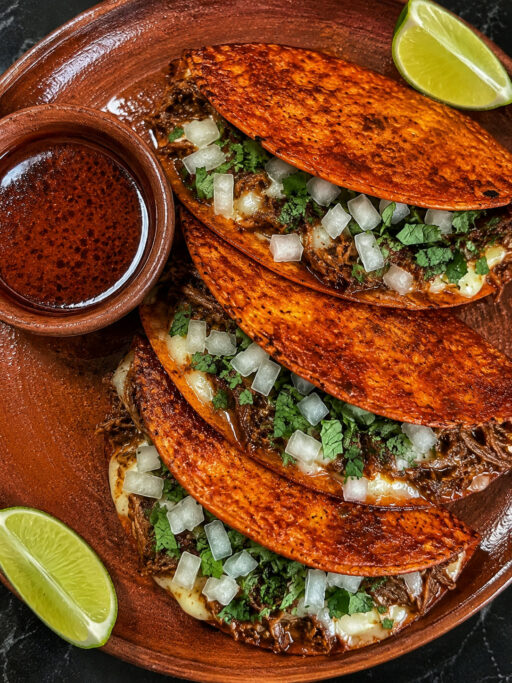
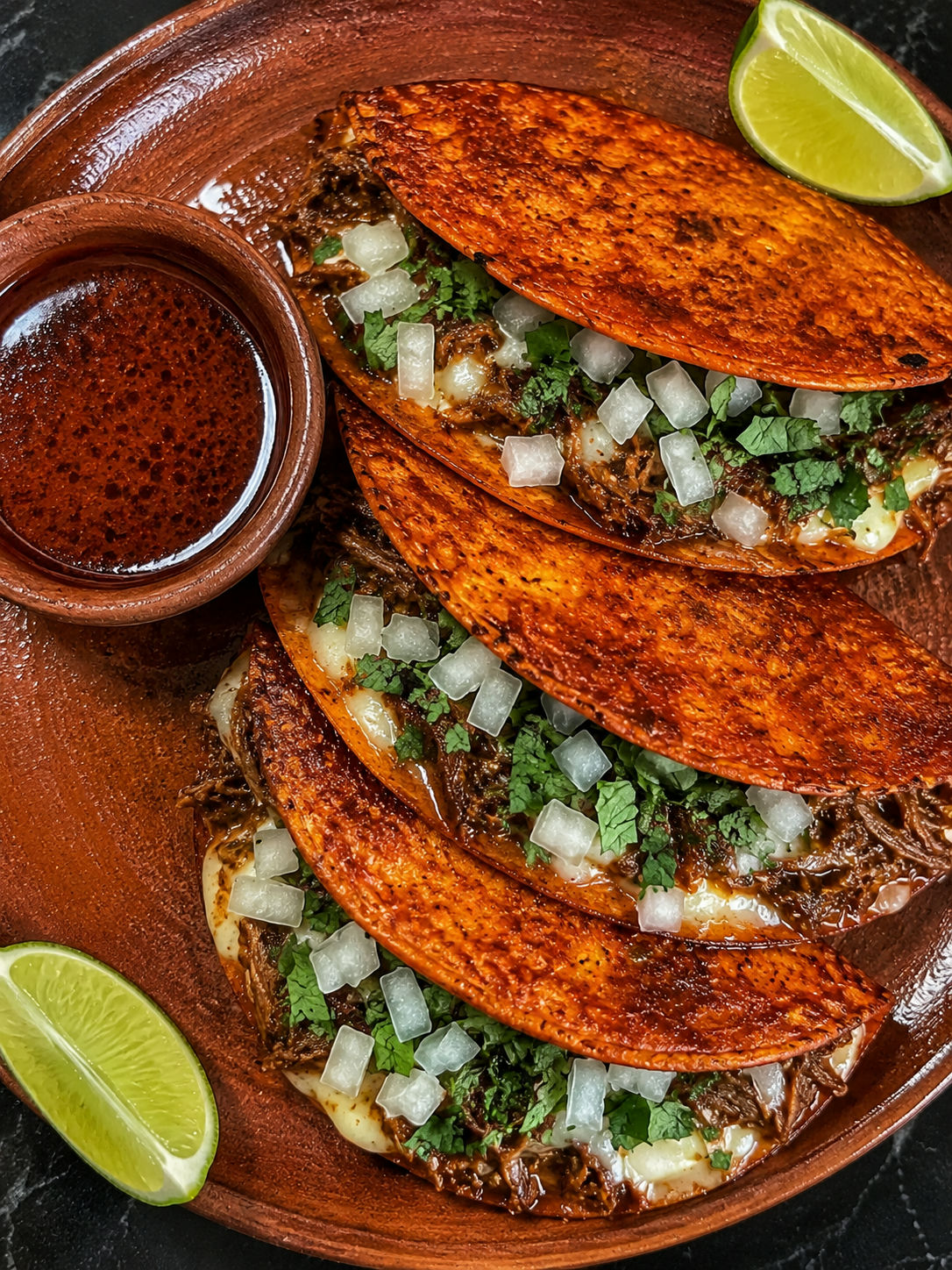

Birria tacos have a way of making people stop mid-bite. The beef is deep red, impossibly tender, loaded into a tortilla that was dipped in chile broth before it hit the hot skillet. That broth, the consomé, is what makes these different from every other taco out there.
The recipe takes real time, but almost all of it is hands-off. The adobo comes together in a blender, the beef goes into the oven, and hours later you have something that tastes like it took serious skill even though the method is straightforward. Marinating overnight is the one step you cannot skip.
This version uses beef shank and bone-in short ribs. The shank gives you lean, deeply flavored pulled meat. The short ribs add fat and marrow that render into the consomé, keeping the broth rich and silky. Together they build something so good that some people drink a full cup of it alongside every plate of tacos.
The Chiles and Spices That Drive the Flavor
The adobo is the soul of birria. You need two kinds of dried chiles and it is worth seeking them out: ancho chiles bring a deep, fruity sweetness, while guajillo chiles give the dish its signature brick-red color and gentle heat. Both are available at Latin grocery stores and increasingly at well-stocked supermarkets.
- Beef shank. Lean and collagen-rich, it gives the consomé body and produces meat that shreds into long, tender fibers.
- Bone-in beef short ribs. Fat and marrow render into the broth during the long braise, making the consomé silky and deeply savory.
- Ancho chiles. Dark wrinkled dried poblanos with a raisin-like sweetness and almost no heat. They give the adobo its chocolate-brown depth.
- Guajillo chiles. Bright red and thin-skinned, these add mild fruity heat and are responsible for the vivid color of the birria.
- Roasted tomatoes. Charred until softened, they add body and a slight acidity that balances the richness of the meat.
- White onion and garlic. Roasting them first rounds out their sharpness before they go into the blender.
- Mexican cinnamon (canela). Softer and more floral than cassia cinnamon, it adds a subtle warmth that ties the spice mix together without being obvious in the final dish.
- White vinegar. Brightens the adobo and begins tenderizing the meat during the marinade.
- Oaxacan cheese (quesillo). Melts and stretches beautifully on a hot skillet. Monterey Jack is a reliable substitute if you cannot find it.
Building Birria from Chile Sauce to Crispy Tacos
- Season the meat. Pat the beef shank and short ribs dry with paper towels. Season generously on all sides with salt and black pepper and arrange in a large oven-safe baking dish or Dutch oven.
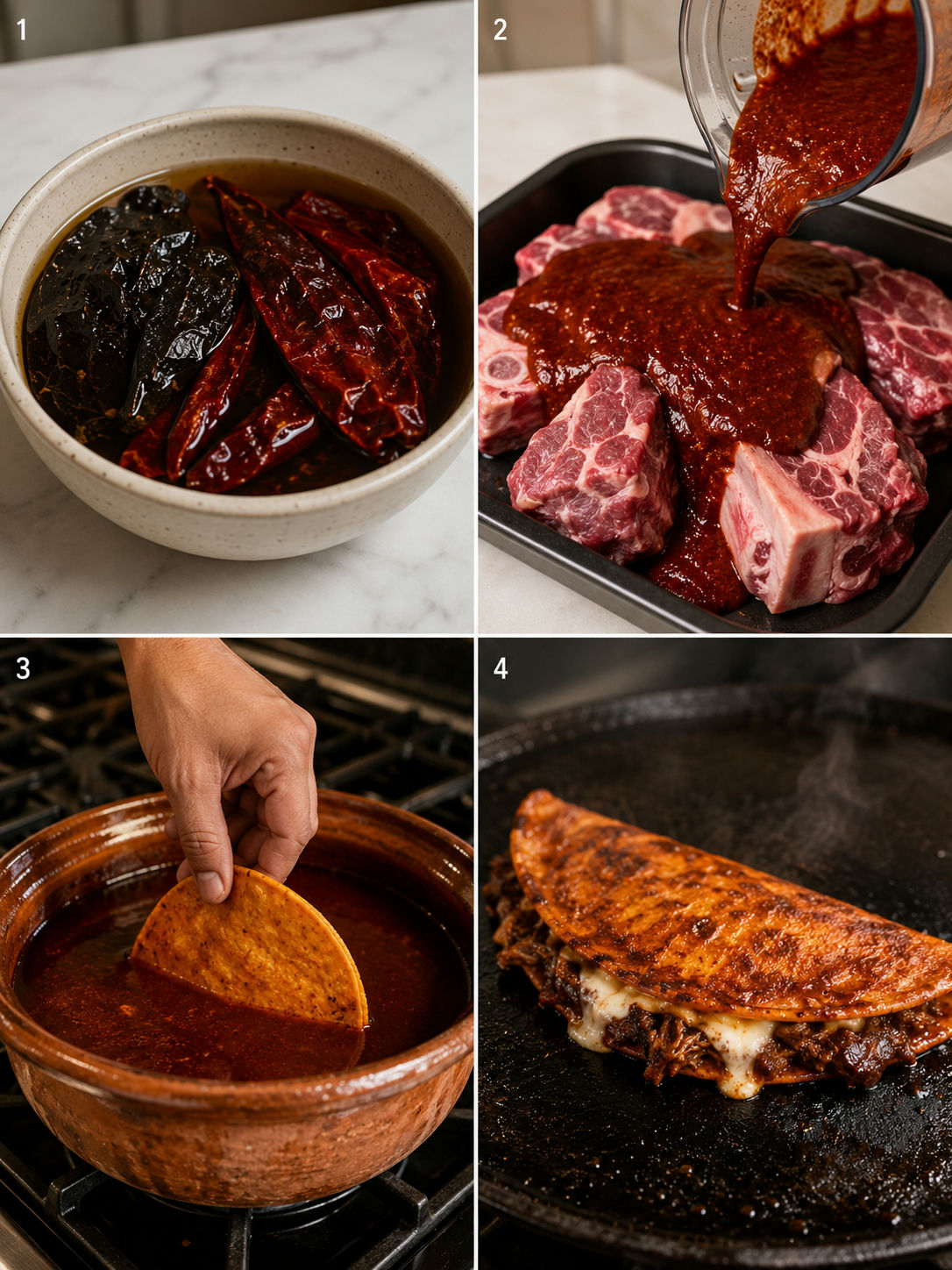
- Toast and soak the chiles. Stem, seed, and devein the ancho and guajillo chiles. Press them flat in a dry skillet over medium heat for about 15 seconds per side until they darken slightly and smell toasty. Stop before any smoke appears. Burnt chiles will make the adobo bitter. Transfer to a bowl and cover with very hot water. Soak for 20 minutes until fully soft.
- Roast the aromatics. Char the tomatoes, onion, and garlic directly over a gas burner or under a broiler until lightly blackened in spots, about 5 to 8 minutes. This adds a layer of smokiness to the adobo.
- Blend the adobo. Toast the cloves, cumin seeds, and black peppercorns in a dry pan for 20 to 30 seconds until fragrant. Add them to a blender with the drained softened chiles, roasted vegetables, Mexican oregano, marjoram, cinnamon stick, and white vinegar. Puree until completely smooth, adding a splash of water only if the blender struggles. Taste and season with salt.
- Marinate the meat. Pour the adobo over the beef, turning each piece to coat all sides. Cover tightly with aluminum foil and refrigerate for at least 4 hours, preferably overnight.
- Braise in the oven. Preheat the oven to 350°F (175°C). Keep the dish covered tightly with foil and braise for 3.5 to 4 hours until the meat pulls apart easily with two forks. Check at the 3-hour mark and add a small splash of water if the bottom of the dish looks dry.
- Shred the beef and strain the consomé. Transfer the meat to a cutting board and pull it apart, discarding large bones. Skim the fat from the surface of the cooking liquid (save it for frying the tacos if you like), taste the consomé, and adjust the salt. Strain through a fine sieve for a cleaner broth.
- Fry the tacos. Heat a comal or skillet over medium-high heat. Briefly dip a corn tortilla in warm consomé to coat both sides, then lay it on the hot surface. Add a small handful of shredded cheese and a generous scoop of shredded beef to one half. Fold, press gently, and cook for 2 to 3 minutes per side until golden and crunchy.
- Serve with warm consomé. Ladle the consomé into small cups or bowls. Serve the tacos immediately with diced white onion, fresh cilantro, and lime wedges alongside.
Why the Overnight Marinade Pays Off
Four hours is the minimum and it does work, but there is a real difference when you let the beef sit in the adobo overnight. The dried chile pigments penetrate deeper into the meat fibers instead of staying on the surface. The vinegar has enough time to begin breaking down the collagen in the shank, which means the braise goes faster and the meat shreds more cleanly. If you are making this on a weekend, mix the adobo on Friday night and braise on Saturday. This same patience shows up in other slow Mexican beef dishes, like tender beef tamales with spiced masa, where the chile marinade also needs time to do its work. For a closer look at the food science behind long braises, the team at Serious Eats covers it in useful detail.
Getting the Tacos Golden and Crunchy
The dip in consomé is what gives birria tacos their color and flavor, but there is a line between coated and waterlogged. A second or two in the broth is enough. The tortilla should look saturated on the surface but not be dripping when you lay it on the skillet. A pan that is too cool will steam the tortilla soft instead of crisping it. Medium-high heat and a few seconds of patience before flipping are what you need.
Cheese is structural here, not just for flavor. It melts and bonds the two halves of the tortilla so the taco holds when you pick it up. If you find yourself with leftover birria meat, the cheesy beef birria dip is a fantastic way to use it, the consomé becomes the dipping liquid and the whole thing comes together fast.
Toppings and the Consomé Dipping Cup
Traditional birria tacos come with diced white onion, chopped cilantro, and a squeeze of lime. That is the version to start with. Sliced radishes, a spoonful of salsa roja, or a drizzle of crema are common additions depending on the region. The consomé for dipping should be warm but not scalding. Season it well with salt and a squeeze of lime before serving. If you enjoy taco nights with a variety of styles, the grilled elote steak tacos with cotija and lime are a good companion dish and come together in a fraction of the time.
Storing Birria and Making the Most of Leftovers
The shredded beef and consomé store best together. The meat stays moist when submerged in the broth. Keep them in an airtight container in the refrigerator for up to 5 days. The fat solidifies on top when cold, and you can skim it or stir it back in when you reheat. For longer storage, freeze the beef in the consomé for up to 3 months. The USDA food safety guidelines recommend reheating beef to an internal temperature of 165°F before serving. Leftover birria is excellent repurposed into quesadillas, breakfast burritos, or the cheesy beef birria dip, where the consomé makes the perfect dunking liquid.
FAQs
- Can I use a different cut of beef?
-
Yes. Bone-in chuck roast and beef brisket both work well as substitutes or additions. Chuck roast shreds cleanly and brisket adds a different fat distribution. Avoid very lean cuts. You need intramuscular fat and collagen to keep the meat moist and to enrich the consomé through the long braise.
- What can I substitute for Mexican cinnamon?
-
Regular cassia cinnamon works but it is stronger and spicier than canela. Use about half the amount, roughly half an inch of stick, and taste the blended adobo before adding more. Mexican cinnamon is softer and more floral, and it is worth finding at a Latin market if you can.
- Can I make birria in a slow cooker?
-
Yes. After marinating, cook on LOW for 8 hours or HIGH for 5 hours. The consomé will be thinner than the oven version because moisture does not evaporate in a sealed slow cooker. Simmer it uncovered on the stovetop for 15 to 20 minutes after shredding the meat to concentrate the flavor.
- Why do my corn tortillas crack when I dip them in the consomé?
-
Cold stiff tortillas crack on contact with hot liquid. Warm each one in a dry skillet or directly over a gas burner for 20 to 30 seconds per side until pliable before dipping. The dip itself should be brief, just a second or two, so the tortilla is coated but not saturated and falling apart.
- What cheese works if I cannot find Oaxacan cheese?
-
Monterey Jack is the easiest substitute and melts in a very similar way. Low-moisture mozzarella also works well. Avoid pre-shredded cheese with added starch if you can, as it does not melt as cleanly. Quesillo (the string-cheese form of Oaxacan cheese) is the traditional choice and worth seeking out at a Mexican grocery.
- How long do leftovers keep and can I freeze them?
-
Store the shredded beef and consomé together in an airtight container in the refrigerator for up to 5 days. The fat solidifies on top when cold, and you can skim it or stir it back in when reheating. Freeze in the consomé for up to 3 months. Reheat gently over low heat with the lid on so the meat stays moist.
- Can I make the adobo sauce ahead of time?
-
Yes. The blended chile sauce keeps in the refrigerator for up to a week and freezes well for up to 3 months. Making it a day or two in advance is actually helpful. The flavors mellow slightly and you can start marinating the beef right away when you are ready, without any extra prep pressure.
References
Sources cited in this recipe.