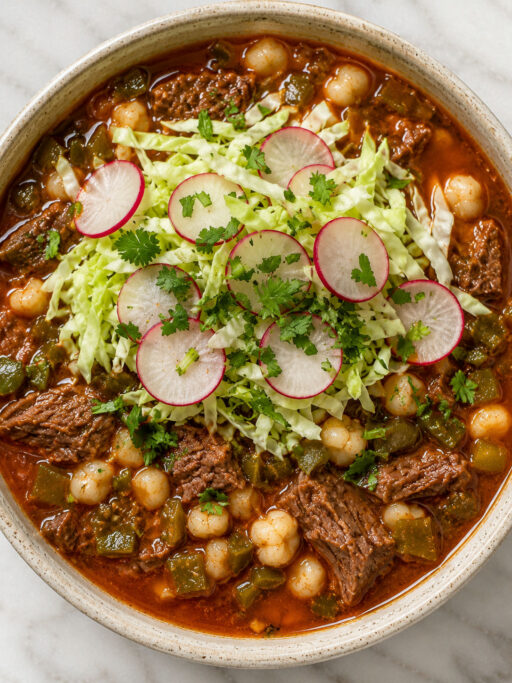
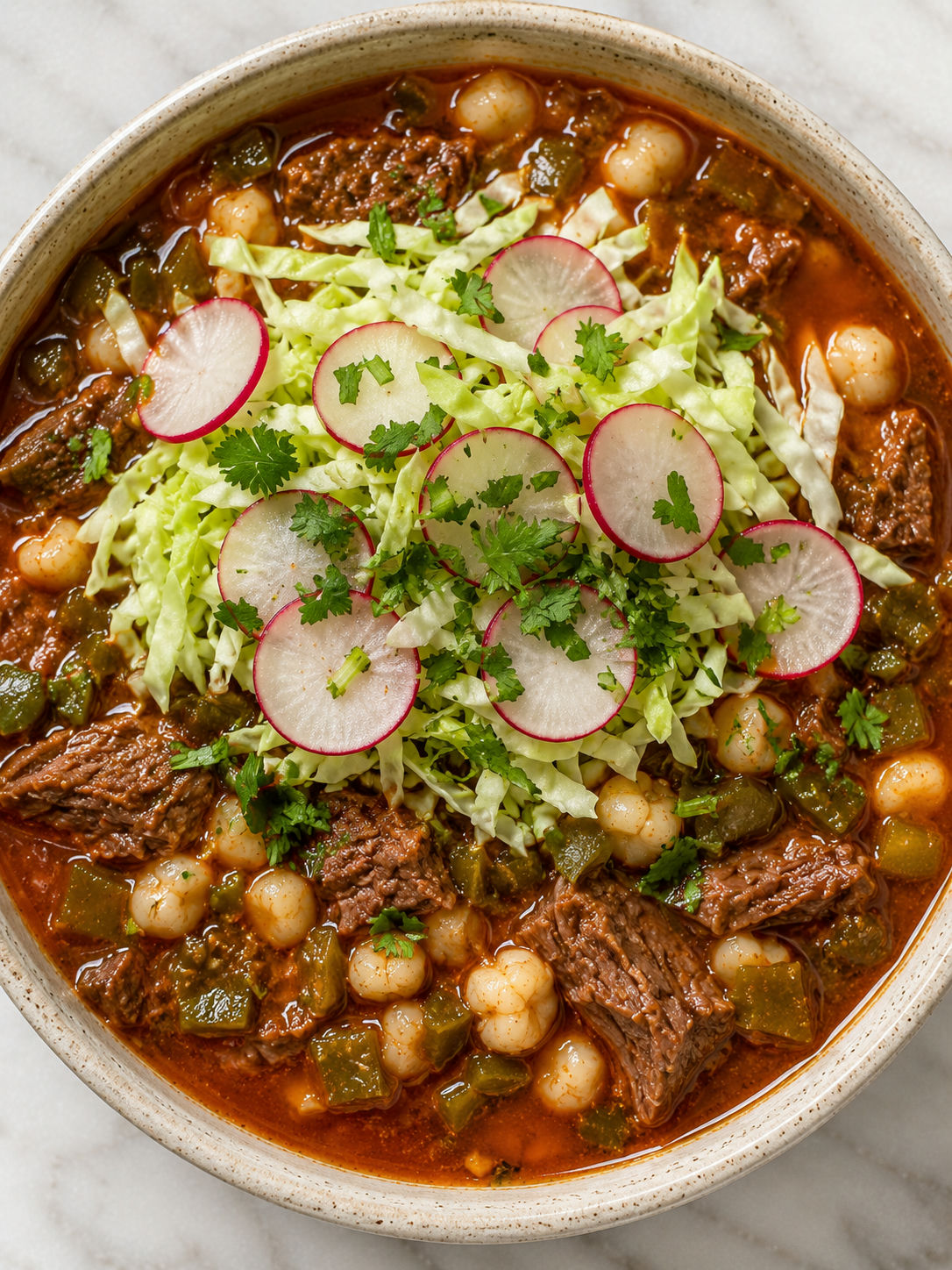

Pozole has been bringing people together in Mexico for centuries, and this Christmas-style version earns its name in every bowl. “Christmas” in New Mexico and parts of Mexico means both red and green chile at the same time, and the combination is genuinely better than either alone. The red builds earthy depth. The green adds roasted brightness. Together they create a bowl as festive as it tastes.
This recipe uses beef steak instead of the more common pork. Chuck or sirloin simmers low and slow until fork-tender, soaking up all that smoky layered broth. The white hominy swells soft and chewy. Most of the 2-hour cook is hands-off simmering.
Toast the chiles, sear the beef, build the broth, and let time do the rest. The garnish table at the end is half the experience.
What Goes in This Festive Bowl
Dried chiles are the heart of this recipe, and fresher is better. A Latin grocery will usually have guajillo and ancho chiles that are pliable and fragrant rather than brittle and dusty. The quality of the chiles is what separates a good pozole from a great one.
- Dried guajillo chiles. The backbone of the red chile base. Mild-to-medium heat with a fruity, slightly tangy depth that gives the broth its warm copper color.
- Dried ancho chiles. Smoky and almost raisin-sweet. They round out the guajillo and add dark richness without more heat.
- Beef chuck or sirloin steak. Cut into large chunks. Chuck becomes meltingly tender after a long simmer. Sirloin stays firmer and holds its shape in the bowl.
- White hominy. Canned and rinsed works perfectly. Dried corn treated with lime, it gets plump and slightly chewy after simmering in the broth.
- Roasted Hatch green chiles. The “green” in Christmas-style. Fresh roasted are best. Canned diced green chiles are a solid substitute any time of year.
- Low-sodium beef broth. Use a good one since it makes up most of the liquid and you will taste it in every spoonful.
- Mexican oregano. Sharper and more citrusy than Italian oregano. The two are not interchangeable in this broth.
Building the Broth from Scratch
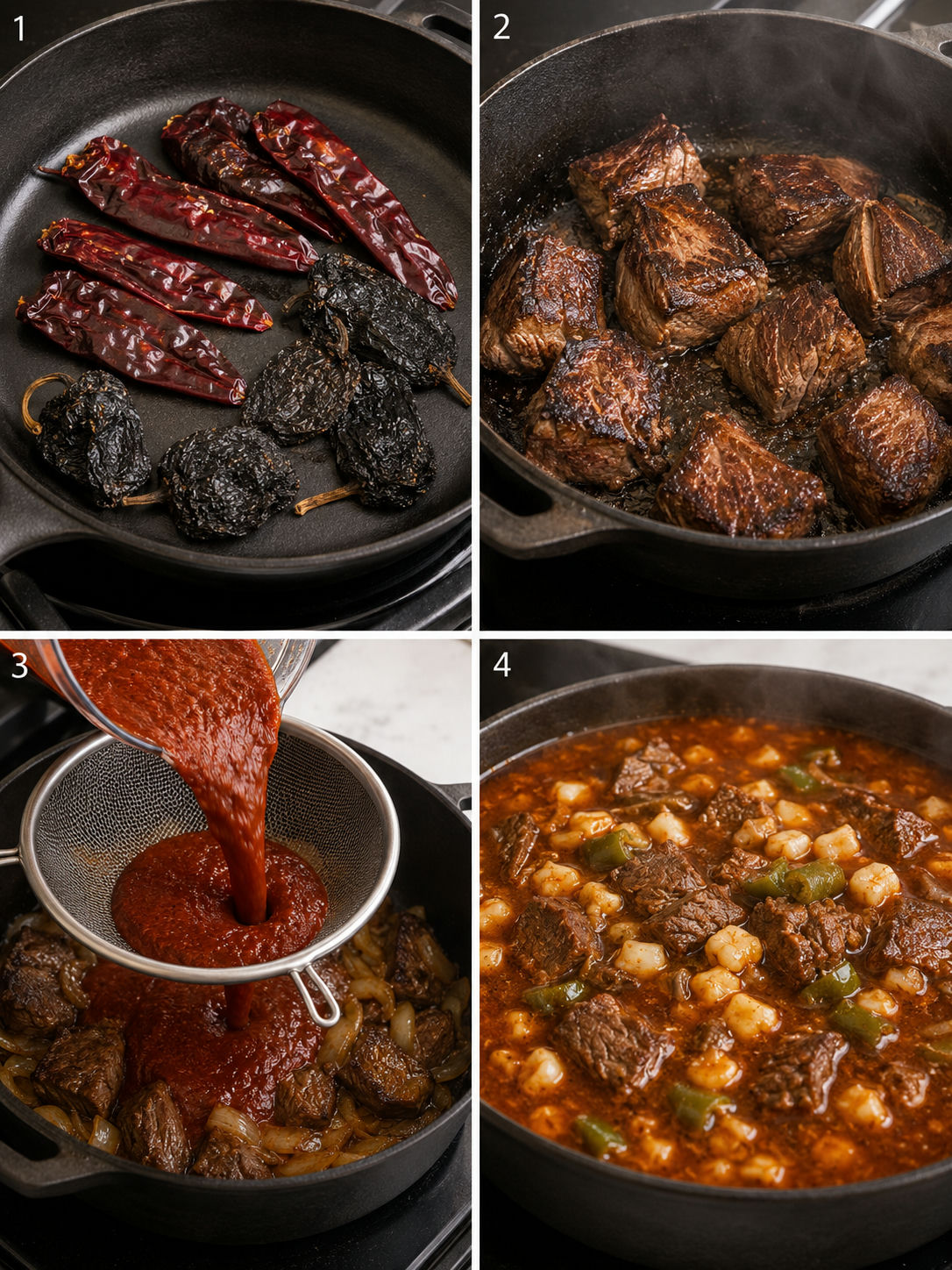
- Toast the dried chiles. Remove stems and seeds from the guajillo and ancho chiles. Press each one flat in a dry skillet over medium heat for about 20 seconds per side until fragrant and lightly puffed. Do not let them scorch or the broth will turn bitter.
- Soak and blend. Cover toasted chiles with 2 cups of very hot water and soak for 20 minutes until soft. Drain, keeping 1 cup of soaking liquid. Blend the chiles with the reserved liquid until completely smooth.
- Brown the beef. Pat beef chunks very dry and season generously with salt and pepper. Heat oil in a large Dutch oven over high heat. Sear in batches for 2 to 3 minutes per side until deeply browned. Do not crowd the pan. Set aside.
- Saute the aromatics. Lower heat to medium. Add diced onion to the same pot and cook until soft, about 4 minutes. Add garlic and stir for 1 more minute.
- Build and simmer the broth. Return beef to the pot. Pour the blended red chile sauce through a fine sieve into the pot. Add beef broth, hominy, oregano, and cumin. Bring to a boil, then reduce to a low simmer. Cover and cook for 1.5 to 2 hours until the beef is very tender.
- Add the green chiles. Stir in the chopped roasted green chiles for the last 20 minutes of cooking. This keeps their color bright and creates the Christmas red-and-green effect.
- Season and serve. Taste and adjust salt. Ladle into bowls and let everyone build their own from the garnish table.
What Christmas-Style Actually Means
The name comes from New Mexico, where ordering anything “Christmas” means both red and green chile on the same plate. The red in this pozole comes from dried guajillo and ancho chiles blended into a sauce that colors the broth deep copper. The green comes from roasted chiles stirred in near the end. The two are fundamentally different flavors. Red dried chiles bring an earthy, almost chocolatey depth. Green roasted chiles add a brighter, grassier note that cuts through the richness. Neither is particularly hot unless you choose a spicier variety. If you enjoy big Mexican beef soups, our Traditional Mexican Caldo de Res is another deeply flavored bowl worth adding to your rotation.
Picking the Right Beef Cut
Chuck is the best option for long-simmered pozole. It has enough fat and connective tissue to dissolve into the broth over 2 hours, giving the pot a richness that lean cuts cannot match. Sirloin works if you prefer cleaner, more defined chunks. Cut pieces large, 2 inches minimum, since they shrink during cooking. The searing step is not optional. Browning builds fond on the bottom of the pot, and that is what makes the broth taste like it has been going far longer than it has. The USDA recommends 145°F for whole cuts of beef, but in this pozole the beef goes well past that for tenderness.
Build Your Garnish Table
Pozole without its garnishes is half a meal. Set out shredded green cabbage, sliced radishes, diced white onion, fresh cilantro, dried Mexican oregano, lime wedges, and sliced avocado. Each person builds their own bowl. The cabbage adds crunch against the soft hominy. The radishes bring peppery snap. A generous squeeze of lime just before eating brightens the whole bowl. Corn tostadas or warm tortillas on the side are traditional for dipping. For a full Christmas dinner spread, serve with Easy Mexican Style Rice alongside and finish with Christmas Eve Cinnamon Crisps for dessert.
Slow Cooker and Make-Ahead
This pozole moves easily to the slow cooker. Complete the chile blending, beef searing, and onion sauteing on the stove first, then transfer everything to the slow cooker. Cook on LOW for 6 to 8 hours or HIGH for 3 to 4 hours, adding the green chiles in the final 30 minutes. For make-ahead cooking, the whole pozole can be made 1 to 2 days ahead and refrigerated. The flavors deepen overnight. Reheat gently on the stove with a splash of broth to loosen.
Storage and Reheating
Refrigerate cooled pozole in an airtight container for up to 4 days. Always store garnishes separately since cabbage wilts and avocado browns. Day-two pozole is often better than the first bowl because the broth settles and deepens. Reheat on the stove over medium-low heat. If it has thickened too much, add a small splash of broth or water. Freeze portioned leftovers for up to 3 months and thaw overnight in the fridge before reheating.
FAQs
- What does ‘Christmas-style’ mean in pozole?
-
Christmas-style means both red and green chile in the same bowl, a New Mexico tradition. The red comes from dried guajillo and ancho chiles blended into a sauce that colors the broth deep copper. The green comes from roasted chiles stirred in near the end. The two flavors are fundamentally different and each brings something the other cannot.
- Can I use canned green chiles instead of roasting fresh ones?
-
Yes. Two 4-ounce cans of diced green chiles work well and save a step. They are milder than freshly roasted Hatch chiles, so add a pinch of cayenne or a small dried chile de arbol if you want more heat. Fresh roasted give better smoky depth, but canned is a reliable year-round shortcut.
- What cut of beef works best for this pozole?
-
Chuck steak is the best choice. Its fat and connective tissue break down over the slow simmer and enrich the broth in a way lean cuts cannot match. Sirloin holds its shape better if you prefer more defined chunks in the bowl. Avoid very lean cuts like round, which can turn dry even after a long cook.
- Can I make this in a slow cooker?
-
Yes. Sear the beef and saute the aromatics on the stove first, then transfer everything to the slow cooker. Cook on LOW for 6 to 8 hours or HIGH for 3 to 4 hours. Add the roasted green chiles in the last 30 minutes. The beef gets very tender and the broth deepens on the slow setting.
- Is this Christmas-style pozole gluten-free?
-
The recipe itself is naturally gluten-free. Hominy, dried chiles, and beef contain no wheat. Check your store-bought beef broth label since some brands add wheat-based ingredients. Use a certified gluten-free broth if cooking for someone with celiac disease.
- Can I use pork instead of beef steak?
-
Yes, and pork is the more traditional choice in many parts of Mexico. Pork shoulder cut into chunks follows the same method. It may take a bit longer to get fully tender, around 2 to 2.5 hours. The flavor is slightly richer and fattier, which most people love in pozole.
- How do I store and reheat leftover pozole?
-
Refrigerate cooled pozole in an airtight container for up to 4 days. Store garnishes separately since cabbage wilts and avocado browns. Reheat gently on the stove over medium-low heat with a splash of broth if needed. Pozole freezes well for up to 3 months. Thaw overnight in the fridge before reheating.
References
Sources cited in this recipe.