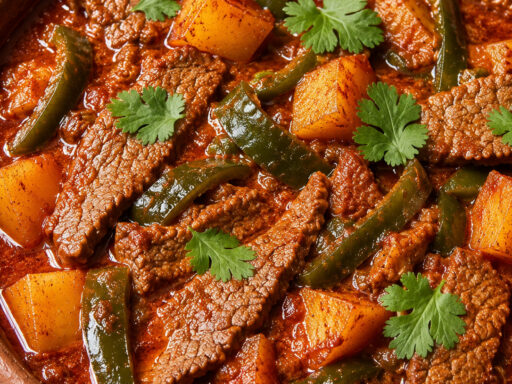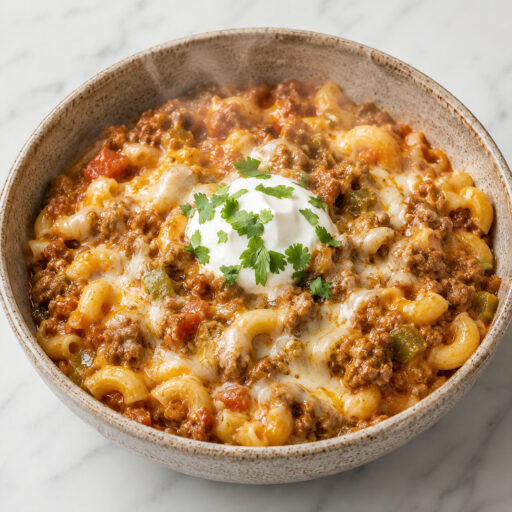
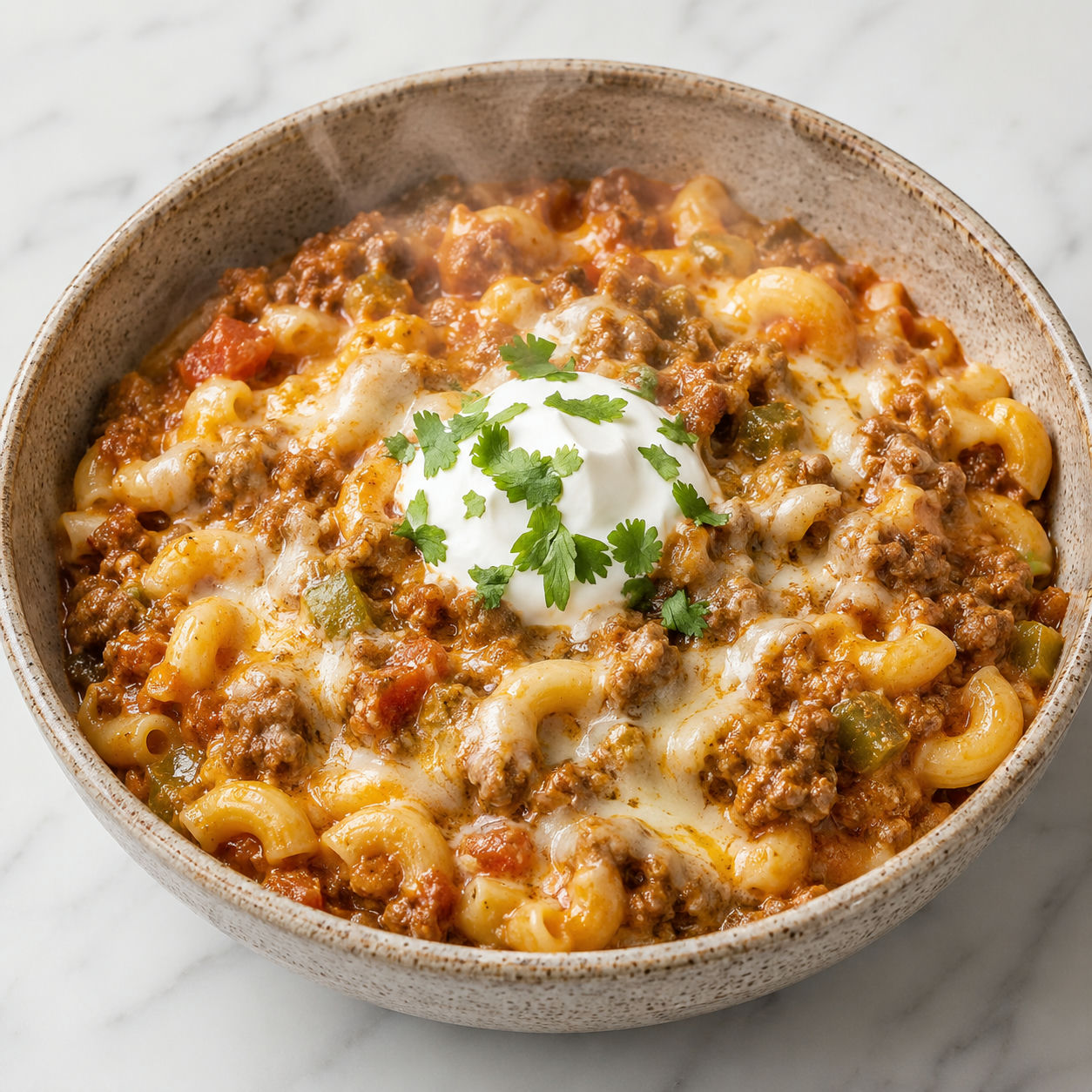

This is the goulash recipe you make when you want something filling, a little spicy, and done in one pot before anyone starts asking what’s for dinner. The base is classic American goulash, ground beef, macaroni, and tomato, but roasted green chiles and a generous handful of cheese give it a completely different personality.
The green chiles do real work here. They add a mild heat and a slightly earthy sweetness that tomatoes alone can’t give you. Hatch chiles are ideal when they’re in season, but a 4-ounce can of diced green chiles pulls the dish together just as well on a Tuesday night.
The pasta cooks right in the pot, absorbing the beef and chile broth as it goes. By the time the macaroni is tender, you have something thick and cohesive rather than noodles sitting in sauce. Stir the cheese in at the end while the heat is low and it melts into everything instead of clumping.
What Goes Into the Pot
The ingredient list is short and most of it is already in your pantry. The one thing worth spending on is the cheese. A real block of Pepper Jack or Colby Jack melted in at the end is what separates this from an ordinary weeknight pasta.
- Ground beef. The backbone of the dish. 80/20 gives the most flavor because the fat carries the chile and tomato into every bite.
- Diced green chiles. The ingredient that defines this recipe. Canned works reliably all year. Fresh roasted Hatch chiles make it exceptional when they’re in season.
- Elbow macaroni. Added dry and cooked directly in the broth, so it thickens the whole pot as the starch releases.
- Diced tomatoes and tomato sauce. The tomato base gives the goulash its body and a gentle acidity that balances the richness of the beef and cheese.
- Beef broth. Adds depth and gives the dry pasta enough liquid to cook through without making the whole thing watery.
- Onion and garlic. Cooked in the beef fat until soft before anything else goes in, they build the flavor base for everything that follows.
- Cumin and chili powder. A small amount of each rounds out the green chile flavor without turning this into a chili con carne.
- Pepper Jack cheese. Stirred in off the heat at the very end. It melts into glossy, stretchy ribbons if you give it a minute to cool first.
Building the Pot Step by Step
- Brown the beef. Cook the ground beef in a large Dutch oven or deep skillet over medium-high heat, breaking it apart as it goes, about 6 to 8 minutes until no pink remains. Drain excess fat, leaving about a tablespoon in the pan.
- Soften the aromatics. Add the diced onion and cook for 3 to 4 minutes until softened. Add the garlic and cook another 30 seconds until fragrant.
- Add the chiles and tomatoes. Stir in the green chiles, diced tomatoes with their juices, and tomato sauce. Add the cumin, chili powder, garlic powder, salt, and black pepper and stir to combine.
- Pour in broth and macaroni. Add the beef broth and bring everything to a boil. Pour in the dry elbow macaroni, stir well to submerge, then reduce heat to a steady simmer.
- Simmer until pasta is tender. Cook uncovered for 12 to 15 minutes, stirring every few minutes to prevent sticking. The goulash is ready when the macaroni is fully cooked and most of the liquid has been absorbed into a thick, cohesive sauce.
- Stir in the cheese. Remove the pot from the heat and wait about a minute. Add the shredded cheese and stir constantly until fully melted and smooth. Serve right away.
Choosing Your Green Chiles
The chile you use matters more than anything else in this dish. Canned diced green chiles are mild and convenient. A standard 4-ounce can covers it for most people, and a second can or a hot variety takes the heat up if you want that.
When Hatch chiles are available in late summer, buy a pound and roast them yourself. Char them directly on a grill grate or 2 inches under the broiler, steam them in a covered bowl for 10 minutes, and peel the skin off. The roasted flavor adds a smokiness that no canned chile will give you. You can freeze the extras in small bags and pull them out through the rest of the year. That same roasted chile technique translates well into dishes like Caldillo de Chile Verde Stew, where the chiles are the whole point of the bowl.
Why Dry Macaroni Goes In
Adding dry elbow macaroni directly to the broth and tomato base is what gives this dish its body. The starch releases from the pasta as it cooks and naturally thickens the liquid into something that clings to the beef and coats every bite. Boil the pasta separately and add it at the end and you lose all of that. The pot ends up thinner and the pasta never picks up the chile and tomato flavor the way it should.
The one downside is that it keeps thickening after you stop cooking. If the goulash sits for 20 minutes before you serve it, stir in a splash of broth or water to loosen it. The same one-pot pasta method carries over to Crock Pot Goulash with Ground Beef and Peppers if you want to see how it adapts to a slow cooker format.
Getting the Cheese Right
Two things ruin the cheese in this recipe. Adding it while the pot is still over high heat causes it to seize and go grainy. Using pre-shredded cheese from a bag, which is coated in cornstarch or cellulose to prevent clumping, means it won’t melt cleanly into the sauce.
Pull the pot off the burner and let it rest for about a minute before you add the cheese. Then stir constantly until it’s fully melted and the sauce looks glossy. If you want to replicate that full molten queso texture in other dishes, Homemade Queso Fundido covers the technique in detail and the principles carry right over to this recipe.
Pepper Jack is the default here. Colby Jack gives a milder, creamier result. A mix of half Pepper Jack and half sharp cheddar gives you heat and sharpness at the same time. Per USDA FSIS safe temperature guidelines, ground beef needs to reach 160°F before the pasta or cheese goes in. An instant-read thermometer checks that in seconds.
Storing and Reheating Leftovers
Store leftovers in an airtight container in the fridge for up to 3 days. The pasta absorbs more liquid overnight, so the goulash will be noticeably thicker the next day. Add a few tablespoons of beef broth or water before reheating on the stovetop over medium-low heat, stirring occasionally until warmed through.
The microwave works but tends to dry out the top layer. If you use it, cover the bowl loosely and heat in 90-second intervals, stirring between each one. Once it’s steaming throughout, it’s ready. Freeze portions before the cheese is added for the cleanest results. The pasta holds its texture much better when frozen without dairy. Reheat from frozen on the stovetop with a splash of broth, then stir in fresh shredded cheese to finish.
Simple Swaps for This Goulash
Ground turkey is the easiest swap and the result is lighter without losing much. Ground pork is richer and pairs especially well with the green chiles. A half-beef, half-pork mix is worth trying if you have both on hand.
Small pasta shells or ditalini replace the elbow macaroni without changing the cooking time. Larger shapes like rotini need an extra half-cup of broth and a few more minutes of simmering to cook through. For a look at the classic American foundation this recipe builds from, Old-Fashioned Goulash with Beef, Macaroni, and Tomato shows the baseline method. The two dishes share nearly the same process. The green chiles and queso are what pull this one in a completely different direction.
FAQs
- Can I use fresh roasted green chiles instead of canned?
-
Yes, and they’re noticeably better if you can get them. Roast 3 to 4 medium Hatch or Anaheim chiles directly over a gas flame or under the broiler until charred all over, then steam them in a covered bowl for 10 minutes and peel. Dice and use in place of the canned variety. The flavor is smokier and more complex.
- What cheese melts best in this goulash?
-
Pepper Jack is the top choice because it melts smoothly and adds a mild kick. Colby Jack works if you want a creamier, milder result. Avoid pre-shredded bags since the anti-caking coating dulls the melt. Shred from a cold block and stir in off the heat so the cheese doesn’t break or turn greasy.
- Can I make this goulash ahead of time?
-
You can, though the pasta continues absorbing liquid as it sits. If you plan ahead, cook the macaroni about 2 minutes less than fully tender and store without the cheese stirred in. Reheat on the stovetop with a splash of broth, then stir in fresh shredded cheese just before serving. Keeps in the fridge up to 3 days.
- How spicy does this goulash come out?
-
Mild to medium, depending on your chiles. Canned diced green chiles are usually mild. Hatch chiles range from mild to hot depending on the variety. For more heat, add a diced jalapeño when you cook the onion, use a hot canned chile variety, or stir a pinch of cayenne in with the spices.
- Can I swap the ground beef for something else?
-
Ground turkey works well and keeps the dish lighter without losing the texture. Ground pork is richer and pairs especially well with the green chiles. A half-beef, half-pork blend is another solid option. For a meatless version, plant-based ground meat works but the broth flavor won’t be as deep, so add a teaspoon of smoked paprika to compensate.
- What pasta can I use instead of elbow macaroni?
-
Small shells or ditalini are the best substitutes since they cook in about the same time and hold the sauce well. Larger shapes like rotini need an extra half-cup of broth and a few more minutes on the heat. Avoid very large pasta shapes here since they won’t cook evenly given the liquid ratio in this recipe.
- Can I freeze this goulash?
-
Freeze it before you stir in the cheese for the best results. Pasta texture holds better when frozen without dairy. Portion into freezer-safe containers, remove excess air, and freeze for up to 2 months. Thaw overnight in the fridge, reheat gently on the stovetop with a splash of broth, and stir in fresh shredded cheese to finish.
References
Sources cited in this recipe.