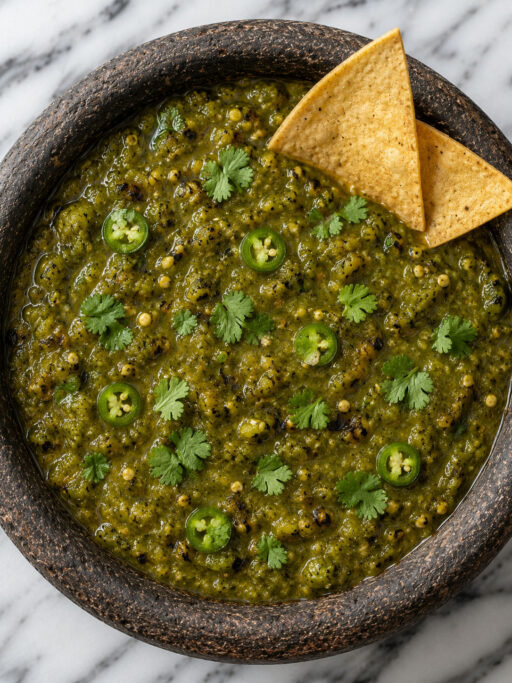
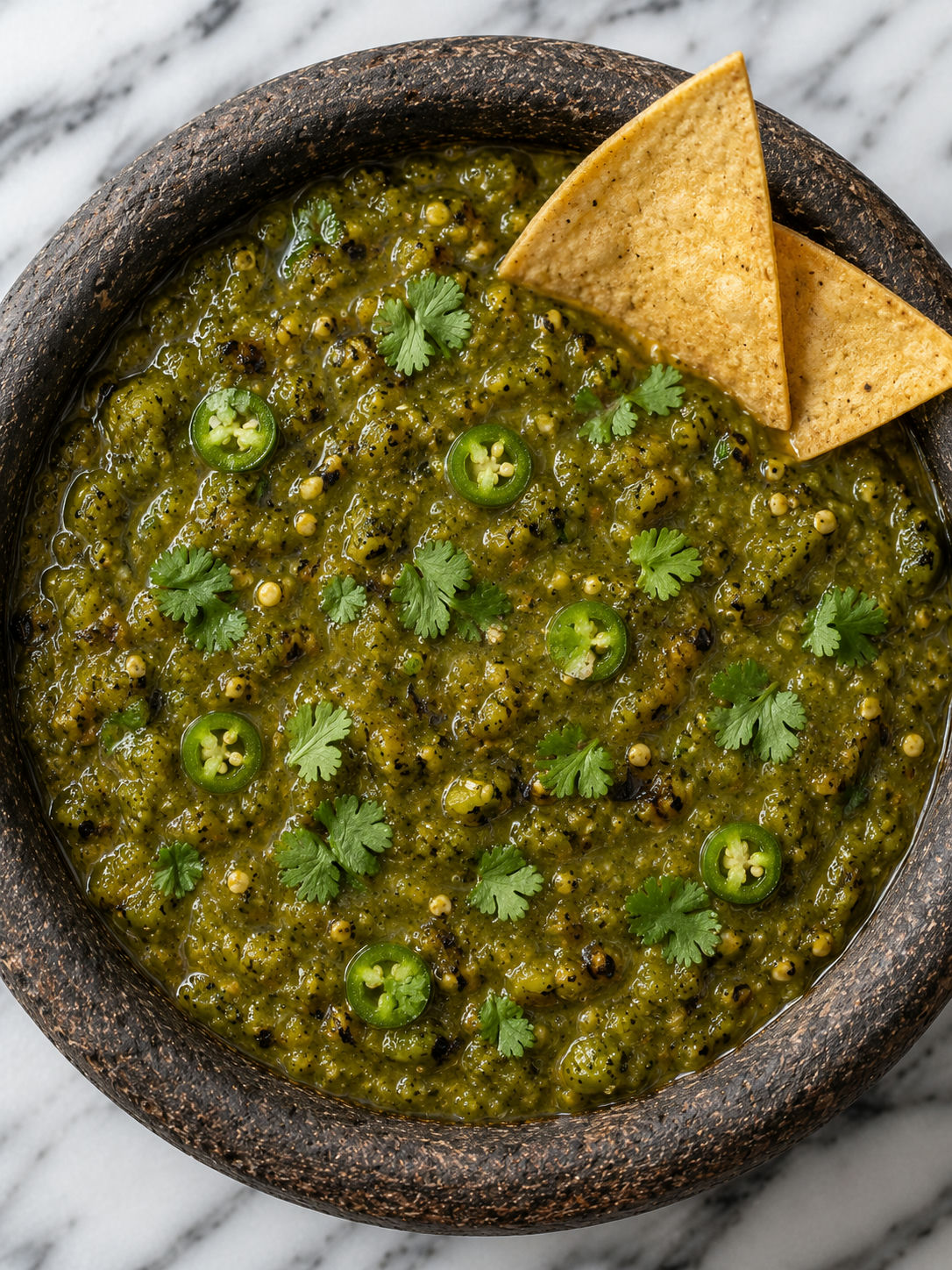

Salsa pecante earns its name. The word means spicy in Spanish, and this version delivers that with a double punch of serrano and jalapeño peppers roasted until their skins blister and char. The fire-roasting adds a smokiness that no blender-only salsa can replicate.
The base is tomatillos, which bring a tart citrusy brightness that balances the heat without dulling it. Garlic and onion go on the same dry comal, and everything blends together with cilantro and a squeeze of lime. No added oil, no complicated steps.
Make this once and you will want a jar in the fridge at all times. The flavor deepens overnight, it works on tacos, eggs, grilled meats, and chips, and it stays good for a full week.
The Chiles That Build the Heat
Short list, big results. Tomatillos are the backbone, serranos and jalapeños bring the heat, and everything else plays a supporting role. Look for tomatillos that feel firm and fill out their papery husks completely.
- Tomatillos. The tangy, citrusy base that gives salsa pecante its bright backbone and signature olive-green color.
- Serrano peppers. Hotter than jalapeños with a sharper, almost grassy heat that is the classic choice in Mexican hot salsas.
- Jalapeño peppers. A second layer of heat with a fruitier flavor and a bit more body than the serranos.
- Garlic cloves. Roasted in their skins, they turn sweet and nutty with none of the sharp rawness you get from uncooked garlic.
- White onion. Charred at the edges, it adds savory sweetness without taking over the sauce.
- Fresh cilantro. Added after the charred ingredients so the bright green flavor stays clean rather than cooking out.
- Lime juice. The acid that ties everything together and keeps the color vivid.
- Salt. Season inside the blender and adjust after tasting. The right amount makes the heat bloom.
Charring on the Comal
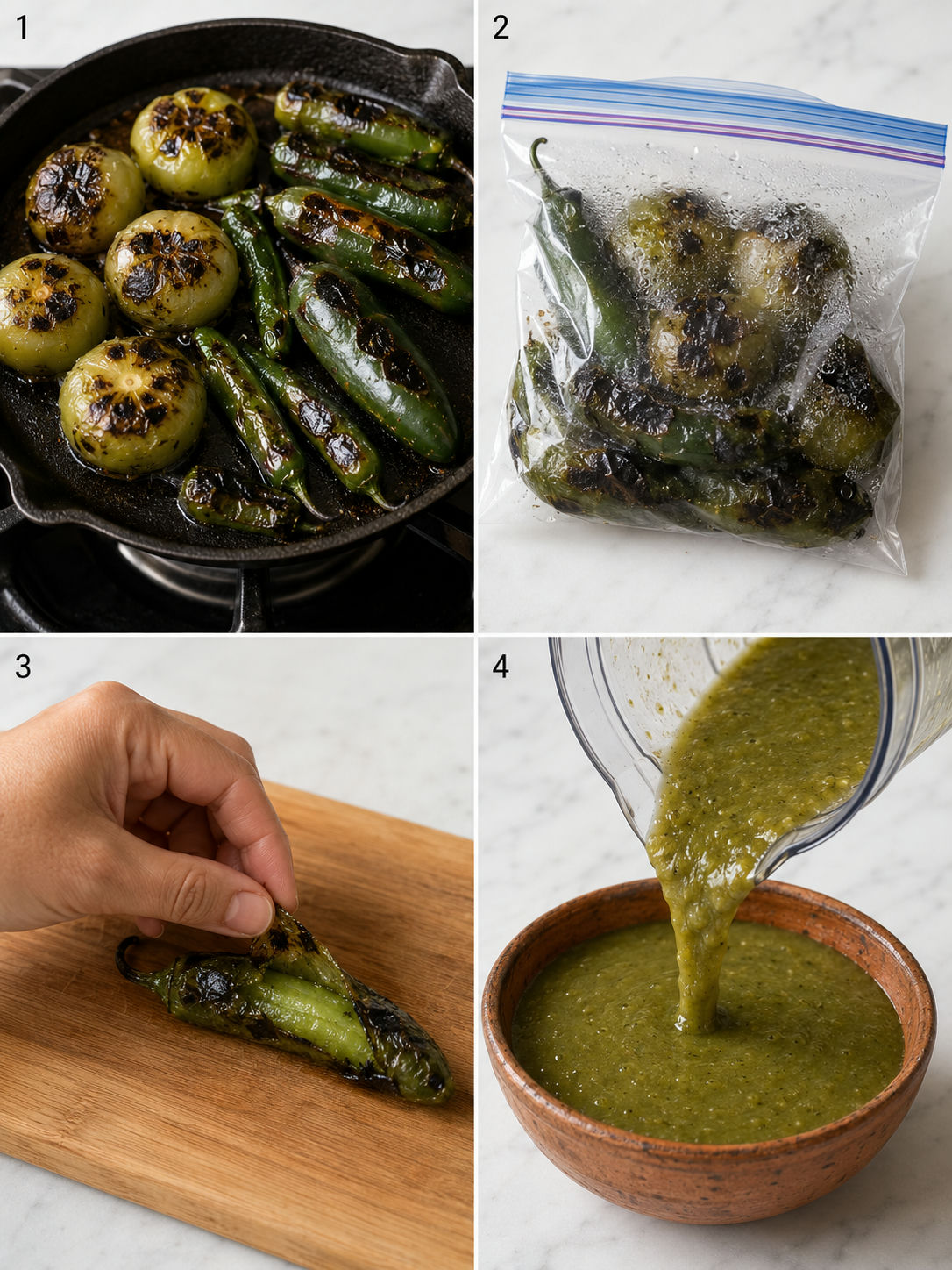
- Heat the comal. Set a cast iron skillet or comal over medium-high heat and let it get fully hot, about 2 to 3 minutes. No oil.
- Char the produce. Add the husked tomatillos cut side down, the whole serranos and jalapeños, the unpeeled garlic cloves, and the onion wedges. Cook, turning occasionally, until everything blisters and darkens in spots, 8 to 12 minutes. The tomatillos should turn soft and army green. Some black char on the chiles is exactly what you want.
- Steam the chiles. Transfer the charred serranos and jalapeños into a zip-lock bag or a bowl covered with plastic wrap. Seal it and let them steam for 5 minutes. This loosens the skins so they slip off easily.
- Peel and prep. Rub the loosened skins off the chiles. A few charred bits left on are fine and add flavor. Squeeze the roasted garlic out of its papery skin and break apart the charred onion roughly.
- Blend. Add the tomatillos, peeled chiles, garlic, onion, cilantro, lime juice, and salt to a blender. Blend on high for 30 to 45 seconds until smooth with a bit of texture. Taste and adjust salt and lime. Add water one tablespoon at a time if it needs loosening.
- Simmer (optional). For a deeper, slightly less acidic flavor, pour the salsa into a small saucepan and simmer over medium heat for 5 minutes, stirring once or twice. Cool before serving or refrigerating.
Why the Char Changes Everything
Most home cooks skip the charring step because it looks like extra work. It is not optional here. Raw tomatillos and chiles blended together taste sharp and one-dimensional. Once they hit a hot dry surface and blister, the sugars caramelize, a little water evaporates, and a mild smokiness develops that you cannot replicate any other way.
The char is also what separates salsa pecante from a plain fresh tomato salsa. The roasted base gives the final sauce a complexity and roundness that makes the heat feel intentional rather than just aggressive. If you want to go further, hold the serranos and jalapeños directly over a gas flame with tongs for about two minutes per side instead of using a comal. The open-flame method gets a deeper char in less time.
Dialing the Heat Level
The seeds and white ribs inside any hot pepper hold most of the capsaicin, the compound responsible for the burn. Removing all seeds from the serranos and jalapeños before blending gives you a salsa with noticeable heat but nothing that lingers painfully. Leaving them in is the traditional approach and gives you a sauce with real bite.
For a milder version, swap one serrano for a poblano pepper. Poblanos have almost no heat but add a deep, slightly sweet roasted flavor that works well here. For a hotter batch, add one small habanero alongside the jalapeños with seeds removed. Or take it in a direction closer to a vegetable-forward salsa and reduce the serranos to one while adding an extra tomatillo for body.
Keeping and Storing Salsa Pecante
Transfer the finished salsa to a clean glass jar with a tight lid. It keeps in the refrigerator for 5 to 7 days and the flavor deepens by day two. If it thickens in the fridge, stir in a teaspoon of water before serving.
Serve at room temperature or slightly warm. Pull it out of the refrigerator 10 minutes before eating, or warm it briefly in a small saucepan over low heat for 30 seconds. For storage beyond a week, the National Center for Home Food Preservation has tested water-bath canning guidelines for spicy tomatillo salsas worth following.
Beyond the Chip Bowl
Tacos are the obvious starting point but this salsa works far beyond the chip bowl. Try it stirred into scrambled eggs in the morning, spooned over grilled chicken or pork right off the grill, or set out on the table alongside a milder option like roasted tomatillo avocado salsa so guests can choose their own heat level.
It also works as a fast pan sauce. After searing chicken thighs or shrimp, pour two or three tablespoons of salsa pecante into the hot pan and let it bubble for one minute. The sauce clings to the protein and picks up the fond from the pan, and the result tastes like you spent far more time on it than you did.
FAQs
- How hot is salsa pecante?
-
It lands in the medium-hot range when you include all the seeds. Serranos run about 10,000 to 23,000 Scoville heat units and jalapeños sit at 2,500 to 8,000. A full heat comparison across common peppers is available at PepperScale. Removing all seeds before blending drops this salsa to a mild-medium heat. Leaving them in pushes it firmly into the hot category. Taste as you blend and stop when it hits your limit.
- Can I use different peppers?
-
Yes. If serranos are hard to find, add two extra jalapeños for a milder but still spicy version. For more heat, add one small habanero (seeds removed) alongside the jalapeños before blending. Chiles de arbol work too, though they are dry chiles so skip the charring step and instead toast them in a dry pan for about 30 seconds per side until they puff and darken slightly.
- How long does homemade salsa pecante keep?
-
Stored in a sealed glass jar in the refrigerator it stays fresh for 5 to 7 days. The flavor deepens and mellows by day two, so making it the night before is worth the effort. Do not leave it at room temperature for more than two hours. For longer storage, the National Center for Home Food Preservation at nchfp.uga.edu has tested water-bath canning instructions for spicy tomatillo salsas.
- Do I need to peel the tomatillos?
-
You need to remove the papery husks but not the skin. The husks are dry and bitter and will not blend out. Once the husks are off, rinse the tomatillos under cold water to remove the slightly sticky coating on their surface. The tomatillo skin itself chars nicely on the comal and adds to the salsa flavor, so leave it on.
- Can I make salsa pecante ahead of time?
-
This is one of those salsas that genuinely improves after sitting overnight. The roasted flavors meld, the heat distributes more evenly throughout, and the cilantro settles into the background in the best way. Make it up to 2 days ahead and store in a sealed container. Pull it out about 10 minutes before serving so it is not ice cold from the fridge.
- What if I made it too spicy?
-
Blend in a small ripe avocado or two tablespoons of sour cream. Both fat sources bind to capsaicin and cut the perceived heat without ruining the flavor. You can also add an extra tomatillo and re-blend to dilute the chile concentration. A small pinch of sugar works too and takes the sharp edge off without changing the overall taste much.
- What do you serve salsa pecante with?
-
It works on nearly everything. Start with tacos, scrambled eggs, grilled chicken, or carne asada. Spoon it over homemade queso fundido for a fiery appetizer dip, or use it as a table sauce alongside enchiladas and rice. It also doubles as a quick pan sauce. After searing chicken thighs, add two or three tablespoons to the hot pan and let it bubble for a minute.
References
Sources cited in this recipe.