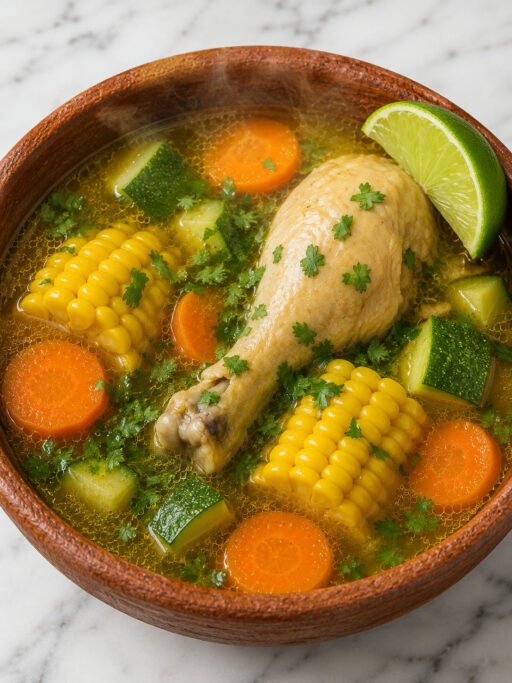
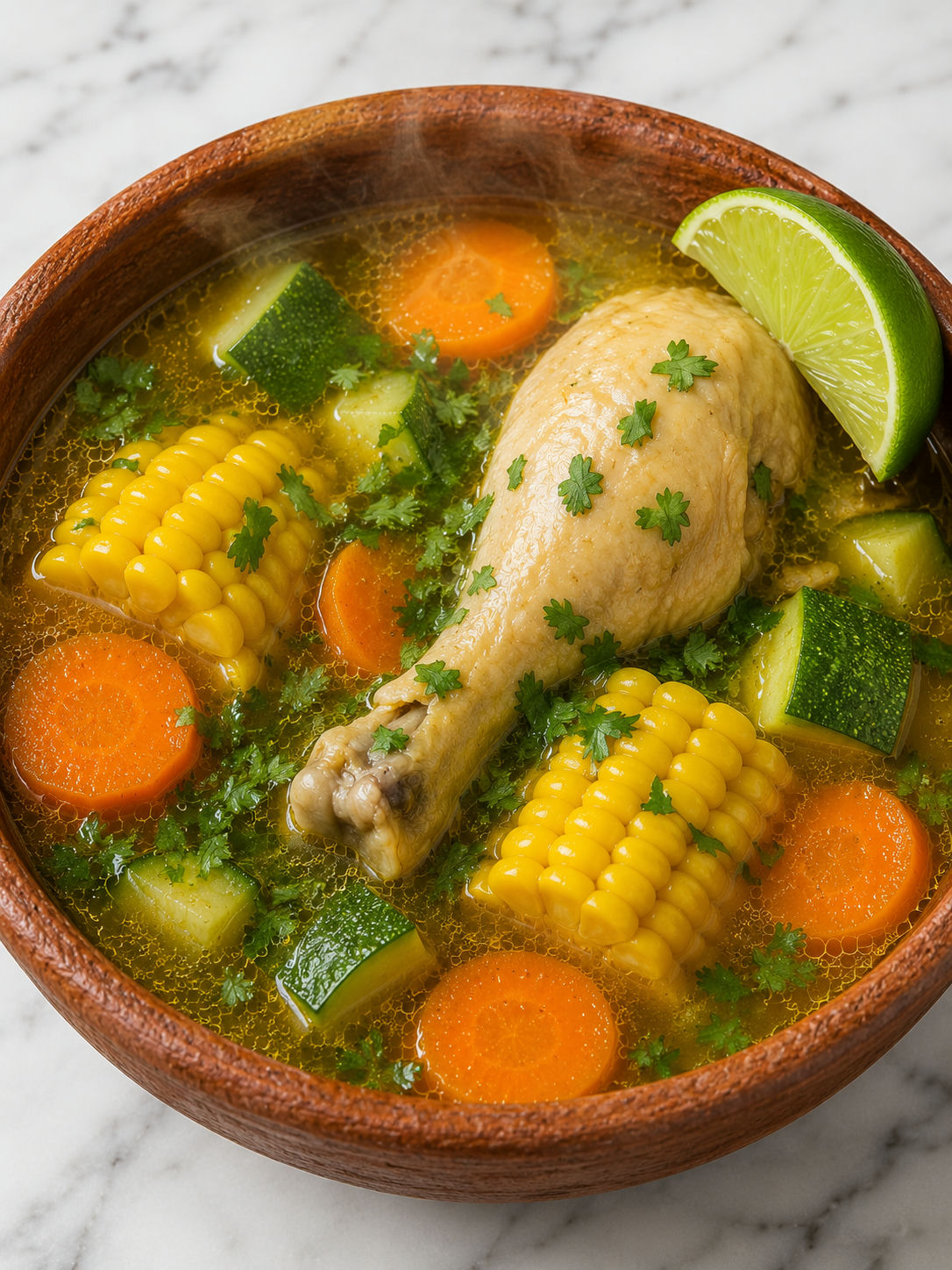

Caldo de pollo is the soup that shows up on stoves across Mexico on cold mornings, sick days, and Sunday afternoons. At its core it is simple. Bone-in chicken, water, and vegetables simmered until the broth turns golden and the meat slides from the bone. The depth comes from the bones themselves and the time you give them, not from a long list of ingredients.
What makes this version work is layering the vegetables in stages so each one finishes at the right texture. The carrots go in early. The zucchini goes in late. And the broth gets its final seasoning at the end, after the chicken has done its job.
This soup reheats beautifully and tastes better the next day. Make a big pot and you have dinner tonight and lunch tomorrow.
What Goes Into the Pot
Fresh, whole vegetables are what set homemade caldo apart from anything from a can. Look for corn on the cob rather than frozen kernels, and pick firm zucchini with no soft spots. Chayote is worth tracking down at a Latin grocery. Its mild, slightly sweet flavor blends into the broth without taking over.
- Bone-in chicken thighs and drumsticks. The bones give the broth its body and golden color. Skinless works but bone-in is what makes a real caldo.
- White onion. Halved and simmered whole, it sweetens the broth gently without turning bitter.
- Garlic. Added whole and unpeeled for a mellower, more rounded flavor than minced garlic gives at the start of a long simmer.
- Carrots. Cut thick so they hold their shape through the long cook and contribute natural sweetness to the broth.
- Corn on the cob. Cut into thirds and cooked on the cob so the kernels stay juicy and release a little starch that gives the broth body.
- Zucchini. Goes in late so it softens just enough without falling apart. It soaks up the broth and ends up being one of the best bites in the bowl.
- Chayote. A firm, mild squash that holds its texture through longer cooking. Waxy potatoes work as a stand-in if you cannot find it.
- Cilantro. Stirred in at the very end so its brightness stays alive rather than cooking away.
- Chicken bouillon. One cube is optional but deepens the broth without piling on extra salt.
How to Build the Broth Step by Step
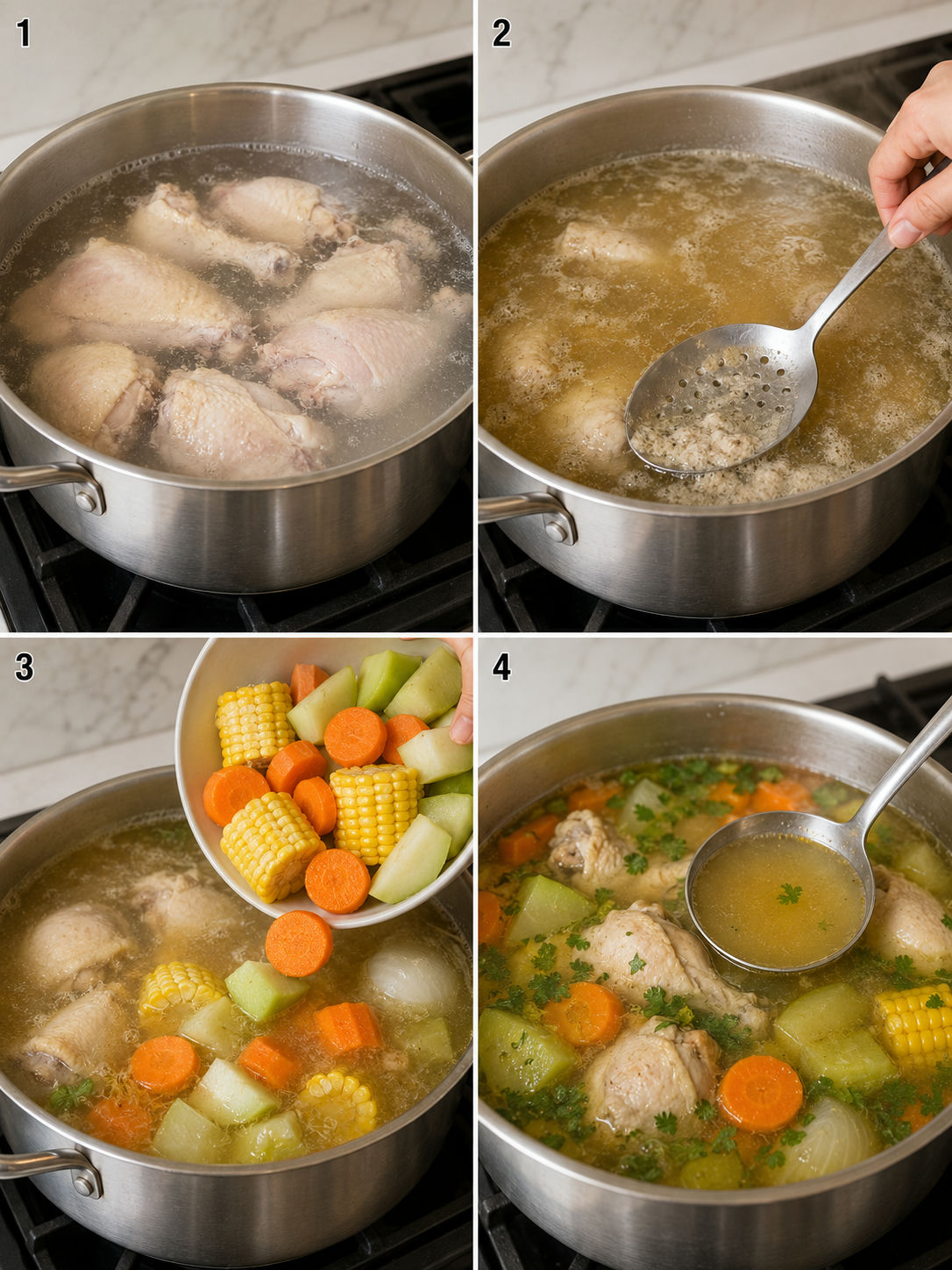
- Start cold. Place the chicken in a large pot and pour in cold water. Starting cold draws more collagen from the bones into the broth as it heats. Bring to a gentle simmer over medium heat, about 15 minutes.
- Skim the foam. In the first 10 to 15 minutes a gray foam rises to the surface. Remove it with a spoon or fine-mesh skimmer before it dissolves back in. This step is what keeps the broth clear.
- Add aromatics. Drop in the halved onion, whole garlic cloves, cumin, salt, and black pepper. Lower the heat to a steady quiet simmer and cook uncovered for 30 minutes.
- Add the harder vegetables. Put in the carrots, corn, chayote, and celery. Simmer for 20 minutes until the carrots begin to yield when pressed.
- Add the zucchini. Stir in the zucchini and simmer for another 12 to 15 minutes until just tender. The chicken should read at least 165°F on an instant-read thermometer at this point.
- Season and finish. Taste the broth and add the optional bouillon cube, extra salt if needed, and the fresh cilantro. Simmer 5 more minutes. Remove and discard the onion halves and garlic cloves.
- Serve. Ladle into deep bowls with chicken pieces and vegetables. Add a scoop of cooked white rice to each bowl and bring the garnishes to the table.
Why Bone-In Chicken Makes the Difference
Boneless chicken breast will cook through, but the broth will taste thin. The bones and connective tissue in thighs and drumsticks release collagen as they simmer, giving the finished broth a slight body and that characteristic golden color. By the time the meat is done, roughly 45 to 60 minutes of simmering, it should pull away from the bone with almost no resistance. If it still holds on, keep going. There is no shortcut that produces the same result.
The USDA recommends cooking poultry to an internal temperature of 165°F. The USDA poultry food safety guide covers thawing, handling, and safe cooking temperatures in full.
Adding Vegetables in the Right Order
The biggest mistake with caldo is dropping every vegetable in at once. Carrots and chayote need about 20 to 25 minutes of simmering to soften. Zucchini needs only 12 to 15. Add them in stages and every piece arrives at the table at the right texture rather than a uniform softness where everything blurs together. Cut them thick, at least an inch and a half per piece, so they have enough mass to cook through without falling apart.
If you love Mexican soups built with this kind of patience, the Traditional Mexican Caldo de Res uses the same staged approach with beef ribs and a slightly different vegetable lineup.
Variations Worth Trying
Across Mexico, caldo de pollo varies by season and pantry. Potatoes instead of chayote, cabbage wedges instead of zucchini, or a whole serrano chile simmered in the broth for gentle heat are all common choices. Some cooks add a small handful of rice directly to the pot in the last 20 minutes and skip the separate rice entirely. A dried pasilla chile dropped in with the aromatics adds a smoky, earthy note without much heat. Pull it out before serving if you want just the flavor.
For a weeknight version that skips the long stovetop simmer, the Crock Pot Green Enchilada Chicken Soup covers a similar flavor profile in a slow cooker with far less hands-on time.
Serving, Storing, and Freezing
Put the garnishes on the table and let everyone build their own bowl. A scoop of white rice, a squeeze of lime, sliced jalapeño, diced avocado, and a handful of cilantro are the standard additions. Warm corn tortillas on the side turn it into a real meal. Leftovers keep in the fridge for four days. Store the rice separately from the broth so it does not absorb everything overnight. For more soups in this slow-cooked style, the Authentic Mexican Albondigas and the Easy Anti-Inflammatory Chicken Soup are both worth adding to your rotation.
FAQs
- Can I use a whole chicken instead of pieces?
-
Yes. A whole chicken cut into quarters works great and the carcass adds extra collagen that makes the broth richer. Just extend the simmer time by about 20 minutes to be sure the breast meat reads 165°F on an instant-read thermometer.
- Which vegetables can I swap in for caldo de pollo?
-
Caldo de pollo is forgiving. Chayote is traditional but waxy potatoes or parsnips work in its place. Cabbage wedges are common in some regions. Green beans are a good addition dropped in the last 15 minutes. Celery adds a clean savory note without changing the flavor much.
- How do I keep the broth clear instead of cloudy?
-
Cloudy broth has two main causes. High heat and foam left unremoved. Keep the pot at a steady low simmer, not a rolling boil, for the entire cook. In the first 10 to 15 minutes, skim any gray foam that rises to the surface. Clear broth comes from patience, not any special technique.
- Can I make caldo de pollo in a slow cooker?
-
You can. Put the chicken, onion, garlic, carrots, corn, and spices into the slow cooker with the water. Cook on low for 6 to 8 hours. Stir in the zucchini in the last 45 minutes so it does not turn mushy. The broth will be lighter in color than stovetop but still flavorful.
- How do I store and reheat leftover caldo de pollo?
-
Refrigerate in an airtight container for up to 4 days. Reheat gently over medium-low on the stove and add a splash of water if the broth has thickened overnight. The soup freezes well for up to 3 months. Freeze it without the rice so the rice does not absorb all the liquid and turn mushy.
- What do you serve with caldo de pollo?
-
The classic lineup is a scoop of cooked white rice in the bowl, a squeeze of fresh lime, sliced jalapeño, diced avocado, extra cilantro, and warm corn tortillas on the side. Some households add a spoonful of Mexican crema. The rice is the traditional choice and soaks up the broth beautifully.
- Is caldo de pollo the same as chicken broth?
-
Not quite. Chicken broth is a strained, concentrated cooking base. Caldo de pollo is a full meal made from bone-in chicken and whole vegetable pieces cooked together in seasoned water and served as a soup. The vegetables and chicken stay in the bowl rather than being strained out.
References
Sources cited in this recipe.