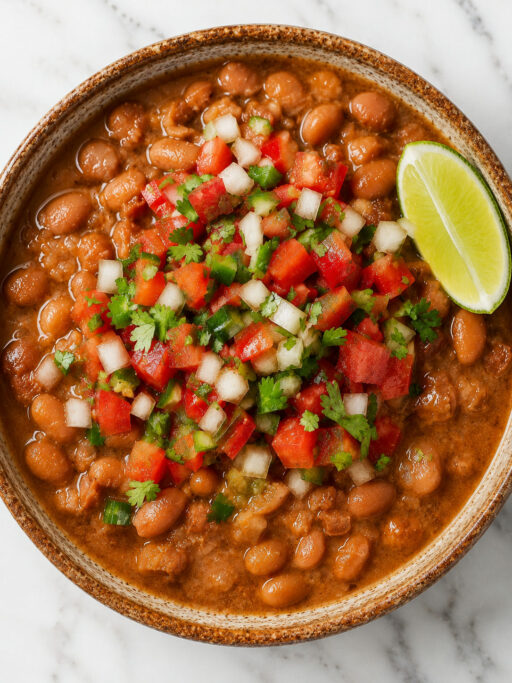
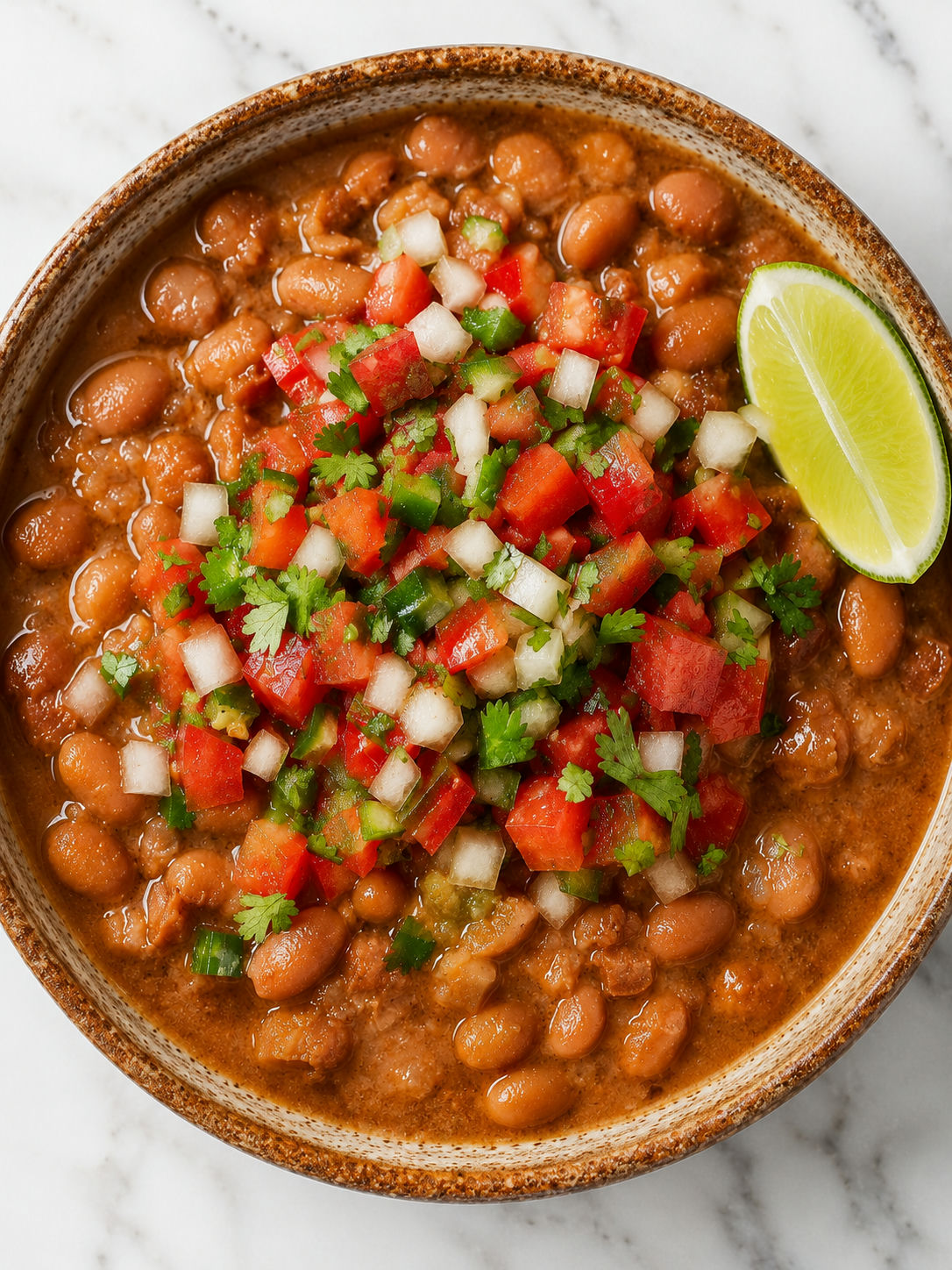

Pot beans topped with fresh pico de gallo are one of those dishes that asks almost nothing of you and gives back everything. A bowl of slow-simmered pinto beans still swimming in their fragrant broth, covered in a bright and acidic pile of tomatoes and herbs, is as satisfying as food gets.
This is weeknight cooking and weekend cooking and any-day-you-need-something-real cooking. The beans do the work on their own over low heat. The pico takes about ten minutes. Together they make something you will want again the following week.
These are frijoles de la olla, or pot beans, in their most traditional form. They pair beautifully with warm corn tortillas, plain white rice, or a fried egg on top. This recipe walks you through both components so you can serve them together or use each on its own.
What Fills the Pot
A short list of pantry basics that produces a deeply flavored broth. Buy the freshest dried pinto beans you can find at a store with high turnover, and use a white onion rather than yellow for a cleaner, more traditional flavor.
- Dried pinto beans. The base of the dish. Rinse them and check for any stray pebbles before cooking.
- White onion. Half goes into the pot to flavor the broth. The other half gets finely diced for the pico.
- Garlic. Smashed cloves give the broth a gentle savory backbone without overpowering the beans.
- Bay leaf. Subtle and aromatic, it adds a layer of herbal depth you would notice if it were missing.
- Roma tomatoes. Firm and meaty with less water than beefsteak types, they hold their shape in the pico.
- Jalapeño. Gives a clean, approachable heat. Swap in a serrano if you want something sharper and brighter.
- Fresh cilantro. Finishes the pico with a clean herbal note. Use the leaves and the thin stems.
- Lime juice. The acid that ties the pico together and brightens the whole bowl.
Simmering Beans Step by Step
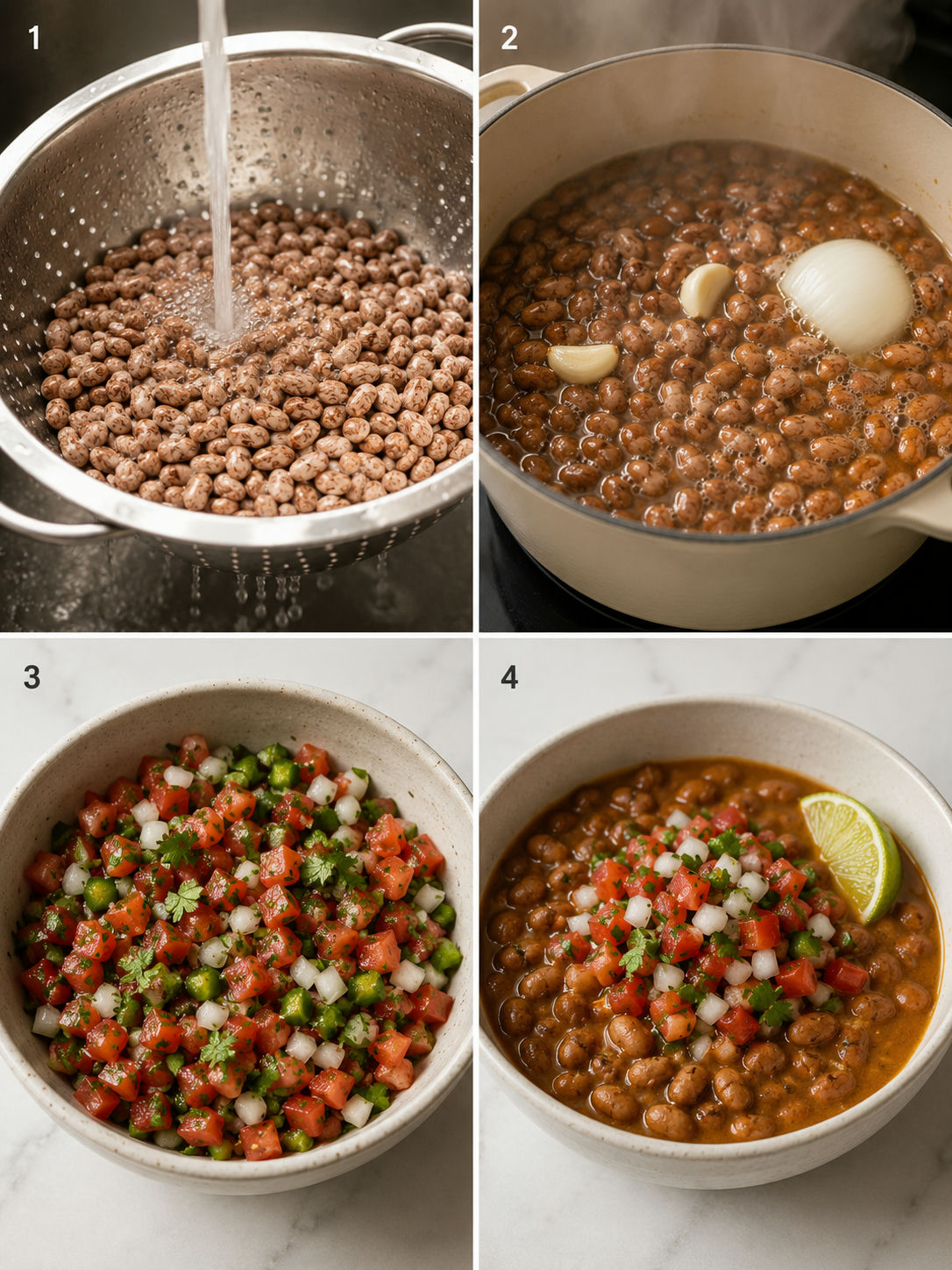
- Soak if you can. Cover dried beans with cold water by three inches and soak 8 hours or overnight. Drain and rinse. This shortens cooking time and makes the beans easier to digest. If you skip soaking, add 30 to 45 minutes to the cook time.
- Start the pot. Place drained beans in a large pot and add 8 cups of fresh water, the onion piece, smashed garlic, and bay leaf. Bring to a boil over high heat and skim any foam that rises in the first few minutes.
- Reduce and simmer. Lower the heat to a low, steady simmer. Cook partially covered for 1.5 to 2 hours for soaked beans, adding hot water if the level drops below the beans. They are done when completely soft with no chalky center.
- Salt at the end. Once the beans are fully tender, stir in the salt and cook 15 more minutes. Salting too early slows the softening of the skins.
- Make the pico. In a bowl, combine diced tomatoes, minced onion, jalapeño, and cilantro. Squeeze in the lime juice and add salt. Stir and let rest 15 minutes so the juices pool and the flavors settle.
- Serve together. Ladle beans and plenty of broth into deep bowls. Spoon a generous heap of pico de gallo on top. Serve with warm corn tortillas on the side.
Why Salt Timing Changes Everything
There is a persistent myth that salt toughens bean skins so badly the beans never soften. The truth is more specific. Salt added before the beans have absorbed water can slow the softening of the outer skin. But salt added in the last 15 to 20 minutes, once the beans are nearly tender, gives you firm-but-soft texture and a bean that is seasoned all the way through rather than just on the surface. The cooks at Serious Eats have confirmed this through side-by-side testing. Salt after tenderness, and your beans will taste deeply seasoned rather than bland inside.
The Broth Is Half the Dish
Bean broth, called caldo de frijoles in Mexican cooking, is one of the most underrated liquids in the kitchen. It carries the starches the beans release during simmering plus the softened garlic and onion into a silky, deeply savory liquid you should not drain away. Spoon it over rice, use it as the base for a quick tortilla soup, or sip it from a cup with a squeeze of lime. According to USDA FoodData Central, pinto beans are an excellent source of plant-based protein and dietary fiber. The broth carries a share of those water-soluble nutrients too. Keep the liquid. It is part of the meal.
Pico That Does Real Work
The best pico de gallo here is not just a garnish. It is doing active work, adding acid, crunch, and heat to a rich and starchy dish that would be flat without it. For a bowl of beans, you want the pico on the brighter and more acidic side, so don’t hold back on the lime. Dice the tomatoes small enough that each spoonful picks up a bit of every ingredient. Let it sit at room temperature while the beans finish cooking so the juices pool. If you want a standalone version with more detail on ratios and heat levels, our easy pico de gallo recipe breaks down the proportions clearly.
Variations Worth Trying
The base recipe is quiet enough to welcome a lot of additions. Drop in a dried ancho chile or a chipotle in adobo at the start of simmering for a smoky depth. Add a sprig of fresh epazote instead of the bay leaf for an earthy, slightly resinous note that is very traditional in central Mexico. These beans also work beautifully inside a chicken burrito bowl or as a side dish next to grilled meats. Leftover beans are ideal for refried beans: mash them with a fork and fry in a little lard or neutral oil for a few minutes. You can also repurpose them into Mexican-style chili beans the next day with just a few added spices.
Storing and Reheating the Leftovers
Pot beans keep in their broth in a sealed container in the refrigerator for up to five days. The beans absorb more liquid as they sit, so add a splash of water when reheating on the stovetop over low heat. They also freeze well. Cool completely, transfer to freezer bags in single-portion amounts, and freeze for up to three months. Pico de gallo is best the day it is made but holds in the refrigerator for up to two days. It will release more liquid over time, so drain briefly before serving if it looks watery. For another take on deeply flavored Mexican-style beans, see our authentic Frijoles de la Olla recipe.
FAQs
- Can I use canned pinto beans instead of dried?
-
Yes, canned beans work for a faster version. Drain and rinse two 15-oz cans, then warm them in about a cup of vegetable broth with smashed garlic and a small piece of onion for 10 minutes. The broth won’t be as deep as the slow-simmered version, but the beans will taste good under the pico. Go easy on added salt since canned beans are already salted.
- Do I have to soak the beans overnight?
-
No, soaking is optional. Unsoaked beans take 2 to 2.5 hours, sometimes longer if they’re old. A quick soak helps: bring the beans to a boil for 2 minutes, remove from heat, cover, and rest for 1 hour, then drain and proceed. Either way, always cook until the beans are completely soft with no chalky center before adding salt.
- What tomatoes make the best pico de gallo?
-
Roma tomatoes are the first choice because they’re firm, low in water, and hold their shape after dicing. In peak summer, any ripe garden tomato works beautifully. Avoid large beefsteak tomatoes, they release too much liquid and make the pico watery quickly.
- Can I swap lemon juice for lime in the pico de gallo?
-
Yes, lemon juice works in a pinch. The flavor is slightly different, a bit sharper and less floral, but it provides the same acid balance. Use the same amount. Fresh juice always beats bottled for pico, regardless of which citrus you choose.
- Why are my beans still hard after two hours of cooking?
-
Old beans are the most common culprit. Beans that are more than a year past their harvest date often refuse to fully soften no matter how long you cook them. Buy from a store with high turnover and check the bag date. Very hard tap water can also slow softening. If your water is highly mineral, try filtered water. And always add salt after the beans are tender, not before.
- Can I make this in an Instant Pot or pressure cooker?
-
Yes. Place unsoaked, rinsed beans in the Instant Pot with 6 cups of water, the onion, garlic, and bay leaf. Cook on high pressure for 35 to 45 minutes with a natural release of at least 15 minutes. Check for tenderness, then stir in salt and cook an additional 5 minutes on the sauté setting. No soaking needed.
- What else can I serve with these beans besides tortillas?
-
Plain white rice is the classic companion alongside the tortillas. The beans and pico also work as a topping for a chicken burrito bowl, as a filling for tacos, alongside grilled meats, or with a fried egg on top for a simple breakfast. They’re a complete meal on their own when portions are generous.
References
Sources cited in this recipe.