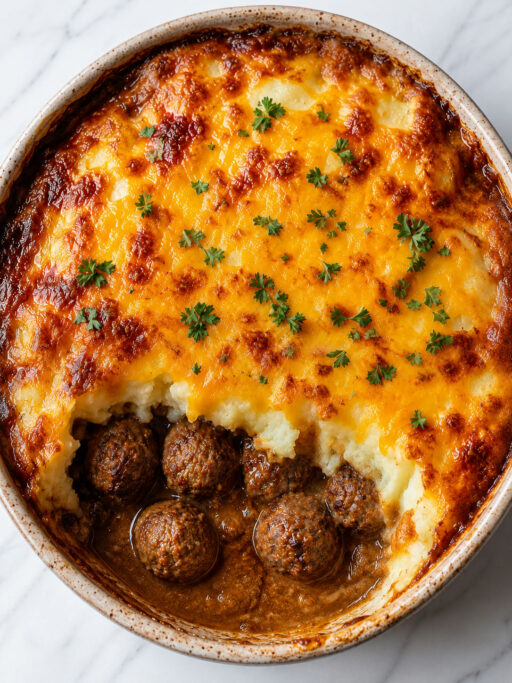
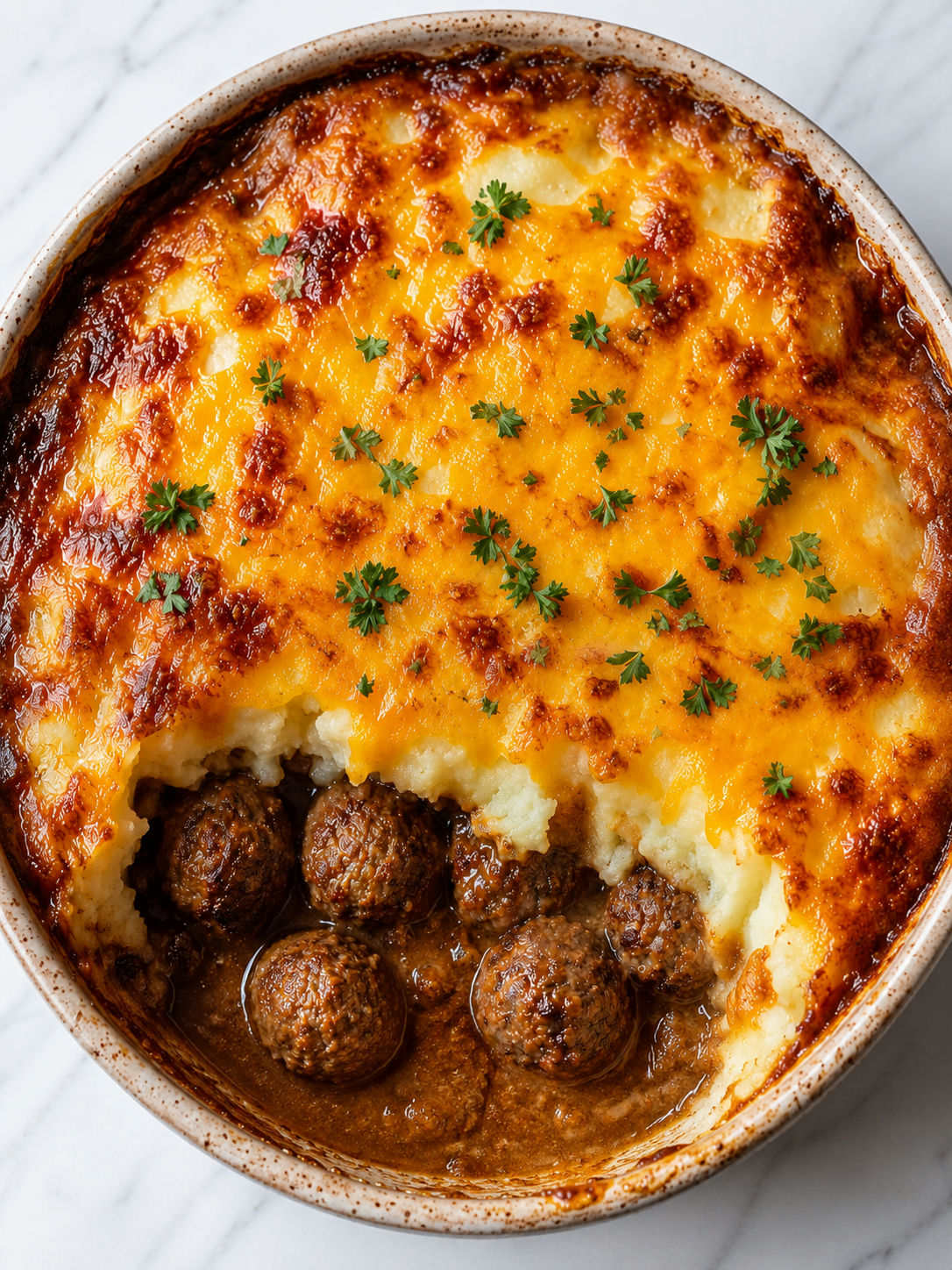

Some dinners you make because they look impressive. This one you make because your family actually asks for it again. Juicy, well-seasoned meatballs sit in a rich brown gravy, and a thick layer of creamy mashed potatoes goes right on top before the whole thing bakes until the cheese is golden and the edges bubble.
It is the kind of casserole that cleans up easily and reheats like a dream. If you have made shepherd’s pie before, the assembly will feel familiar. The meatball version just hits harder on the comfort scale.
A Short Lineup That Feeds Six
Yukon Gold potatoes make the creamiest topping here because their natural butteriness needs less added fat to shine. For the meatballs, a beef and pork mix keeps them juicy through both the stovetop sear and the oven time. A good store-bought beef broth is perfectly fine for the gravy.
- Ground beef (80/20). The fat content keeps the meatballs moist and prevents them from drying out during the bake.
- Ground pork. Adds richness and a slightly sweeter note that balances the savory gravy.
- Breadcrumbs and egg. Bind the mixture just enough without making the meatballs dense or tight.
- Yukon Gold potatoes. Their low starch content and natural butter flavor mash smooth without turning gluey.
- Unsalted butter and warm milk. The fat and liquid that turn boiled potatoes into a creamy, spoonable topping.
- Beef broth. The base of the gravy and the reason the whole bake tastes deeper than it looks.
- Worcestershire sauce. One tablespoon deepens the gravy’s flavor without tasting like anything you can pin down.
- Sharp cheddar cheese. Melts over the top and browns into the kind of crust people pick at before dinner is even served.
Building Each Layer of the Bake
- Preheat and prep. Heat the oven to 375°F (190°C) and lightly grease a 9×13-inch baking dish.
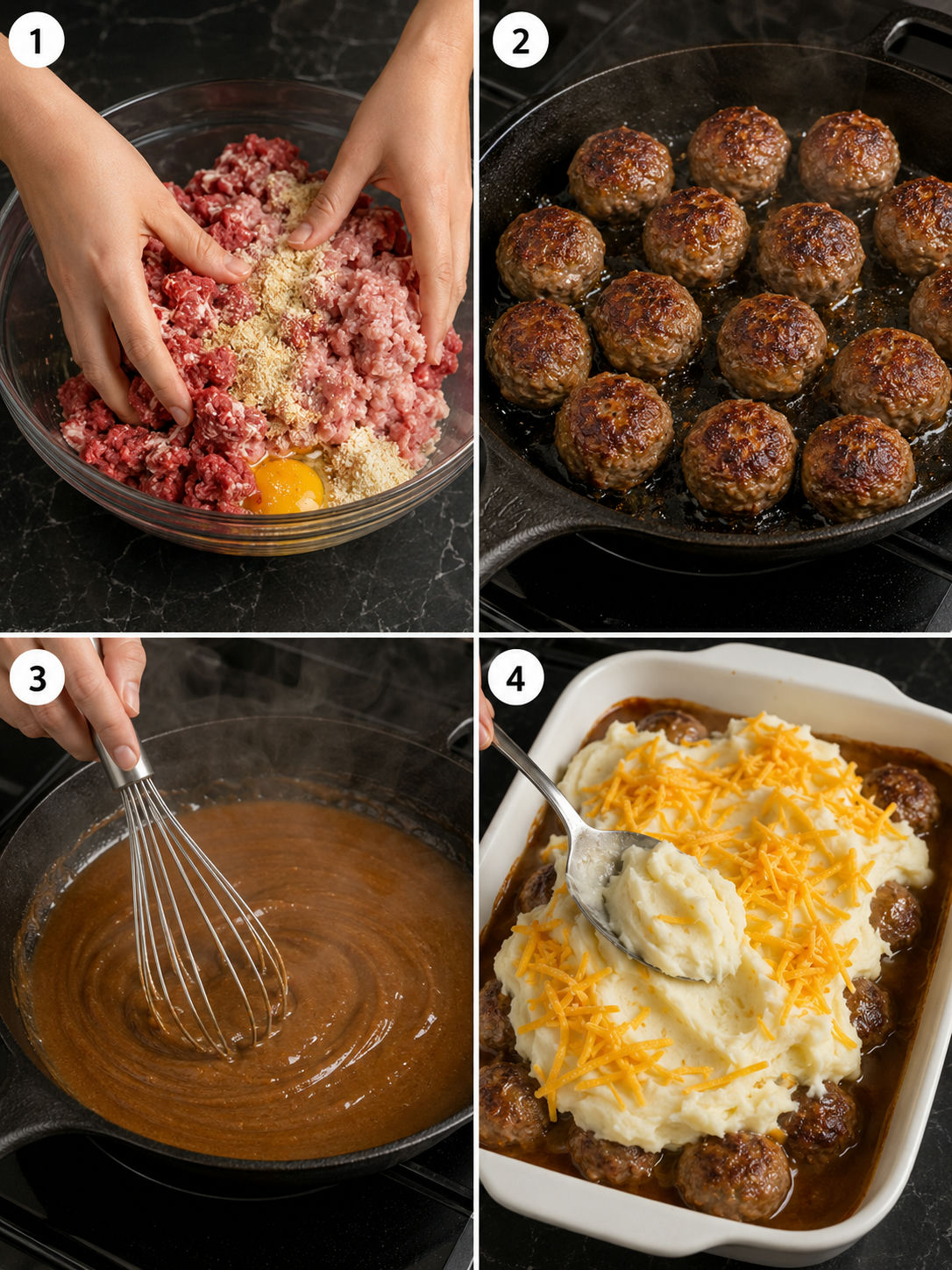
- Mix the meatballs. Combine ground beef, ground pork, breadcrumbs, egg, garlic, Italian seasoning, onion powder, salt, and pepper in a large bowl. Mix gently with your hands until just combined. Roll into 1.5-inch balls, roughly 18-20 total.
- Brown the meatballs. Heat olive oil in a large skillet over medium-high heat. Sear the meatballs in batches for about 2 minutes per side until browned all over. They do not need to cook through at this point. Transfer them to the prepared baking dish.
- Make the gravy. In the same skillet, melt butter over medium heat and whisk in the flour. Cook for 1 minute, then gradually pour in the beef broth while whisking constantly. Add the Worcestershire sauce and garlic powder, then simmer until thickened, about 3-4 minutes. Season with salt and pepper and pour evenly over the meatballs.
- Boil and mash the potatoes. Cook the potatoes in well-salted water until completely tender, about 15-18 minutes. Drain well and let them steam dry in the pot for 1 minute. Mash with butter, warm milk, salt, and white pepper until smooth and creamy.
- Assemble and top. Spoon the mashed potatoes over the meatballs and gravy, spreading all the way to the edges of the dish. Scatter the shredded cheddar evenly over the top.
- Bake until golden. Bake for 25-30 minutes until the cheese is melted and golden and the gravy bubbles around the edges. Rest for 5 minutes before scooping. Garnish with fresh parsley.
Why Gentle Mixing Matters Here
The most common meatball mistake is overmixing. Ground meat is mostly protein, and protein tightens up when you work it too hard. The result is a dense, rubbery ball instead of a tender one. Mix until the breadcrumbs and egg are just distributed, then stop.
Size matters too. Smaller meatballs cook faster but dry out more easily in the oven. Larger ones stay juicier but take longer to cook through. The 1.5-inch size hits a good spot for both. According to the USDA’s ground beef safety guidelines, all ground beef should reach 160°F (71°C) internally. After browning and 25-30 minutes in the oven, this recipe hits that comfortably. For more meatball ideas, the Homemade Swedish Meatball Pasta Bake and the Salisbury Meatballs with Mashed Potatoes both use a similar approach.
A Gravy Worth Making from Scratch
The gravy comes together in the same skillet used for the meatballs. The browned bits stuck to the pan bottom dissolve into the liquid and add depth that broth alone cannot deliver. Add the broth gradually while whisking to avoid lumps. If it thickens faster than expected, pull it off the heat early because it will loosen slightly once it hits the cold ingredients in the baking dish.
For a richer version, swap about a quarter cup of the broth for heavy cream at the end of simmering. It makes the gravy noticeably more indulgent without changing the texture much.
Getting the Potato Topping Just Right
Drain the potatoes thoroughly and let them steam dry in the pot for a minute before mashing. Wet potatoes make the topping dense instead of fluffy. Warm the milk before adding it. Cold milk hits hot potatoes and can make the texture gluey rather than smooth.
Use a masher or ricer rather than a blender or stand mixer. Overworked potatoes release too much starch and start to feel like paste. If you want an even richer topping base, the Creamy Mashed Potatoes with Roasted Garlic and Parmesan method works beautifully here.
Make It Now, Eat It Later
This bake is one of the better make-ahead dinners in the rotation. Assemble the whole thing, skip the final bake, cover tightly with plastic wrap, and refrigerate for up to 24 hours. Pull it out while the oven heats and add 10 extra minutes to account for the cold start.
Leftovers keep for 4 days in the fridge and reheat well with a splash of water added before microwaving. The casserole also freezes for up to 3 months. If you enjoy cooking for the week, the Cheesy Herb-Infused Potato Bake with Crispy Breadcrumb Topping is another solid make-ahead option worth having in your back pocket.
FAQs
- Can I use store-bought frozen meatballs?
-
Yes. Thaw them completely first, then skip the browning step and go straight to making the gravy. The bake time stays the same. Pre-cooked frozen meatballs still pick up plenty of flavor from the gravy as everything heats through.
- What potatoes work best for the topping?
-
Yukon Golds are the right choice. They mash smooth without getting gluey and have a natural buttery flavor that needs less added fat. Russets work too but can get starchy if you overmix them, so use a masher rather than a stand mixer.
- Can I make this bake ahead of time?
-
Yes, and it actually improves after a night in the fridge. Assemble the full bake without baking it, cover tightly with plastic wrap, and refrigerate for up to 24 hours. Bake straight from the fridge and add about 10 extra minutes to the cook time.
- How do I know the meatballs are fully cooked?
-
The USDA recommends cooking ground beef to an internal temperature of 160°F (71°C). After browning on the stovetop and baking in the oven for 25-30 minutes, the meatballs in this recipe reach that mark comfortably. An instant-read thermometer is the most reliable way to confirm.
- Can I swap the beef broth in the gravy?
-
Chicken or vegetable broth both work in a pinch. To get similar depth and color without beef stock, stir a tablespoon of tomato paste into the roux before adding the broth. It adds savoriness that gets close to the original.
- How should I store and reheat leftovers?
-
Cover the dish tightly and refrigerate for up to 4 days. To reheat individual portions, add a small splash of water before microwaving so the potato topping stays moist. For a full re-bake, cover with foil and heat at 350°F for 20-25 minutes until piping hot throughout.
- Can I freeze this casserole?
-
Yes. Cool it completely, then wrap tightly in plastic wrap and foil. Freeze for up to 3 months. Thaw overnight in the fridge before reheating. The mashed potato topping may release a little water after thawing, but stirring it back in before heating fixes that.
References
Sources cited in this recipe.