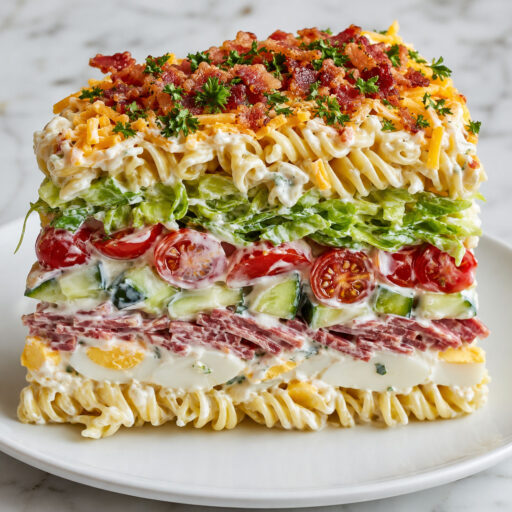
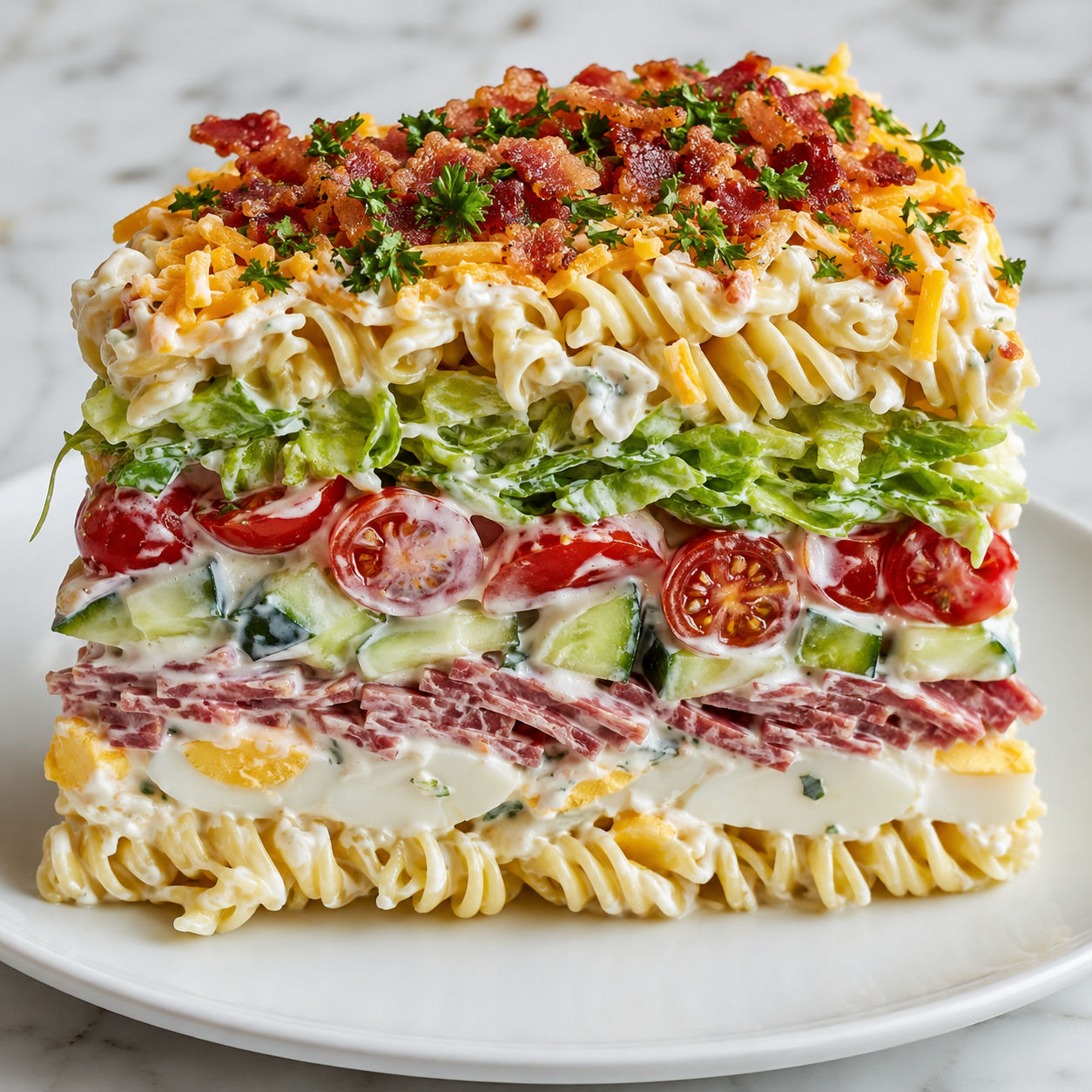

This salad turns heads before anyone has taken a bite. Building a pasta salad inside a springform pan sounds fancier than it actually is, and once you pull the ring off at the table, the layered cross-section does the talking for you.
The idea comes from the old-fashioned seven-layer salads that showed up at every church potluck, but this version adds cooked pasta as the base, which makes it substantial enough to serve as a main rather than just a side. A creamy dressing gets spread over the top and slowly seeps down through everything as it chills.
Give it at least two hours in the fridge, and it actually improves overnight. That makes it an ideal make-ahead for cookouts, potlucks, or a holiday spread where you want one impressive dish that is already done before guests walk in.
The lineup for a dramatic stack
Most of these ingredients are already in your fridge. The key is picking vegetables that hold their crunch after a few hours under the dressing, so nothing turns watery or limp by the time you slice and serve.
- Rotini pasta. The twists grip the dressing in their grooves and pack into a firm, sliceable base layer better than any other shape.
- Romaine lettuce. Shredded romaine stays crisper under the dressing longer than iceberg, and its mild flavor lets the other layers do the talking.
- Cherry tomatoes. Halved and pressed cut-side up, they resist turning watery and add a bright pop of color visible in every slice.
- English cucumber. The thin skin means no peeling needed, and the flesh stays firm without releasing much liquid into the layers below.
- Salami or cooked ham. Adds a savory, slightly salty layer that makes the salad filling enough to stand as a full meal.
- Hard-boiled eggs. Sliced crosswise, they layer flat and add richness alongside the cheese just above them.
- Sharp cheddar. Cubed or shredded, it ties together the protein and dressing layers with a satisfying salty bite in every forkful.
- Creamy dressing. A thick mayo and sour cream blend spread on top acts as the glue that seeps down through all the layers as the stack chills.
Building it layer by layer
- Cook and cool the pasta. Boil rotini in well-salted water until just al dente, 8 to 10 minutes. Drain and rinse under cold water. Toss immediately with 2 tablespoons of Italian dressing, spread on a sheet pan, and cool completely before building.
- Make the dressing. Whisk together the mayonnaise, sour cream, red wine vinegar, garlic powder, Italian seasoning, salt, and black pepper until smooth. Taste and adjust seasoning. Set aside.
- Line the pan. Lay a large sheet of plastic wrap inside a 9-inch springform pan, pressing it flat against the bottom and up the inner sides with several inches of overhang all around.
- Build the pasta base. Press the cooled pasta firmly and evenly into the bottom as a packed layer about 1 inch thick.
- Add the vegetable layers. Layer on the romaine, then the tomatoes cut-side up, cucumber, red onion, olives, and bell pepper. Press each layer gently before adding the next.
- Add protein and cheese. Spread the salami over the vegetables, arrange the egg slices in a flat even layer, and finish with the shredded cheddar.
- Top with dressing and chill. Spread the dressing evenly over the cheese and smooth it to the edges. Fold the plastic wrap over the top. Refrigerate for at least 2 hours or overnight.
- Unmold, garnish, and slice. Unclip the springform ring and lift it straight up. Peel back the plastic from the sides. Place the stack on a platter, scatter with bacon bits and fresh herbs, and slice into wedges with a sharp knife, wiping the blade between cuts.
Why the springform pan changes everything
A regular bowl shows you the salad from above, but you never see the layers until someone breaks into it. A springform pan flips that entirely. Remove the ring at the table and the full cross-section is visible from every angle at once.
The plastic wrap is what makes it work. Press it flat against the pan walls so each layer compacts cleanly against the edge rather than leaving air gaps. When the ring comes off, the exposed side stays neat instead of crumbling. If you enjoy this kind of stacked presentation, the same technique works beautifully in the Spicy California Shrimp Stack and the Teriyaki Chicken and Avocado Stack.
Getting the dressing ratio right
Too thin and the dressing runs straight to the bottom, turning the pasta layer wet and heavy. Too thick and it just sits on top without flavoring anything below. The mayo and sour cream ratio in this recipe hits the right balance: thick enough to slice clean, loose enough to seep down an inch or two over two hours of chilling.
Taste before it goes on. It should be tangy, well-seasoned, and just barely rich from the sour cream. A pinch of sugar fixes it if the vinegar runs sharp. You can also borrow the punchy flavor profile from a good Italian Grinder Pasta Salad dressing by adding a few minced pepperoncini and a teaspoon of their brine.
Swaps that keep the structure intact
The stack holds as long as you keep the layers compact and the dressing thick. Swap the salami for chopped pepperoni, cooked chicken, or canned tuna drained very well. Replace the cheddar with provolone, pepper jack, or crumbled feta. For a richer pasta layer, swap rotini for cheese tortellini, which gives you something closer to what makes the Italian Tortellini Pasta Salad so satisfying.
The one thing to watch is water content. Raw zucchini, fresh mozzarella, and canned corn all release liquid that pools in the base and softens the pasta. The FDA safe food-handling guidelines also note that mayo-based salads should not sit at room temperature for more than 2 hours, so keep the stack covered and refrigerated right up until you are ready to serve.
Storing leftover slices well
Once you cut into the stack, press plastic wrap directly against the cut face to keep the layers from drying out. Refrigerate and eat within 3 days. The romaine softens a bit by day 2, but the pasta and protein layers actually taste better as the dressing works further in. Leftover slices travel well in a sealed container for lunch as long as you support the sides so nothing tips over on the way.
FAQs
- Can I make this pasta salad stack a day ahead?
-
Yes, and it is actually better the next day. Assemble the full stack, spread the dressing over the top, and refrigerate it covered with plastic wrap for up to 24 hours before serving. The dressing seeps down and flavors everything more deeply overnight. Add the bacon bits and fresh herbs right before you unmold so they stay crisp and bright.
- What pasta shape works best for this stack?
-
Short, sturdy shapes with grooves work best because they grip the dressing and pack firmly into a solid base layer. Rotini, penne, and medium shells all perform well. Avoid long pasta like spaghetti or tiny orzo since they either slip around or fall through the layers when you slice the stack.
- What if I do not have a springform pan?
-
A deep 9×9-inch baking dish works fine. Line it with plastic wrap, build the layers the same way, and press firmly. Refrigerate until set, then lift out the whole stack using the plastic wrap and transfer it to a cutting board to slice. You will not get the same clean round shape, but the cross-section is still beautiful and every layer comes through clearly.
- Can I make this vegetarian?
-
Easily. Leave out the salami and bacon bits and add more vegetables in their place. Artichoke hearts, roasted red peppers, or sun-dried tomatoes all add great flavor and substance. The hard-boiled eggs carry enough protein on their own, and you can also add a layer of rinsed and drained chickpeas for extra heft.
- Can I use a different dressing?
-
The mayo and sour cream base holds together well under refrigeration, which is what makes the stack slice cleanly. Thick ranch dressing works as a straight swap. A vinaigrette alone will not keep the top layer firm enough to slice, but mixing half vinaigrette with half mayo gives a lighter flavor while still holding the structure. Keep the dressing thick no matter what you use.
- How long do leftovers keep in the fridge?
-
Up to 3 days covered tightly. According to FoodSafety.gov cold storage guidelines, prepared mayo-dressed salads stay safe for 3 to 5 days at 40 degrees F or below. Texture is best within 3 days though, as the lettuce softens noticeably by day 2. Leftover portions are easiest to scoop once the stack has been cut open.
- How do I get clean slices without the layers sliding?
-
Two things make the biggest difference. First, press each layer firmly as you build so there are no air pockets between them. Second, refrigerate the assembled stack for at least 2 hours so the dressing firms up and acts as a light binder. Use a sharp knife and cut straight down in one motion without sawing. Wipe the blade clean between each slice and the layers will hold.
References
Sources cited in this recipe.