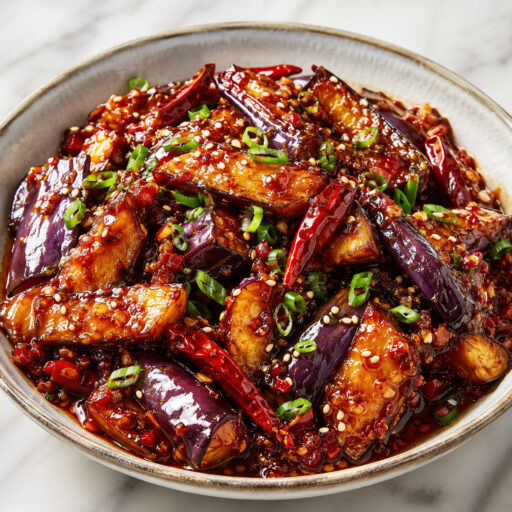
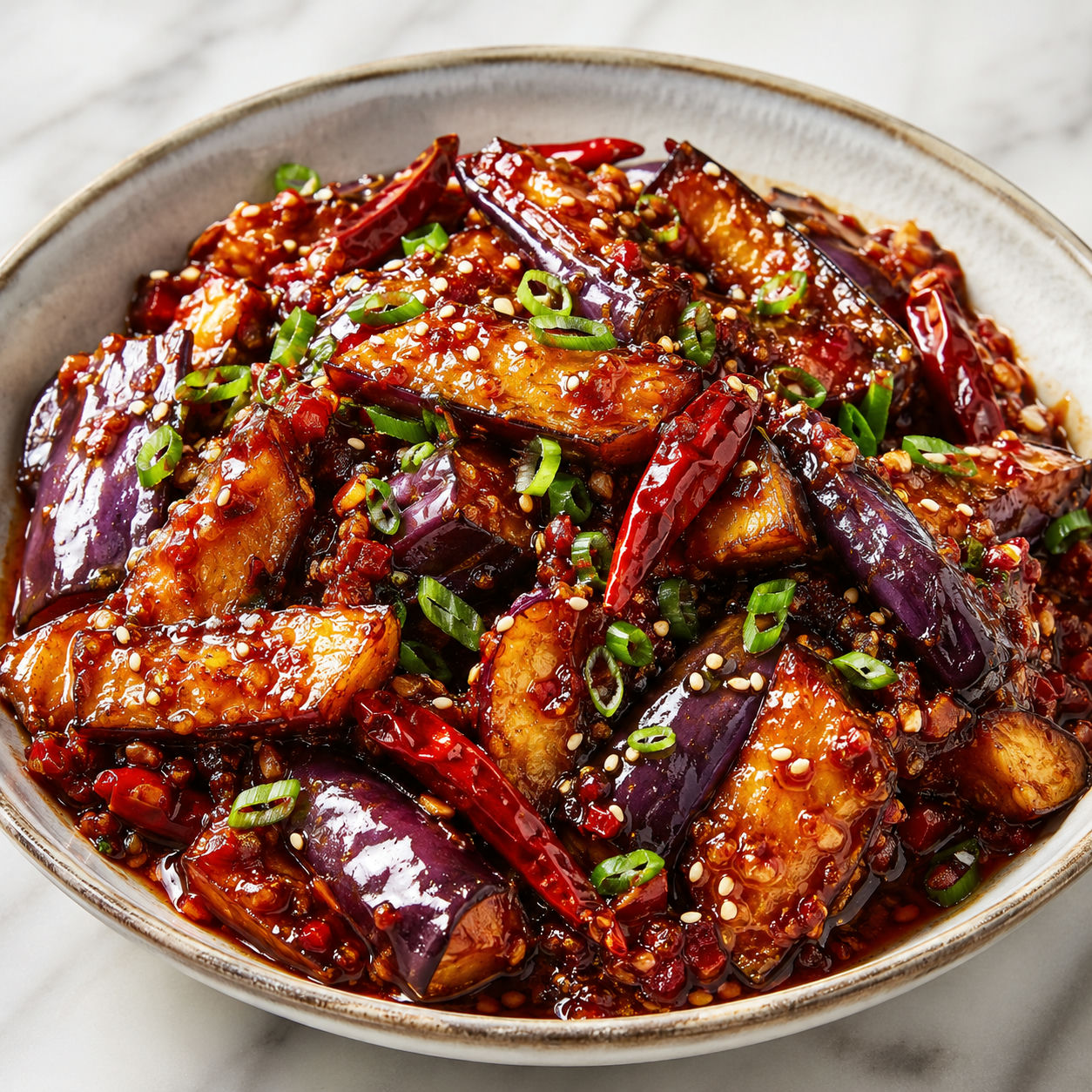

I first had this dish at a small Sichuan restaurant where the eggplant arrived in a clay pot, glossy and dark red, smelling of garlic and chili. I spent the next six months trying to get that same result at home. The secret turned out to be two things: salting the eggplant so it cooks up silky instead of spongy, and using real doubanjiang instead of any substitute.
This is the classic vegetarian version of Yu Xiang Qiezi, which translates to “fish-fragrant eggplant” even though there is no fish involved. The name comes from the sauce profile, a Sichuan combination of spicy, savory, sour, and a touch of sweet that was traditionally paired with fish dishes. The eggplant soaks up every drop of it and the result is something deeply satisfying.
You can have this on the table in 30 minutes. It works as a main dish over rice or as a side alongside other vegetables. If you want to add meat, my Spicy Sichuan Eggplant with Mince covers the ground pork variation in full detail.
The Ingredients Behind the Sichuan Heat
The list is short but every item matters. Doubanjiang is the spine of the sauce and there is no real substitute for it. Good Chinese eggplant saves you from fighting with texture the whole time you cook.
- Chinese or Japanese eggplant. Thinner skin and less bitterness than globe varieties, they cook up creamy and tender without turning to mush.
- Doubanjiang (Sichuan chili bean paste). Fermented, salty, and deeply savory, this is what makes the sauce taste authentically Sichuan rather than just spicy. Pixian brand is the benchmark.
- Garlic and fresh ginger. Both minced fine so they melt into the sauce during cooking. Use fresh here, not powders.
- Soy sauce. Adds salt and a layer of savory depth to back up the doubanjiang.
- Rice vinegar. A small amount cuts through the richness and lifts the whole dish.
- Sugar. Just enough to balance the chili heat and the vinegar without making this sweet.
- Cornstarch slurry. Thickens the sauce so it clings to every piece of eggplant rather than pooling at the bottom of the bowl.
- Toasted sesame oil. Stirred in off the heat for a nutty, fragrant finish.
- Scallions. Sliced thin and scattered on top for freshness and a pop of green.
How This Dish Comes Together
- Salt and rest the eggplant. Cut the eggplant into 2-inch pieces and toss with a generous pinch of salt. Let it sit in a colander for 15 minutes to draw out moisture, then pat completely dry with paper towels.
- Fry until golden. Heat 3 tablespoons of neutral oil in a wok or large skillet over medium-high heat. Add the eggplant in a single layer and cook without stirring for 2 to 3 minutes until the undersides are golden. Flip and cook another 2 minutes. Remove to a plate.
- Bloom the paste and aromatics. Add a touch more oil to the same pan if needed. Add the doubanjiang and cook for 30 seconds, stirring, until the oil turns red and fragrant. Add the garlic and ginger and cook another 30 seconds.
- Add the liquids. Pour in the soy sauce, rice vinegar, sugar, and water. Stir to combine and let it bubble for 30 seconds.
- Return the eggplant and thicken. Add the eggplant back to the pan and toss to coat. Pour in the cornstarch slurry and toss again until the sauce thickens and clings, about 1 minute.
- Finish and serve. Remove from heat, drizzle with sesame oil, and top with sliced scallions. Serve immediately over steamed rice.
Why Salting Changes the Texture
Eggplant is about 92% water. Skip the salting step and you end up with a pan full of steam and eggplant that stews in its own liquid instead of browning. Salt draws that moisture to the surface, and when you pat it dry before frying, the eggplant can actually make contact with a hot pan and develop some color. The result is a completely different texture: creamy inside, with a surface that holds the sauce instead of rejecting it. Fifteen minutes of resting is the minimum. Twenty works even better if you have the time.
Doubanjiang Is the Whole Point
If you have tried this dish with just chili sauce or sriracha and felt something was off, doubanjiang is what was missing. It is a fermented paste made from broad beans and chilies that has been aged for months or years. The fermentation creates a funkiness and depth that fresh chili cannot replicate. When it hits a hot pan, the oil turns a vivid red and the kitchen fills with a smell that is instantly recognizable as Sichuan cooking. Pixian county in Sichuan province produces the most prized version. The Woks of Life has a thorough guide to buying and using it if you want to go deeper into this ingredient.
Making It Your Own
The base recipe is already fully vegan. To push the heat up, add a teaspoon of chili flakes with the doubanjiang or finish with a drizzle of chili oil. For the full numbing Sichuan experience, toast and grind a quarter teaspoon of Sichuan peppercorns and stir them in at the end. They add a tingling, electric quality that is unlike anything else. This dish pairs naturally with Sichuan-Style Dan Dan Noodles for a bigger spread, or serve it next to Quick Spicy Garlic Bok Choy for an easy all-vegetable dinner. If eggplant is a vegetable you keep coming back to, creamy Baba Ganoush is another great direction to take it.
Storing and Reheating Leftovers
Leftovers keep well for up to three days in the fridge. The sauce thickens as it cools, so add a tablespoon of water when reheating in a skillet to bring it back to the right consistency. The microwave works too, just cover the container and heat in short bursts to avoid overcooking the eggplant further. Cooked eggplant does not freeze well, so this is best enjoyed within a few days. The vegetable itself is low in calories and naturally high in fiber according to USDA FoodData Central, which makes this one of the more nutritionally solid ways to eat something this satisfying.
FAQs
- What kind of eggplant works best for Sichuan eggplant?
-
Chinese or Japanese eggplant is the right choice. They are longer and thinner than globe eggplant, with thinner skin and fewer seeds, so they cook up silky and tender rather than bitter or spongy. If you can only find globe eggplant, cut it into thinner slices and salt it a bit longer to draw out more moisture before frying.
- Where do I find doubanjiang?
-
Most Asian grocery stores carry it, usually near the soy sauce or in the condiment aisle. Look for Pixian doubanjiang, which comes from a specific county in Sichuan and has a deeper, more fermented flavor than generic versions. It keeps in the fridge for months once opened. Online retailers also stock several reliable brands.
- Is this recipe vegan?
-
Yes, in its base form. Doubanjiang is made from fermented chili and broad beans, soy sauce is plant-based, and there is no meat or dairy here. Just check the doubanjiang label, as a few brands include shrimp paste. Most traditional Pixian versions are fully vegan.
- How do I stop the eggplant from getting soggy?
-
Salt it first and let it sit for at least 15 minutes, then pat it very dry before it goes in the pan. Moisture is the enemy of good texture here. Make sure the oil is properly hot before the eggplant goes in, and resist the urge to stir too soon. Let each piece develop some color before moving it, and cook in batches if your pan is not large enough to hold them in a single layer.
- Can I add ground pork or chicken to this?
-
Absolutely. Brown about 4 ounces of ground pork or minced chicken in the pan first, then add the doubanjiang and garlic. That is actually the most common restaurant version. My Sichuan Eggplant with Mince walks through exactly that method if you want the full recipe.
- How do I store and reheat leftovers?
-
Store in an airtight container in the fridge for up to three days. The sauce thickens as it cools, so add a tablespoon of water when reheating in a skillet to bring it back. The microwave works too, just heat in short bursts with the container covered. Cooked eggplant does not freeze well, so this is best enjoyed within a few days.
- How spicy is this dish?
-
Moderately spicy, depending on your doubanjiang brand. You control the heat easily: use less doubanjiang for a milder result, or add dried chili flakes and a drizzle of chili oil for more fire. The optional Sichuan peppercorns add a tingling, numbing sensation that is distinct from regular chili heat and very much worth trying if you can find them.
References
Sources cited in this recipe.