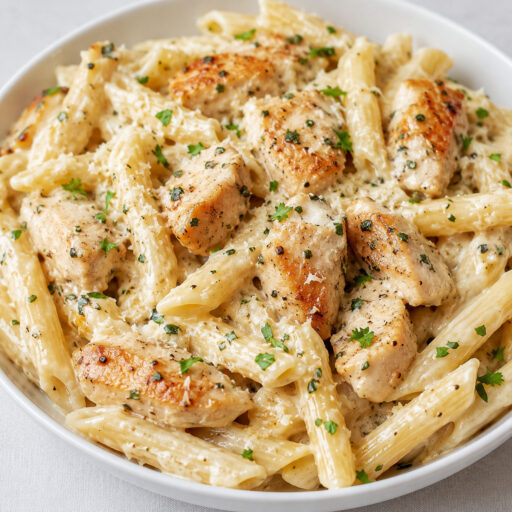
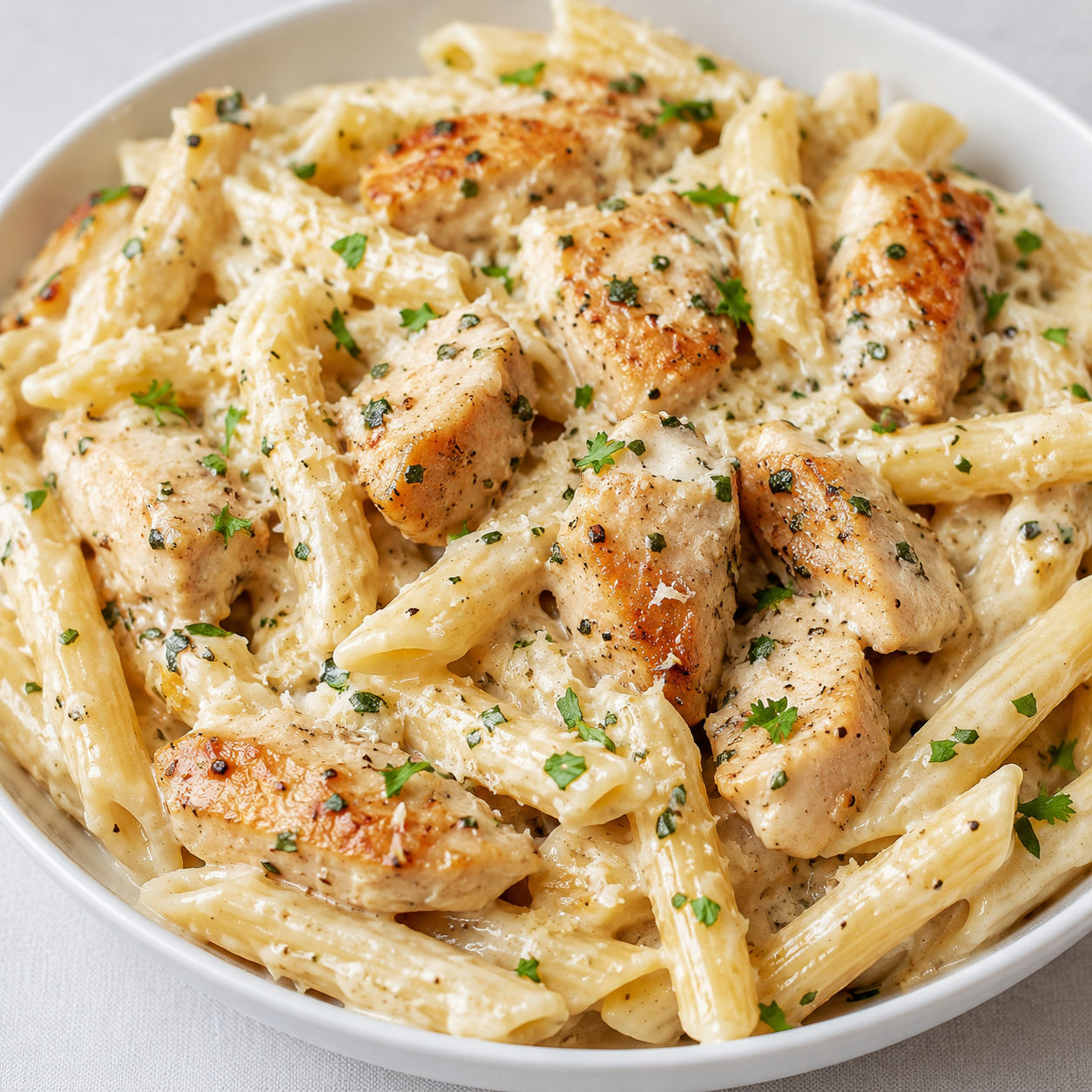

Creamy Garlic Herb Chicken Pasta is the kind of dinner that makes a regular weeknight feel settled. The sauce is rich without being heavy, the garlic smells warm and buttery, and the fresh herbs keep the whole skillet from tasting flat.
I like penne or rigatoni here because the ridges catch the sauce. Cut the chicken into bite-size pieces before cooking so every piece browns quickly and stays tender.
Garlic cream pasta lineup
The ingredient list is simple, so each piece matters. Use fresh garlic, real parmesan, and herbs that still smell lively when you rub the leaves between your fingers.
Heavy cream gives the sauce body, but the pasta water is what helps it cling. Keep a mug of it near the stove before you drain the noodles.
- Chicken breast. Cooks quickly when cut into small pieces and gives the pasta plenty of lean protein.
- Penne pasta. Holds the creamy sauce inside the tubes and keeps each bite balanced.
- Garlic. Brings the main savory flavor when cooked gently in butter.
- Italian seasoning. Adds dried herb flavor to the chicken before it hits the skillet.
- Heavy cream. Makes the sauce smooth, rich, and stable enough to coat the pasta.
- Chicken broth. Lightens the cream and picks up the browned bits from the pan.
- Parmesan cheese. Salts and thickens the sauce while adding a nutty finish.
- Fresh parsley and basil. Wake up the creamy sauce right before serving.
- Lemon juice. Adds a small bright lift so the dish does not taste too rich.
Creamy Garlic Herb Chicken Pasta Method
- Boil the pasta. Cook the penne in salted water until just shy of al dente. Save 1 cup of pasta water, then drain.
- Brown the chicken. Season the chicken with Italian seasoning, salt, and pepper. Sear it in olive oil until golden and cooked through, then move it to a plate.
- Start the sauce. Melt butter in the same skillet. Add garlic and cook just until fragrant so it stays sweet instead of bitter.
- Simmer the cream. Stir in broth and cream, scraping up the browned bits. Let it bubble gently until it thickens slightly.
- Finish with cheese. Lower the heat and stir in parmesan until smooth. Add pasta water a little at a time if the sauce looks too thick.
- Toss everything together. Return the chicken and pasta to the skillet. Fold in parsley, basil, and lemon juice, then serve while glossy.
Keep the chicken juicy
Small pieces of chicken cook fast, which is good, but they can also dry out fast. Give them room in the skillet. If the pan is crowded, the chicken steams and turns pale instead of browning. Brown in two batches if your skillet is smaller than 12 inches.
For food safety, chicken should reach 165°F according to the USDA safe temperature chart. I pull the chicken as soon as it reaches that point, then let it rest on a plate while the sauce comes together. The juices settle and the chicken goes back into the pasta at the end, so it warms through without overcooking.
Why the sauce clings
The best creamy pasta sauces are not just cream poured over noodles. They need motion and starch. The browned chicken bits add flavor, the cream gives body, and a little reserved pasta water helps the sauce loosen and coat every piece.
Add the parmesan over low heat and stir until it melts before adding the pasta. If the skillet looks dry after tossing, add pasta water by the spoonful. If it looks loose, let it sit off the heat for a minute. This same pan-sauce idea also works in Creamy Garlic Chicken with Penne Pasta and Classic Homemade Chicken Alfredo.
Fresh herb swaps
Parsley and basil keep this creamy garlic herb chicken pasta fresh, but you have room to adjust. Chives add a mild onion note. Thyme tastes deeper and more savory, so use less. Dill is brighter and works if you add extra lemon.
If all you have is dried herbs, use them early with the chicken or garlic so they can bloom in the fat. Do not add a full handful of dried herbs at the end. They need heat and moisture to soften. For a greener version, fold in baby spinach after the pasta goes in, much like the cozy greens in Creamy Broccoli Chicken Pasta.
Make it ahead
This dish tastes best right after tossing, but you can still get ahead. Cut and season the chicken up to one day in advance. Grate the parmesan, mince the garlic, and chop the parsley. Keep the basil whole until the last minute so it does not bruise.
Leftovers keep in an airtight container in the fridge for up to 3 days. The sauce will thicken as the pasta absorbs moisture. Reheat gently with a splash of milk, cream, or broth. If you need a lower-effort version for a busy day, the same garlic parmesan comfort shows up in Crockpot Garlic Parmesan Chicken Pasta.
What to serve nearby
This pasta is rich, so keep the sides simple. A crisp green salad with lemon vinaigrette works well. Roasted broccoli, asparagus, or green beans also cut through the cream. Garlic bread is welcome if you want a full comfort dinner, but I usually choose a vegetable when serving this on a weeknight.
If you want more heat, add crushed red pepper with the garlic. For a brighter plate, add lemon zest with the herbs. For a heavier baked version, spoon the pasta into a baking dish, top with mozzarella, and broil until the top bubbles.
FAQs
- Can I use chicken thighs instead of chicken breasts?
-
Yes. Boneless skinless chicken thighs work well and stay very juicy. Cut them into bite-size pieces and cook until browned and the thickest pieces reach 165°F.
- What pasta shape is best for creamy garlic herb chicken pasta?
-
Penne, rigatoni, fusilli, and farfalle all work because they hold sauce in their ridges and pockets. Long pasta like fettuccine also tastes good, but short pasta is easier to toss with the chicken.
- Can I make it ahead?
-
You can cook the chicken and chop the herbs a day ahead. For the best texture, boil the pasta and finish the cream sauce right before serving because creamy pasta thickens as it sits.
- How do I keep the sauce from getting grainy?
-
Turn the heat down before adding parmesan and stir it in gradually. Pre-grated cheese can clump because it often has anti-caking starches, so a freshly grated block melts more smoothly.
- Can I add vegetables?
-
Yes. Baby spinach, broccoli florets, peas, mushrooms, or asparagus fit this sauce. Add quick-cooking greens at the end and firmer vegetables earlier so they have time to soften.
- How should I reheat leftovers?
-
Warm leftovers in a skillet over low heat with a splash of milk or broth. Stir gently until the sauce loosens. Microwaving works in short bursts, but high heat can make the chicken tough.
References
Sources cited in this recipe.