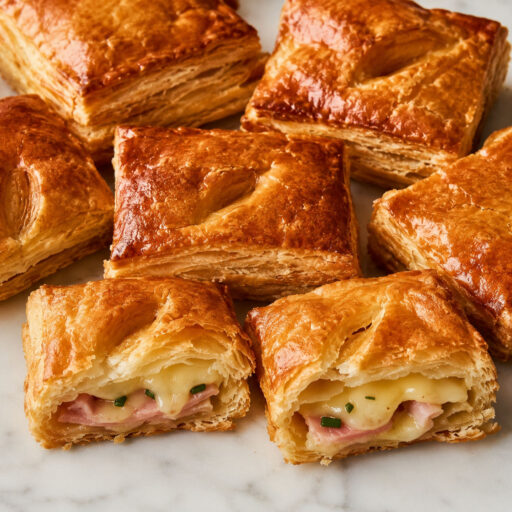
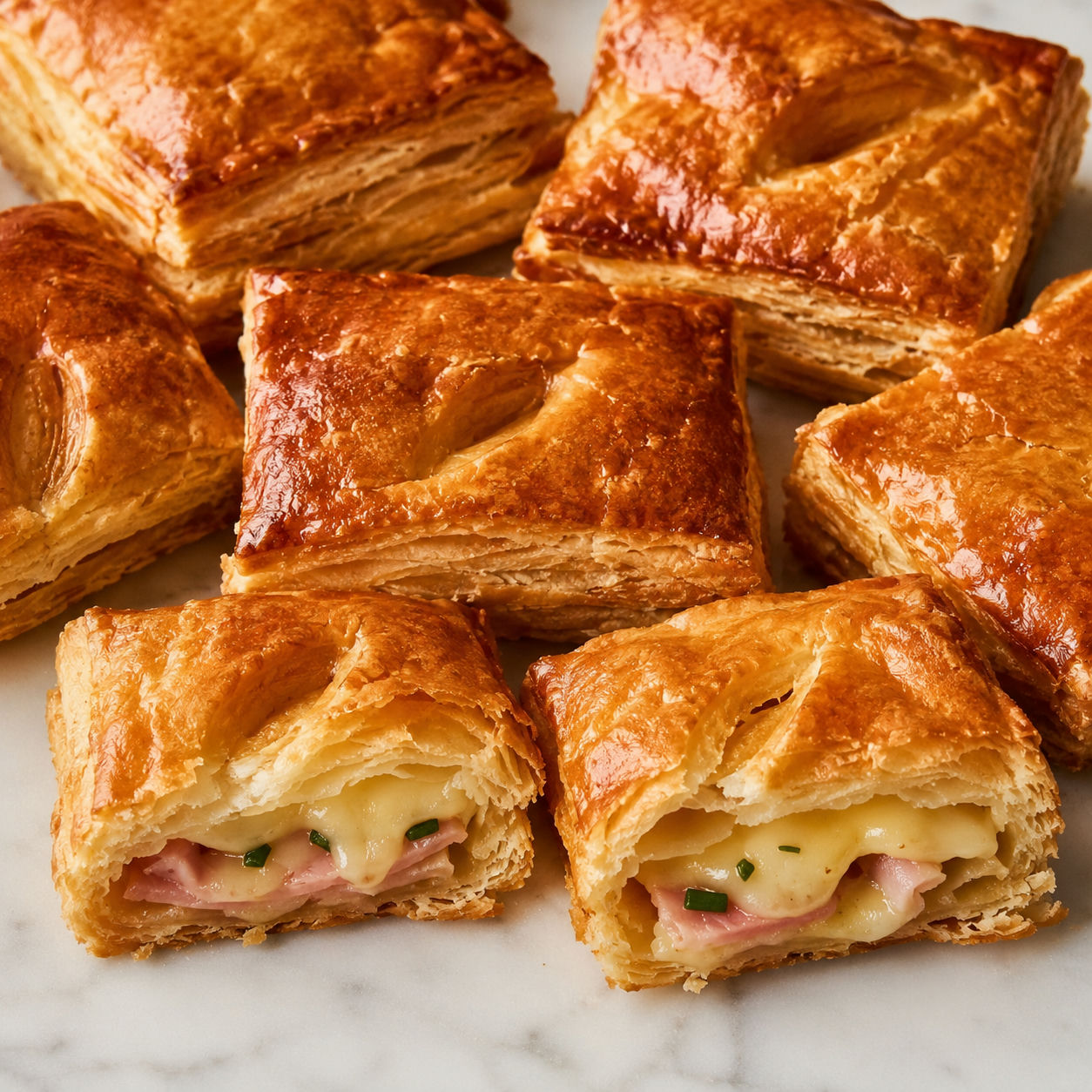

Ham Cheese Puff Pastry is the kind of recipe that disappears before the tray hits the table. The pastry bakes crisp and buttery around salty ham, melted cheese, and a thin swipe of Dijon.
I like these as small pockets because they are tidy to serve and easy to reheat. Keep the pastry cold, seal the edges well, and do not overfill them. That is the difference between neat flaky squares and a cheese puddle on the pan.
Ham Cheese Puff Pastry Basics
The ingredient list is short, so each piece matters. Use all-butter puff pastry if you can find it, thinly sliced ham, and a cheese that melts without turning greasy.
- Puff pastry. Gives the pockets their crisp, flaky layers. Thaw it in the fridge so it stays cold and easy to handle.
- Cooked ham. Adds smoky saltiness and makes the filling feel substantial without needing any extra cooking.
- Swiss cheese. Melts smoothly and balances the ham with a mild nutty flavor.
- Gruyere. Adds deeper flavor. You can use all Swiss if that is what you have.
- Dijon mustard. Cuts through the richness and keeps the filling from tasting flat.
- Honey. Softens the mustard just enough without making the pastry sweet.
- Chives or thyme. Adds a fresh note that keeps the filling lively.
- Egg wash. Helps the tops bake glossy and golden.
Fold, Chill, Bake
- Thaw the pastry. Let the puff pastry thaw in the refrigerator until flexible but still cold. Warm pastry gets sticky and will not rise as neatly.
- Cut the squares. Roll each sheet lightly, then cut into six even rectangles. Keep the pieces on parchment while you work.
- Fill the centers. Spread a little Dijon-honey mix on one side of each rectangle. Add ham, cheese, pepper, and herbs, leaving a clean border.
- Seal the pockets. Fold the pastry over the filling and press the edges closed with a fork. Cut a small vent in the top so steam can escape.
- Chill the tray. Refrigerate the filled pastries for 15 minutes. This firms the butter in the dough and helps the pockets puff.
- Bake until golden. Brush with egg wash, sprinkle with seeds if using, and bake at 400 F for 18-22 minutes until the pastry is deeply golden and crisp.
Keep The Pastry Cold
Puff pastry rises because thin sheets of dough and butter create steam in the oven. If the dough gets warm, the butter melts early and the layers bake heavier. King Arthur Baking has a useful overview of keeping puff pastry cold while you work in its puff pastry tips.
Work on parchment so you can move the filled pastries without stretching them. If the dough starts to feel soft or greasy, pause and slide the tray into the fridge for 10 minutes. This little break gives you cleaner edges and a better rise.
Flavor Without A Mess
A thin layer of mustard does more for these pastries than a thick one. Too much sauce makes the bottom damp. I mix Dijon with a small spoonful of honey, then brush on just enough to flavor the ham. Bon Appetit uses the same ham, cheese, and mustard idea in a larger ham and cheese feuillete.
For cheese, grated Swiss and Gruyere melt more evenly than thick slices. Keep the filling centered and leave a border around every edge. If you enjoy this flavor combo in party food, try the Ham & Cheese Christmas Tree Pastry or these Easy Ham and Cheese Sticks next.
Make Them Party Ready
These are best warm, but they do not have to be last-minute stressful. Assemble the pockets earlier in the day and keep them chilled until baking. Brush on the egg wash right before the oven so the surface stays glossy.
For a snack tray, cut each baked pocket in half after resting for five minutes. Add pickles, mustard, grapes, or a crisp salad. If you want another ham-and-cheese option that feeds a crowd, the Savory Ham and Cheese Sliders are softer and more sandwich-like.
Good Swaps To Try
Swap Swiss for sharp cheddar, fontina, or provolone. Cheddar brings more bite, while fontina melts especially smooth. Turkey works instead of ham if you want a lighter filling. A spoonful of chopped pickles or caramelized onions also fits well, but drain anything wet before adding it.
You can shape the same filling into pinwheels instead of pockets. Roll the pastry around the filling, chill, slice, and bake until browned. For that style, look at the shape and serving idea in these Mushroom Puff Pastry Pinwheels.
Storing And Reheating
Store leftovers in an airtight container in the fridge for up to 3 days. The USDA recommends chilling leftovers promptly in its leftovers safety guide. Let the pastries cool first so trapped steam does not soften the crust.
Reheat in a 350 F oven or air fryer until crisp and hot, usually 6-10 minutes. The microwave warms the filling, but it softens the pastry fast.
FAQs
- Can I use deli ham for Ham Cheese Puff Pastry?
-
Yes. Deli ham works well if the slices are not too wet. Pat them dry before layering so the pastry can crisp instead of steaming.
- What cheese melts best in these pastries?
-
Swiss is classic because it melts smoothly and tastes good with ham. Gruyere gives a deeper nutty flavor. Cheddar also works, but use a moderate amount because it can leak more oil.
- Can I assemble them ahead of time?
-
Yes. Fill and seal the pastries, then refrigerate them on a lined sheet for up to 8 hours before baking. Brush with egg wash right before they go into the oven.
- Why did my puff pastry leak cheese?
-
The most common reasons are warm pastry, too much filling, or edges that were not sealed firmly. Chill the tray for 15 minutes before baking and press the edges with a fork.
- Can I freeze ham and cheese puff pastry?
-
You can freeze the unbaked sealed pastries on a tray, then move them to a freezer bag. Bake from frozen at 400 F, adding a few extra minutes, until deeply golden and hot inside.
- What should I serve with them?
-
For snacks, serve them with pickles, mustard, or a simple green salad. For brunch, add fruit and eggs so the buttery pastry has something fresh beside it.
References
Sources cited in this recipe.