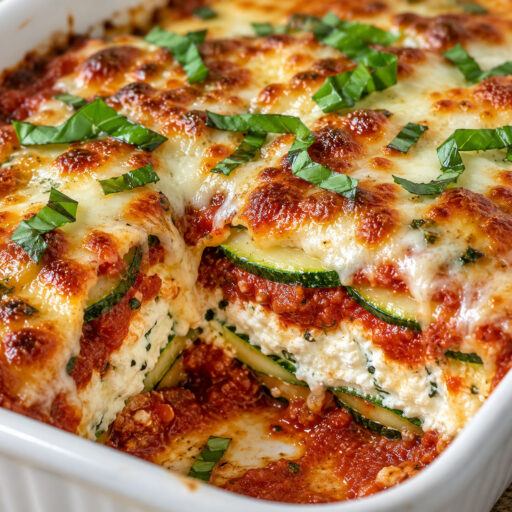
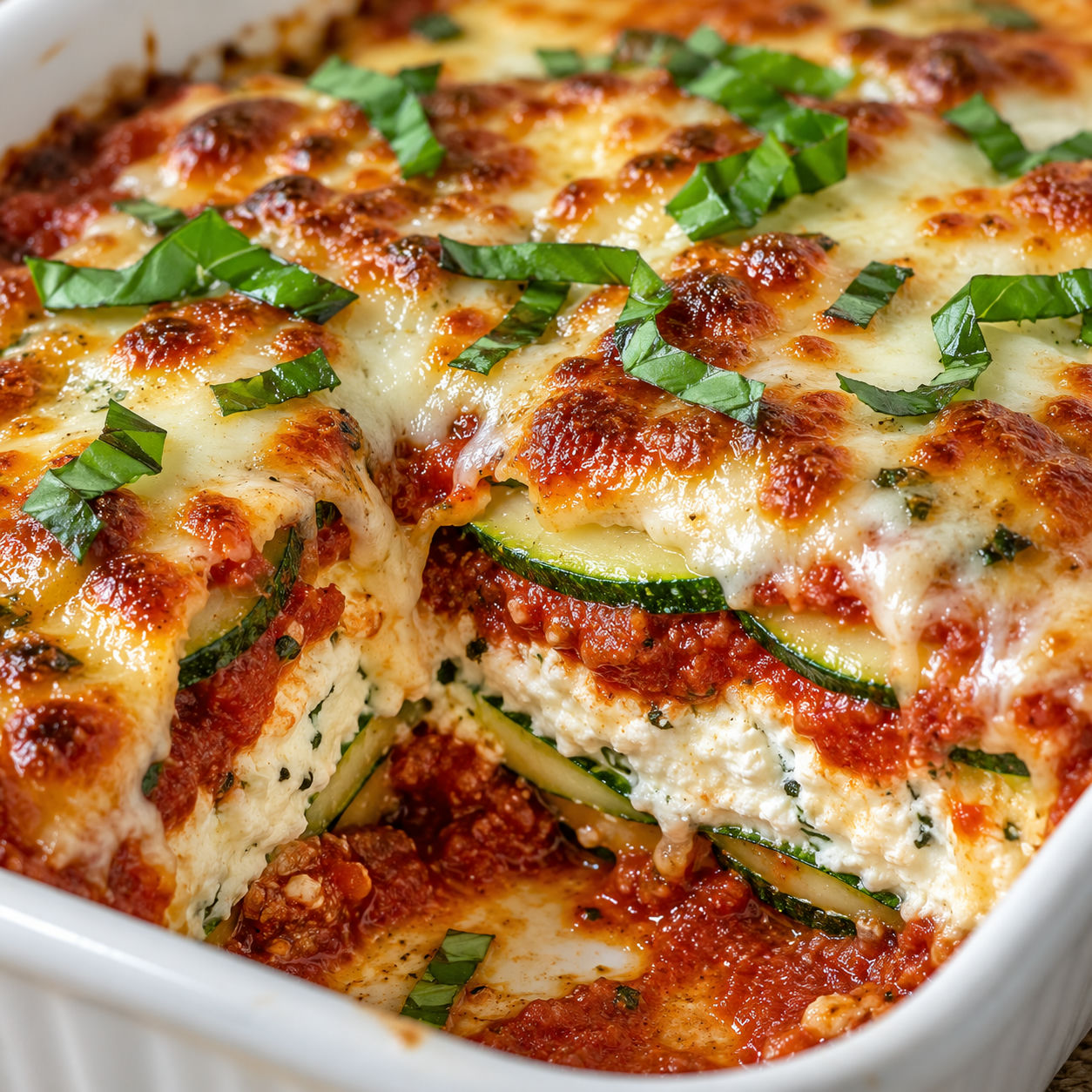

There is a specific craving that shows up on a cold evening when you want something layered and cheesy but you are trying to keep carbs low. This zucchini ricotta bake fits that need exactly. It looks and tastes like lasagna but uses thin zucchini planks instead of pasta sheets, so the carb count stays low and the flavor stays high.
The layers are simple: salted zucchini slices, a seasoned ricotta filling, good marinara, and plenty of mozzarella on top. Just a bubbling, golden pan that comes out of the oven smelling like something from an Italian grandmother’s kitchen.
The step most home cooks skip is salting the zucchini first. It pulls out the excess moisture that would otherwise turn firm layers into a watery mess. Do it and the bake holds together cleanly when you cut it.
What Goes Into Each Layer
The ingredient list is short. Fresh zucchini is the foundation, so choose medium ones with firm, bright skin. Whole-milk ricotta makes a richer, more stable filling than part-skim. A good thick marinara and quality mozzarella do the rest.
- Zucchini. Sliced a quarter inch thick so it softens through without turning mushy between the layers.
- Whole-milk ricotta. Creamier and more stable than part-skim; it binds the filling and holds up against the heat.
- Egg. Stirred into the ricotta so the filling sets during baking and the layers hold when you slice.
- Garlic. Minced and mixed into the ricotta for flavor that carries through every bite.
- Marinara. Use a sauce you would eat on pasta. A thin, watery jar will make the bake soupy no matter how well you drained the zucchini.
- Shredded mozzarella. Scattered between layers and piled on top for the classic pull and golden crust.
- Parmesan. Grated over the top for savory depth and a slightly crisp finish.
- Fresh basil. Stirred into the ricotta and scattered over the finished bake for brightness.
Building the Layers Step by Step
- Salt and drain the zucchini. Lay slices on paper towels, sprinkle with kosher salt, and wait 15 to 20 minutes. Pat thoroughly dry. This step is not optional.
- Mix the ricotta filling. Combine ricotta, egg, minced garlic, chopped basil, Italian seasoning, and black pepper. Stir until smooth. Taste and adjust seasoning.
- Preheat the oven. Set to 375 degrees F (190 degrees C). Lightly oil a 9×13 baking dish.
- Build the first layer. Spread a thin layer of marinara on the bottom. Add half the zucchini slices, spread half the ricotta filling over them, spoon on more marinara, and scatter a third of the mozzarella.
- Add the second layer. Repeat with the remaining zucchini and ricotta. Top with the remaining marinara, the rest of the mozzarella, and all of the Parmesan.
- Bake covered. Cover tightly with foil and bake 30 minutes until the zucchini is tender and the sauce bubbles at the edges.
- Brown the cheese. Remove the foil and bake 12 to 15 more minutes until the cheese is golden in spots.
- Rest before serving. Let sit 10 minutes before cutting. The layers need this time to firm up.
Why Salting the Zucchini Changes Everything
Zucchini is roughly 95 percent water by weight. Without salting, that moisture releases straight into the bake and turns firm layers into a watery collapse. A 15 to 20 minute rest with salt draws it out before it can cause trouble. According to USDA FoodData Central, a cup of raw zucchini has fewer than 4 grams of net carbs and about 20 calories, making it one of the most efficient low-carb swap ingredients in home cooking. For even drier slices, press them gently between folded kitchen towels after the paper-towel pat before you start layering.
Getting the Ricotta Filling Right
The egg is the structural key. Without it the ricotta stays loose and slides between layers instead of setting as it bakes. Stir it in until the mixture looks uniform and slightly glossy. If your ricotta seems very wet straight from the container, strain it through a fine-mesh sieve over a bowl for 20 minutes before mixing. Season the filling generously because it needs to compete with marinara and melted cheese. A pinch of red pepper flakes stirred into the ricotta adds background warmth that plays well against a sweet tomato sauce.
Swaps and Variations Worth Trying
For a meaty version, brown half a pound of Italian sausage or ground beef, drain the fat, and stir it into the marinara before layering. For a different meatless filling with more texture, our spinach and mushroom ricotta zucchini boats show how sauteed vegetables work into a seasoned ricotta base. Fontina or provolone melts beautifully in place of mozzarella and adds a slightly nuttier depth. If you enjoy the layered format with pasta on a less restrictive evening, our roasted vegetable lasagna follows the same technique with pasta sheets and a full vegetable filling.
Storing and Reheating Like a Pro
This bake keeps well and improves overnight once the layers settle. Store in an airtight container in the fridge for up to 4 days. Reheat covered with foil in a 350-degree oven for 15 minutes, or in a covered skillet over medium-low heat with a splash of water to keep the cheese from drying out. The microwave works in a pinch but softens the zucchini more than ideal. For a full week of easy low-carb dinners, pair this bake with our crustless pizza bowl and you have two satisfying meals covered with very little active cooking time.
FAQs
- Do I really need to salt the zucchini first?
-
Yes, it is the most important step. Zucchini is mostly water, and skipping the salt means that moisture releases into the bake as it cooks and turns your layers into a soggy mess. A 15 to 20 minute rest with salt draws it out before it can cause trouble. Pat the slices thoroughly dry afterward.
- Can I use part-skim ricotta instead of whole-milk?
-
You can, but whole-milk ricotta gives a creamier, more stable filling. Part-skim releases more liquid during baking, which works against all the moisture control you just did. If that is all you have, strain it through a fine-mesh sieve for 20 minutes first and add an extra tablespoon of Parmesan to help the filling hold together.
- How do I stop the bake from being watery?
-
Three things matter most: salt and dry the zucchini thoroughly, use a thick marinara rather than a thin watery jar, and let the finished bake rest a full 10 minutes before slicing. Slicing too early is the most common reason the layers slide apart on the plate.
- Can I make this ahead?
-
Yes. Assemble the full bake, cover tightly with foil, and refrigerate up to 24 hours before baking. Add about 10 extra minutes to the covered baking time since it starts cold. You can also bake it fully and reheat individual portions the next day in a 350-degree oven covered with foil.
- Can I add meat to this recipe?
-
Absolutely. Brown half a pound of Italian sausage or ground beef, drain the fat well, and stir it into the marinara before layering. Our ground beef zucchini bake follows the same base approach if you want to build from a fully meat-forward version.
- How long does this keep in the fridge?
-
Up to 4 days in an airtight container. Reheat covered with foil in a 350-degree oven for 15 minutes, or in a covered skillet over medium-low heat with a splash of water. According to FoodSafety.gov cold storage guidelines, cooked casseroles stay safe for 3 to 4 days refrigerated.
- Can I freeze leftovers?
-
You can, but the texture changes. Zucchini releases more water when frozen and thawed, so the layers will be softer afterward. Cut into individual portions, wrap each one tightly, and use within 2 months. Thaw overnight in the fridge and reheat in the oven for the best result.
References
Sources cited in this recipe.