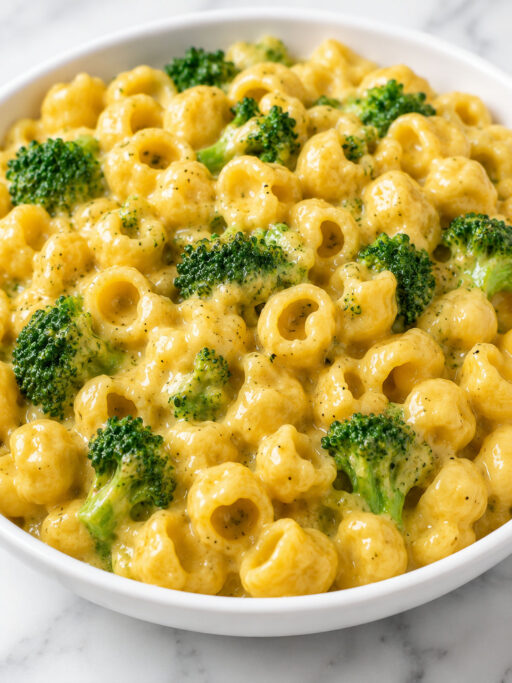
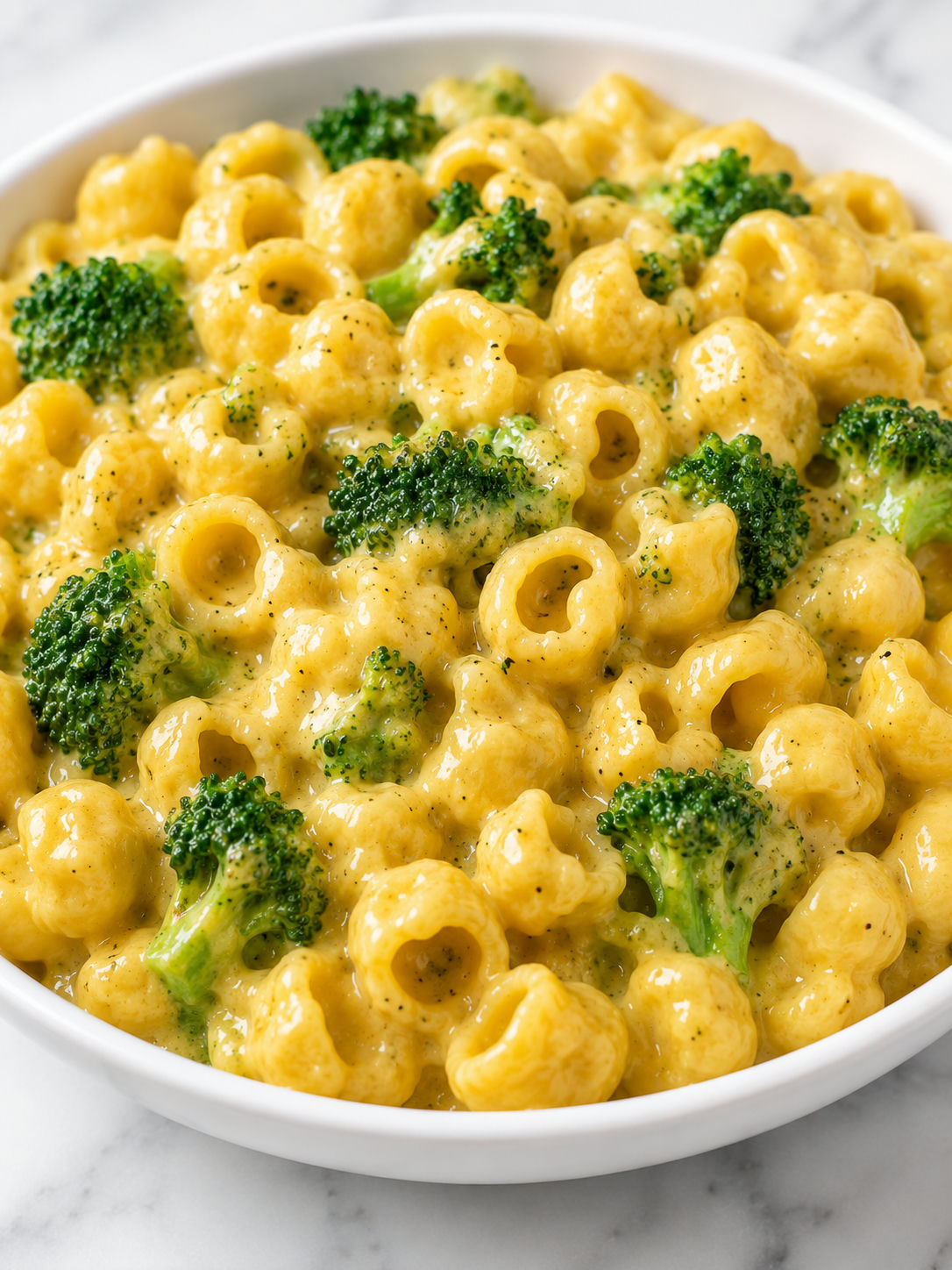

One Pot Broccoli Cheddar Pasta is what I make when I want the comfort of mac and cheese with a little green tucked right in. The pasta cooks in the same pot as the sauce, so the starch helps thicken everything without a separate roux.
The trick is timing the broccoli so it stays tender but still bright. Add the cheese at the end, off the heat, and you get a smooth cheddar sauce instead of a grainy one.
The Creamy Cheddar Lineup
Use a block of sharp cheddar and shred it yourself if you can. Fresh broccoli, small pasta, and a little mustard powder make the sauce taste fuller without adding much work.
- Small shell pasta. Cooks quickly and catches the creamy cheddar sauce in every curve.
- Fresh broccoli. Adds color, texture, and a mild sweetness that fits the cheese.
- Sharp cheddar. Gives the sauce its bold broccoli-cheddar flavor. Freshly shredded melts best.
- Parmesan. Adds a salty, savory edge so the cheddar does not taste flat.
- Whole milk. Softens the sauce and keeps it creamy without making it too heavy.
- Vegetable broth. Seasons the pasta from the inside as it simmers.
- Butter, onion, and garlic. Build a simple savory base before the liquid goes in.
- Dry mustard. Makes the cheddar taste sharper and more balanced.
Simmer, Stir, Melt
- Soften the aromatics. Melt the butter in a wide pot, then cook the onion with a pinch of salt until it turns glossy and soft. Stir in the garlic and mustard for the last minute.
- Start the pasta. Add the shells, broth, milk, and water. Bring the pot to a gentle simmer and stir well so no pasta sticks to the bottom.
- Add the broccoli. When the pasta is about halfway tender, stir in the chopped broccoli. Keep the simmer gentle so the milk does not scorch.
- Check the sauce. Cook until the shells are al dente and the broccoli is tender. If the pot looks dry before the pasta is done, add a small splash of broth or milk.
- Melt the cheese. Remove the pot from the heat. Stir in cheddar and parmesan by handfuls until smooth, then let the pasta rest for 3 minutes before serving.
One Pot Broccoli Cheddar Pasta
The reason this dish works is the starch. As the shells cook, they release enough starch to help the milk and broth thicken into a sauce. That same idea shows up in many one pot recipes, including this creamy chicken pasta with vegetables. Keep the heat at a calm simmer. A hard boil can make the milk taste cooked and can leave the bottom of the pot sticky. I like to use a wide Dutch oven because the pasta sits in a shallow layer and cooks evenly. The finished sauce should look a little loose when you turn off the heat. It thickens as it rests.
Keep The Sauce Smooth
Cheddar needs gentle treatment. Pre-shredded cheese is convenient, but it often has starches or coatings that can keep it from melting cleanly. A block of sharp cheddar gives you a better sauce and a stronger flavor. The versions I researched from Simply Made Eats and The Kitchn both lean on the same idea. Add cheese near the end, after the pasta has cooked. I take the pot off the burner and stir in the cheese slowly. If the sauce tightens too much, a splash of warm milk brings it back.
Broccoli That Stays Bright
Cut the broccoli into small bite-size florets so it cooks at the same pace as the pasta. The stems are good too. Peel the tough outside and chop the tender center into small pieces, then add them with the onion so they soften fully. If you like broccoli with more bite, wait until the last 4 minutes before adding the florets. For a softer, almost soup-like broccoli cheddar texture, add them a minute or two earlier. This is also a good place to use leftovers from chicken and broccoli pasta as inspiration if your family likes extra vegetables in creamy pasta.
Swaps For Real Weeknights
This recipe is flexible as long as you keep the liquid and pasta amount close. Elbows, ditalini, and small penne all work. If you want protein, stir in cooked chicken at the end, or use the flavor idea from creamy broccoli chicken pasta. For more heat, add a pinch of cayenne with the mustard powder. For a richer sauce, replace half a cup of milk with half-and-half. If you need a meatless dinner, stick with vegetable broth and serve it with a crisp salad. It also pairs well with simple roasted vegetables or garlic bread.
Leftovers Need Moisture
Cheesy pasta thickens in the fridge because the shells keep absorbing sauce. Store it in a covered container for up to 3 days. The USDA food safety guidance recommends refrigerating leftovers within 2 hours. Reheat gently with a splash of milk or broth and stop as soon as it is hot. Do not boil it again. If you love the one pot cheddar idea, try one-pot chicken parmesan mac and cheese next for a heartier dinner.
Summary
This creamy vegetarian pasta is best served right away, with extra black pepper and a small handful of cheddar on top.
FAQs
- Can I use frozen broccoli?
-
Yes, but add it straight from frozen during the last 3-4 minutes of simmering. It softens faster than fresh broccoli and can break apart if it cooks too long.
- Why did my cheddar sauce turn grainy?
-
The heat was probably too high when the cheese went in. Take the pot off the burner first, then stir in the cheddar by handfuls until it melts smoothly.
- What pasta shape works best?
-
Small shells are my favorite because they hold the cheese sauce and bits of broccoli. Elbows, ditalini, mini penne, or cavatappi also work well.
- Can I make this gluten-free?
-
You can use a sturdy gluten-free short pasta, but watch it closely. Many gluten-free pastas release more starch and can go from firm to soft quickly in a one pot sauce.
- Can I add chicken or bacon?
-
Yes. Stir in cooked shredded chicken at the end, or sprinkle crisp bacon over each bowl. If you add salty bacon, taste before adding more salt.
- How do I reheat leftovers?
-
Warm leftovers in a small pot over low heat with a splash of milk or broth. Stir often until creamy again, and avoid boiling the sauce after the cheese has melted.
References
Sources cited in this recipe.