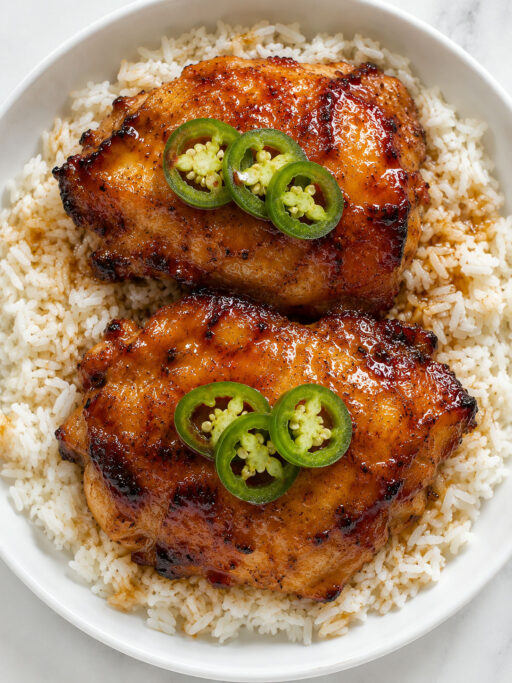
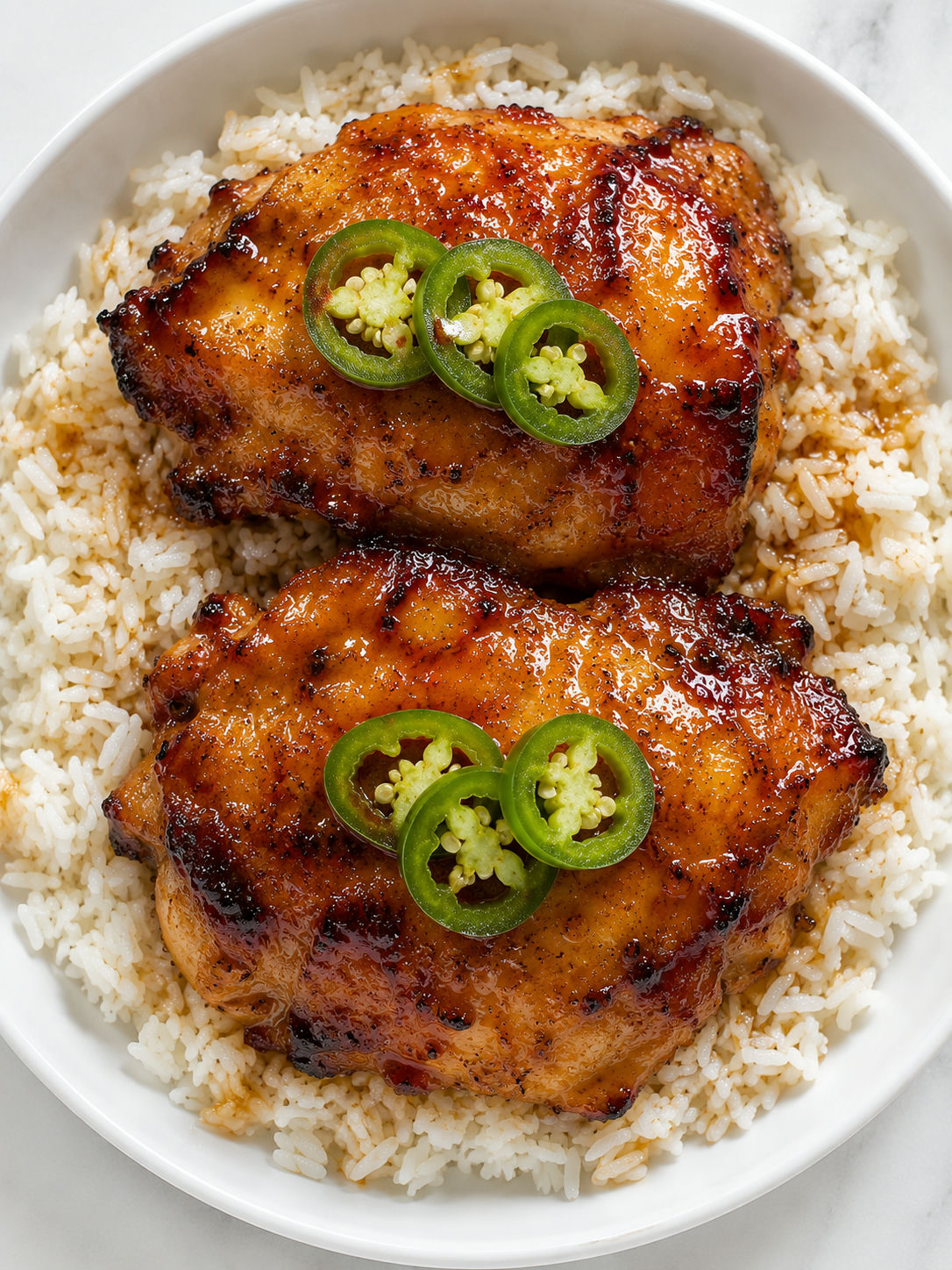

Two things happen when peach preserves hit a hot skillet with fresh jalapeño. The sugar caramelizes fast. The heat from the pepper blooms into something sweet and sharp all at once. That is the whole engine of this dish.
The glaze is thick and glossy. It coats every inch of seared chicken before it goes into the oven, and by the time it comes out, the top is lacquered with a little char at the edges and the peach flavor has pushed through the meat. Serve it over white rice, spoon the extra glaze from the pan over everything, and dinner is done.
You only need one skillet, pantry staples, and about 40 minutes from cold pan to table.
Four Pantry Items, One Great Glaze
Peach preserves are the base of the glaze, so quality matters more here than in most recipes. A good jar should list real fruit near the top of the ingredient label. Everything else (jalapeños, garlic, butter, vinegar) plays a supporting role and most of it is already in your kitchen.
- Bone-in, skin-on chicken thighs. The skin crisps under the glaze and protects the meat from drying out during baking. Boneless thighs work too but cook about 8 minutes faster, so watch the temperature closely.
- Peach preserves. One cup is the sweet foundation of the glaze. It reduces and concentrates as it cooks, so even a basic supermarket jar turns into something more complex.
- Fresh jalapeños. Two seeded peppers give medium heat. Leave the seeds in one if you want a more assertive kick through the sweetness.
- Garlic. Three cloves, minced and cooked briefly in butter before the preserves go in, so the raw edge cooks off without burning.
- Unsalted butter. Starts the glaze and rounds out the sharp edges of the vinegar without adding any heavy dairy note.
- Apple cider vinegar. One splash cuts the sweetness and keeps the glaze from tasting flat or one-dimensional.
- Soy sauce. Adds a savory undertone that anchors the fruity sweetness and keeps the glaze from being cloying.
- Brown sugar. One teaspoon, optional, but it helps caramelization if your preserves are on the tart side.
One Skillet from Sear to Finish
- Prep and preheat. Preheat your oven to 400°F (200°C). Pat the chicken thighs completely dry with paper towels, then season all over with salt, black pepper, and garlic powder. Wet skin steams instead of sears, so don’t skip the drying step.
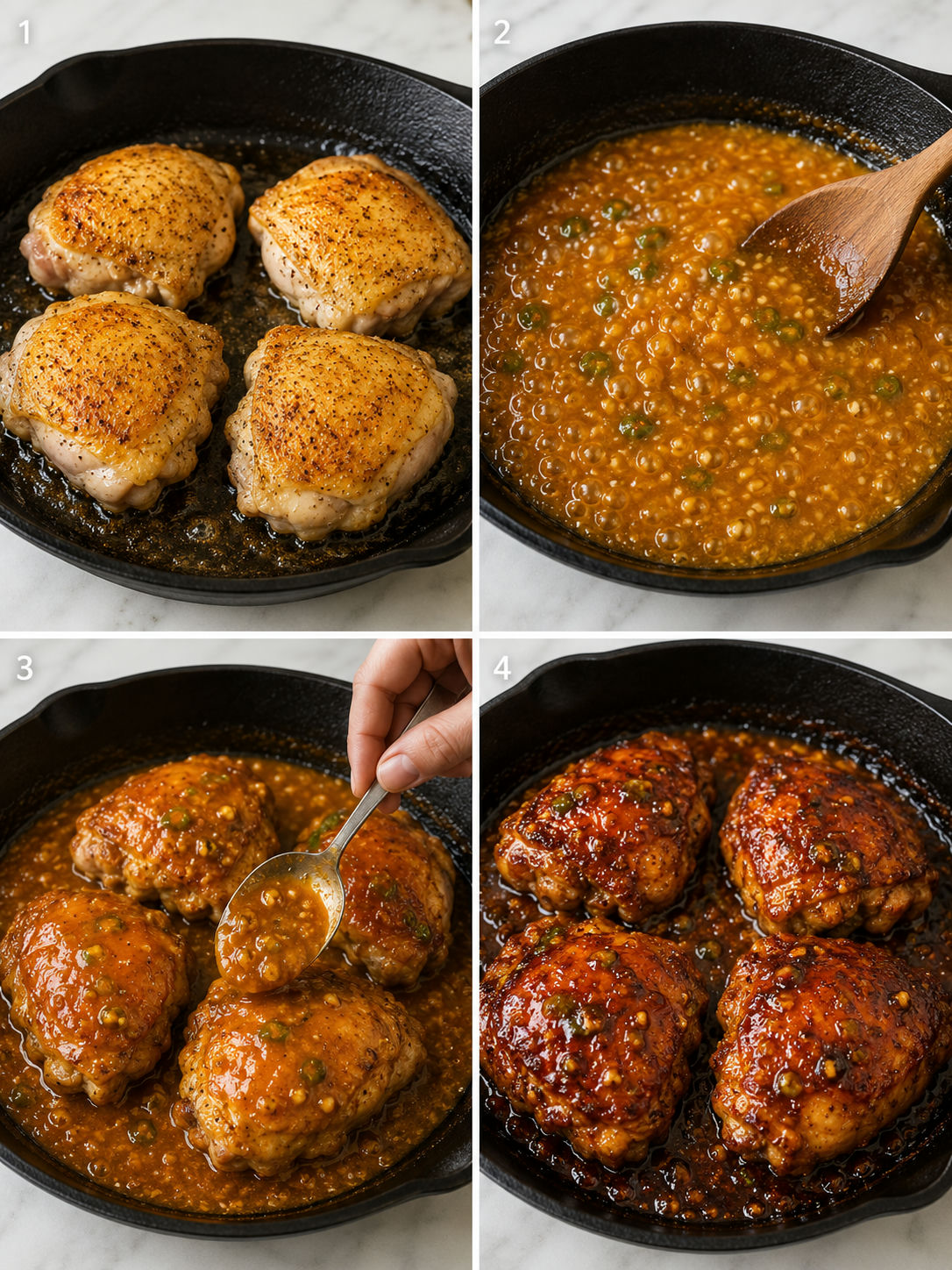
- Sear the skin. Heat the olive oil in a large oven-safe skillet over medium-high heat. Lay the thighs skin-side down and leave them alone for 4 to 5 minutes until the skin is deep golden and releases easily from the pan. Flip and sear the underside for 2 more minutes, then move the chicken to a plate.
- Build the glaze. Lower the heat to medium. Melt the butter in the same skillet, then add the minced jalapeño and garlic. Cook, stirring, for about 90 seconds until softened. Pour in the peach preserves, vinegar, soy sauce, and brown sugar. Stir and simmer for 4 to 5 minutes until the glaze thickens enough to coat a spoon.
- Coat and go into the oven. Return the chicken to the skillet skin-side up. Spoon half the glaze generously over each piece, getting the top and sides. Slide the pan into the oven.
- Glaze again halfway through. After 12 minutes, pull the pan out and spoon the remaining glaze over each thigh. Return to the oven for another 10 to 15 minutes until the internal temperature reads 165°F (74°C) and the top is glossy with some char at the edges.
- Rest and plate. Let the chicken rest in the pan for 5 minutes. Spoon any glaze pooled at the bottom of the skillet back over each piece before serving.
Why the Oven Step Makes the Dish
The oven step does more than cook the chicken through. Under dry heat, the sugar in the peach preserves reduces further and concentrates, and the surface of each thigh develops that sticky, lacquered finish you would expect from a restaurant plate. Finishing on the stovetop alone keeps the glaze wet and it never fully sets into that crust.
Keep the oven at 400°F. Lower temperatures mean the surface glazes without caramelizing. The pool of sauce that collects at the bottom of the skillet also intensifies during baking, so it becomes a richer finishing sauce than what you spooned on at the start. Don’t leave it in the pan. Spoon it back over the chicken right before serving.
The USDA poultry food safety guidelines recommend 165°F as the safe minimum internal temperature for chicken. An instant-read thermometer is the most reliable way to check without cutting in and losing the juices.
Getting the Heat Level Right
Two seeded jalapeños give you medium heat. Noticeable but not aggressive, and most people at the table can handle it. For less heat, use one jalapeño and remove every bit of the white membrane, which carries most of the capsaicin. A mild poblano is a good swap if you want smoky warmth with almost no fire.
Capsaicin, the compound responsible for jalapeño heat, does temper somewhat with cooking, which is why the finished glaze is mellower than a raw bite of the pepper. The Healthline breakdown of jalapeño nutrition covers this and the pepper’s other properties in detail. For a bolder punch that doesn’t cook out, stir a teaspoon of hot sauce into the finished glaze off the heat.
If jalapeño heat with chicken is your thing, Creamy Jalapeño Popper Stuffed Chicken takes the same pepper in a cream-cheese direction that is completely different and just as easy to make on a weeknight.
Bone-In Thighs vs. Other Cuts
Bone-in, skin-on thighs are the right call here. The bone conducts heat slowly and keeps the interior juicy. The skin crisps under the glaze and acts as a barrier that bastes the meat from below as the fat renders during baking. Boneless skinless thighs are a fine substitute and cook about 8 minutes faster, so check the temperature at the 18-minute mark in the oven.
Boneless chicken breasts work too but are less forgiving. Pound them to an even 3/4-inch thickness and reduce the total oven time to 15 to 18 minutes. Pull them the moment they hit 165°F. For those who prefer thighs on the grill, the Grilled BBQ Chicken Thighs use a similar sweet-savory glaze approach over live fire instead of in the oven.
Storing and Reheating Leftovers
Leftovers keep in an airtight container in the fridge for up to 4 days. The glaze firms up when cold and reloosens when you heat the chicken in a skillet over medium-low with a small splash of water or broth. The microwave works in a pinch, but stovetop gives you a noticeably better result.
For longer storage, freeze the cooked chicken for up to 2 months. Thaw overnight in the fridge. Avoid thawing at room temperature, which affects both the texture of the meat and the quality of the glaze.
Sides That Work Best with It
White rice is the simplest and best pairing because it soaks up the extra glaze pooled in the skillet. Coconut rice leans into the sweet, fruity angle if you want to push that direction. A quick cucumber slaw or chopped cabbage salad adds crunch and cuts through the sweetness.
Roasted sweet potato wedges, broccolini, or zucchini round out the plate without competing with the glaze flavor. For something lighter, this chicken sits well over arugula dressed with lemon and olive oil, where the bitterness of the greens is a real counterpoint to the sweet-hot glaze.
For another fruit-forward chicken bake, the Honey Cranberry Chicken Bake with Feta and Brie uses a sweet-acidic base with a completely different fruit profile and is just as easy to pull together on a weeknight.
FAQs
- Can I use fresh peaches instead of peach preserves?
-
Yes. Use 2 cups of diced fresh peaches and add an extra tablespoon of brown sugar to compensate for the reduced sweetness. Fresh peaches take a couple of minutes longer to break down in the pan, and the texture is slightly chunkier. Frozen peaches, thawed and well drained, also work the same way.
- How do I make this less spicy?
-
Use one seeded jalapeño instead of two and remove every bit of the white membrane, which carries most of the heat. A mild poblano pepper is a good swap if you want smoky warmth with almost no heat at all. If you want to skip the pepper heat entirely, omit the fresh jalapeño and add just a pinch of red pepper flakes to the glaze instead.
- Can I grill this instead of baking it in the oven?
-
Yes. Make the glaze on the stovetop first, then grill the chicken over medium-high heat. Sear each side for 4 to 5 minutes, then brush generously with glaze and move to indirect heat. Continue cooking with the lid down, basting once more, until the internal temperature hits 165°F. The char from the grill grates goes very well with the sweet glaze.
- How do I know when the chicken is fully cooked?
-
An instant-read thermometer inserted at the thickest part of the thigh (not touching the bone) should read 165°F (74°C). The USDA sets this as the safe minimum internal temperature for poultry. Cutting into the meat to check works, but it releases the juices. A thermometer gives a more accurate result without sacrificing moisture.
- Can I use boneless skinless chicken breasts instead?
-
You can. Pound them to an even 3/4-inch thickness so they cook at the same rate. Sear for 2 to 3 minutes per side, then coat with glaze and bake at 400°F for 15 to 18 minutes. Breasts are less forgiving than thighs and dry out quickly, so pull them the moment they reach 165°F and let them rest for a full 5 minutes before cutting.
- How long do leftovers keep, and can I freeze them?
-
Leftovers stay good in the fridge for up to 4 days in an airtight container. Reheat in a skillet over medium-low with a splash of water or broth to revive the glaze. For longer storage, freeze the cooked chicken for up to 2 months. Thaw overnight in the fridge before reheating.
References
Sources cited in this recipe.