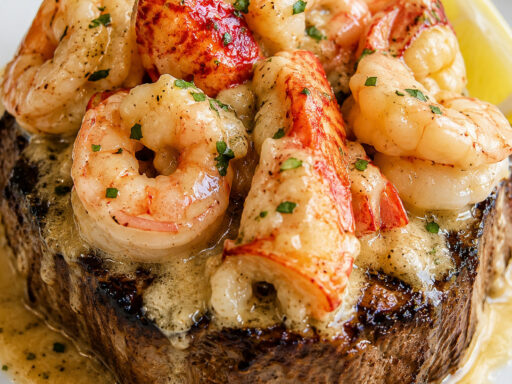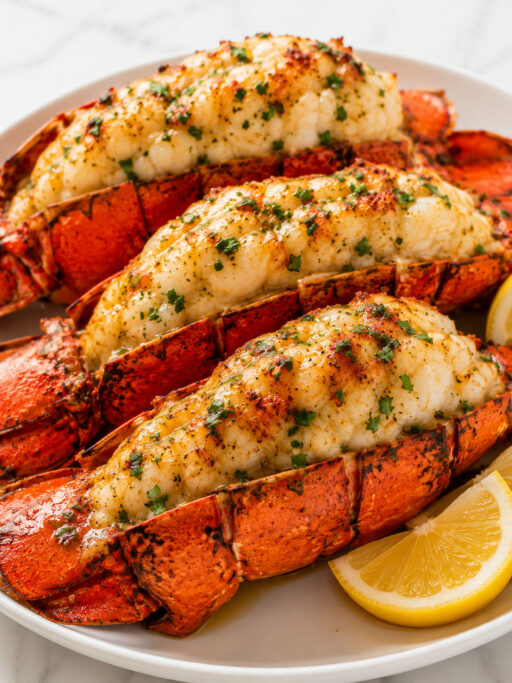
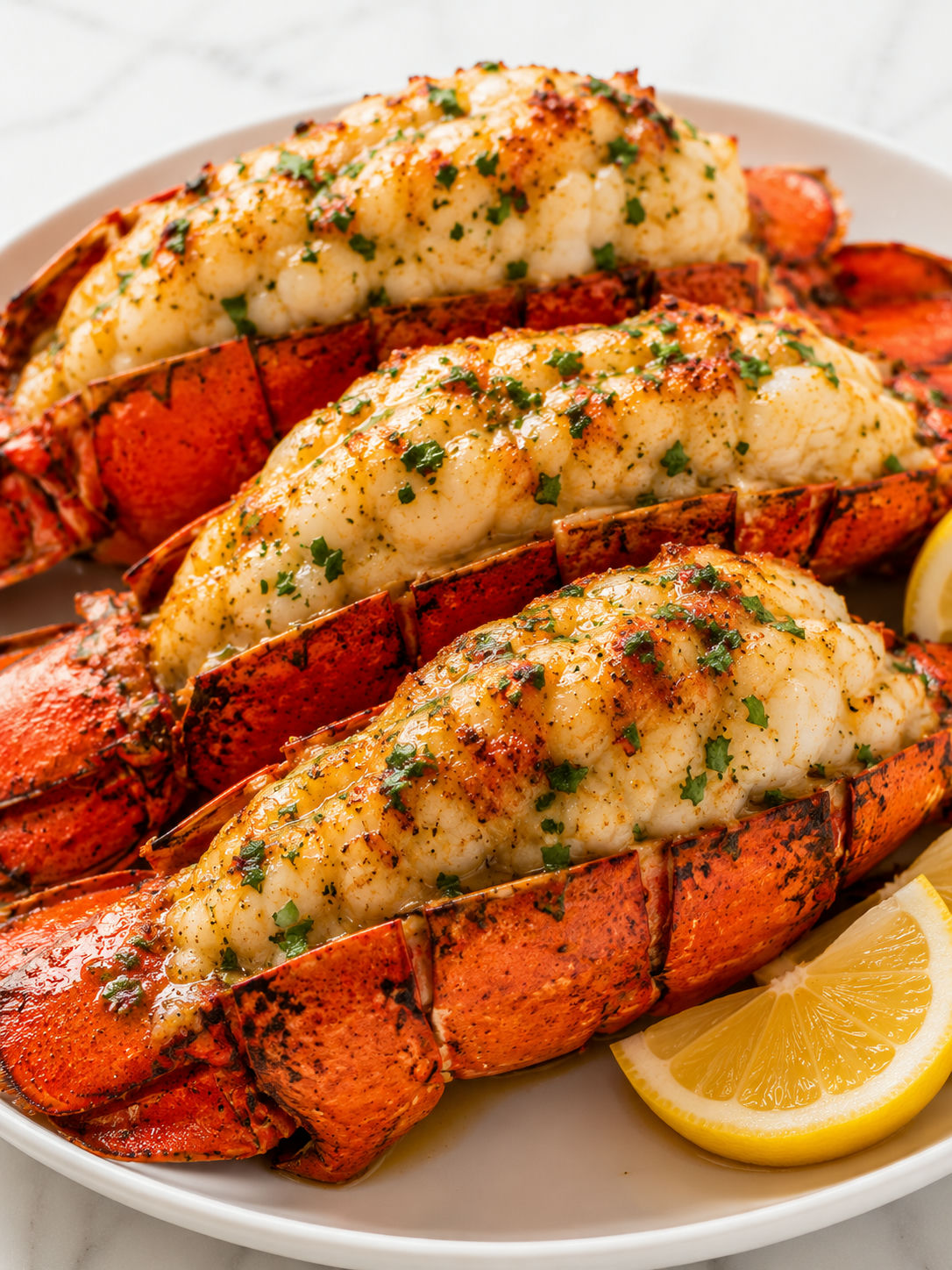

Garlic Butter Lobster is one of those dinners that looks like a restaurant plate but cooks faster than chicken breasts. The shells do most of the presentation work for you, and the meat only needs butter, garlic, lemon, and a careful eye.
I like broiling lobster tails because the heat is fast and direct. The meat stays sweet, the edges lightly bronze, and the garlic butter pools in the shell instead of disappearing into a pot of water.
Lobster, Butter, Bright Lemon
Start with lobster tails that feel heavy for their size and have no strong fishy smell. Thawed tails are easier to cut cleanly and cook more evenly under the broiler.
The butter should taste fresh because it becomes the sauce. Fresh garlic, lemon, and parsley keep the dish rich without making it feel heavy.
- Lobster tails. The sweet, meaty center of the dish. Five to six ounce tails cook quickly and are easy to portion.
- Unsalted butter. Carries the garlic and keeps the lobster glossy. Unsalted gives you control over seasoning.
- Garlic. Adds sharp, savory flavor. Mince it finely so it softens fast under heat.
- Lemon juice and zest. Brighten the butter and balance the richness.
- Parsley. Adds a fresh finish and a little color against the white lobster meat.
- Paprika. Gives the butter a warm color and a mild, savory note.
- Salt and pepper. Bring out the sweetness of the lobster without covering it.
Garlic Butter Lobster Method
- Warm the broiler. Set the broiler to high and move a rack about 6 inches from the heat. Line a baking sheet with foil for easier cleanup.
- Butterfly the tails. Cut the top shell lengthwise with kitchen shears, stopping before the tail fan. Loosen the meat gently and rest it over the shell.
- Mix the butter. Stir melted butter with garlic, lemon juice, zest, paprika, salt, pepper, and parsley. Save a spoonful for brushing after cooking.
- Broil until opaque. Brush the lobster generously and broil for 7-10 minutes, depending on size. The meat should be opaque and lightly browned at the edges.
- Finish warm. Spoon the reserved garlic butter over the hot lobster and serve right away with lemon wedges.
Butterflying Without Tearing
Butterflying is the part that makes people pause, but it is mostly a gentle shell job. Use kitchen shears and cut only the top shell. Leave the tail fan intact so the meat stays anchored. Slide your thumb between the shell and meat on both sides, then lift the meat up and set it on top of the shell.
If the shell feels sharp, use a folded towel to hold it steady. If the meat sticks badly, do not pull hard. A quick dip in simmering water for a minute can loosen stubborn meat. For a creamier lobster tail idea, the site also has butter-seared lobster tails with garlic cream sauce.
Why Broiling Works Fast
Broiling puts direct heat on the exposed lobster meat, so the surface cooks quickly and the butter browns a little around the edges. That is why the rack position matters. Too close and the garlic can scorch before the center is done. Too far and the meat cooks slowly without that lightly toasted top.
Many trusted lobster tail recipes use either a hot broiler or a hot oven. Natasha’s Kitchen uses broiling for fast color, while The Kitchn explains a covered baking method for gentler heat. This version leans on the broiler because the buttered meat is exposed and ready fast.
How To Read Doneness
Lobster goes from tender to rubbery quickly. Watch the thickest part of the tail, not the thin edges. It should turn white and opaque, with a firm but springy feel. If you use a thermometer, aim for 140-145 F in the thickest part. FoodSafety.gov says lobster and other shellfish should be cooked until the flesh is pearly or white and opaque on its safe temperature chart.
Smart Swaps And Sides
Use regular paprika for a classic flavor or smoked paprika for a deeper taste. Chives can replace parsley, and a tiny pinch of cayenne is good if you like heat. If you want more sauce, melt two extra tablespoons of butter with lemon juice and serve it on the side for dipping.
For sides, keep things simple. garlic butter rice catches every drop of sauce, and roasted asparagus or crisp potatoes make the plate feel complete. If you want another shellfish dinner with the same buttery profile, try garlic butter crab legs.
Make-Ahead, Storage, Reheat
You can prep the lobster tails earlier in the day. Butterfly them, cover, and refrigerate for up to 4 hours. Mix the butter too, then warm it just enough to loosen before brushing.
Leftover cooked lobster is best removed from the shell and stored airtight in the fridge for up to 2 days. Reheat gently in a covered skillet with a spoonful of butter over low heat. Stop as soon as it is warm. For a different lobster dinner later in the week, tuck leftovers into buttery lobster rolls.
Summary
Serve this lobster right away with lemon wedges, rice, roasted potatoes, or a crisp salad. Keep the heat high and the cook time short for the best texture.
FAQs
- Can I use frozen lobster tails?
-
Yes. Most lobster tails sold at the seafood counter were previously frozen. Thaw them overnight in the fridge, then pat them dry before butterflying so the garlic butter clings to the meat.
- How do I know when lobster is done?
-
The meat should turn pearly white and opaque, with no gray translucent center. A thermometer in the thickest part should read 140-145 F, and the meat should feel springy rather than soft.
- Can I bake this instead of broiling?
-
Yes. Bake the butterflied tails at 425 F for about 10-14 minutes, depending on size. Broiling gives more color on top, while baking is gentler and a little more forgiving.
- What can I substitute for parsley?
-
Chives, tarragon, or a small amount of dill all work well with lobster. Use a light hand with stronger herbs so they do not cover the sweet shellfish flavor.
- Can I make garlic butter lobster ahead?
-
You can butterfly the lobster tails and mix the garlic butter up to 4 hours ahead. Keep both chilled. Broil the lobster just before serving because reheated lobster can turn firm quickly.
- What should I serve with garlic butter lobster?
-
Serve it with rice, roasted potatoes, asparagus, pasta, or a simple salad. Anything that can catch the extra garlic butter is a good choice.
References
Sources cited in this recipe.